When Was Asbestos Banned in the UK?
By Graham, owner of Clearaway Asbestos. Spectra licensed (142305706), more than seven years removing asbestos across Surrey and south London. Last updated 19 November 2026.
Asbestos was fully banned in the UK in 1999.
Quick answer: White asbestos (chrysotile) was banned in the UK in 1999, which completed the ban on all types. Blue asbestos (crocidolite) and brown asbestos (amosite) had already been banned in 1985. So by the end of 1999 it was illegal to import, supply or use any form of asbestos in the UK. Asbestos already in older buildings is not illegal and can be left in place if it is safe and well managed, but any building put up or refurbished before 2000 can still contain it.
People often assume asbestos was banned decades earlier than it actually was, or that it was all banned at once. Neither is quite right, and the detail matters, because it tells you exactly which buildings are still likely to contain it. Here is the full timeline, in plain terms.
When exactly was asbestos banned?
The ban came in two parts. In 1985, the UK prohibited the import and use of blue asbestos (crocidolite) and brown asbestos (amosite), the two amphibole types with the worst health record. In 1999, the ban was extended to white asbestos (chrysotile), the last type still in use, under the Asbestos (Prohibitions) (Amendment) Regulations 1999, which came into force on 24 November 1999.
| Year | What changed |
|---|---|
| 1985 | Blue asbestos (crocidolite) and brown asbestos (amosite) banned |
| 1999 | White asbestos (chrysotile) banned, completing the UK ban on all types |
| 2000 onwards | New building materials should contain no asbestos, so post-2000 properties are very low risk |
From the end of 1999, it has been illegal to import, supply or use any type of asbestos in the UK. That date, 1999, is the one to remember, because it is the point after which new building materials should not contain asbestos at all. For context, a wider ban on asbestos use came into force across the European Union from 2005, but in the UK the ban was already complete by the end of 1999.
Why was it banned in two stages?
The order follows the risk. Blue and brown asbestos have fine, straight fibres that are easily inhaled and are considered the most harmful, so they were dealt with first, in 1985. White asbestos was seen as less potent and was far more widely used, in everything from cement roofs to floor tiles, so a ban was more disruptive and came later, in 1999. By then the evidence against white asbestos was clear enough that it was prohibited too. If you want the detail on how the three types differ, we cover that in our guide to the different types of asbestos.
Not sure what you are dealing with? We will tell you before anything is disturbed.
Get a free quote: 0800 024 6168Is asbestos completely banned now?
Yes, in the sense that matters day to day. It is illegal to import, supply or use asbestos in any new product or building work in the UK. What the ban does not do is make it illegal to have asbestos that is already in a building. Material installed before the ban can legally stay where it is, provided it is in good condition and is managed safely, because undisturbed asbestos that is left alone is far less of a risk than asbestos that is broken up or disturbed.
How that material must be handled is governed by the Control of Asbestos Regulations 2012. If you are responsible for non-domestic premises, a commercial building, a workplace, or the shared parts of a block of flats, you have a legal duty to manage any asbestos in them. In practice that means finding out whether asbestos is present, recording where it is and what condition it is in, and keeping a written plan to manage it. Landlords and employers in particular should not overlook this, because the duty falls on whoever is responsible for the maintenance and repair of the building. Homeowners do not carry that same legal duty inside their own home, but the same practical advice applies: know where it is, leave it undisturbed, and have it removed by a professional before any work that would disturb it.
Does my house still have asbestos if it was built before 2000?
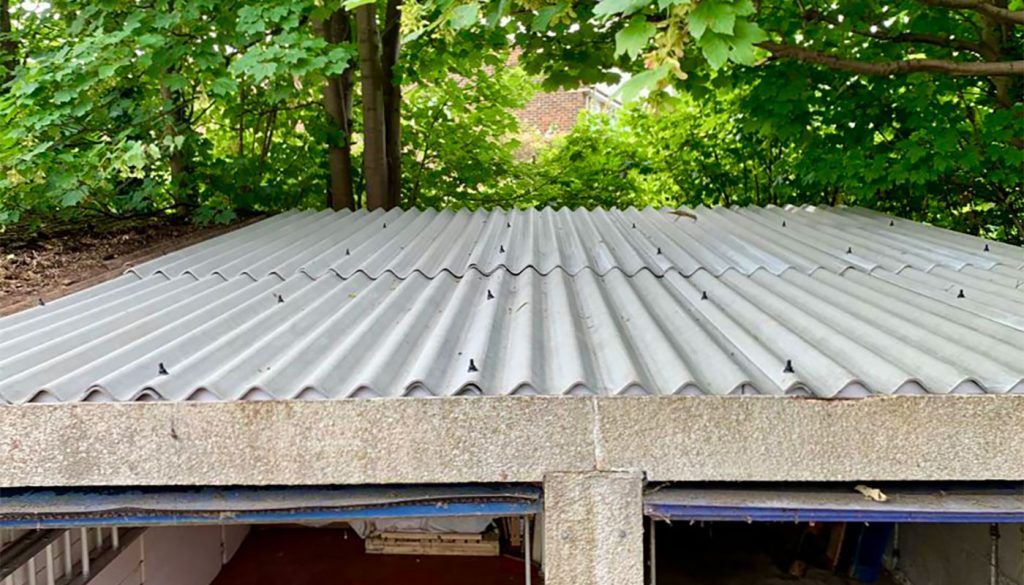
It can. Because the ban was not completed until 1999, any property built or refurbished before 2000 may contain asbestos somewhere, and in the UK that is a very large share of the housing stock. The older the property, the more likely it is, and the more types it might contain. Common places include garage and shed roofs, textured artex ceilings, old floor tiles, insulating board around boilers, and pipe lagging.
A property built after 2000 is very unlikely to contain asbestos, because the materials used to build it should never have contained it in the first place. That single date, 2000, is a useful rule of thumb. Before it, assume asbestos could be present and check before you disturb anything. After it, the risk is low. Across Surrey and south London, a large share of the housing went up well before 2000, which is why we still find asbestos regularly in homes, garages and outbuildings that look perfectly ordinary from the street.
As Graham, who runs Clearaway, puts it: "People think a 1980s house is too modern to have asbestos. It isn't. White asbestos was still going into cement and ceilings right up to 1999, so a house from the nineties can be full of it. The build date is the first thing I ask about."
What to do if your property might contain asbestos
If you own or are buying a property built before 2000 and you are planning work, the safe order is simple. Don't disturb anything you suspect, and don't try to test or remove it yourself. Have it checked first. An asbestos survey identifies any asbestos, confirms the type through laboratory testing, and tells you whether it can be safely left in place or needs to come out, and you can check what an asbestos survey costs first. Where removal is needed, it is carried out as licensed or non-licensed asbestos removal depending on the material.
Clearaway Asbestos is based in Chessington and works across Surrey and south London. We hold Spectra licence number 142305706 and have spent more than seven years working on exactly the kind of pre-2000 properties where asbestos still turns up. If you are not sure whether your building contains it, call us on 0800 024 6168 for straight advice and a free quote.
Not sure what you are dealing with? We will tell you before anything is disturbed.
Get a free quote: 0800 024 6168Frequently asked questions
When was asbestos banned in the UK?
Asbestos was banned in two stages. Blue asbestos (crocidolite) and brown asbestos (amosite) were banned in 1985, and white asbestos (chrysotile) was banned in 1999. The 1999 ban, which came into force on 24 November that year, completed the prohibition on all types.
Is asbestos completely illegal in the UK now?
It is illegal to import, supply or use asbestos in any new product or building work. It is not illegal to have asbestos that was already installed before the ban. That existing material can stay in place if it is in good condition and managed safely, and only needs removing if it is damaged or will be disturbed by work.
When was white asbestos banned?
White asbestos (chrysotile) was banned in the UK in 1999. It was the last type still in use, having stayed legal after blue and brown asbestos were banned in 1985, so its prohibition completed the UK ban on all forms of asbestos.
Can my house still contain asbestos if it was built before 2000?
Yes. Because the ban was not completed until 1999, any property built or refurbished before 2000 can contain asbestos. It is often found in garage and shed roofs, artex ceilings, floor tiles, insulating board and pipe lagging. A property built after 2000 is very unlikely to contain it.
Is it against the law to have asbestos in your home?
No. Having asbestos in your home is not illegal, and material in good condition can safely be left in place. What is illegal is using or installing new asbestos. If asbestos in your home is damaged or you plan work that would disturb it, it should be assessed and, if needed, removed by a professional.
Sources for the facts cited: the 1999 ban on white asbestos is set out in the Asbestos (Prohibitions) (Amendment) Regulations 1999 (in force 24 November 1999); blue and brown asbestos were banned in 1985. The duty to manage asbestos is set by the Control of Asbestos Regulations 2012, regulation 4, as explained by the Health and Safety Executive.
Need Asbestos Advice?
Call us for a free survey and quote. Same-day response on most enquiries.
Call 0800 024 6168