The Different Types of Asbestos, and Which Is Most Dangerous
By Graham, owner of Clearaway Asbestos. Spectra licensed (142305706), more than seven years removing asbestos across Surrey and south London. Last updated 19 November 2026.
Quick answer: There are three main types of asbestos found in UK buildings: chrysotile (white), amosite (brown) and crocidolite (blue). Blue asbestos is generally considered the most dangerous, but all three are harmful and all have been banned in the UK since 1999. You cannot reliably tell one type from another by its colour, so any material you suspect contains asbestos should be tested by a UKAS-accredited laboratory before it is disturbed.
Most people only think about the type of asbestos once they have found something suspect in a loft, a garage roof or an old ceiling. The honest answer is that the type matters less than you might expect, because every form is dangerous once its fibres are released into the air. Still, it helps to know what the names mean, which is the most harmful, and why the colour on its own tells you very little. This guide explains all three, in plain terms.
How many types of asbestos are there?
There are six recognised asbestos minerals, but only three were used widely in building materials. Those three, chrysotile, amosite and crocidolite, are the ones you are likely to come across in a UK home or commercial property. The other three, tremolite, actinolite and anthophyllite, were rarely used on purpose and usually turn up only as contaminants in other materials.
The six fall into two mineral families. Chrysotile belongs to the serpentine group and has curly, flexible fibres. The other five belong to the amphibole group and have straight, needle-like fibres. That difference in fibre shape is part of why the amphibole types are considered more hazardous, because sharp, straight fibres are more easily drawn deep into the lungs and stay there.
The three main types in UK buildings
| Type | Common name | Mineral group | Where it was commonly used |
|---|---|---|---|
| Chrysotile | White asbestos | Serpentine | Cement sheets, garage and shed roofs, artex, floor tiles, insulation board |
| Amosite | Brown asbestos | Amphibole | Insulating board, ceiling tiles, pipe lagging, thermal insulation |
| Crocidolite | Blue asbestos | Amphibole | Sprayed coatings, pipe lagging, some cement products, insulation |
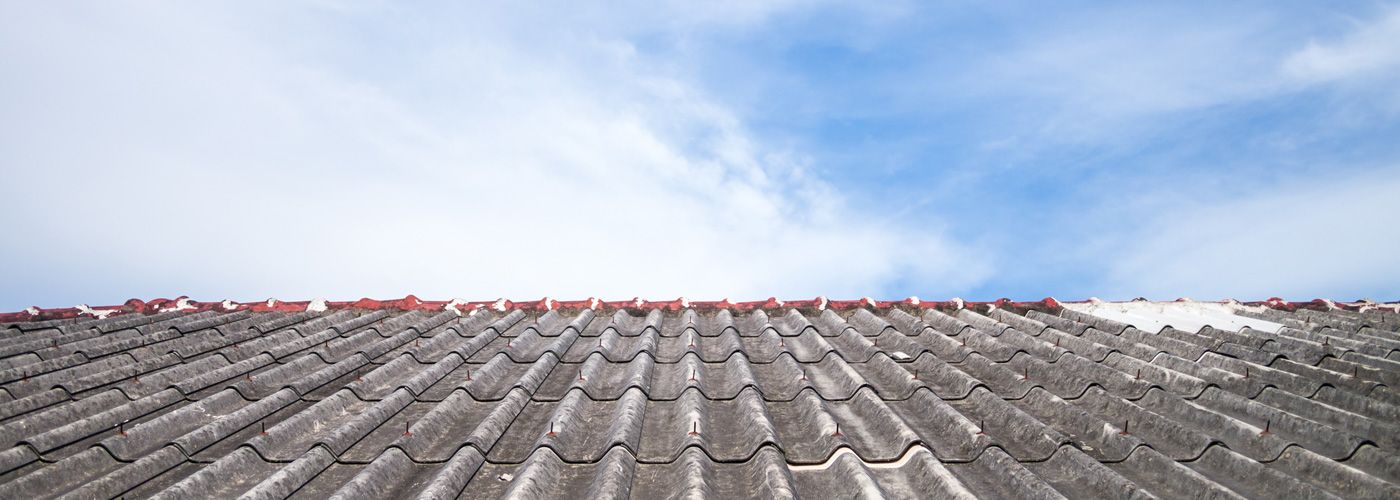
Chrysotile, or white asbestos, is by far the most common type still found in British properties, because it stayed legal the longest and was used in everything from corrugated garage and shed roofs to textured artex, ceilings and floor tiles. Amosite, or brown asbestos, shows up most often in insulating board around boilers and in ceiling tiles. Crocidolite, or blue asbestos, was used less but is the one with the worst reputation, often found in older sprayed coatings and pipe lagging.
Not sure what you are dealing with? We will tell you before anything is disturbed.
Get a free quote: 0800 024 6168Which type of asbestos is the most dangerous?
Crocidolite, blue asbestos, is generally regarded as the most dangerous of the three. Its fibres are especially fine and straight, which makes them easy to inhale and very hard for the body to break down or expel. Amosite, brown asbestos, is considered the next most harmful, with chrysotile, white asbestos, seen as less potent again.
It is important not to read too much into that order. All three are classed as causes of cancer, and all three can lead to serious diseases such as mesothelioma and asbestos-related lung cancer. According to the Health and Safety Executive, asbestos-related diseases still cause around 5,000 deaths a year in Great Britain, which makes asbestos the single greatest cause of work-related deaths in the country. White asbestos being the least potent does not make it safe. It simply means every type needs to be treated with the same care.
One thing worth understanding is why the type matters less than people expect. These diseases usually take decades to appear after the exposure that caused them, so there's no safe amount to breathe in and no way to tell at the time that any harm has been done. As Graham, who runs Clearaway, puts it: "On the day, people want to know if it is the dangerous blue sort. My answer is always the same. Treat all of it as dangerous, because by the time the type would have made a difference, it is already too late to change what you breathed in."
Can you tell the type of asbestos by its colour?
No, and this is the mistake that catches people out. The names white, brown and blue come from the raw mineral, not from how the finished material looks in a building. Once asbestos has been mixed into cement, board or tile, it can be grey, off-white, dirty brown or almost any shade, and the three types can look identical to the eye. There is no safe way to tell them apart by sight.
The only reliable way to identify asbestos, and which type it is, is a laboratory test. A small sample is taken under controlled conditions and sent to a UKAS-accredited laboratory, which examines the fibres under a microscope and confirms whether asbestos is present and what type. That is why guessing is never good enough for a builder, a solicitor or a buyer. The result has to come from a proper test.
A quick note on the law, since it often comes up alongside this question. Blue and brown asbestos were prohibited in the UK in 1985, and white asbestos was banned in 1999, which completed the ban on all types. Any building put up or refurbished before the year 2000 can still contain any of them, which is why older properties are always worth checking before work starts.
What to do if you think you have found asbestos
If you find a material you think might contain asbestos, the safest thing is to leave it alone and not disturb it. Undamaged asbestos that is left undisturbed is far less of a risk than asbestos that is broken, sanded or drilled, because it's the loose fibres in the air that cause harm. Don't try to remove it yourself, and don't break it up to get a closer look.
The right next step is to have it tested and assessed. An asbestos survey identifies the material, confirms the type through laboratory testing, and tells you whether it can be safely managed in place or needs to come out, and you can read what an asbestos survey costs before you book one. If it does need removing, that is handled as licensed or non-licensed asbestos removal depending on the material, with the higher-risk work carried out under full controls.
Clearaway Asbestos is based in Chessington and works across Surrey and south London. We hold Spectra licence number 142305706 and have spent more than seven years identifying and removing asbestos in exactly the kinds of older properties where these materials turn up. If you've found something you're not sure about, call us on 0800 024 6168 for straight advice and a free quote, and we will tell you what you are dealing with before anything is disturbed.
Not sure what you are dealing with? We will tell you before anything is disturbed.
Get a free quote: 0800 024 6168Frequently asked questions
How many types of asbestos are there?
There are six recognised types of asbestos: chrysotile, amosite, crocidolite, tremolite, actinolite and anthophyllite. Only the first three were used widely in buildings, so they are the ones most people come across. The other three usually appear only as contaminants in other materials.
What is the difference between white, brown and blue asbestos?
The three refer to different asbestos minerals. White asbestos (chrysotile) has curly fibres and was the most widely used, found in cement, roofs and artex. Brown asbestos (amosite) and blue asbestos (crocidolite) have straight, needle-like fibres and are considered more hazardous, found in insulating board, lagging and sprayed coatings.
Which type of asbestos is the most dangerous?
Blue asbestos (crocidolite) is generally considered the most dangerous, because its fine, straight fibres are easily inhaled and hard for the body to clear. Brown asbestos is next, and white asbestos is seen as the least potent. All three are harmful and all can cause serious disease, so every type should be treated with the same care.
Is white asbestos dangerous?
Yes. White asbestos (chrysotile) is less potent than the blue and brown types, but it is still classed as a cause of cancer and can lead to mesothelioma and lung cancer. It being the least harmful of the three does not make it safe, and it is still subject to the same strict removal rules.
Can you identify asbestos by its colour?
No. The names white, brown and blue come from the raw mineral, not the finished material, which can be almost any colour once mixed into cement, board or tile. The only reliable way to identify asbestos and its type is a laboratory test on a sample taken under controlled conditions.
Sources for the facts cited: Health and Safety Executive (asbestos-related deaths and risk), and the UK ban dates confirmed by the government's post-implementation review of the Control of Asbestos Regulations.
Need Asbestos Advice?
Call us for a free survey and quote. Same-day response on most enquiries.
Call 0800 024 6168