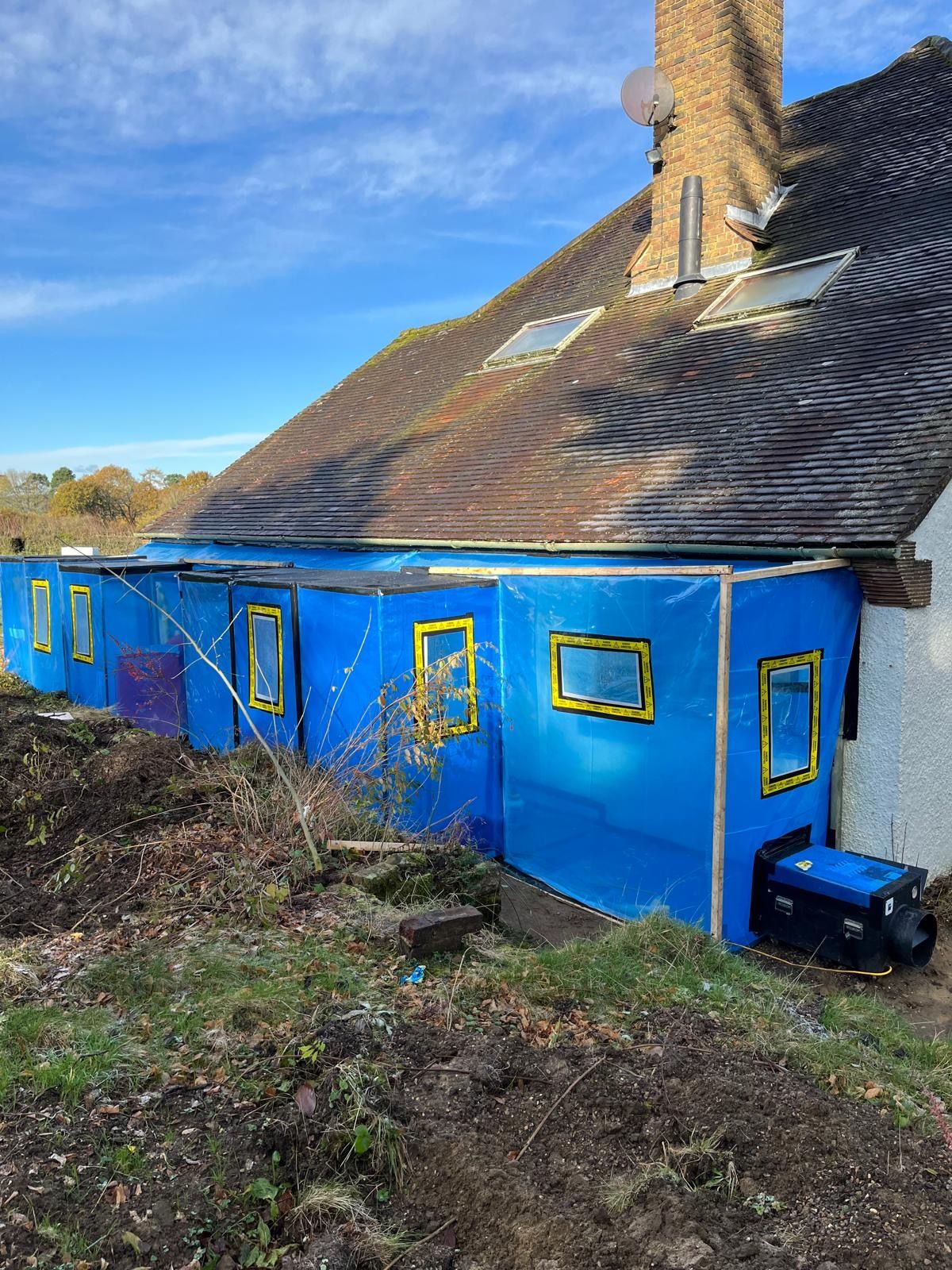
Asbestos Surveys in Woking
Asbestos surveys across Woking, from the Victorian streets of Horsell and Old Woking to the postwar estates at Knaphill, Goldsworth Park and Sheerwater. We find it, sample it and write you a report you can hand to a builder, buyer or solicitor.
Why a Survey Comes Before Anything Else
A survey is the part of the job where nothing gets removed. We walk the property, find the materials that might contain asbestos, note where each one sits, and tell you plainly what is there. In a town like Woking, where so much of the housing went up across the GU21 and GU22 postcodes before the 1999 ban, that first look matters more than people expect. Two ceilings that look identical can come back from the lab completely differently, so the only honest answer to "is that artex a problem" is to test it rather than to guess.
Most surveys we run in Woking fall into one of two camps. The first is the owner who is staying put and simply wants to know what the house holds, the garage roof, the soffits, the board in the airing cupboard. The second is the one with a builder booked, a knock-through planned, or a sale going through, who needs the material documented before anyone disturbs it. Both end the same way, with a written report rather than a pile of bin bags.
The survey is also the cheapest stage at which to deal with the problem. Find the material now and you can plan the work around it, budget for it, and warn the trades who are coming in. Find it halfway through a kitchen rip-out, with the old tiles already lifting and dust in the air, and a simple refit turns into a stop-work, clear-the-room problem that costs far more to put right.
Management Surveys and Refurbishment Surveys
There are two standard surveys and they do different jobs. A management survey is the lighter of the two, meant for a home that is staying lived in. We locate the material that is on show or easy to reach, record its condition, and tell you what to keep an eye on. It suits the Goldsworth Park or Knaphill semi where nobody is knocking walls about, but the owner wants a record of the garage roof, the cement soffits and the board in the airing cupboard, so they know what they are living with. Most of that material is fine left alone. The point of the survey is to confirm that, and to flag the few items that are starting to break down before they become a problem.
A refurbishment and demolition survey is the more intrusive one, and it is the survey you need before building work. This time we go looking properly, lifting boards, checking behind panels and under floors, because anything a builder might break into has to be found first. Before a loft conversion in an Edwardian house near Old Woking, or a rear extension on a 1930s semi out at St John's, this is the survey that keeps the job legal and the trades safe. It is also the survey a demolition crew needs before a property is taken down to its structure.
The difference matters because the wrong survey leaves gaps. A management survey on a house about to be gutted will miss the material buried in the structure, which is precisely the material the work will disturb, and that gap is the one that turns into a stoppage on site. We will tell you which one your project needs before we start, not after, and the report will say plainly which type was carried out.
Buying, Selling and Letting in Woking
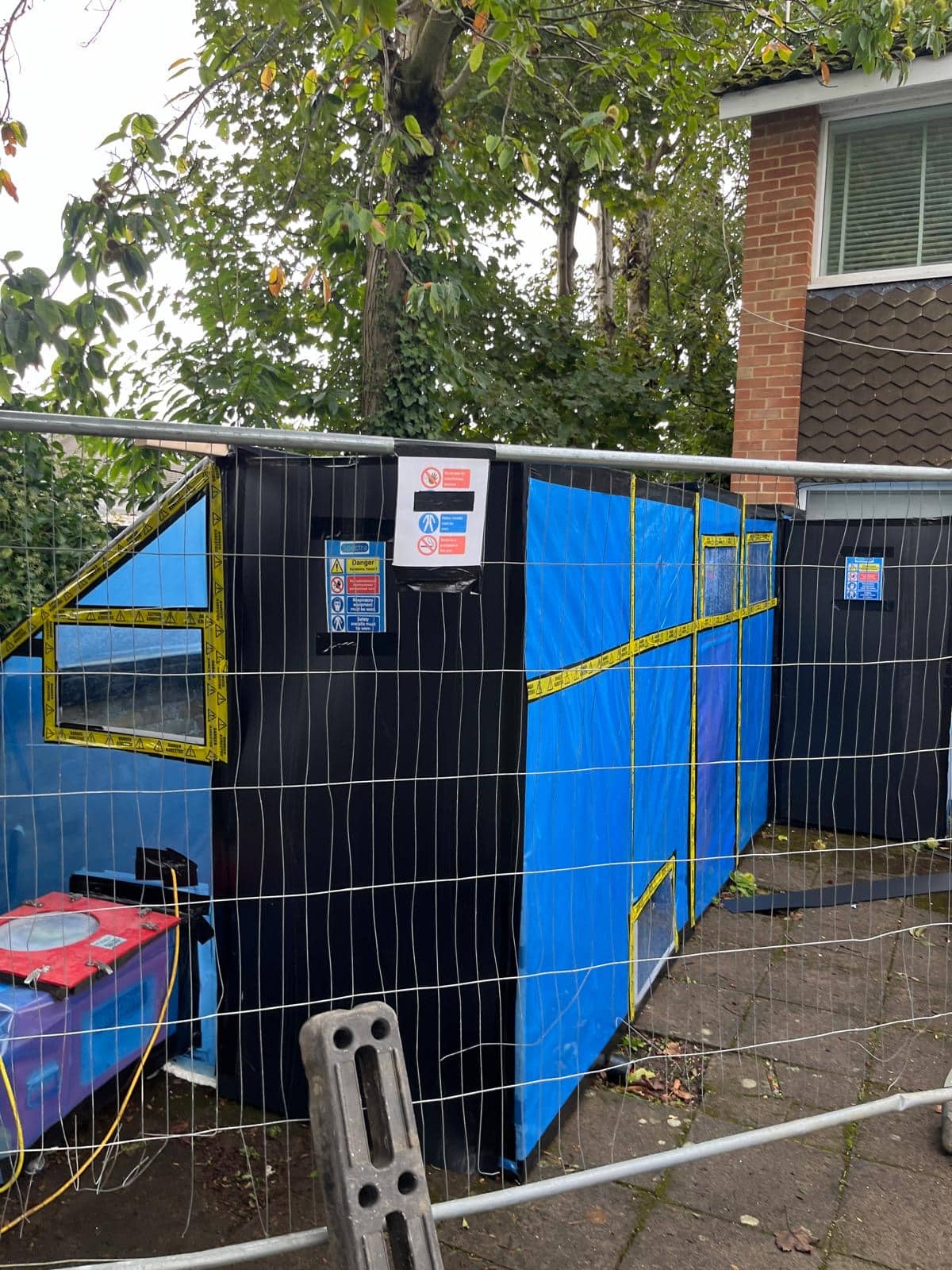
A lot of Woking surveys are tied to a transaction. If you are buying one of the older houses around Horsell or Old Woking, a survey tells you what you are taking on before you commit, rather than discovering pipe lagging or an old boiler flue once the keys are yours. A standard mortgage valuation will not flag any of it, so the survey is the only thing that does. It is far easier to factor removal into a price you are still negotiating than to find it after completion, when the cost lands entirely on you.
Landlords have their own reason. If you let a property, you carry a duty to manage the asbestos in it, and a management survey is how you show you have done that. With so much of Woking's rental stock sitting in the interwar and postwar estates, where corrugated garage roofs, cement soffits and textured ceilings are common, that record is worth having on file rather than hoping the question never comes up. It is the kind of thing that is quick to arrange now and awkward to explain later.
Sellers benefit too. Handing a buyer a clear survey, or proof that suspect material has already been dealt with, removes a question that can otherwise stall a sale while solicitors go back and forth. A solicitor can file it, a surveyor can read it, and the deal keeps moving instead of stopping while someone works out who pays for what.
The Lab, the Report and What You Get
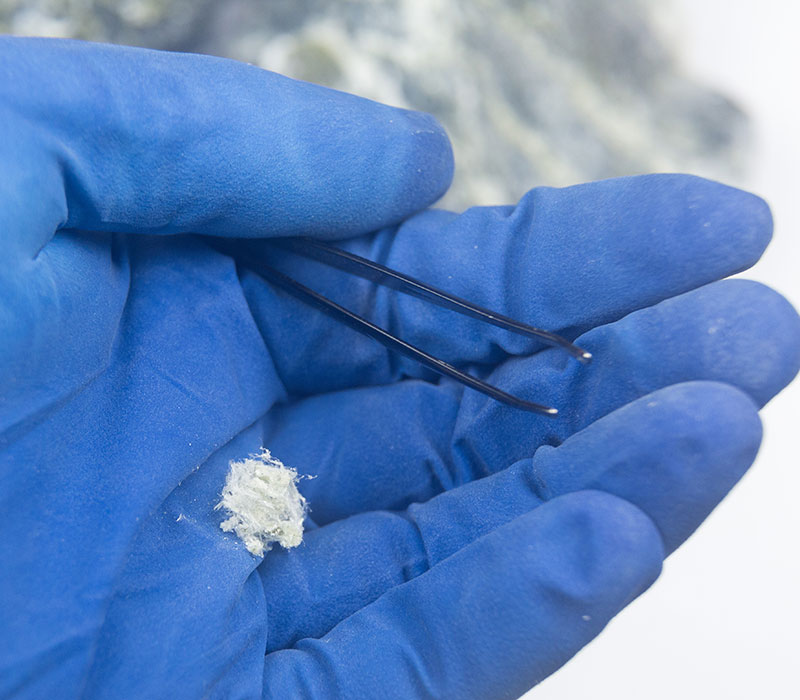
When we find something we suspect, we take a small sample under controlled conditions, so the act of testing does not spread fibres around the house. That sample goes to a UKAS-accredited laboratory, which is the part that turns a hunch into a fact. Results usually come back within a few working days, and only then do we say for certain what a material is. We will not guess at it and we will not start removal until the lab has confirmed what is there.
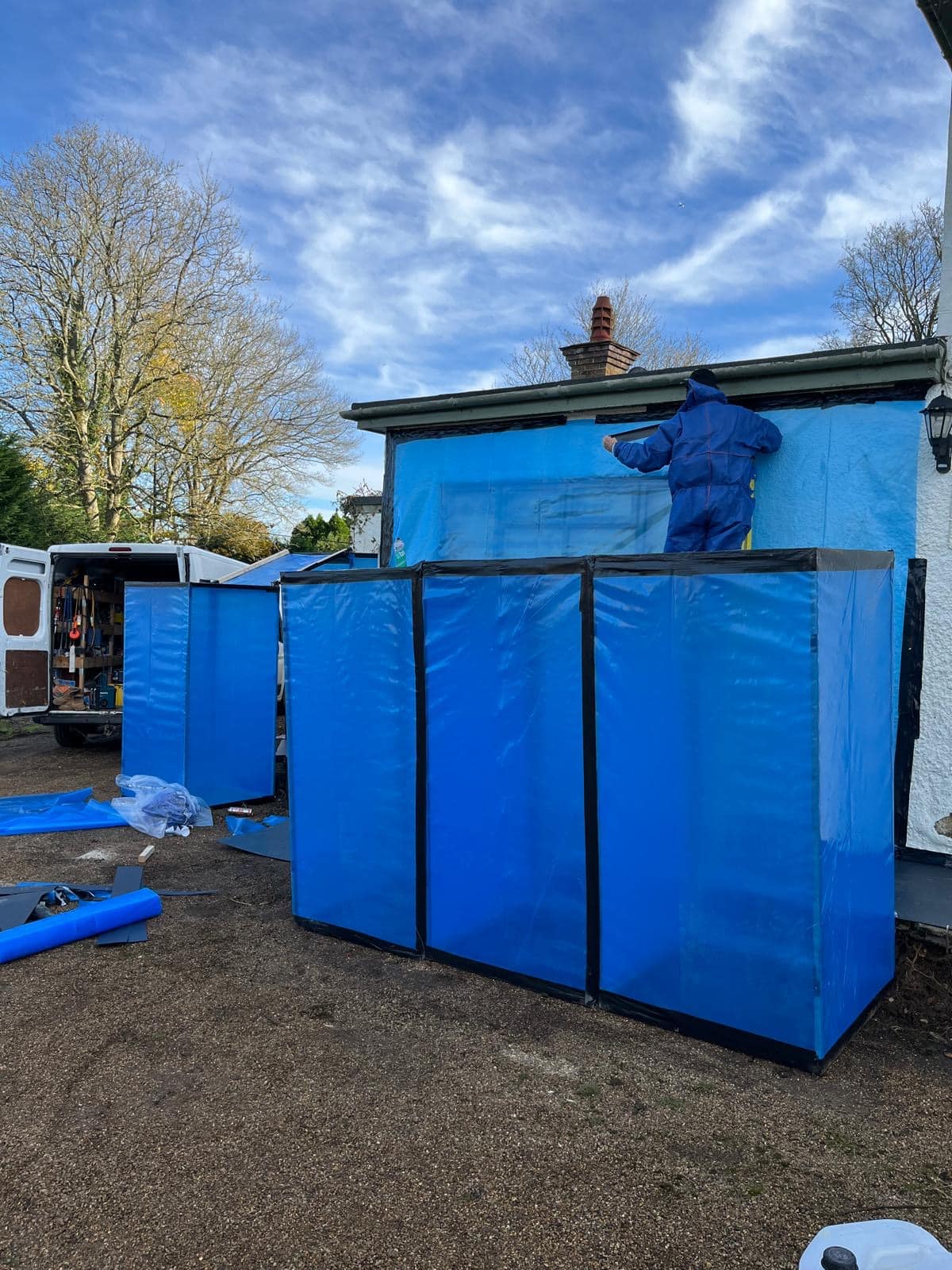
What you receive at the end is a written report. It lists the materials we found, where they are, what condition they are in, and what the lab confirmed, with clear guidance on what needs doing now and what can safely be left alone. It is the document you hand to a builder so they know what they are walking into, to a solicitor for a file, or to a buyer who wants the full picture before they sign. If removal is needed, the report becomes the plan we work to. For any higher-risk licensed material we give the HSE the 14 days' notice the law requires, work under full enclosure, and finish with four-stage clearance testing by an independent analyst before the room goes back into use.
A survey is also where it pays to have the same firm see the job through. The people who found the material are the people who can clear it, so nothing gets lost between a report and a removal team, and you are not left chasing two separate firms. Clearaway Asbestos holds Spectra licence number 142305706 and has surveyed and cleared property across Woking and the wider Surrey GU postcodes for more than seven years. To book a survey anywhere in the town, call the team on 0800 024 6168.
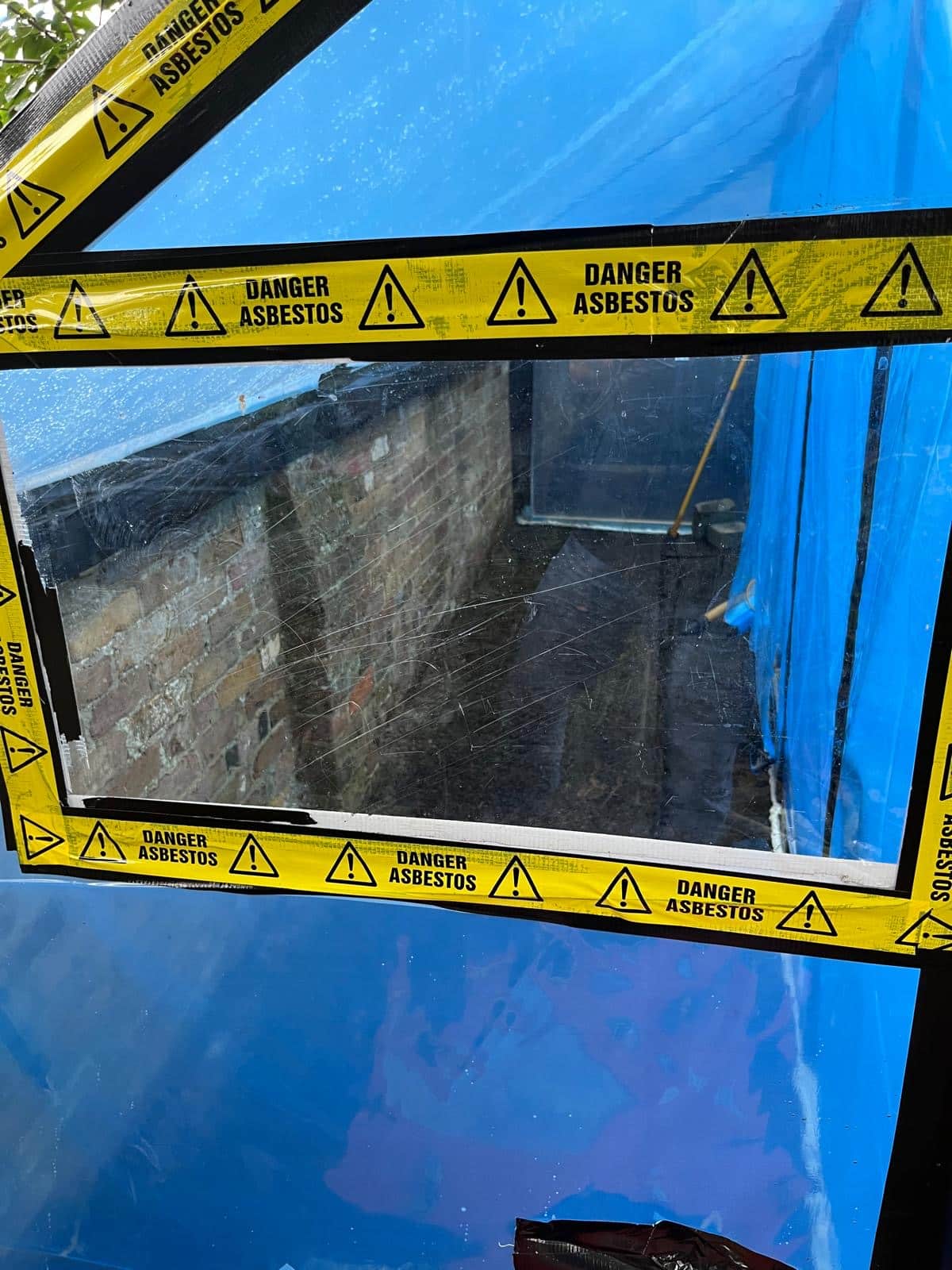
Licensed Asbestos Removal, Woking
Woking, Surrey · Licensed Removal
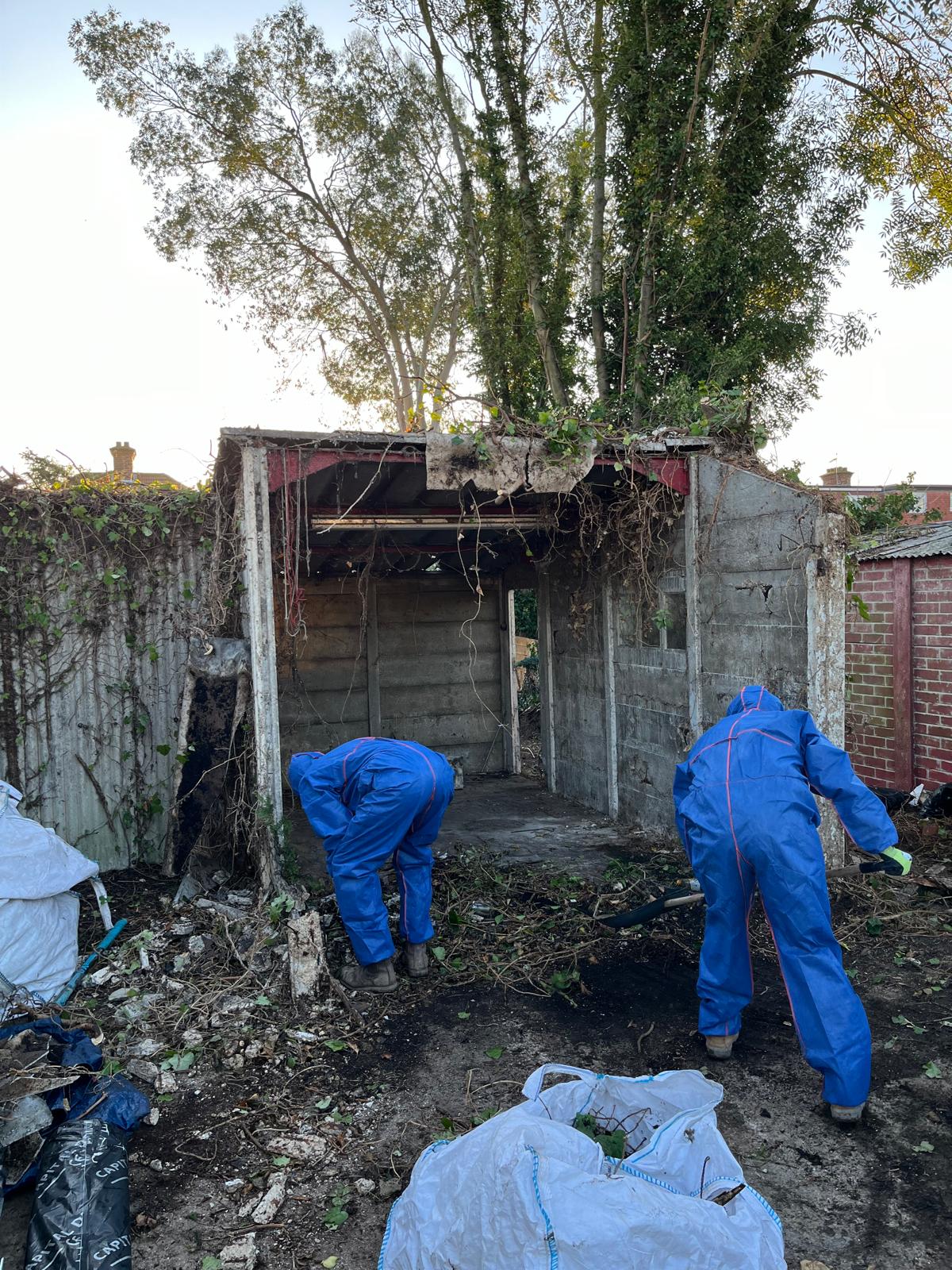
View this project"I used Clearaway Asbestos recently for an asbestos garage removal in my home. The staff were really friendly and professional and put me at ease the whole time they were working. I would recommend Clearaway Asbestos to anyone who needs asbestos removal services!"
Our Removal Process
From first call to final certificate, every job follows the same clear four-step process.
Survey
We inspect the property and confirm the material. Sampling available if required.
Quote
Fixed written price covering removal, disposal and any replacement work.
Removal
Material is removed safely, double-wrapped and taken to a licensed disposal facility.
Certificate
You receive a waste consignment note and disposal certificate confirming legal handling.
Frequently Asked Questions
Why Choose Clearaway
Specialist Crew
Asbestos work is all we do, every day, across the South East.
Fully Licensed
Licensed asbestos removal contractor (Licence No. 142305706). Full public liability insurance on every job.
Local & Fast
Surrey-based. Most domestic jobs are booked in and finished within a week.
Our Own Team
We never subcontract. The people who quote your job are the people who do it.
Get in Touch
Send a few details about your project and we will come back the same working day with a fixed price. We cover Surrey, London and the South East, including Esher, Cobham, Kingston, Richmond, Epsom, Guildford, Woking and Croydon.