
Asbestos Surveys in Wandsworth
An asbestos survey for Wandsworth property, from the Victorian terraces of the Tonsleys and East Hill to the mansion flats around Wandsworth Common and the conversions near the old Ram Brewery. We find and assess the material, then hand you a report you can act on.
Why a Survey Comes First in SW18
A survey is not removal. It is the step before, the part where we work out whether asbestos is present in a Wandsworth property, where it sits, and what condition it is in. Nobody touches anything. The point is to know what you are dealing with before a builder lifts a floor, a buyer signs, or a managing agent lets work start on a block.
Wandsworth makes this worth doing properly. The housing runs from the tight Victorian terraces of the Tonsleys and the slopes of East Hill, through the mansion flats and conversions around Wandsworth Common, out to the postwar estates off Garratt Lane and the warehouse buildings near the old Ram Brewery that are now flats. Almost all of it was built, extended and re-fitted before asbestos was banned in the UK in 1999. The material is still woven through the local stock, and you cannot tell which house has it by looking from the pavement.
Much of SW18 has also been carved up and converted. A single Edwardian house off Trinity Road might now be three flats, each refurbished at a different time by a different owner, each with its own layers of artex, tile adhesive and boxing. A survey reads all of that and writes it down.
Where asbestos turns up here tends to follow the building. In the terraces it is artex on ceilings and walls, vinyl floor tiles on black bitumen, soffits and gutters on the roofline, and pipe lagging around old heating runs in a basement. In the warehouse conversions near the Ram Brewery there can be insulating board, sprayed coatings and lagging left over from the building's working days, sitting under the residential fit-out. A survey is how you find which of these you actually have, rather than guessing from the age of the kitchen.

The Two Surveys, and Which One You Need
There are two kinds, and the difference matters. A management survey is for a home or flat that is staying lived in. It locates the asbestos that is reasonably accessible, checks what state it is in, and tells you what to leave alone and what to keep an eye on. If you are a Wandsworth landlord with a flat near the Common, or you simply want to know what is in the house before you decide anything, this is the one.
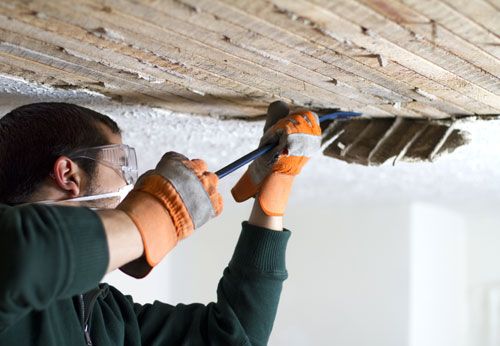
A refurbishment and demolition survey is the more intrusive inspection, and it is what you need before building work. It is meant to disturb. We lift, open up and look behind the surfaces a builder is about to break into, so that nothing turns up by surprise once the tools are out. If you are knocking through, taking out a roofline on a terrace outrigger, or stripping a conversion back, this is the survey the work depends on.
Getting the right one matters because a management survey will not cover a wall someone is about to demolish, and a full refurbishment survey on a flat you only want to live in is more than the situation calls for. The terraces and the converted flats around Wandsworth Common often hold their asbestos out of sight, behind plaster, under later flooring and inside boxed-in pipework, which is exactly why the refurbishment and demolition survey opens those areas up when work is coming and a management survey leaves them be. Tell us what the property is and what you plan to do with it, and we will match the survey to the job rather than sell you more inspection than you need.
Buying, Selling and Letting in Wandsworth
Most surveys we are called to in SW18 sit around a transaction or a tenancy. Someone is buying a terrace near Wandsworth Common and wants to know what is behind the artex before they exchange. A landlord is letting a converted flat and needs to show the material has been found and assessed. A managing agent is about to authorise work on a block off Garratt Lane and cannot let a contractor start blind.
A pre-purchase survey is a cheap thing to do against the price of a Wandsworth house, and it changes what you know before you commit. If asbestos is found, that is not always a reason to walk away. It is information you can use, on price, on timing, and on who deals with it. Far better to have it in writing before contracts than to find lagging in a basement riser the week the builders arrive.
For older converted property the picture is rarely simple, because each flat in a split house may have been refitted separately. A survey treats the whole building honestly rather than assuming a newer-looking kitchen means the rest is clear.
Landlords have their own reason to survey, separate from any sale. Letting a flat in SW18 means being able to show the asbestos in it has been found and assessed and that tenants are not living next to material in poor condition. A management survey gives you that on paper, and it sits on file as the record you can point to. It is a small piece of work set against the cost of finding a problem the hard way, once a tenant or a contractor has already disturbed something.

How We Survey, Sample and Report
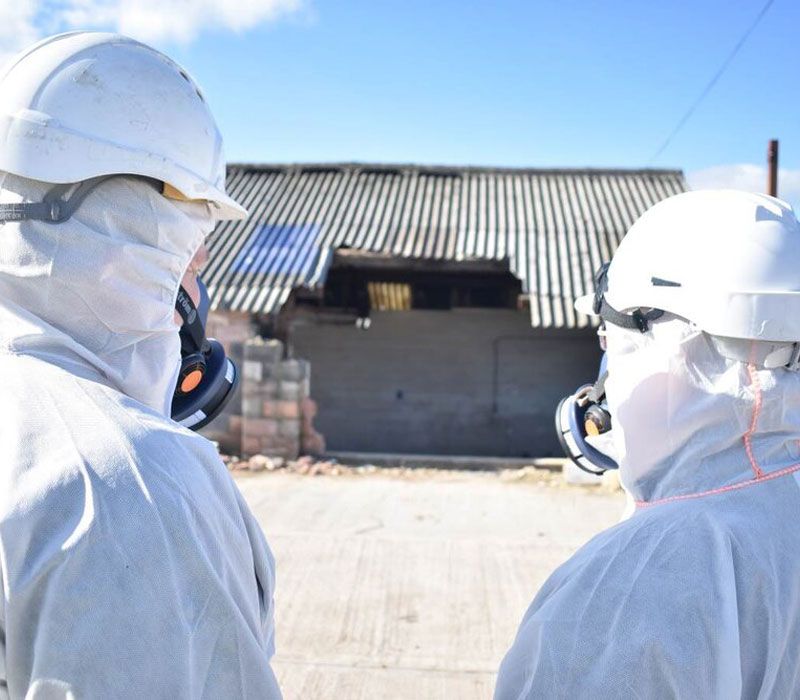
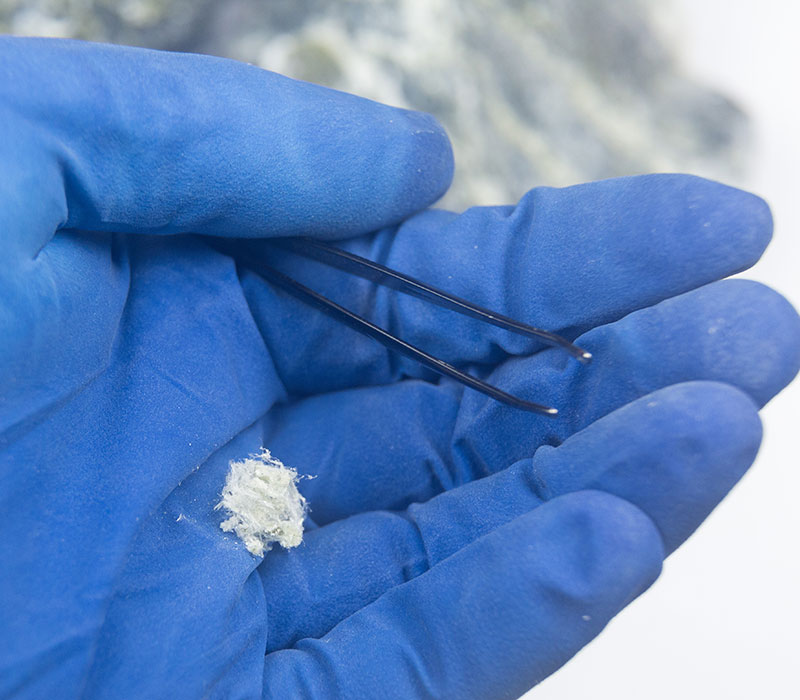
On the day, a surveyor goes through the property room by room, recording every material that could contain asbestos and judging its condition. Where something is suspect, a small sample is taken under controlled conditions and sent to a UKAS-accredited laboratory, because two ceilings that look identical can return very different results and nothing is confirmed by eye. Findings usually come back within a few working days.
What you get is a written report. It lists what was found, where it is, what condition it is in, and what should happen next, with the laboratory results behind it. You can hand that straight to a builder so they price the job knowing what is there, to a solicitor so it sits in the file before exchange, or to a buyer or managing agent who needs the facts in black and white. It is the difference between guessing and knowing.
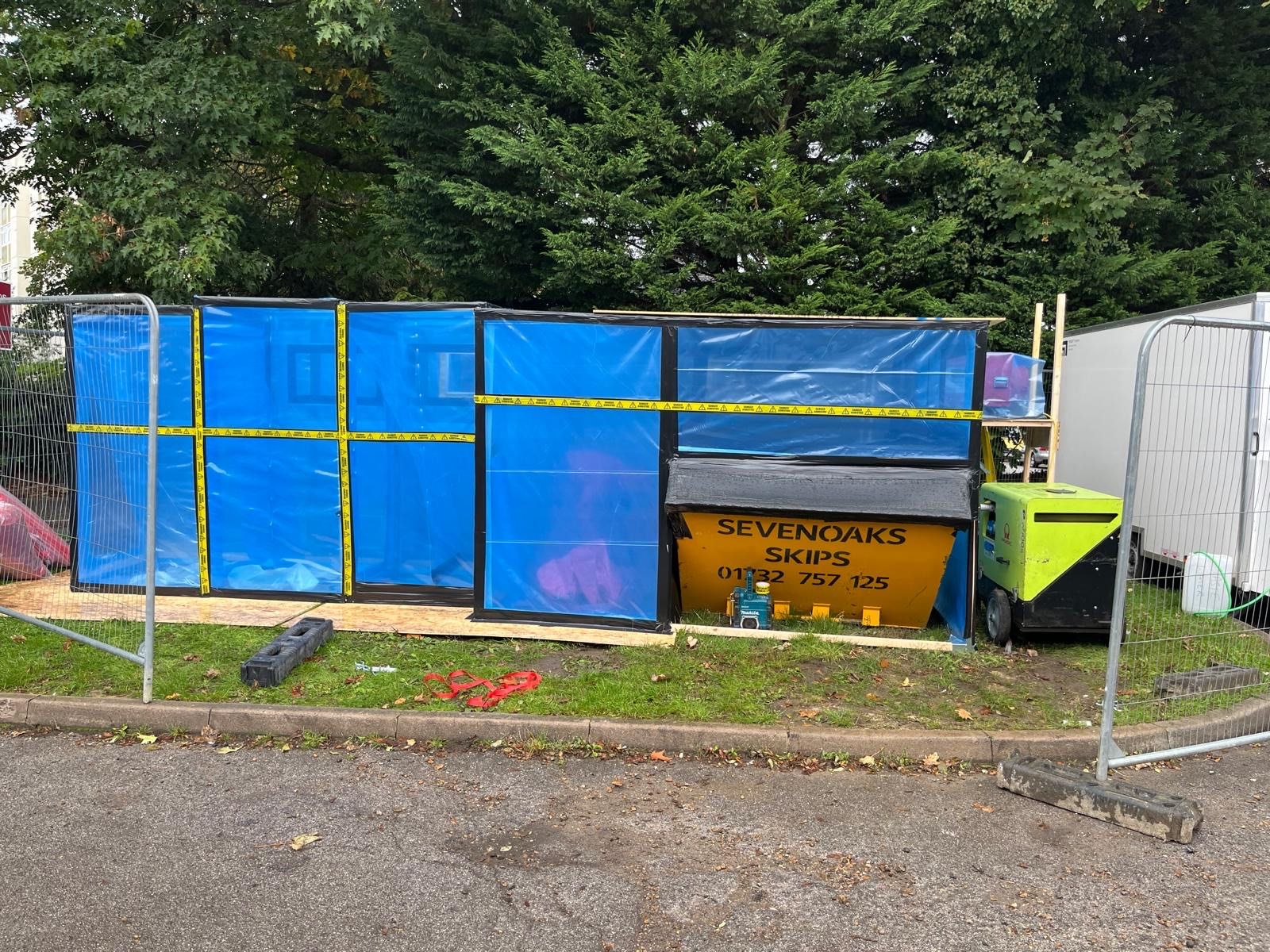
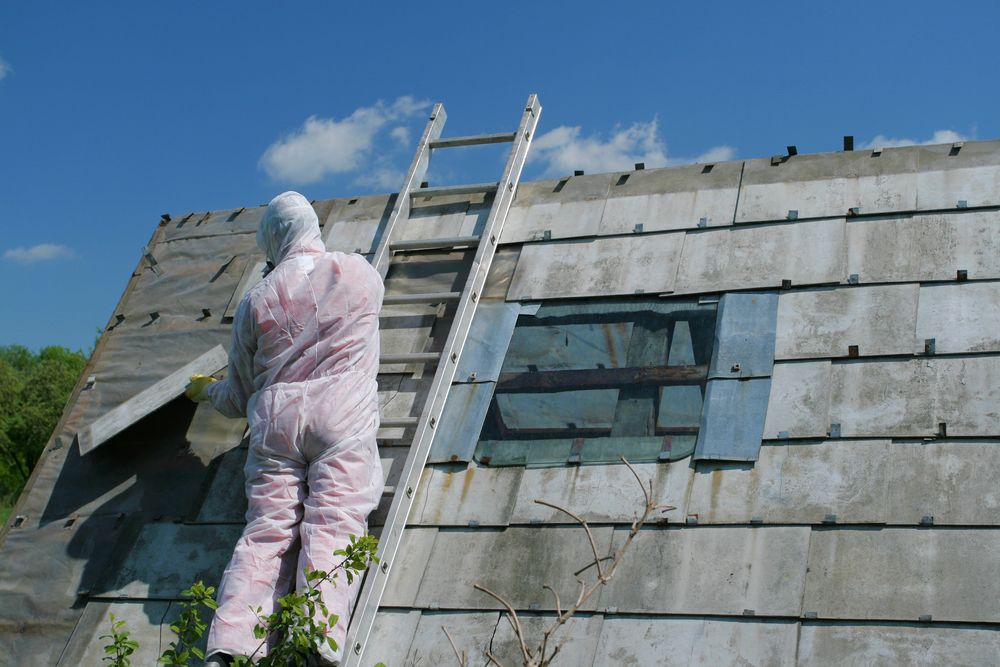
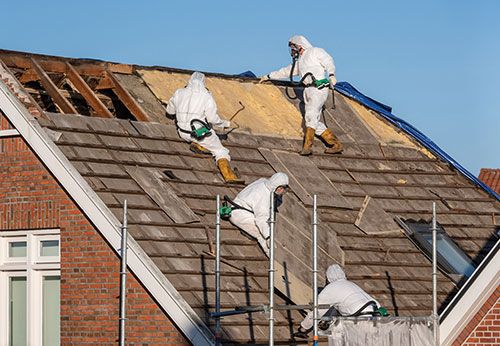
A survey is not the same as sampling a single item. Sampling tests one suspect material; a survey inspects the whole property and maps everything. If removal is needed once the report is in, we can carry it out, and for higher-risk licensed work that means the 14 days of notice the HSE requires, full enclosure with air monitoring, and four-stage clearance testing by an independent analyst before a room is signed off. We hold Spectra licence number 142305706, we have worked across Wandsworth and the wider south-west London and Surrey area for more than seven years, and to book a survey you can call us on 0800 024 6168.
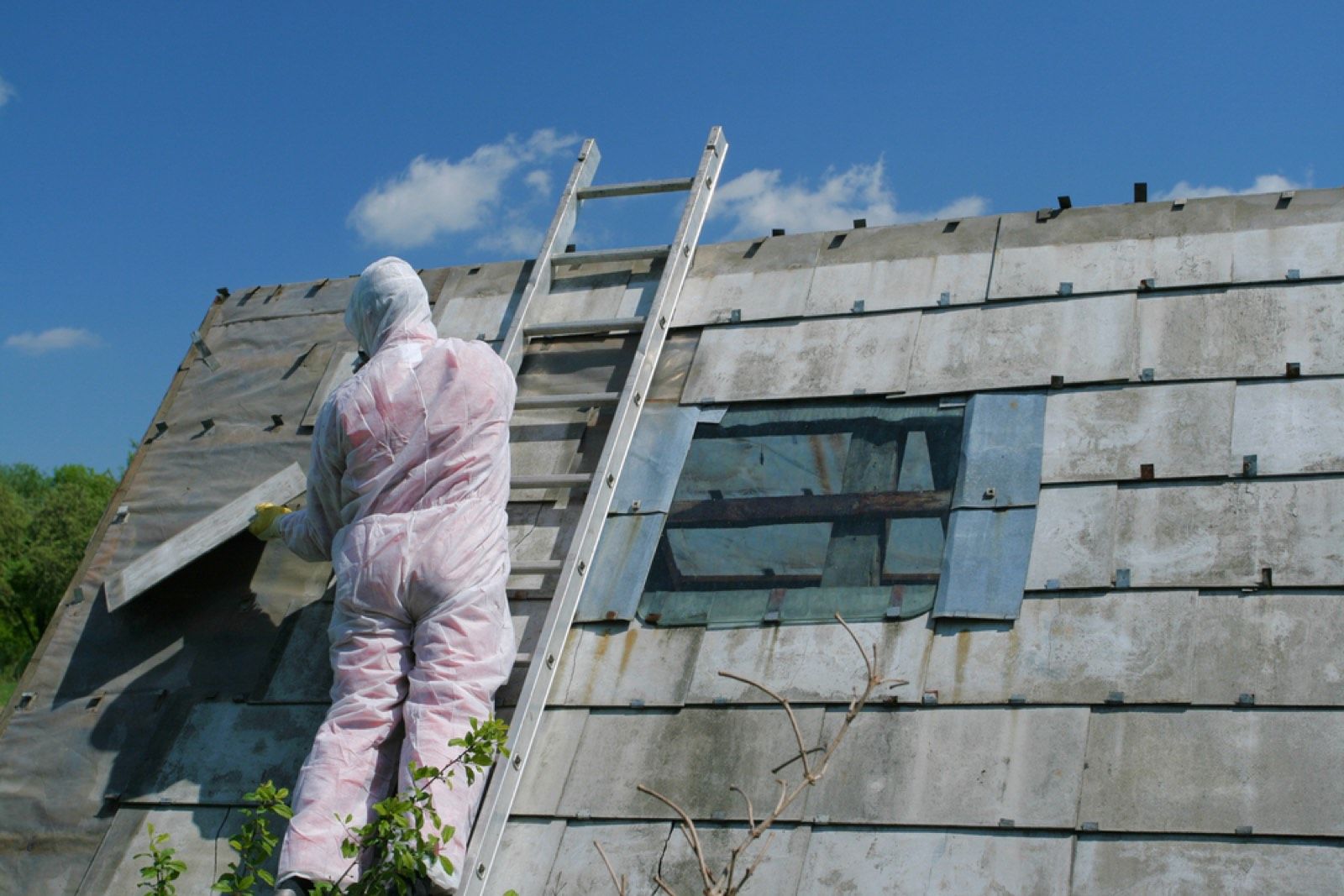
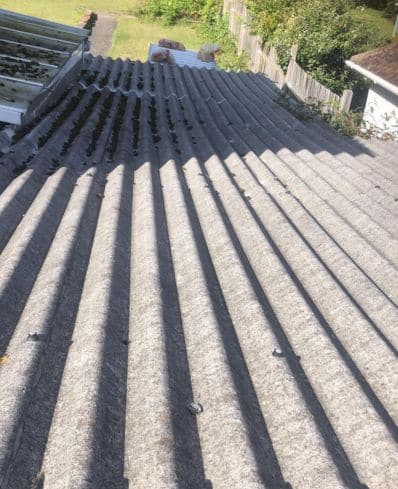
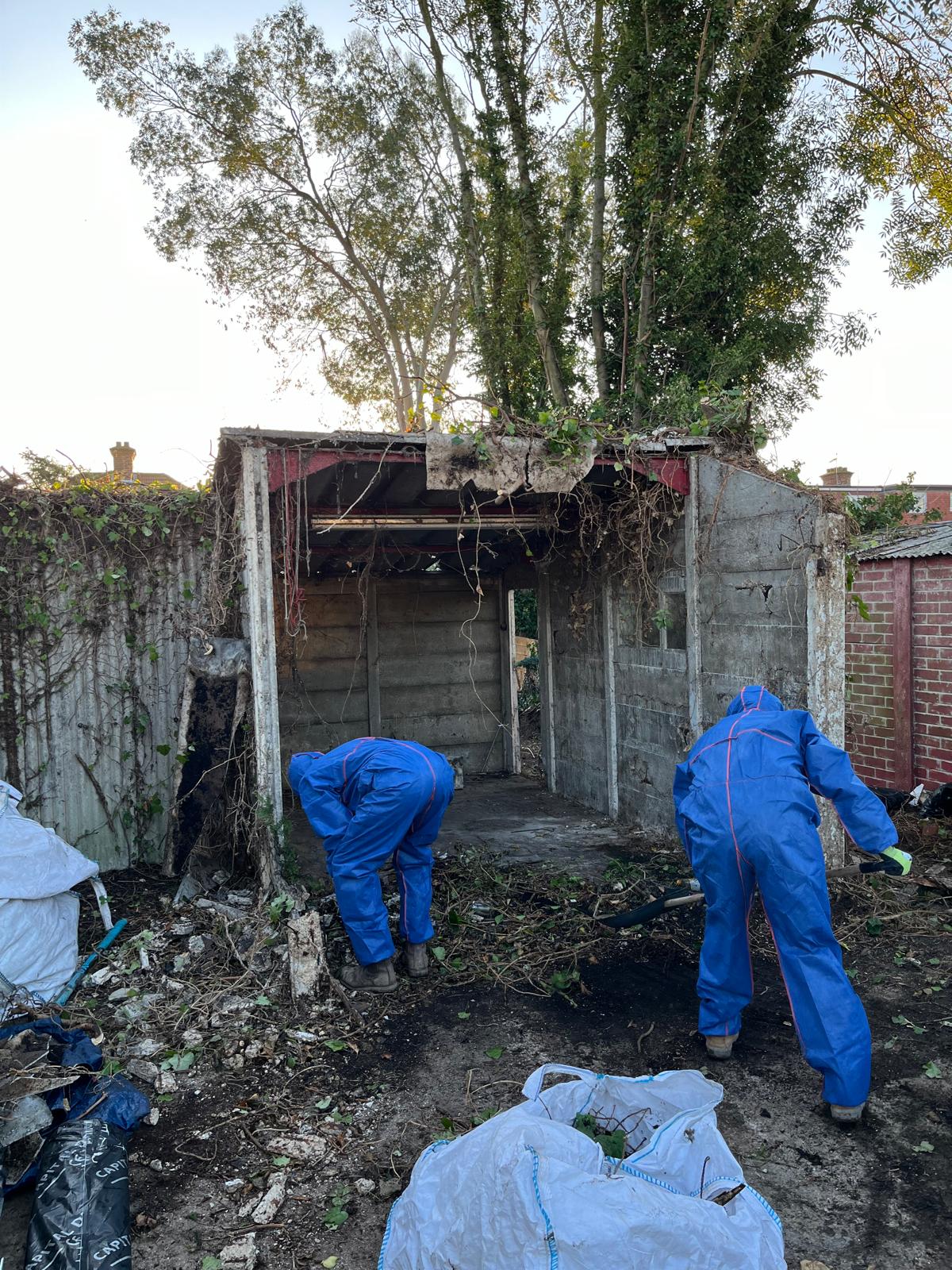
Asbestos Roof Removal & Garage Waste Clearance, Molesey
Molesey, Surrey · Roof Removal & Clearance
View this project"I used Clearaway Asbestos recently for an asbestos garage removal in my home. The staff were really friendly and professional and put me at ease the whole time they were working. I would recommend Clearaway Asbestos to anyone who needs asbestos removal services!"
Our Removal Process
From first call to final certificate, every job follows the same clear four-step process.
Survey
We inspect the property and confirm the material. Sampling available if required.
Quote
Fixed written price covering removal, disposal and any replacement work.
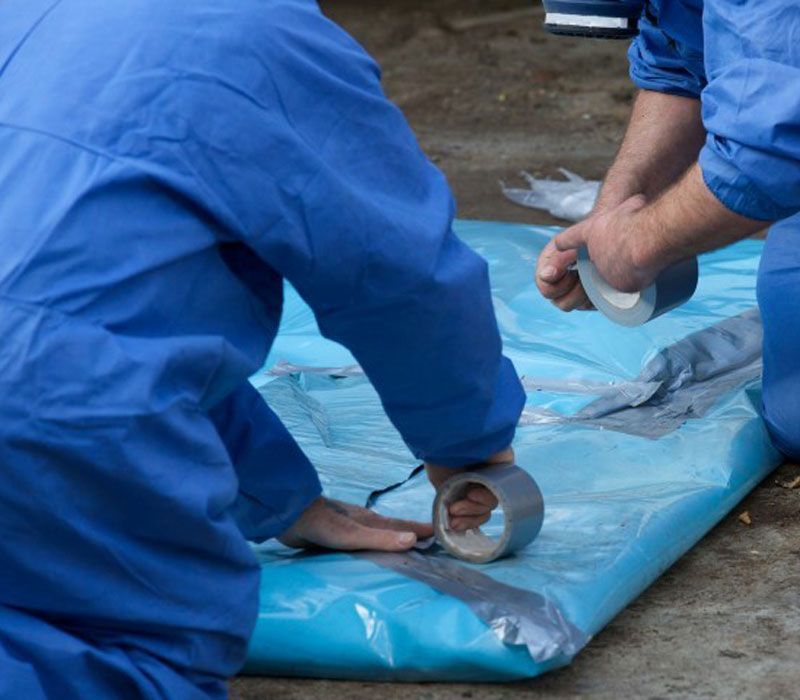
Removal
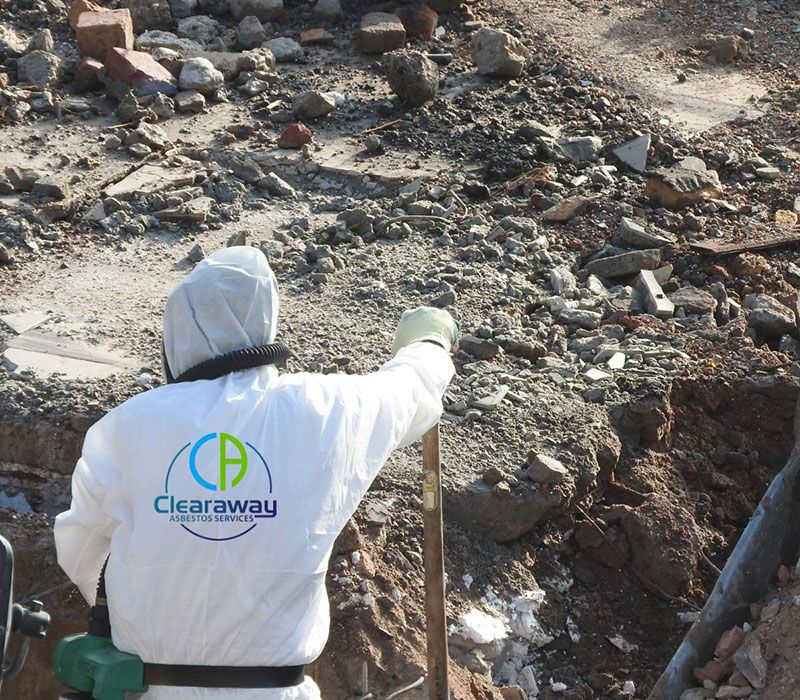
Material is removed safely, double-wrapped and taken to a licensed disposal facility.
Certificate
You receive a waste consignment note and disposal certificate confirming legal handling.
Frequently Asked Questions
Why Choose Clearaway
Landlord Compliant
Survey reports and waste consignment notes that satisfy managing agents, lenders and a tenant's right to a safe home.
UKAS Accredited Testing
Every suspect material sampled and confirmed by a UKAS-accredited laboratory before any removal begins.
Fully Licensed
Licensed asbestos removal contractor (Licence No. 142305706). Full public liability insurance on every job.
Our Own Team
We never subcontract. The people who quote your job are the people who do it.
Get in Touch
Send a few details about your project and we will come back the same working day with a fixed price. We cover Surrey, London and the South East, including Esher, Cobham, Kingston, Richmond, Epsom, Guildford, Woking and Croydon.