
Asbestos Surveys in Staines
A survey finds and assesses asbestos in your Staines property, it does not remove anything. For the older terraces near Church Street and the converted homes across TW18, knowing what is there comes first.
Why a Staines home is worth surveying
A survey is the step people skip and then regret. It is not removal work. Nobody opens up a wall or lifts a tile to take material away. A surveyor walks the property, notes what looks like asbestos, takes small samples where needed and writes it all down. You end up with a document that says what is in the building, where it sits and what condition it is in. That is the thing a builder, a solicitor or a buyer actually needs, and it is the difference between guessing and knowing.
Staines has a lot of housing that predates the 1999 ban. The Victorian and Edwardian terraces around the town centre and Church Street have been added to and altered for decades. The long runs of 1930s semis along Kingston Road and Laleham Road went up when asbestos was ordinary building material, used in everything from soffits to floor adhesive. Postwar estates fill out Stanwell and Ashford and the streets behind the bus station, and plenty of those have had a second or third life as flats and rentals.
Much of this stock has been converted, extended or split up over the years. Every one of those changes is a chance for asbestos to have been disturbed, boxed in or quietly left in place behind newer work. The trouble is that the people doing the altering rarely kept a record, so the material is still there but nobody can say where. A survey is how you find out what you are dealing with before anyone picks up a tool, and it puts the answer in writing rather than in someone's memory.

Management survey or refurbishment survey
There are two surveys, and which one you need depends entirely on what you are about to do. A management survey is for a property that is staying lived in as it is. It is the lighter touch. The surveyor checks the materials you can reach and the ones in normal use, works out the risk each one carries and tells you what to keep an eye on. If a Staines landlord wants to know the building is safe for tenants and have a record to prove it, this is the one. It treats the asbestos as something to manage in place rather than something to go digging for.
A refurbishment and demolition survey is the thorough one, and it is needed before any building work starts. This is the survey for the family planning to knock through, convert the loft or strip a tired kitchen back to the brick. It is more intrusive because it has to be. The surveyor looks behind and underneath, into the cupboards, the ceiling voids and the places a builder will be cutting and breaking. The point is to find the asbestos before the work disturbs it, not after the dust is already in the air.
Get the wrong survey and you can end up paying twice. A management survey will not cover you for a refurbishment, because it never looked where the work is going, and a builder who finds an unexpected material has to down tools while a fresh survey is arranged. If building work is coming, say so at the start and the right survey gets booked from the off. On many of the older Staines properties, where the layout has already been changed once or twice, the refurbishment survey is the one that saves the most grief.
Buying, selling and renting in TW18 and TW19
A survey earns its keep most clearly around a sale or a tenancy. If you are buying one of the older Staines terraces or a converted flat near the river, a survey before you exchange tells you what is in the building and roughly what it will cost to deal with later. That is far better than finding pipe lagging or asbestos insulating board around an old boiler after you have the keys, when it is your problem and your bill. A standard homebuyer report will not go looking for asbestos, so this is a separate check worth making on a property of any age in TW18 or TW19.
For landlords the duty is plain. If you hold a tenanted property you are expected to know whether asbestos is present and to manage it. The interwar semis around Ashford and Stanwell often have cement soffits and gutters that nobody thinks about until they start to crack, and the colder older properties near the river can still have pipe lagging tucked away in cupboards and under stairs. A management survey gives you a written record that you have checked, which is exactly what an agent or a tenant may ask to see, and it tells you which materials can be left alone and which need watching.
Sellers benefit too. Having a survey ready means a buyer's questions get a straight answer instead of a delay. It is one less thing to hold up an exchange while solicitors go back and forth, and on an older Staines home it can stop a nervous buyer from walking away over something that turns out to be low risk.

Samples, the lab and the report you get
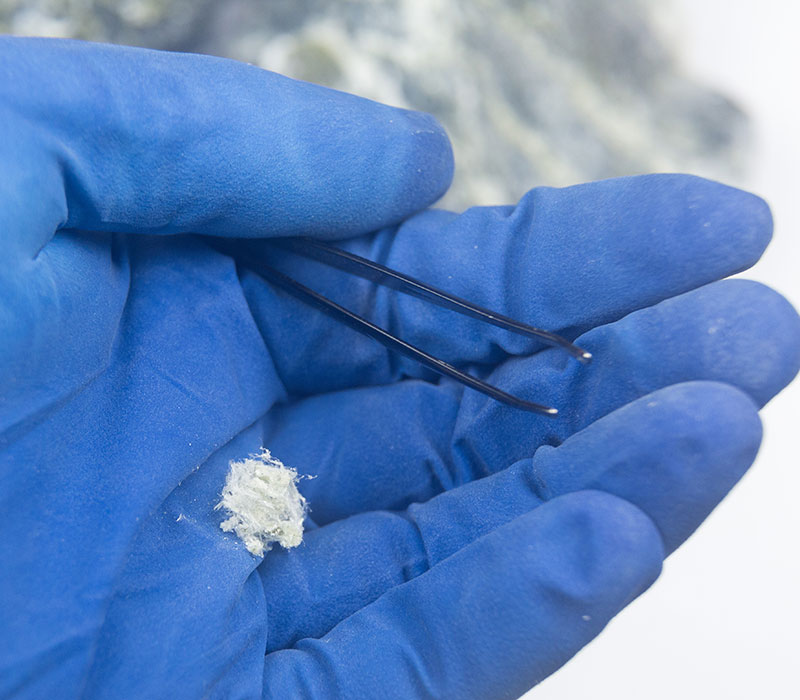
You cannot tell asbestos by looking at it. Textured artex on a Staines ceiling, a sheet of board in an airing cupboard, the adhesive under an old floor tile, none of it announces itself, and two materials that look identical can test completely differently. So where a material is in doubt the surveyor takes a small sample under controlled conditions and sends it to a UKAS-accredited laboratory. The lab confirms whether asbestos is present and which type, and the results come back in a few working days. That accreditation matters, because it means the result will stand up if a solicitor or a buyer asks how it was reached.
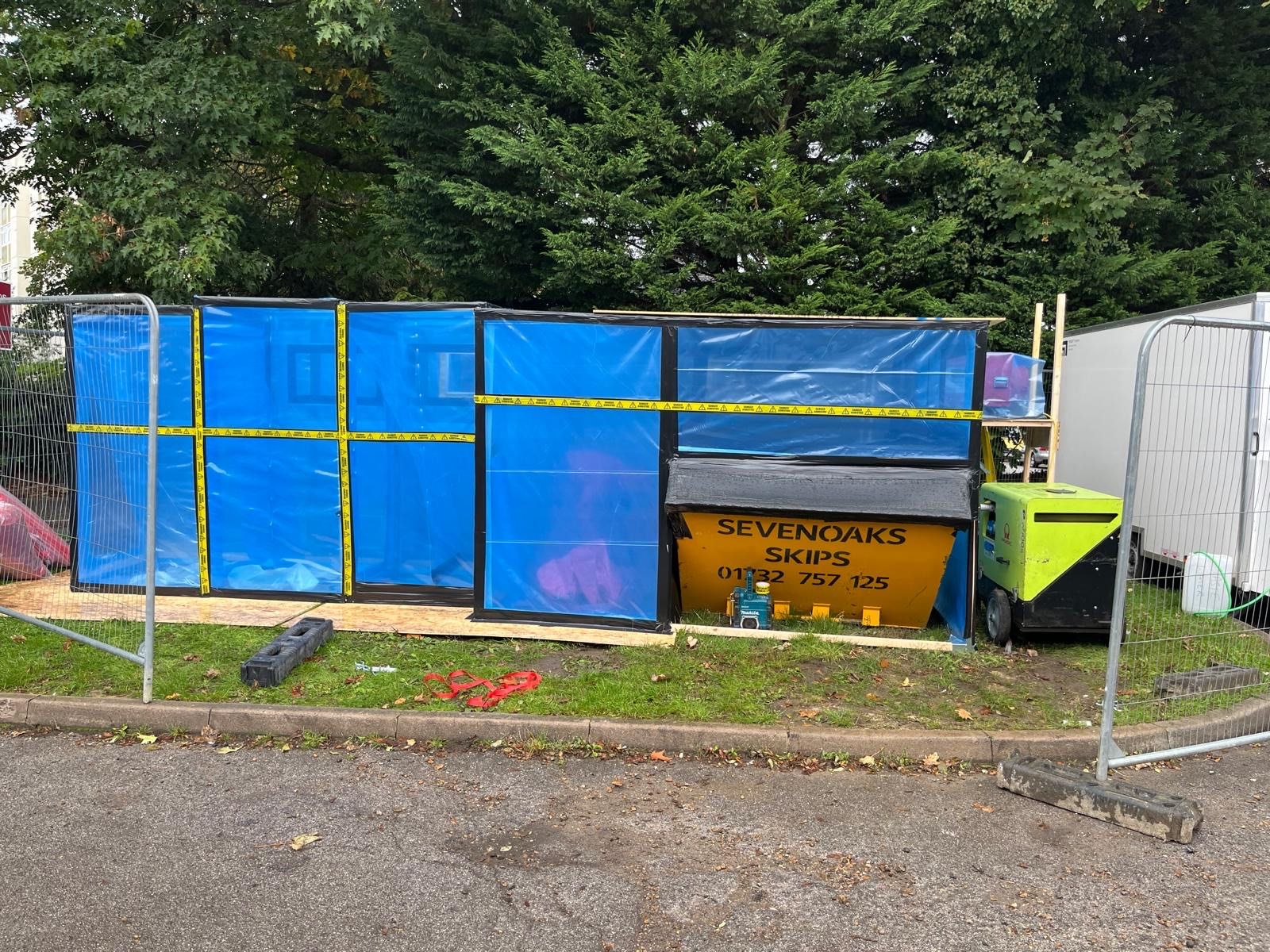
What lands on your desk afterwards is the real product. A clear report listing each suspect material, where it is, what condition it is in and the risk it carries, with the lab results attached. It is written to be handed straight to a builder so they work safely, to a solicitor for a sale, or to a buyer who wants to know what they are taking on. If the report does flag higher-risk licensed material such as asbestos insulating board, you will know before any removal is even discussed, and that work would carry its own controls, the 14 days of notice to the HSE, full enclosure and four-stage clearance testing by an independent analyst. A management survey on a settled home rarely turns up anything that dramatic, but the report tells you either way.
Clearaway is based in Chessington, a short run from Staines, and the owner Graham handles local jobs himself, so the person who surveys your property is the person you spoke to. The work is carried out under Spectra licence number 142305706, and we have spent more than seven years surveying and clearing properties across this part of Surrey. If you want a survey on a Staines home before you buy, let, or start building work, call 0800 024 6168.
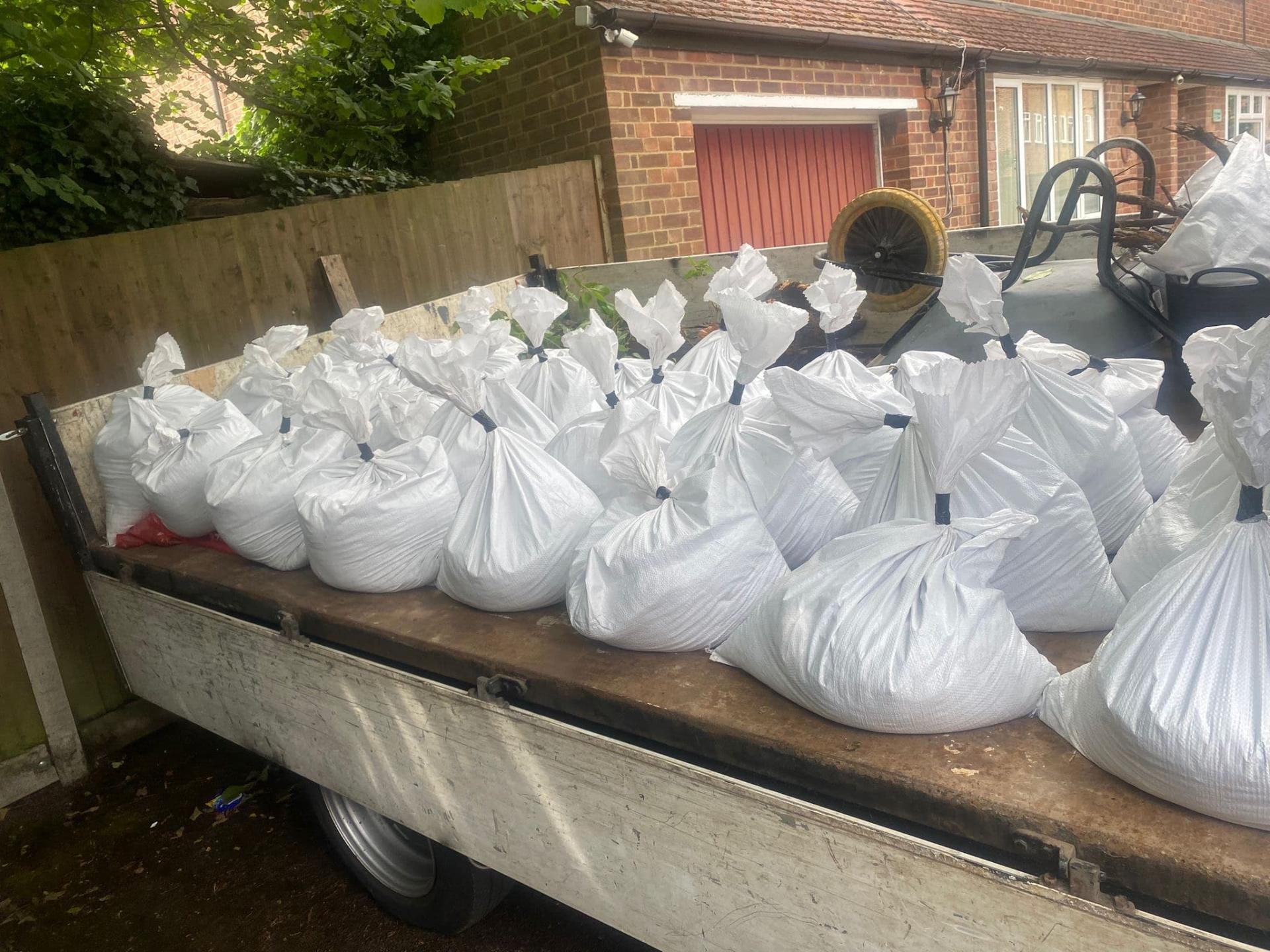
Asbestos Soil Fragments Clearance, Chessington
Chessington, Surrey · Soil Clearance
View this project"Graham and his staff done a great job of removing my concrete and asbestos garage thank you"
Frequently Asked Questions
Our Removal Process
From first call to final certificate, every job follows the same clear four-step process.
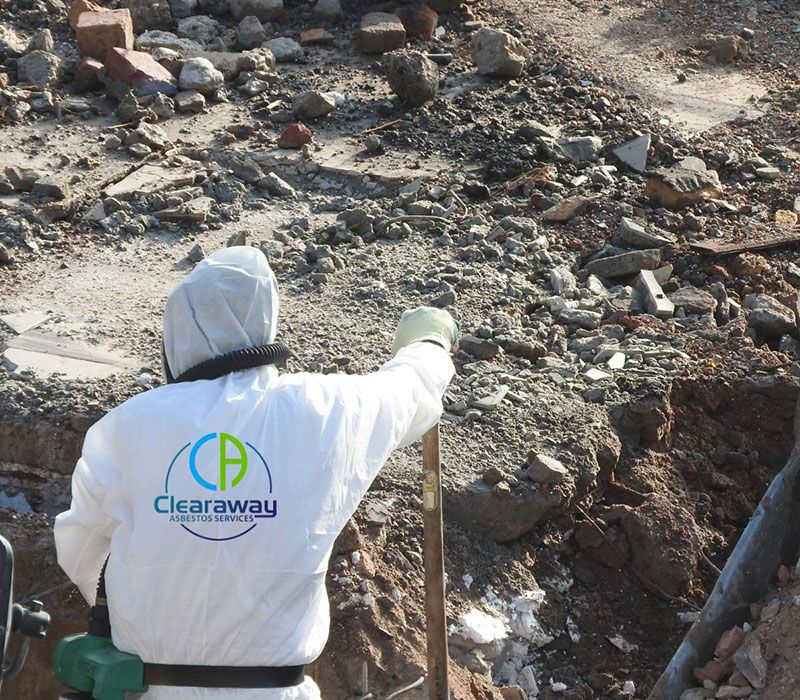
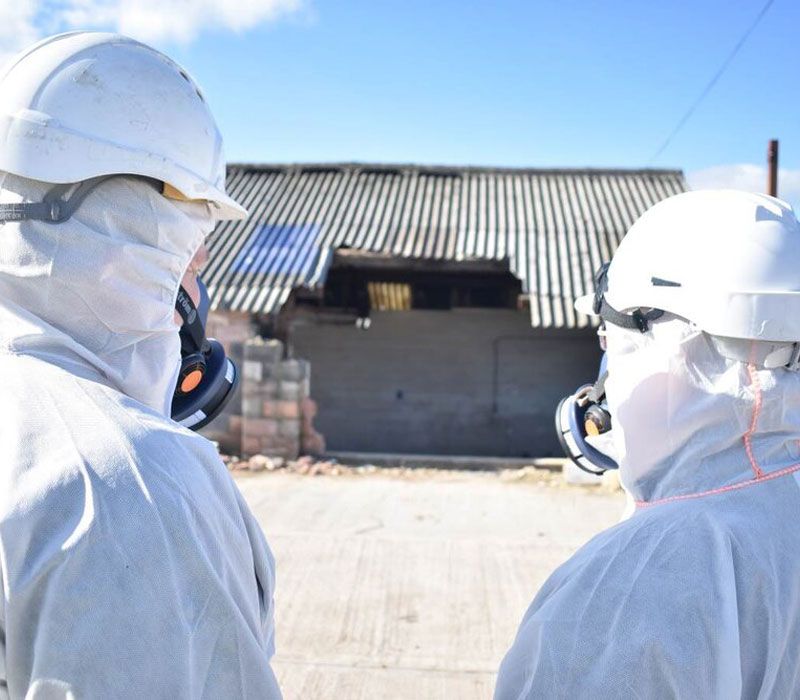
Survey
We inspect the property and confirm the material. Sampling available if required.
Quote
Fixed written price covering removal, disposal and any replacement work.
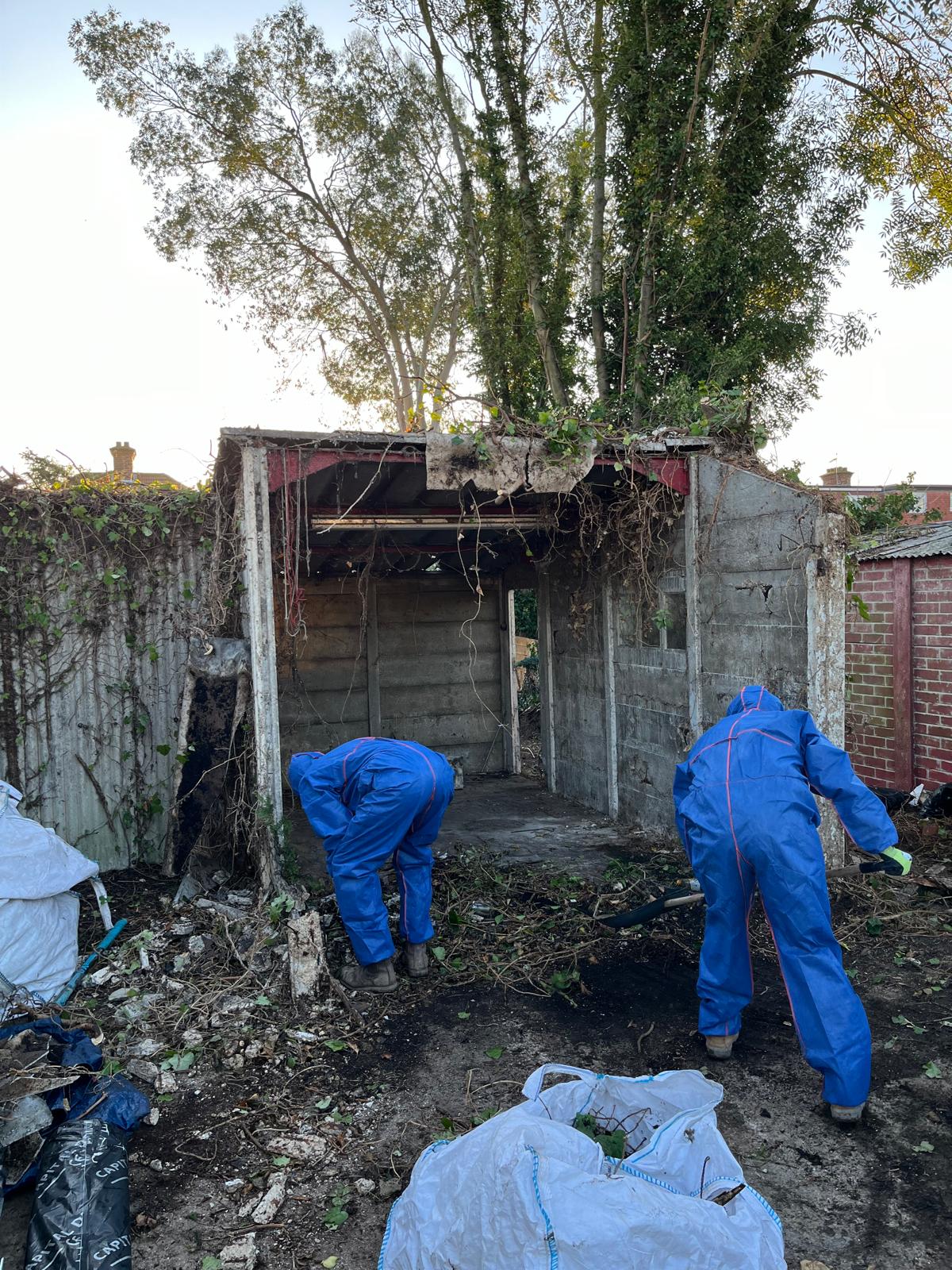
Removal
Material is removed safely, double-wrapped and taken to a licensed disposal facility.
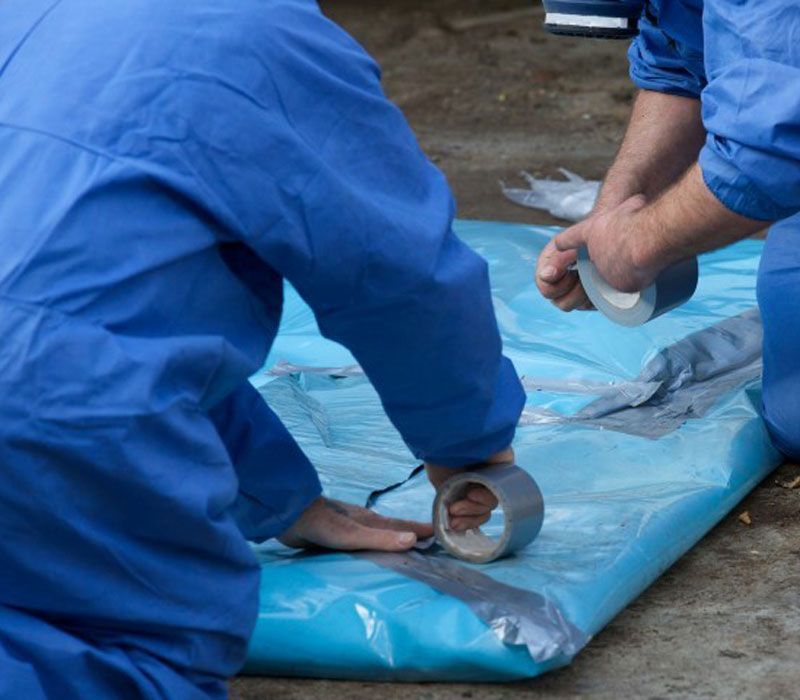
Certificate
You receive a waste consignment note and disposal certificate confirming legal handling.
Why Choose Clearaway
Specialist Crew
Asbestos work is all we do, every day, across the South East.
Fully Licensed
Licensed asbestos removal contractor (Licence No. 142305706). Full public liability insurance on every job.
Local & Fast
Surrey-based. Most domestic jobs are booked in and finished within a week.
Our Own Team
We never subcontract. The people who quote your job are the people who do it.
Get in Touch
Send a few details about your project and we will come back the same working day with a fixed price. We cover Surrey, London and the South East, including Esher, Cobham, Kingston, Richmond, Epsom, Guildford, Woking and Croydon.