
Asbestos Surveys in Hove
Hove runs on converted flats and maisonettes, much of it Regency and Victorian seafront stock carved up decades ago. Before a sale or building work, a survey finds the asbestos and writes it down. We come down from Chessington for that.
Why a Hove conversion needs a survey
Walk the front at Brunswick Town, around Adelaide Crescent or Palmeira, and you are looking at grand stucco houses and terraces built long before anyone worried about asbestos. A great deal of it was split into flats and maisonettes years back, and every split meant new partitions, new ceilings, boxed-in pipework and patched-up boilers. The fabric on show is Regency. The work hidden behind it is anything but, and a survey is how you find out what is actually in the building before you act on it.
That hidden history is the reason a survey matters here more than the age of the address suggests. Asbestos went into UK homes right up until the ban in 1999, and the conversion work in these flats falls squarely inside that window. People assume a listed Victorian terrace is too old to hold asbestos, when the truth is the opposite: it is the 1960s, 70s and 80s alterations layered on top of the period shell that carry the risk. A survey does not remove anything and it does not strip anything out. It finds what is present, judges the condition it is in, and records it so the next decision sits on facts rather than guesswork.
There are two kinds, and the right one depends entirely on what happens next. A management survey is for a flat or maisonette that is staying lived in, the standard check on what is there and whether it is safe left where it sits. A refurbishment and demolition survey is the heavier one, used before building work, because it goes looking behind the surfaces a builder is about to open up. Get the wrong one and you either pay for intrusion you did not need, or you start knocking through walls with no idea what is inside them. On a Hove conversion, where the alterations are decades old and stacked on each other, that distinction does real work.

What the survey looks for indoors
In the period flats and conversions the asbestos sits inside, not on the roof. Textured artex on ceilings and walls is the common find, frequently buried under a later coat of skim or paint so it reads as a plain modern surface. Asbestos insulating board turns up around boilers, in airing cupboards and as ceiling boards in the older bays. Then there are the vinyl and thermoplastic floor tiles, with black bitumen adhesive bedded in underneath, and pipe lagging on the heating runs and down in the basements that many of these tall seafront houses still have.
You cannot tell any of it apart by eye, and that is the whole problem a survey solves. Artex can be a lower-risk material while a board two feet away is licensed asbestos, and the two look near enough identical once they are painted over. So the surveyor takes small samples under controlled conditions, enough to cover every suspect material properly rather than spot-checking and hoping. A management survey on a single Hove flat tends to mean somewhere around five to ten samples, and a larger maisonette with several heating runs and a basement will run higher than that.
Every sample goes to a UKAS-accredited laboratory. The lab confirms whether asbestos is present and identifies the type, and the results come back within a few working days. That accredited result is what separates a survey from a guess. Nothing in the flat gets labelled asbestos on a hunch, and nothing perfectly safe gets torn out on one either, which keeps the cost and the disruption tied to what is genuinely there. For a conversion where one ceiling might be harmless artex and the next a licensed board, that precision is the point.
The report, and who actually reads it
The visit itself is short. A single flat is an hour or two on site, longer for a sprawling maisonette or a house split across several floors with multiple heating runs to trace. But the visit is not the deliverable. The written report that follows is, and that document is the reason you pay for a survey instead of guessing or relying on what a previous owner half-remembers.
It sets out every material checked, exactly where it is in the flat, what the laboratory found and what should happen to it. A builder reads it before lifting a single floor tile, so the job is costed and sequenced around what is really in the property rather than around nasty surprises mid-strip. A solicitor files it with the paperwork on a sale, where it becomes part of the record the transaction rests on. A buyer reads it before committing, which is exactly why a pre-purchase survey on a converted Hove flat is money well spent well before contracts go anywhere near exchange. A clean report or a known, recorded risk both beat walking in blind.
Landlords and managing agents lean on it harder than anyone. A management survey is the standing record that says the common parts and the let flats have been inspected, the findings logged, kept on file and acted on. For the mansion blocks along the front and the let conversions behind them, that file is not paperwork for its own sake. It is the line between running a building properly and finding out the hard way when work starts and disturbs something nobody knew was there. The report is the asset. The visit just produces it.

Honest about the distance, and what we carry
Clearaway is based in Chessington, up in KT9, so Hove is a long run down to the coast, much the same trip as Brighton next door. We are straight about that. This is not our local patch, and we make the run for the work where the credentials earn their keep: the larger residential and commercial surveys, and the bigger flat and house jobs where the documented paperwork is what truly matters. The owner, Graham, runs the jobs himself, so the person assessing the building is the person standing behind the report.
The Regency and conservation streets bring their own planning into it. Scaffold, access and listed-building care all factor into a survey on the seafront terraces, and that gets worked through before anyone arrives rather than discovered on the day. The two survey types cover most of what Hove needs: a management survey for the flats and lets that are staying as they are, and a refurbishment and demolition survey for the conversions about to be opened up. Where a survey turns up higher-risk material and licensed removal has to follow, the standard tightens right up. That means 14 days notice to the HSE, full enclosure of the work area, and four-stage clearance testing signed off by an independent analyst before the space is handed back. A survey is the calm first step that tells you whether any of that is even on the table, which on most jobs it is not.
We have worked across this stretch of the south coast for more than seven years, all under Spectra licence 142305706. If you have a flat, a maisonette or a let in Hove that needs surveying before a sale or building work, call 0800 024 6168.
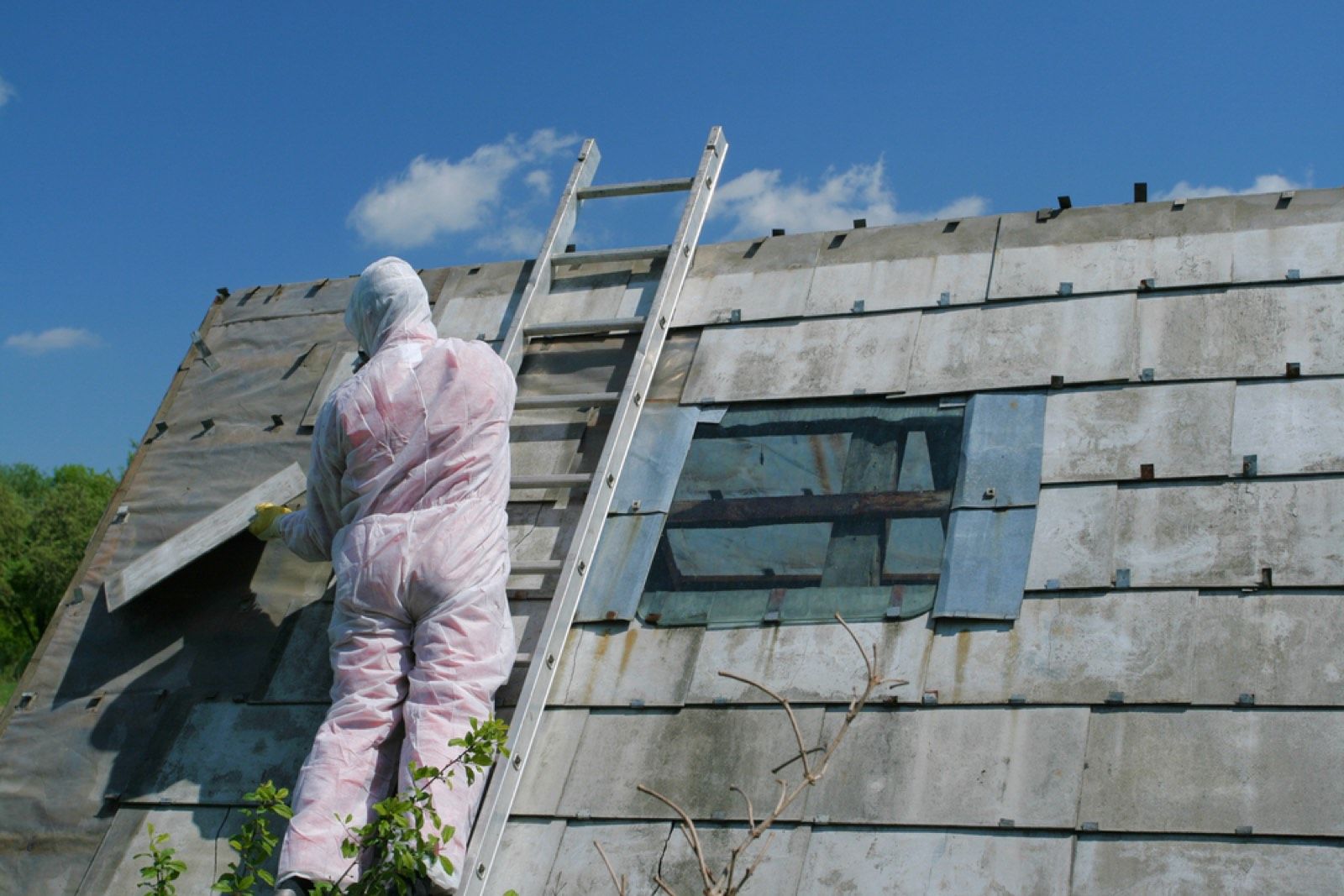
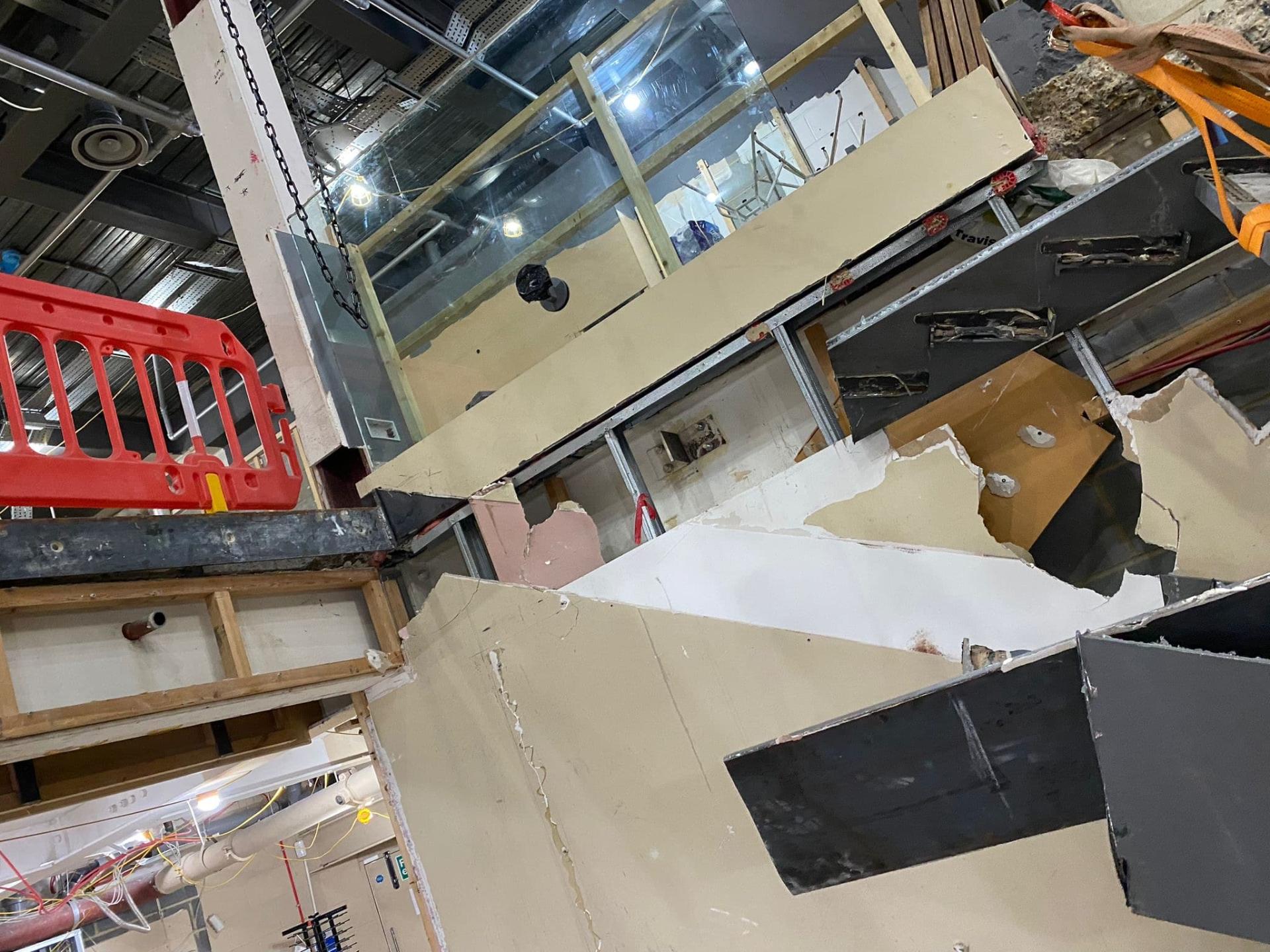
Commercial Building Strip-Out, Kensington
Kensington, South London · Strip-Out
View this project"Graham and his team done an excellent job of removing and replacing my asbestos garage roof and I wouldn't hesitate in recommending them"
Our Removal Process
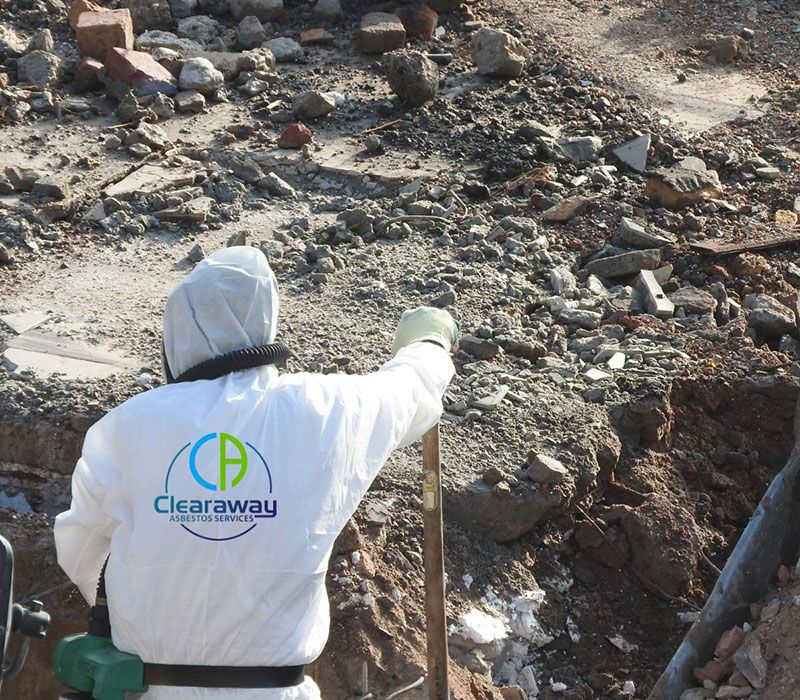
From first call to final certificate, every job follows the same clear four-step process.
Survey
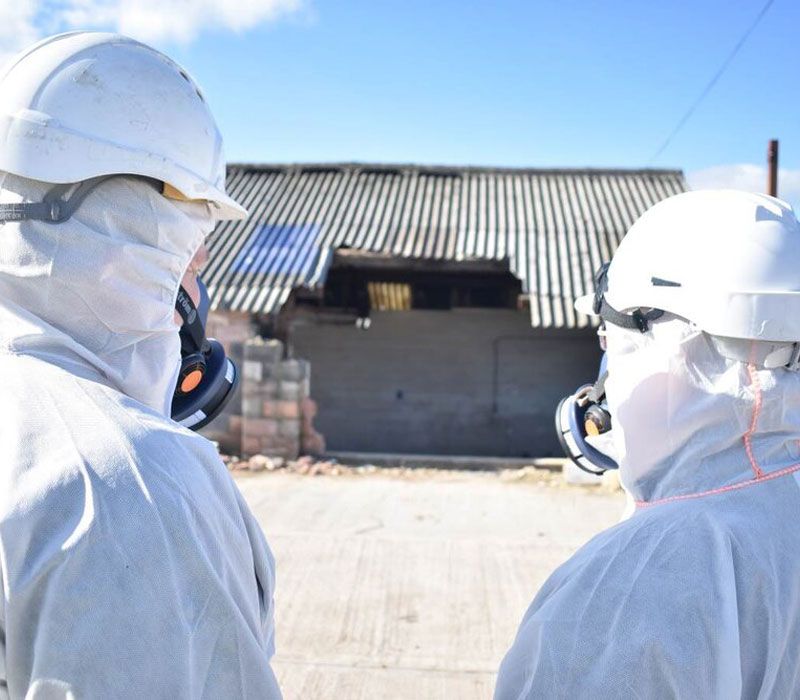
We inspect the property and confirm the material. Sampling available if required.
Quote
Fixed written price covering removal, disposal and any replacement work.
Removal
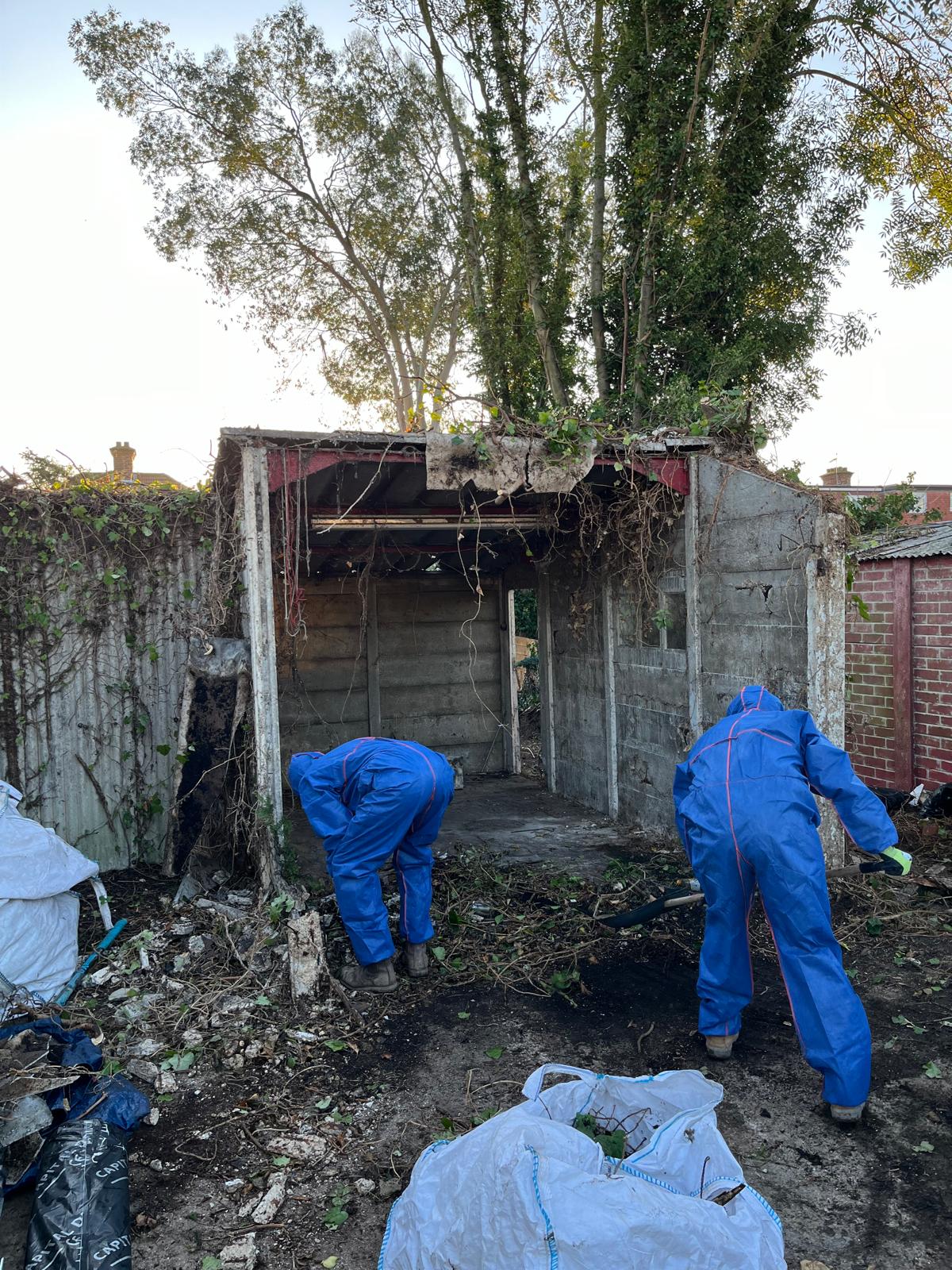
Material is removed safely, double-wrapped and taken to a licensed disposal facility.
Certificate
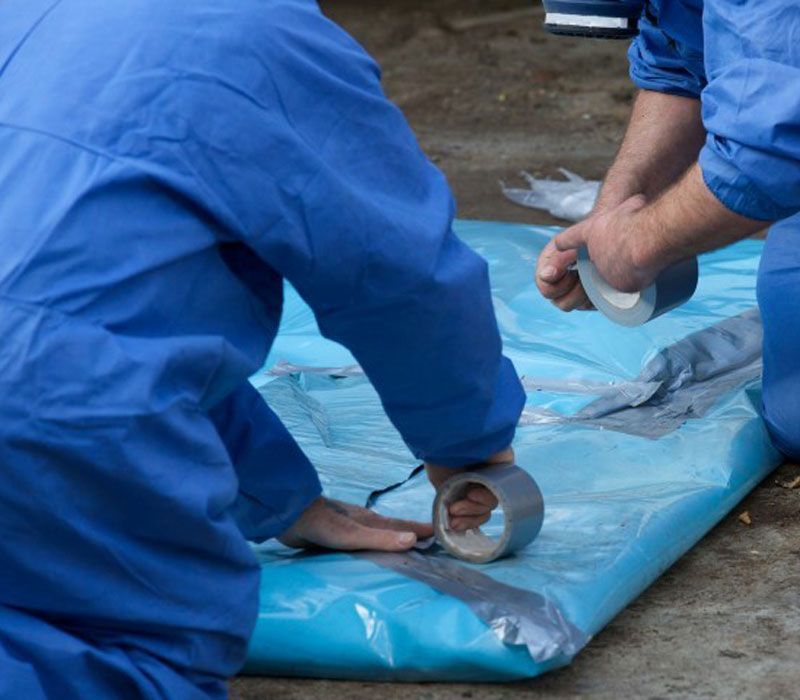
You receive a waste consignment note and disposal certificate confirming legal handling.
Frequently Asked Questions
Why Choose Clearaway
Specialist Crew
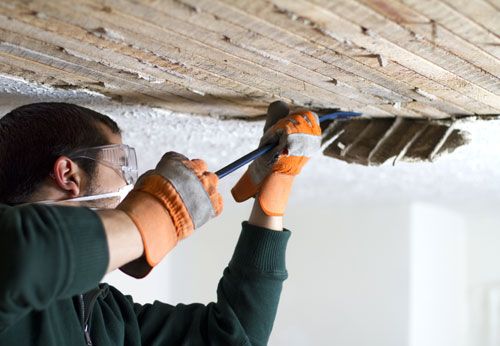
Asbestos work is all we do, every day, across the South East.

Fully Licensed
Licensed asbestos removal contractor (Licence No. 142305706). Full public liability insurance on every job.
Local & Fast
Surrey-based. Most domestic jobs are booked in and finished within a week.
Our Own Team
We never subcontract. The people who quote your job are the people who do it.
Get in Touch
Send a few details about your project and we will come back the same working day with a fixed price. We cover Surrey, London and the South East, including Esher, Cobham, Kingston, Richmond, Epsom, Guildford, Woking and Croydon.