
Asbestos Surveys in Camberley
Most homes around Camberley were built before the 1999 UK asbestos ban, so before any sale or building work it pays to know what is in the fabric. A survey finds and assesses it, room by room, without removing a thing.
Why Camberley homes get surveyed first
Camberley sits on the western edge of Surrey Heath, postcodes GU15 to GU17, and the town grew up around the military at Sandhurst and the Staff College. That history shows in the houses. There are Victorian and Edwardian villas near the centre, then a great deal of 1930s, postwar and later semis and detached homes spreading out across the heath towards Frimley, Yorktown, Old Dean and Bagshot. A survey starts from a simple fact. You cannot tell whether a material holds asbestos by looking at it.
A survey is not removal. It is the step before any of that. Someone walks the property, identifies the materials that look suspect, takes small samples where needed and sends them to a laboratory. What you get back is a written record of what is there, where it sits and what condition it is in. On a typical home that record runs to several pages, with a plan of the rooms and a photograph against each item.
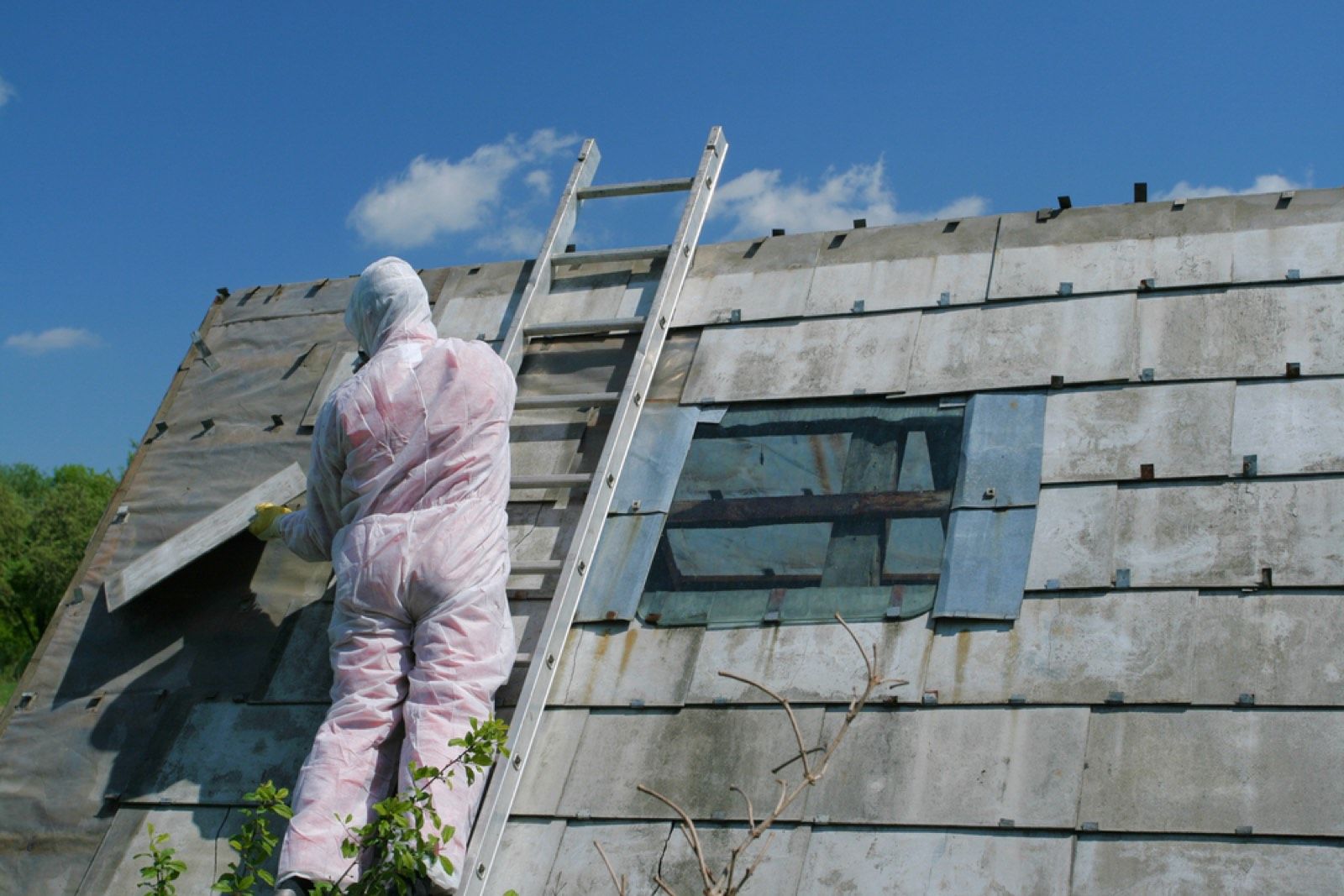
In Camberley the suspect materials are fairly predictable once you know the building stock. Corrugated cement on a garage or shed roof. Textured artex on ceilings and walls. Asbestos insulating board around a boiler or in an airing cupboard. Vinyl and thermoplastic floor tiles with black bitumen adhesive beneath them. Pipe lagging in the older villas, and cement soffits, gutters and fascia boards on the interwar and postwar housing. A survey checks all of it in one visit. It helps to remember why the older stock carries so much of this. Asbestos was a normal building material in the UK right up until the ban in 1999, so anything put up before then can hold it, and a good part of Camberley went up well before that date. The villas near the centre are the oldest of it, while the semis and detached houses out on the heath came later but still sit on the wrong side of the line. A survey is simply the honest way to find out what each individual house is hiding.

The two survey types explained
There are two kinds, and which one you need depends on what is about to happen to the house. A management survey is for a property that stays lived in. It locates the asbestos that is reachable without pulling the building apart, records its condition and tells you what to keep an eye on. This is the survey for a landlord meeting their duty to manage, or for an owner who simply wants to know what they are sitting on. It is the lighter of the two.
A refurbishment and demolition survey is the thorough one, and it is needed before any building work. Where the management survey leaves the structure alone, this one goes looking. The surveyor lifts, opens up and gets behind things, because a builder is about to disturb walls, ceilings and floors that nobody has touched in decades. If you are knocking through, re-roofing or taking a property back to brick, this is the survey the work cannot legally start without.
The distinction matters around here because so much Camberley housing is being extended or modernised. A 1930s semi getting a loft conversion, a postwar detached having its kitchen ripped out, a tired villa near the centre brought up to date. Each one disturbs materials that have sat quietly since the house was built. The wrong survey, or no survey, and a builder finds out the hard way once the dust is already in the air. There is a cost angle to getting the right one too. A refurbishment and demolition survey is more involved than a management survey, because it means opening up parts of the structure, so it asks for more access and a little more disruption on the day. That is the point of it. Paying for the lighter survey when work is planned tends to mean a second visit later, once a builder hits something nobody checked, so it is cheaper to match the survey to the job from the start than to halt a project halfway through.
Samples, the lab and the written report
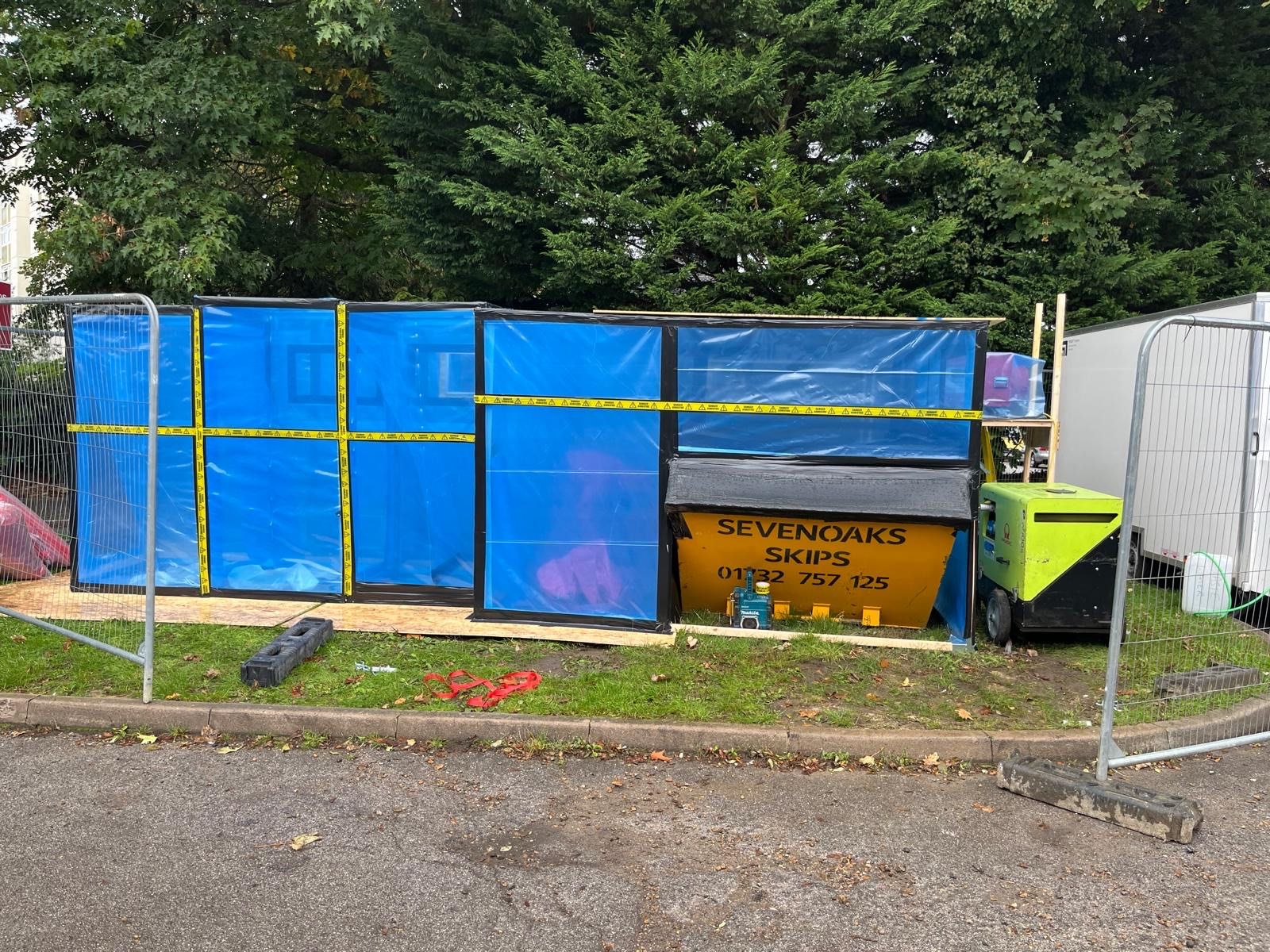
When the surveyor finds something suspect, a small piece is taken under controlled conditions and bagged for the laboratory. On an average three or four bedroom home in Camberley that might mean somewhere around eight to twelve samples, depending on how many different materials turn up. A house full of original artex and an old garage roof will need more than a modernised flat that has already been stripped once.
The samples go to a UKAS-accredited laboratory, which is the independent standard that makes a result mean something to a solicitor, a surveyor or a lender. Results generally come back within a few working days, each one stating whether asbestos is present and, if so, which type. The survey visit itself is not a long disruption. For most homes the inspection takes a few hours, and the household carries on around it.
What you are paying for is the report. It pulls the lab results together into one document that says, in plain terms, what is in the property, where, and the risk each item presents. That is the thing you hand to a builder before they quote, to a solicitor during a sale, or to a buyer who has asked the question. If removal is needed afterwards, the report is also what a removal team works from, so nobody is guessing once the survey is done.

Surveys across Camberley and the wider area
Clearaway is based in Chessington, so for Camberley the team travels out to the western side of the county. That covers the everyday domestic survey, a single semi before a sale, right through to the larger residential and commercial buildings on the edge of town. The owner, Graham, runs the jobs, and the same approach holds whether it is one garage roof or a whole commercial unit.
A survey is also the sensible first move before a purchase. Asbestos sits in so much of the older Camberley stock that a buyer is wise to know what they are taking on before they exchange, rather than discovering it during the first refit. The same goes for landlords across GU15 to GU17, where the duty to manage asbestos in the common parts and the let property is a legal one, not a suggestion. A survey is the document that proves it has been looked at properly.
Where a survey does flag higher-risk material such as asbestos insulating board, the removal that follows is licensed work, with 14 days notice to the HSE, full enclosure and four-stage clearance testing signed off by an independent analyst before the space is used again. The survey is what tells you whether you are in that territory at all. Clearaway holds Spectra licence 142305706 and has worked across this part of Surrey for more than seven years, so the report you get reflects what the law actually requires. To book a survey in Camberley, call 0800 024 6168.
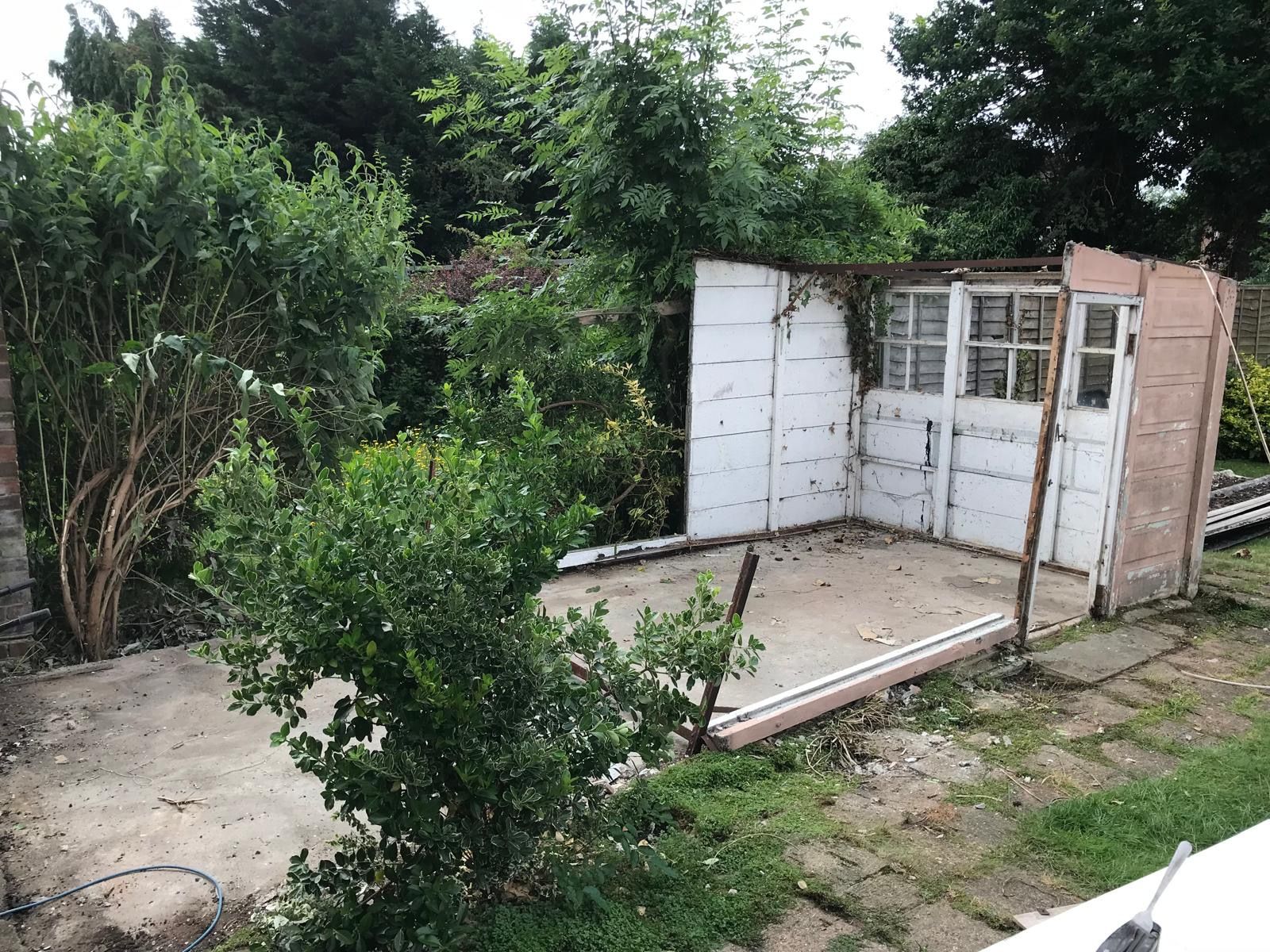
Concrete Asbestos Garage Removal, Cobham
Cobham, Surrey · Garage Removal
View this project"Clearaway Asbestos did a brilliant job coming out to survey our old garage roof for asbestos. They were professional and we were impressed with the job they did replacing the garage roof"
Frequently Asked Questions
Our Removal Process
From first call to final certificate, every job follows the same clear four-step process.
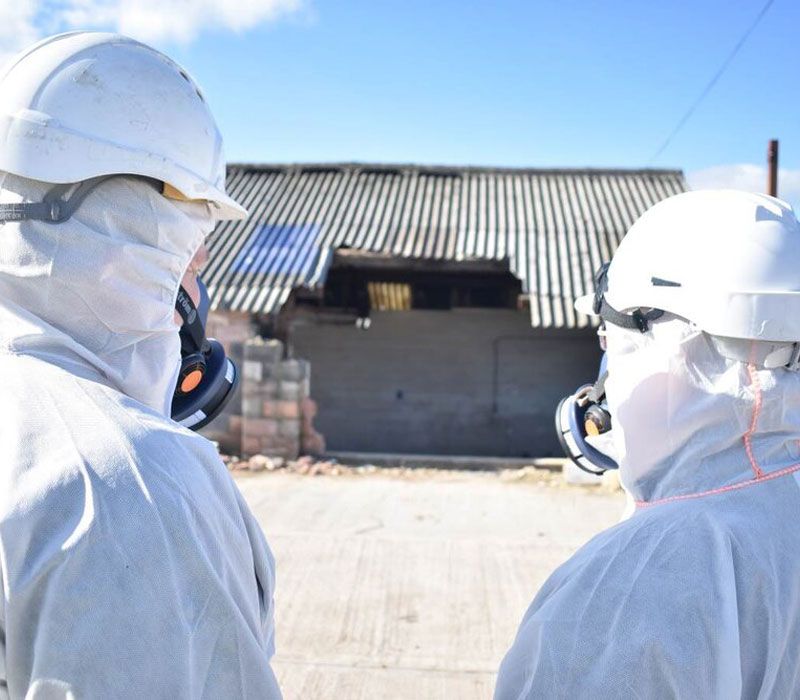
Survey
We inspect the property and confirm the material. Sampling available if required.
Quote
Fixed written price covering removal, disposal and any replacement work.
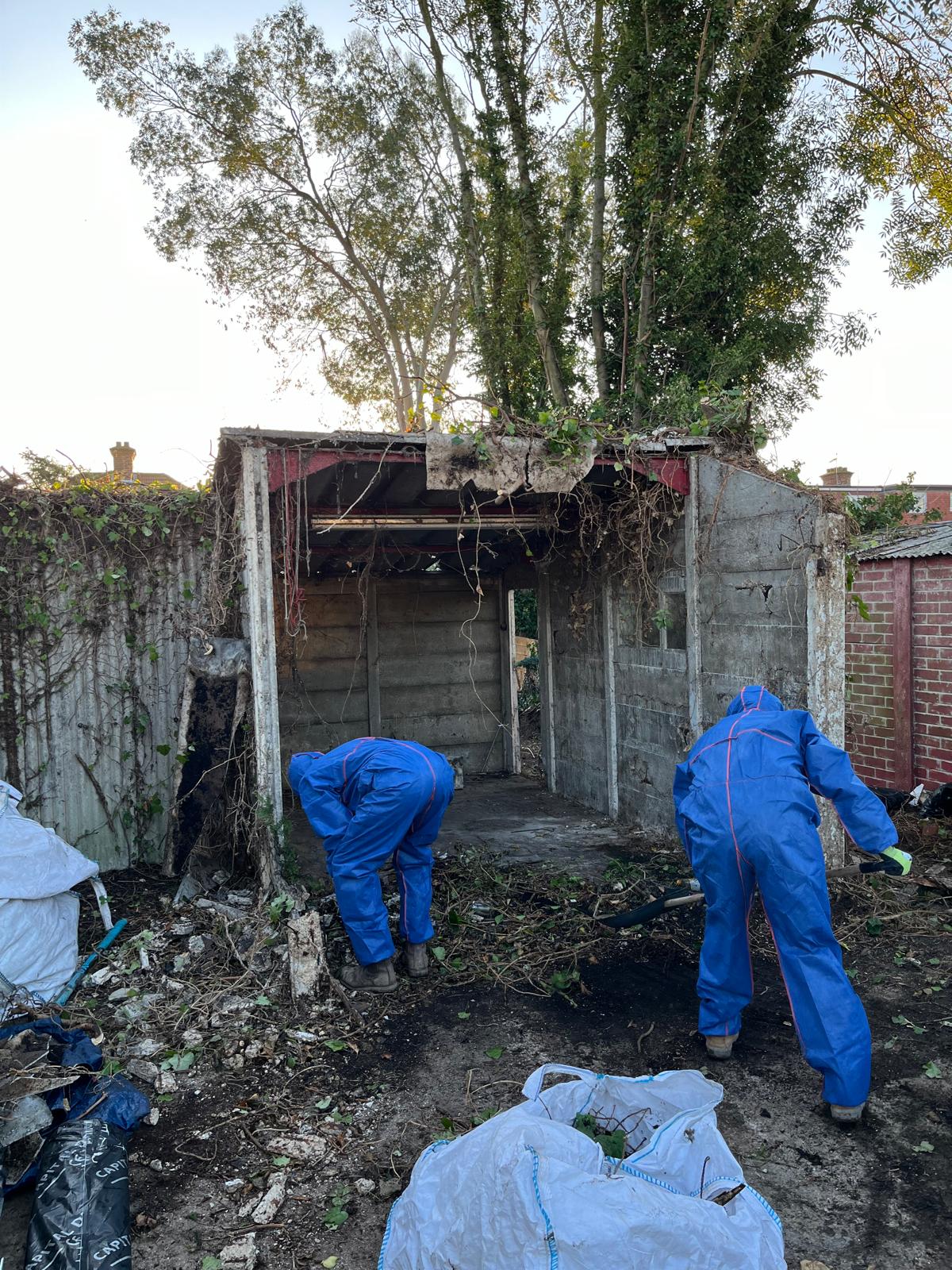
Removal
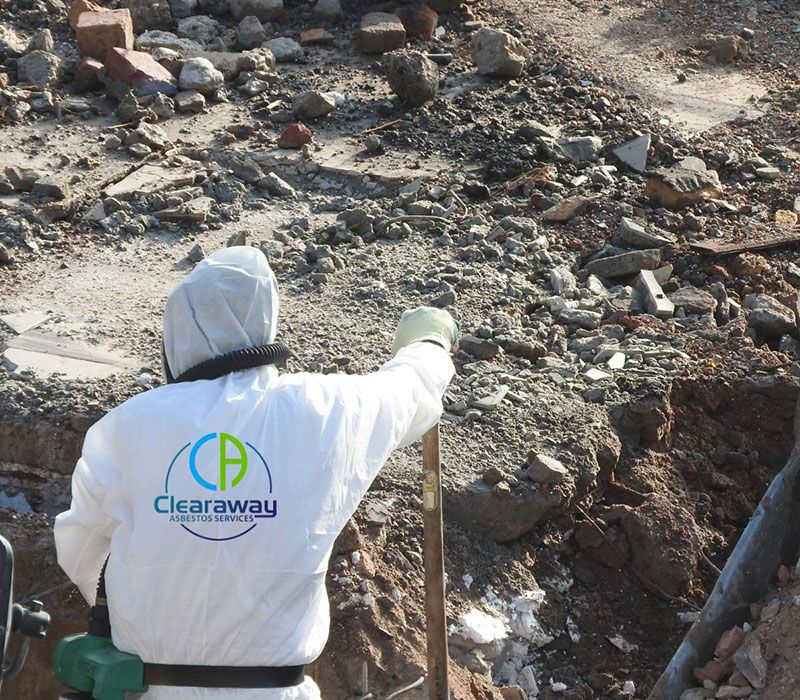
Material is removed safely, double-wrapped and taken to a licensed disposal facility.

Certificate
You receive a waste consignment note and disposal certificate confirming legal handling.
Why Choose Clearaway
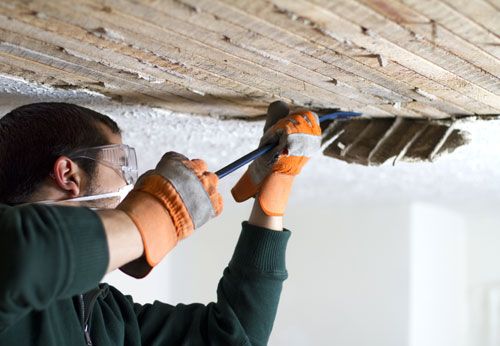
Specialist Crew
Asbestos work is all we do, every day, across the South East.

Fully Licensed
Licensed asbestos removal contractor (Licence No. 142305706). Full public liability insurance on every job.
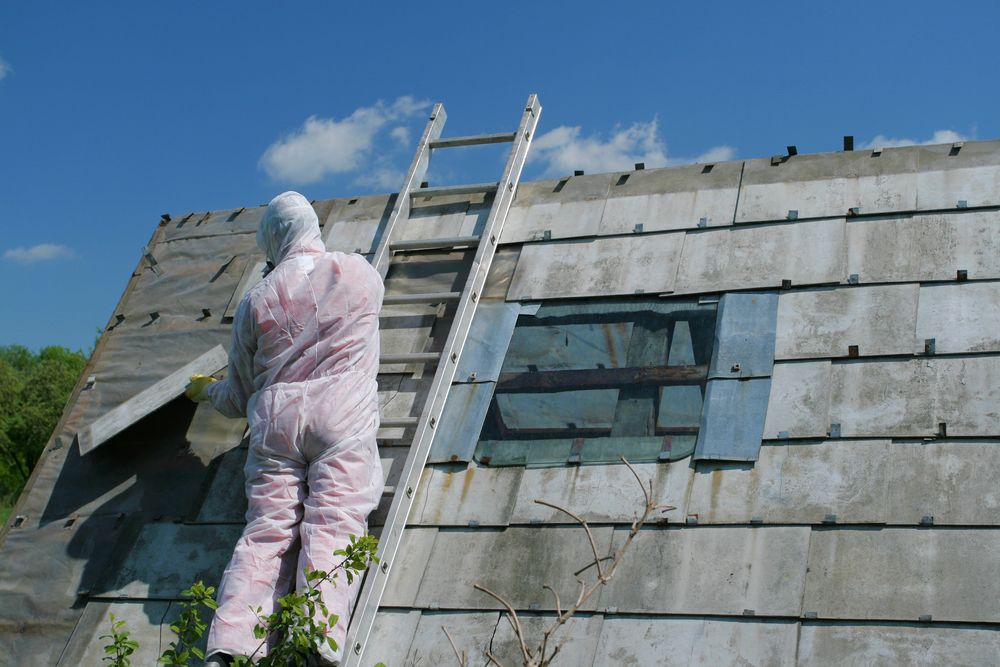
Local & Fast
Surrey-based. Most domestic jobs are booked in and finished within a week.
Our Own Team
We never subcontract. The people who quote your job are the people who do it.
Get in Touch
Send a few details about your project and we will come back the same working day with a fixed price. We cover Surrey, London and the South East, including Esher, Cobham, Kingston, Richmond, Epsom, Guildford, Woking and Croydon.