
Asbestos Surveys in Banstead
Banstead sits up on the North Downs, its streets lined with interwar and postwar houses on generous plots. Many were built before the 1999 ban, which is why a proper asbestos survey matters here before any sale or building work.
Why Banstead homes get surveyed
Spread out between Sutton, Epsom and Tadworth, Banstead grew through the years when asbestos was a normal building material. The village core off the High Street holds some older cottages, but most of what you see across Nork and Burgh Heath is detached and semi-detached stock from the 1920s through to the postwar decades. Generous plots, a garage to the side, gardens front and back. Plenty of these houses went up long before the material was banned across the UK in 1999.
That history is exactly why a survey earns its place. A survey does not pull anything out. It finds what is there, works out the condition, and writes it down so you know what you are dealing with. In a Banstead semi that can mean a corrugated cement garage roof, artex on the ceilings, board around the old boiler, floor tiles with black bitumen under them, or lagging on the pipes in a postwar house.
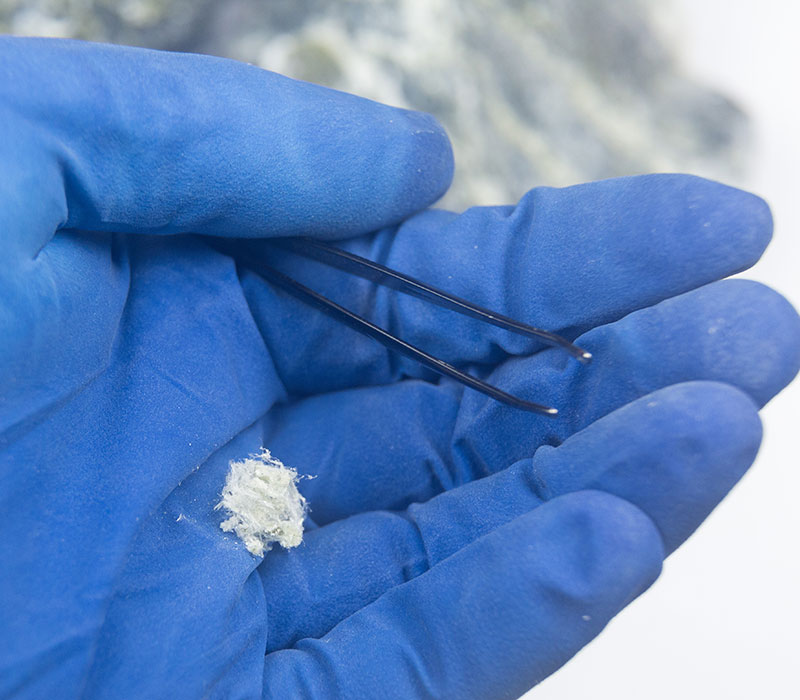
You cannot identify any of this by eye with any certainty. Two products can look identical and only one of them contain asbestos. The only honest answer comes from a sample sent to a laboratory. A survey gathers those samples in a controlled way and turns the guesswork into a document you can actually use.
It is the converted and extended houses that catch people out most. A loft done in the 1970s, a flat-roof extension off the back, a garage that had its roof patched at some point. Each change is a layer, and a survey works through those layers so nothing gets missed before a sale or a refit. The aim is a record you can trust, not a list of maybes.

The two surveys, and which one fits
There are two survey types, and the right one depends on what you are planning. A management survey is for a home that is staying lived in. It maps the materials that are already in place, checks how worn they are, and tells you what to leave alone and what to keep an eye on. For most Banstead owners who are not building anything, that is the one. It is the lighter touch of the two, since nothing structural is being opened up.
A refurbishment and demolition survey is the fuller of the two, and it comes before work starts. It is more intrusive because the builder is about to open up walls, lift floors or take a roof off, and anything hidden in those areas has to be found first. If you are converting a loft, knocking through, or stripping out a kitchen in one of the older Nork houses, this is the survey a contractor will want to see before lifting a tool. Going in blind on one of these jobs is how a small project turns into a stopped site and a much bigger bill.
The difference between the two comes down to access. A management survey looks at what is on show and in the obvious places. A refurbishment and demolition survey goes into the areas about to be disturbed, behind boards, under floors and into the roof, because that is where the work will reach. Picking the right one from the start saves a second visit later.
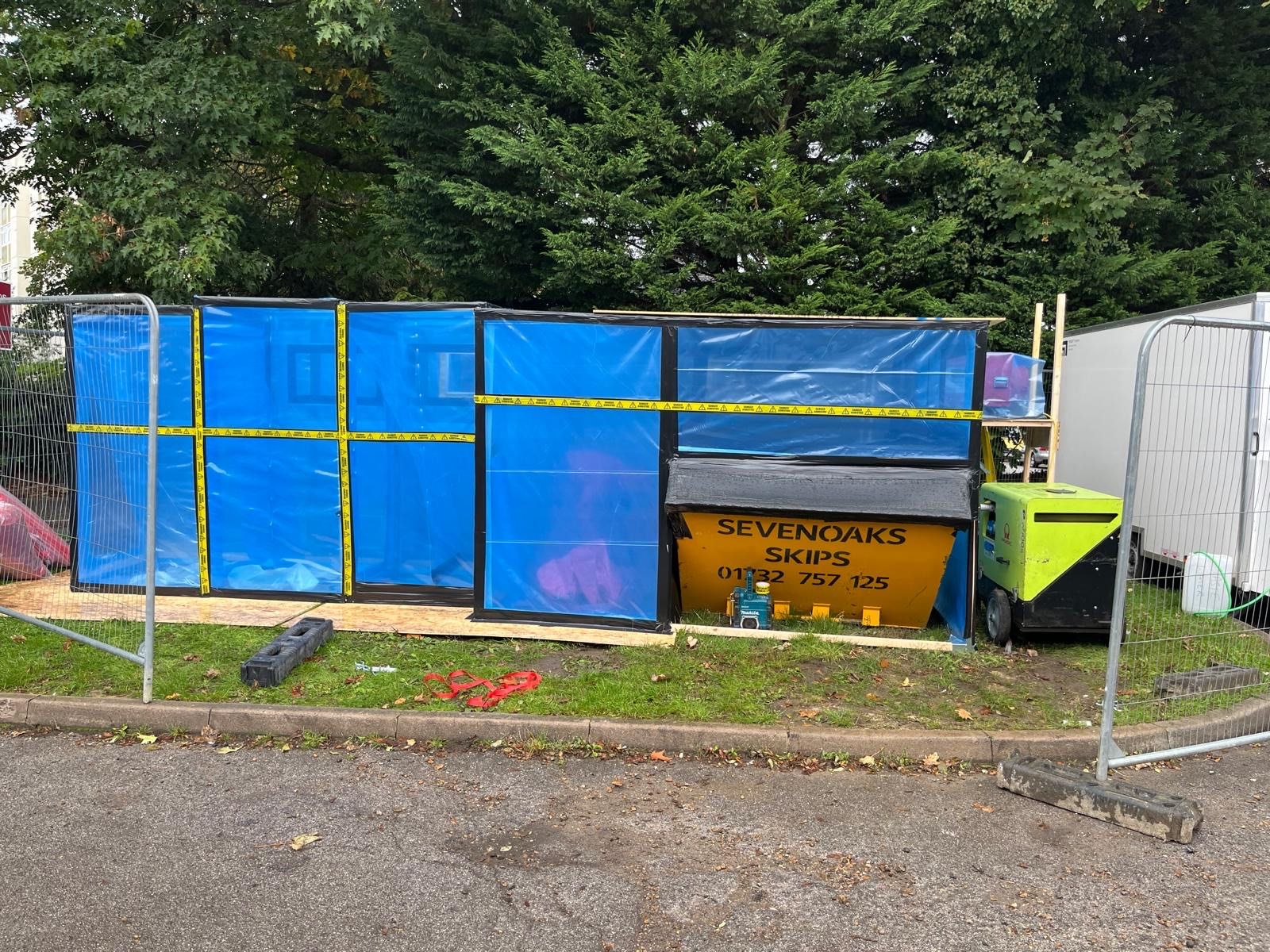
On a typical home survey the surveyor will take in the region of 5 to 10 samples, more in a larger or heavily altered property. Each one is logged against its exact location, so the report reads as a map of the house rather than a vague warning. A garage roof, a stretch of ceiling, the boxing around a boiler and a patch of floor might each give a sample, and each is recorded on its own so you know precisely where any positive result sits.
Samples, the lab and the visit
Every sample comes off under controlled conditions, bagged and labelled, then sent to a UKAS-accredited laboratory. UKAS accreditation is the mark that the testing is done to a recognised standard, so the result holds up when a solicitor or surveyor reads it later. It is the difference between an opinion and a verified finding. Results usually land within a few working days, which keeps a purchase or a refurbishment moving rather than stalled.
The visit itself is not the all-day affair people expect. For an average home, a survey of this kind takes in the region of 2 to 4 hours on site, depending on the size of the house and how many areas need opening up. Graham runs Banstead jobs himself out of nearby Chessington, so the inspection is done by someone who handles this material day to day, not a name passed down a chain.
What you get back is a written report. It sets out what was sampled, where it sits, what the laboratory found, and the condition of each item. A material in sound condition and left undisturbed is a very different matter from one that is cracked or crumbling, and the report draws that line clearly. If anything does need removing later, the report is the starting point for that work too. Higher-risk licensed material carries a stricter standard once removal begins, with 14 days of notice to the HSE, full enclosure, and four-stage clearance testing signed off by an independent analyst. None of that is part of the survey itself, but the survey is what tells you whether any of it will be needed.

The report a buyer, builder or solicitor can use
The point of all this is the document at the end. A clear survey report is the thing you hand to a buyer who wants to know what they are taking on, to a solicitor tidying up a sale, or to a builder who will not quote properly until they know what is in the fabric of the house. For a Banstead landlord it does the same job in reverse, giving a written record of the condition of the materials in a let property.
The pre-purchase angle is worth holding onto. Buying one of the older Burgh Heath or Nork houses without knowing what is in the garage roof or behind the boiler means inheriting somebody else's unknowns. A survey at the right moment turns that into a known quantity before contracts are signed, and gives you something to factor into the price if work is going to be needed down the line.
Britain has known about this material for a long time, and the houses that hold it are not getting any younger. A survey replaces assumption with a record. It tells you whether the garage roof, the artex or the boiler boarding is something to leave well alone or something to plan around, and it does so on paper rather than on a hunch.
Clearaway is a fully insured asbestos company holding Spectra licence number 142305706, and has spent more than seven years working across Banstead and the wider area. If you want a management survey or a refurbishment and demolition survey arranged on your home, call 0800 024 6168 and Graham will talk it through.
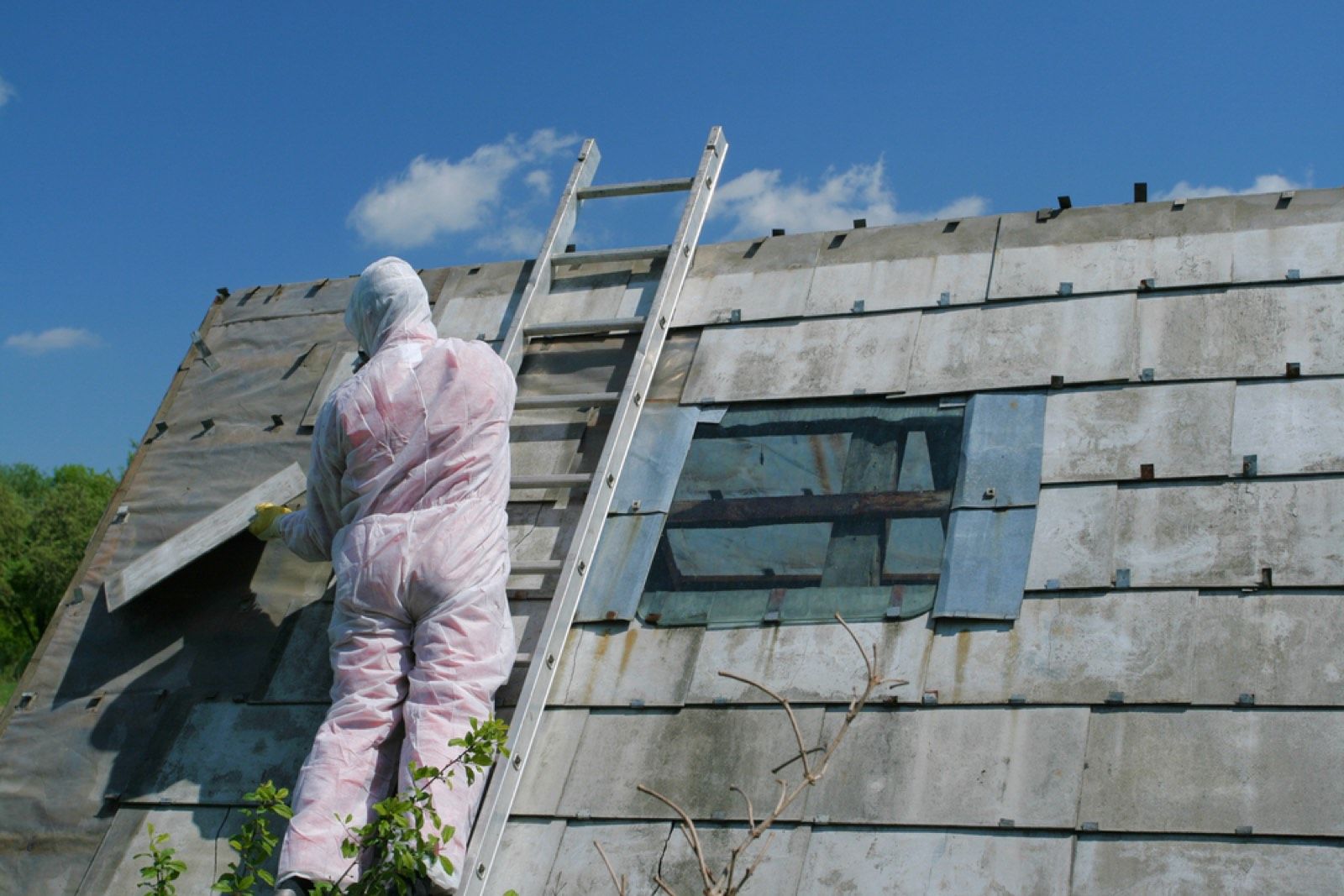
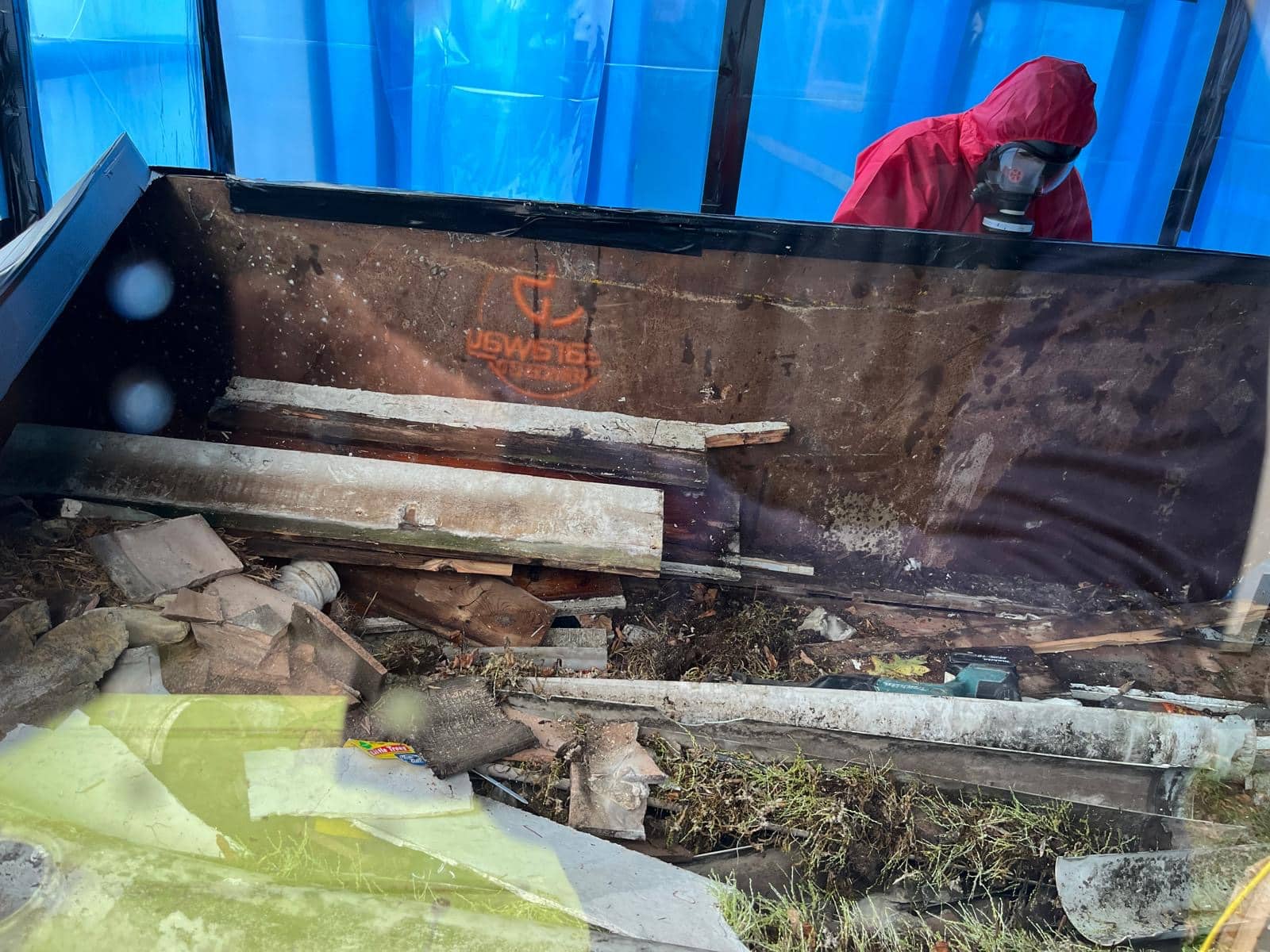
Licensed Asbestos Removal, Weybridge
Weybridge, Surrey · Licensed Removal
View this project"Graham has organised two jobs for me, both of which ran smoothly and on time. Clive and the team are really great, they completed the work in the agreed time and left the site spotless. Would recommend using Clearaway if you need any work done."
Our Removal Process
From first call to final certificate, every job follows the same clear four-step process.
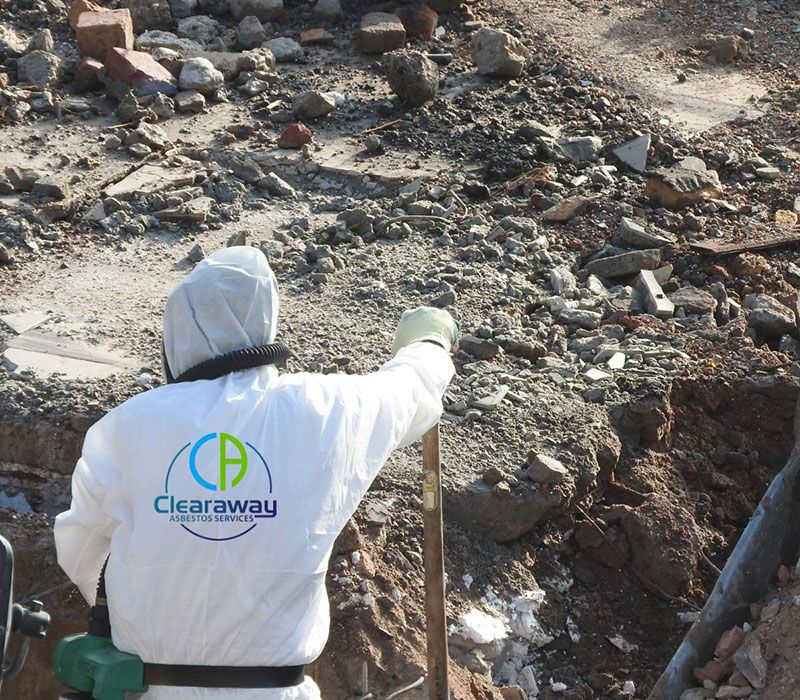
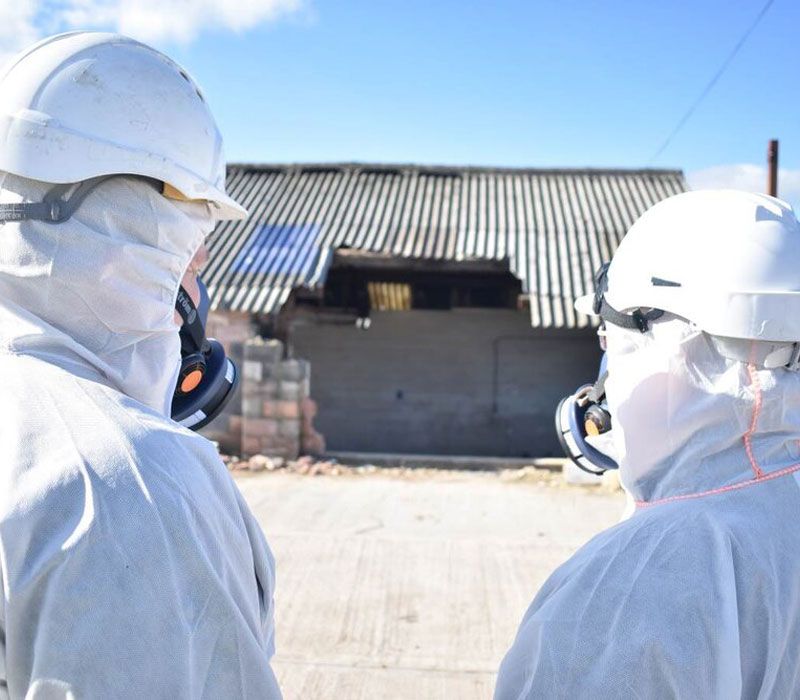
Survey
We inspect the property and confirm the material. Sampling available if required.
Quote
Fixed written price covering removal, disposal and any replacement work.
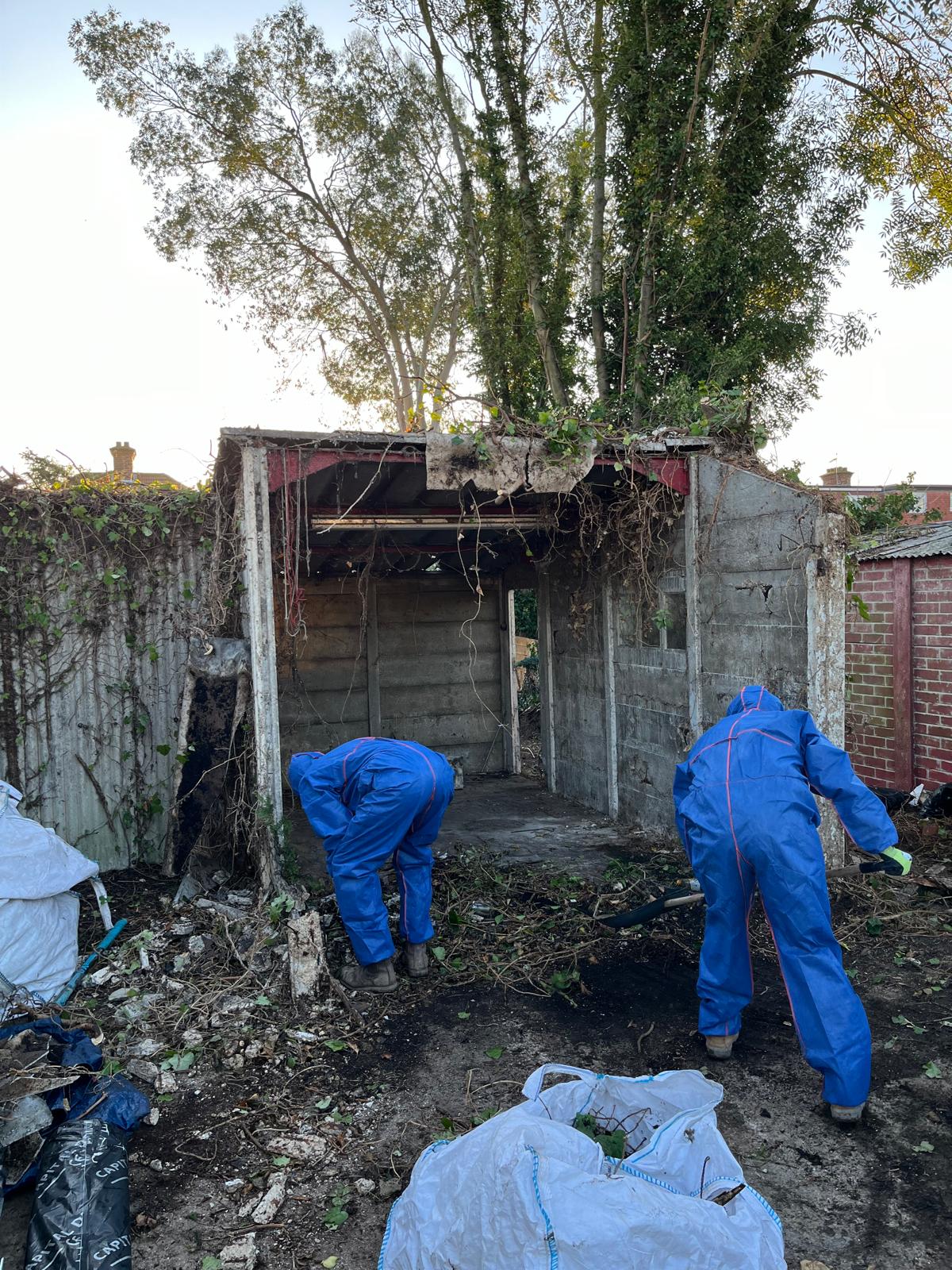
Removal
Material is removed safely, double-wrapped and taken to a licensed disposal facility.
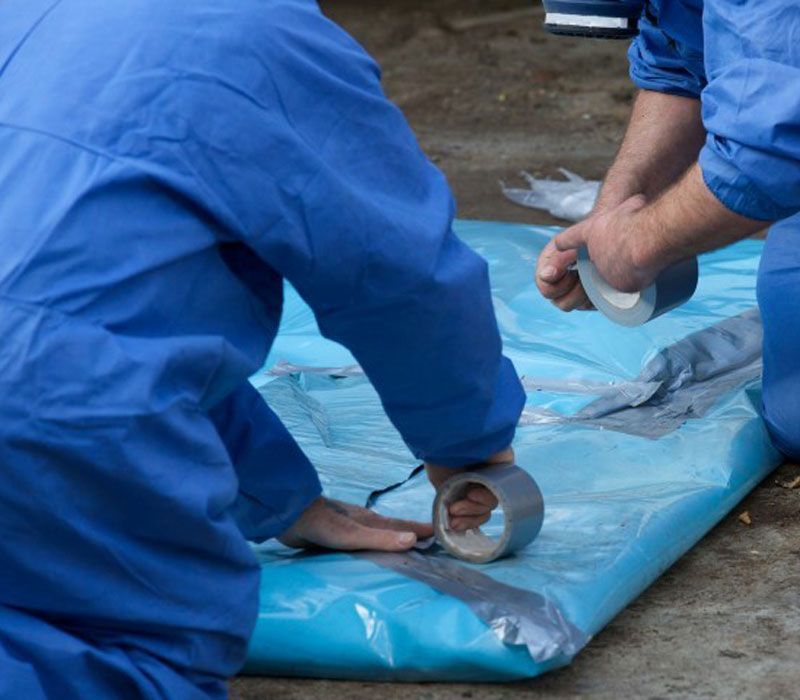
Certificate
You receive a waste consignment note and disposal certificate confirming legal handling.
Frequently Asked Questions
Why Choose Clearaway
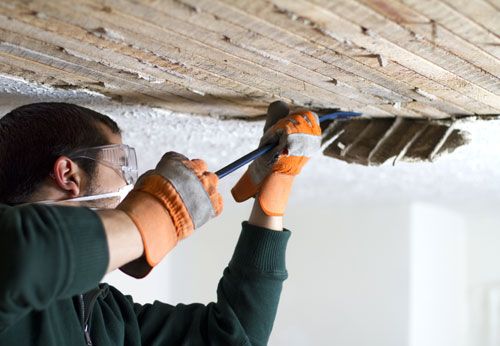
Specialist Crew
Asbestos work is all we do, every day, across the South East.
Fully Licensed
Licensed asbestos removal contractor (Licence No. 142305706). Full public liability insurance on every job.
Local & Fast
Surrey-based. Most domestic jobs are booked in and finished within a week.
Our Own Team
We never subcontract. The people who quote your job are the people who do it.
Get in Touch
Send a few details about your project and we will come back the same working day with a fixed price. We cover Surrey, London and the South East, including Esher, Cobham, Kingston, Richmond, Epsom, Guildford, Woking and Croydon.