
Asbestos Sampling in Teddington
Plenty of Teddington jobs start with a single question. Is this artex, this old garage sheet, this board by the boiler actually asbestos? Sampling answers that cheaply and quickly before a refit or a purchase, so you only spend on removal you truly need.
Why a Teddington sample comes first
You cannot tell asbestos by eye. A textured ceiling off the High Street, a corrugated sheet on a garage near Bushy Park, a grey board in a converted flat above Broad Street, they can all look harmless and still hold fibres. The same material was used in homes that look nothing alike, from the Victorian and Edwardian terraces around Waldegrave Road to the 1930s semis on the outer streets, so age and appearance tell you very little on their own.
That is the problem sampling solves. Guess either way and it costs you. Assume the worst and you pay for removal you may not need. Assume the best and you risk disturbing something that should have been handled properly, sending fibres through a house you are living in. Neither is a sensible way to start a job.
Sampling settles it. A small piece of the suspect material is taken under controlled conditions and sent to a lab, and you get a clear yes or no in writing. In Teddington that one step shapes everything that follows. A homeowner off the High Street planning a kitchen, a landlord checking a flat conversion, a buyer looking at a larger period villa near the river, all of them benefit from knowing for certain before any decision gets made. It is also the cheaper first step. You are paying to confirm what one material is, not to strip anything out, and that keeps the early stage of a project small and clear. Graham runs these jobs himself from Chessington, a short run away, so the same person who takes the sample is the one who talks you through what the result means, with no sheet of figures handed over and left for you to work out.

How the sample is taken and tested
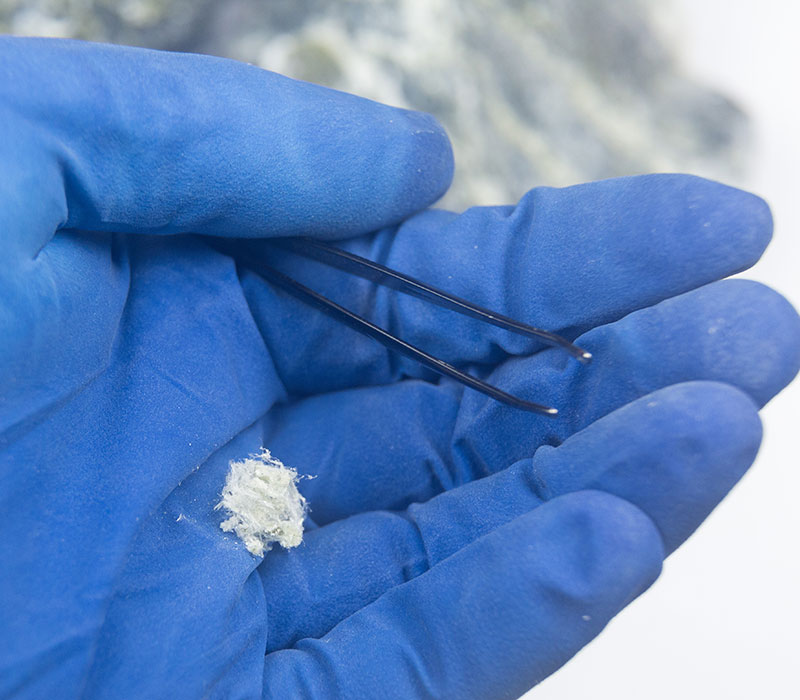
The work itself is small and quick. The area around the suspect material is dampened down to keep dust from lifting, a minute piece is removed and sealed, and the spot is made good behind it. A corner of an artex ceiling, a fragment of a floor tile and the black adhesive under it, a small section of a garage sheet, that is all a sample needs to be. It is a careful, contained job, not a building site, and most homes in Teddington are barely disturbed by it.
The sample then goes to a UKAS-accredited laboratory, which is the standard that makes a result count rather than a guess. A lab working to that accreditation is checked against a recognised method, so the answer holds up if a solicitor, a buyer or a builder later asks to see it. Analysis usually comes back within a few working days. You are told plainly whether asbestos is present, and if it is, what type, and that gives you what you need to plan sensibly rather than react.
If the result is negative, you carry on with your refit or your purchase knowing the material is clear, with no further cost and no lingering worry. If it is positive, you know exactly what you are dealing with before any removal is booked, and the right level of control can be matched to the material instead of being decided on a hunch. Some items are lower risk and straightforward to deal with. Others are higher risk and need a stricter, licensed approach. The sample is what tells you which, and it stops a small job being treated as a big one or, worse, a big one being treated as small.

When Teddington homes need it
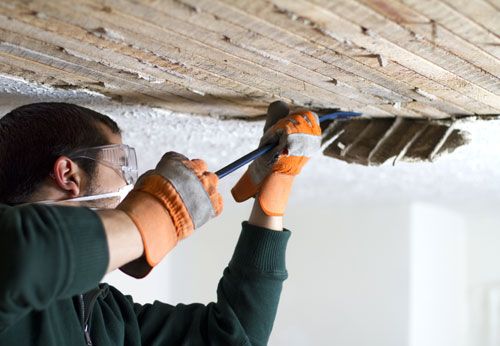
Most calls follow a familiar pattern. A renovation is about to start and something will be disturbed. An artex ceiling is coming down, floor tiles and their black bitumen adhesive are lifting as old lino or carpet comes up, a wall is being opened out, asbestos insulating board around a boiler is being taken back to fit a new one. Once a material like that is broken into, fibres can be released, so testing it beforehand is the sensible move rather than finding out halfway through with the room already open.
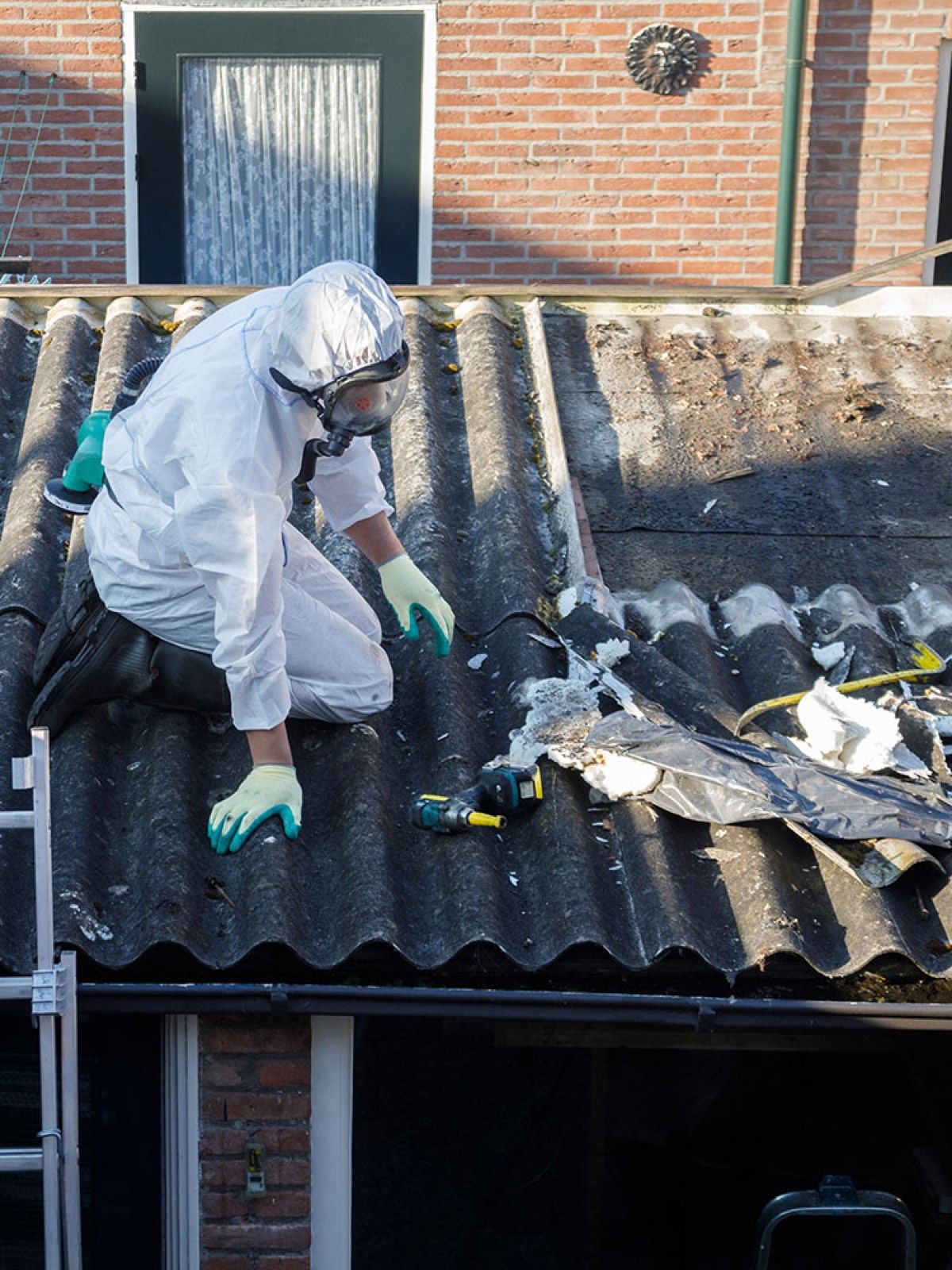
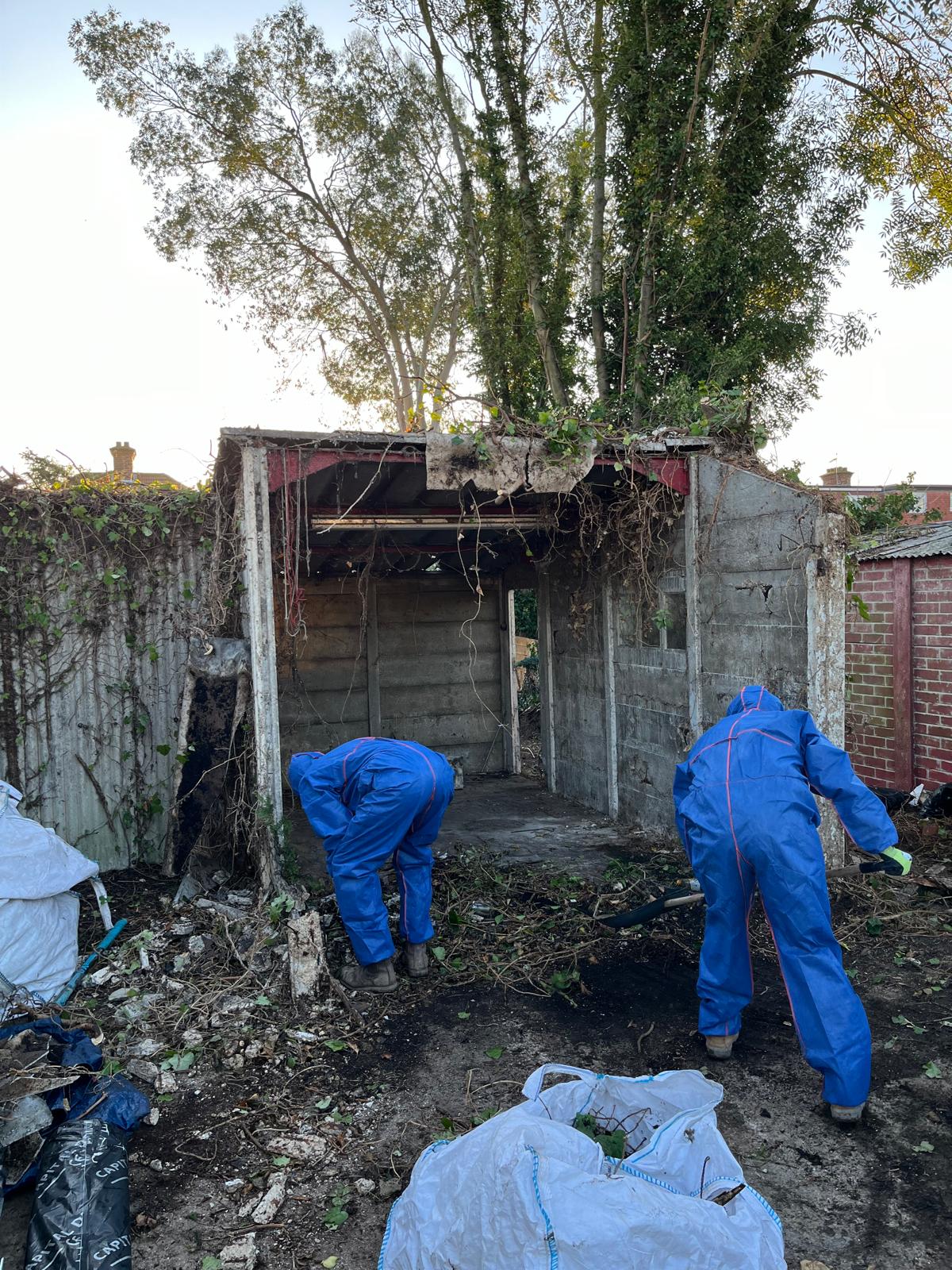
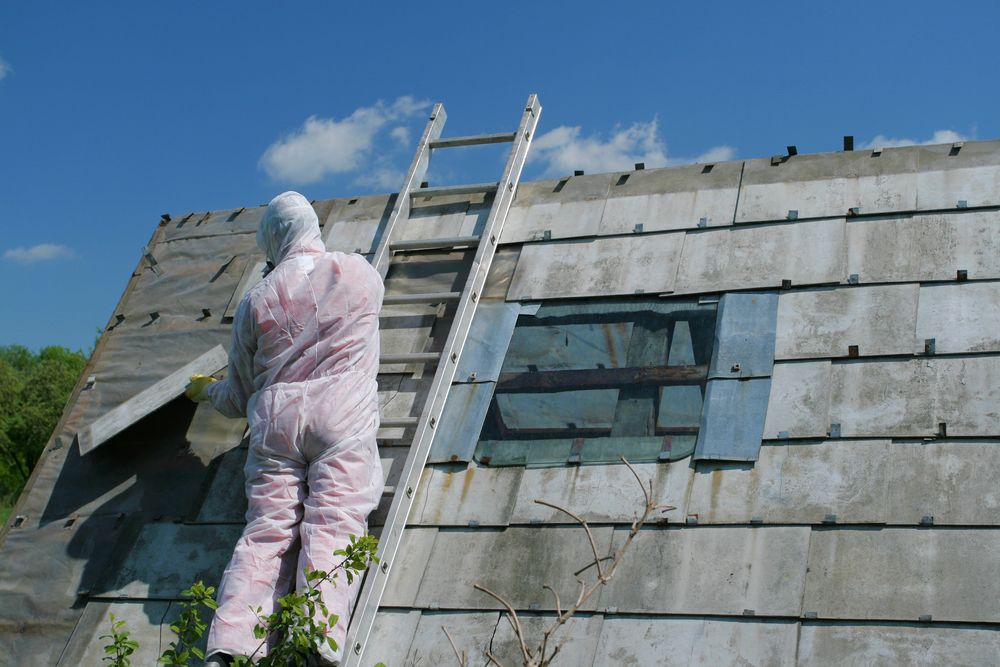
Garage and shed roofs are another common reason. Teddington has plenty of corrugated cement roofs on outbuildings, sheds and lock-ups, often fitted decades ago and weathered since. A cracked, flaking sheet is more of a worry than a sound one, and a single sample confirms whether one of those roofs is asbestos before you decide whether to leave it, repair it or take it down. It is a cheap way to turn a maybe into a decision.
Pre-purchase is the third. The borough has a good number of larger period houses split into flats, and buyers want to know what they are taking on before they commit. Pipe lagging in a cellar or an older property near the river, board around an old boiler, a suspect ceiling in a conversion off Broad Street, any of these can be sampled so the question is answered while there is still room to negotiate or plan. Landlords come at it the same way, checking a conversion before a tenant moves in. In every case a sample turns a worry into a fact you can act on, and it does it for the cost of one test rather than a full strip-out, which is why so many Teddington jobs begin with a single phone call about one suspect material rather than a whole house.

Sampling against a full survey
It helps to be clear on the difference, because the two get confused. Sampling tests specific items. You point at the thing you are worried about, the ceiling in one room, the garage roof, the tiles in the kitchen, the lagging on one length of pipe, and that material is tested. It is the focused, lower-cost option when you already know what you want checked and you only want an answer on that.
A survey is wider. A survey inspects the whole property to find and assess every material that might contain asbestos, room by room, which is what you want before major building work or when you have moved into an older Teddington house and have no real idea what is in it. One looks at a named item, the other builds the full picture. The two work together rather than competing. Many local jobs start with a sample on a single suspect item, and a survey follows only if it turns out the issue is bigger than the one ceiling or the one roof first suggested.
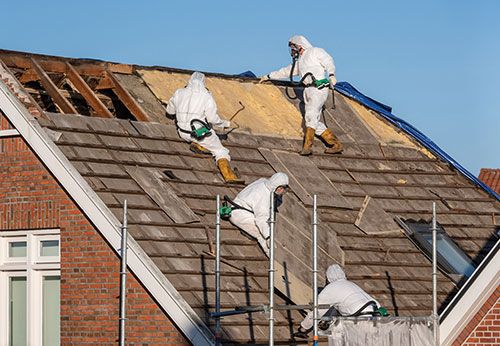
If a sample does come back positive, removal is matched to the material. Lower-risk items can often be taken out under non-licensed control, while higher-risk licensed work runs to a stricter standard, with 14 days of notice to the HSE, full enclosure of the area, and four-stage clearance testing signed off by an independent analyst before anyone goes back in. That last stage matters in an occupied Teddington home, because it is an independent check that the air is clear, not the removal team marking their own work. Clearaway holds Spectra licence number 142305706 and has spent more than seven years working across this area, so whatever a Teddington sample turns up, the next step is handled properly. To get a suspect material tested, call 0800 024 6168.
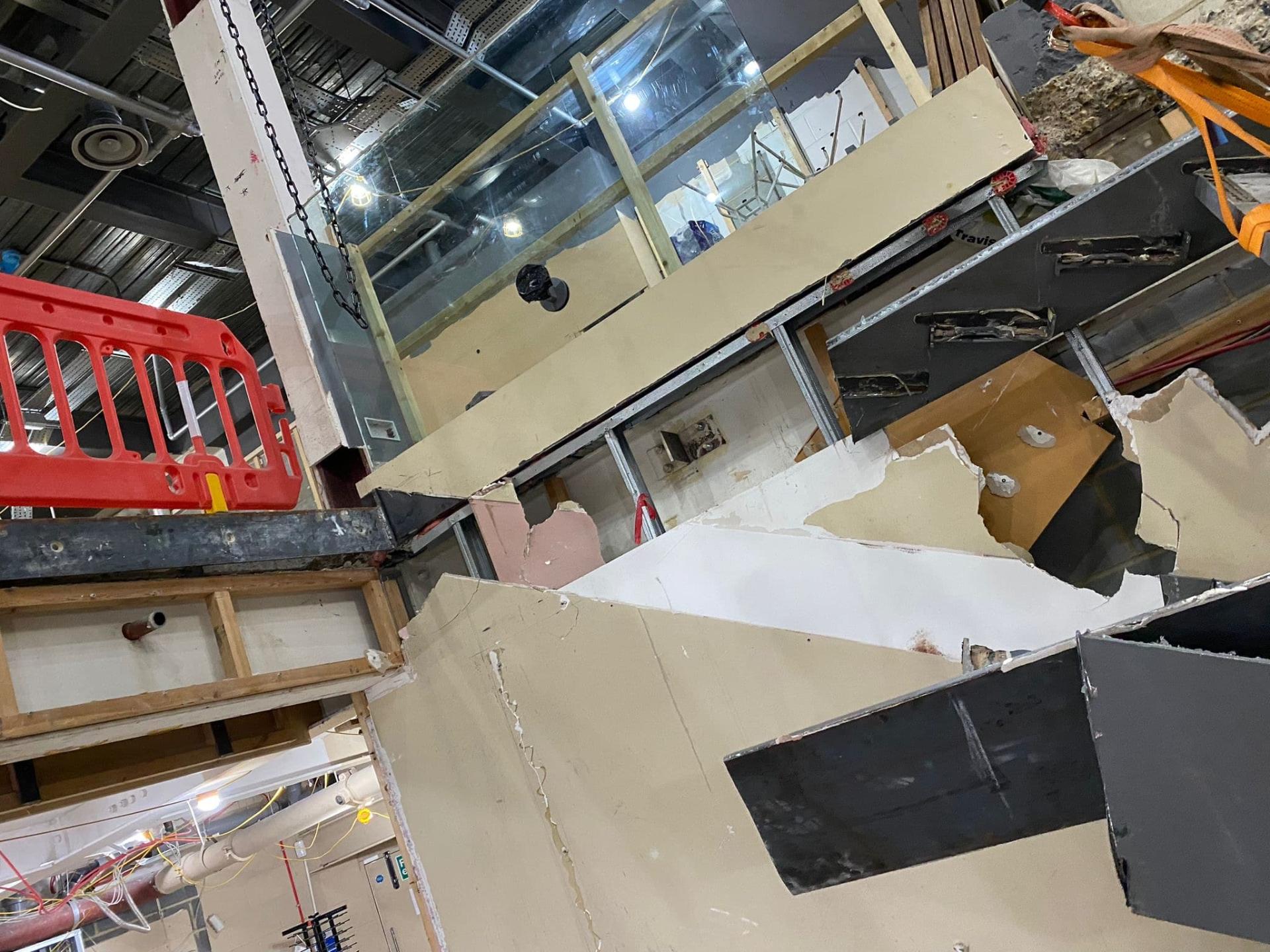
Commercial Building Strip-Out, Kensington
Kensington, South London · Strip-Out
View this project"Graham and his team done an excellent job of removing and replacing my asbestos garage roof and I wouldn't hesitate in recommending them"
Our Removal Process
From first call to final certificate, every job follows the same clear four-step process.
Survey
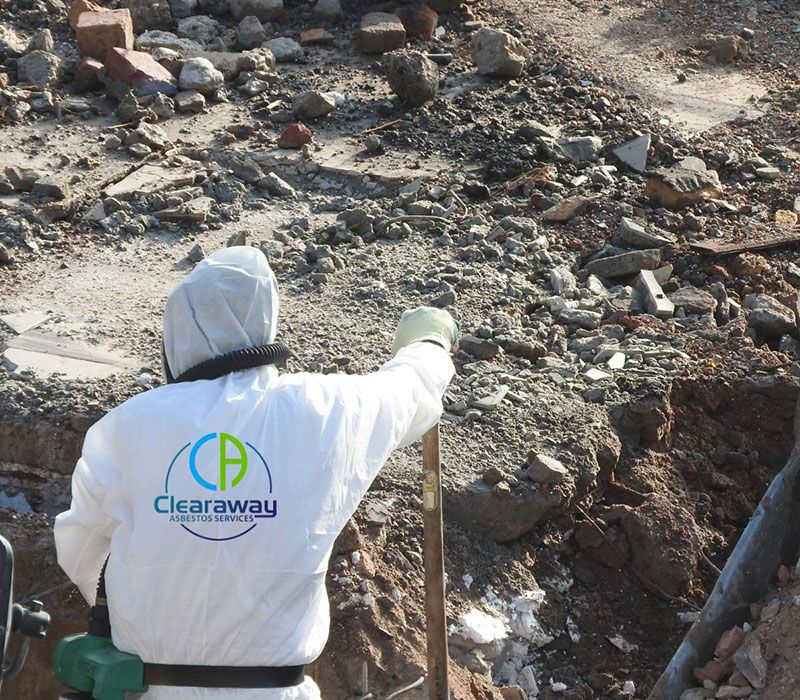
We inspect the property and confirm the material. Sampling available if required.
Quote
Fixed written price covering removal, disposal and any replacement work.
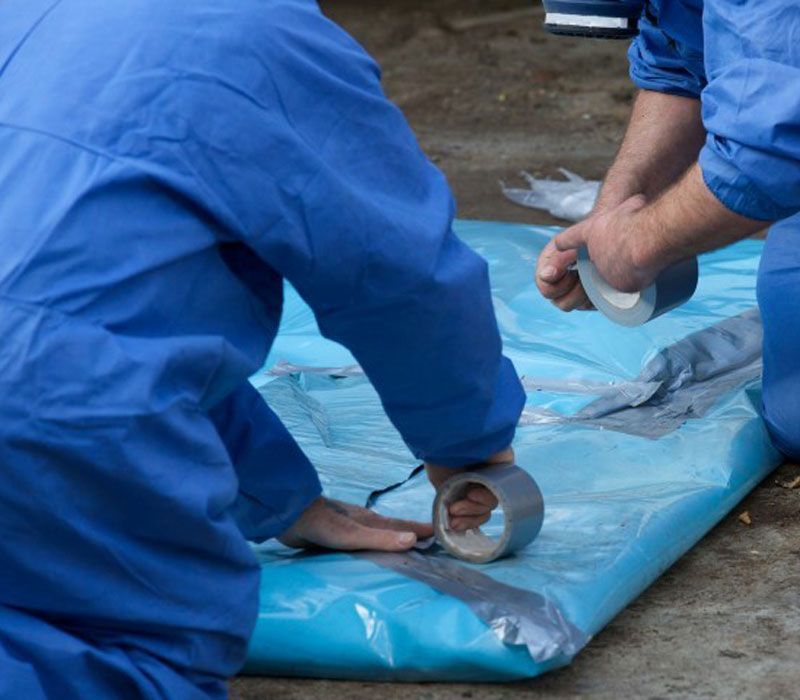
Removal
Material is removed safely, double-wrapped and taken to a licensed disposal facility.
Certificate
You receive a waste consignment note and disposal certificate confirming legal handling.
Frequently Asked Questions
Why Choose Clearaway
Specialist Crew
Asbestos work is all we do, every day, across the South East.
Fully Licensed
Licensed asbestos removal contractor (Licence No. 142305706). Full public liability insurance on every job.
Local & Fast
Surrey-based. Most domestic jobs are booked in and finished within a week.
Our Own Team
We never subcontract. The people who quote your job are the people who do it.
Get in Touch
Send a few details about your project and we will come back the same working day with a fixed price. We cover Surrey, London and the South East, including Esher, Cobham, Kingston, Richmond, Epsom, Guildford, Woking and Croydon.