Asbestos Roofing Removal in Woking
Licensed asbestos roof removal across Woking, from the flat-roof extensions and garden outbuildings of Horsell and Knaphill to the cement soffits and fascias on the interwar semis around St John's and Goldsworth Park.
The Roofs That Came With Woking's Sprawl
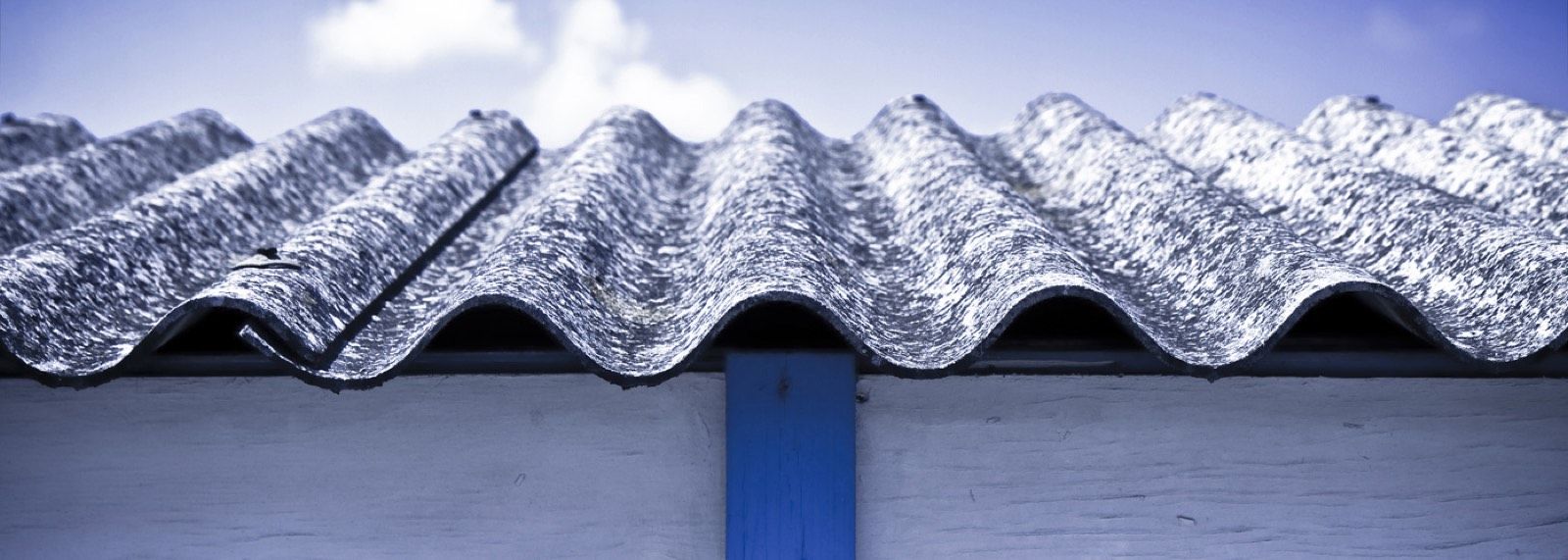
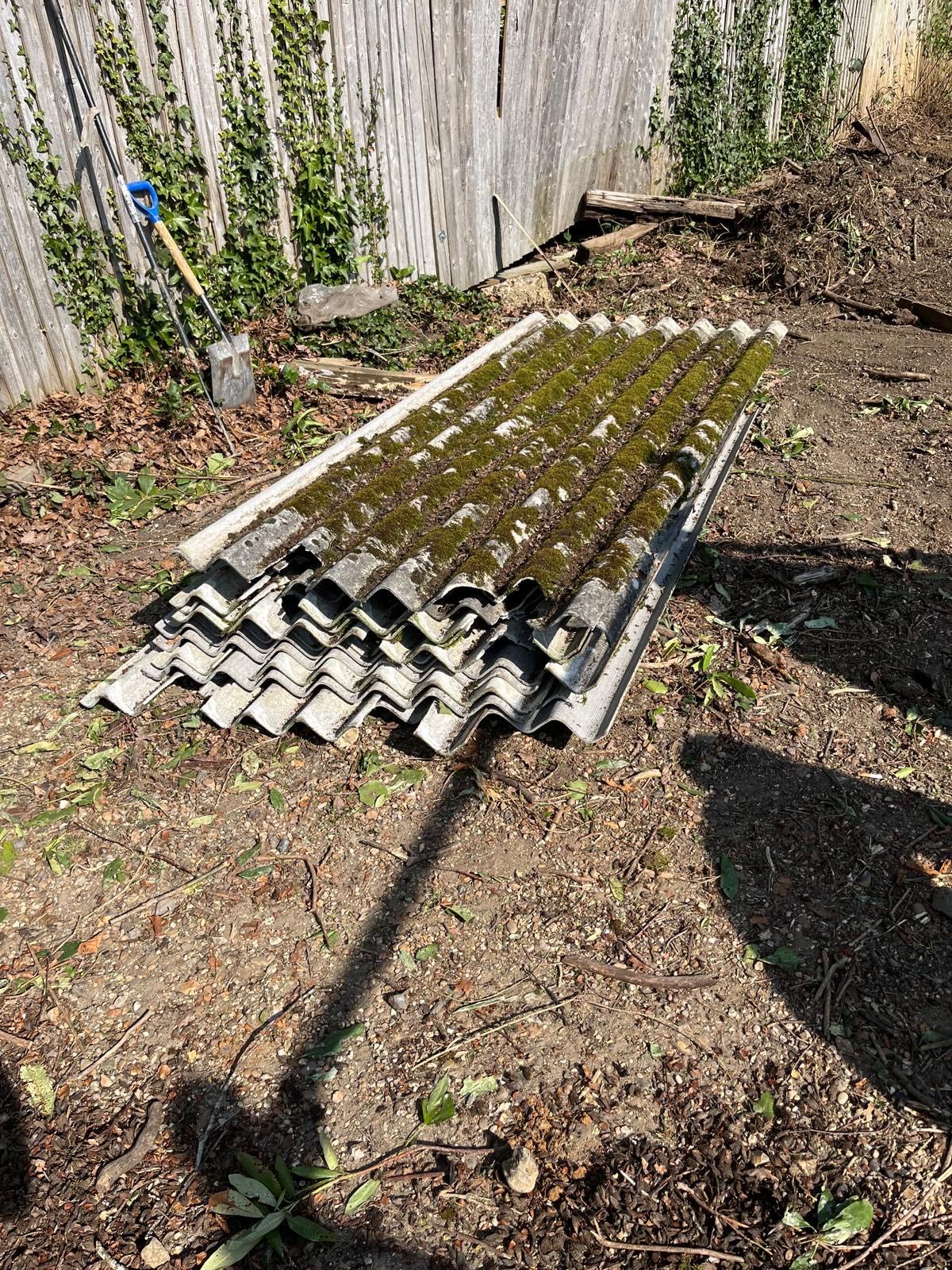
Look up around the back of a Woking house and the asbestos is usually overhead before it is anywhere else. As the town spread out from its railway station after 1838, and then filled in hard through the interwar and postwar decades, cement sheet became the default for anything that needed a cheap, weatherproof lid. Rear extensions, lean-tos, workshops, stables turned into stores, the long low outbuildings behind the bigger houses near Old Woking, all of it tended to get a corrugated cement roof. The same material went up as soffits, fascia boards and gutters on the rows of semis across Knaphill and St John's.
Most of that work was done well before asbestos was banned in the UK in 1999, so a roof that has sat there for fifty or sixty years is no surprise at all. The GU21 and GU22 housing is full of it. It is not the only place the material hides, but it is the most exposed, the most weathered and the one homeowners notice first, usually because a sheet has cracked or a soffit has started to crumble at the edge.
The pattern holds wherever you go in the town. The Victorian and Edwardian streets around Horsell and Old Woking carry their share on the structures behind the main house, the rear additions and the garden buildings. The big interwar and postwar estates out towards Knaphill, St John's, Goldsworth Park and Sheerwater add their own, in the soffit and fascia runs along the eaves and on the roofs of anything built to one side of the property. Roofs like these were meant to last a few decades, not the better part of a century, and a good many are now well past the point where the cement was holding everything together.
Why a Weathered Roof Is the Bigger Risk
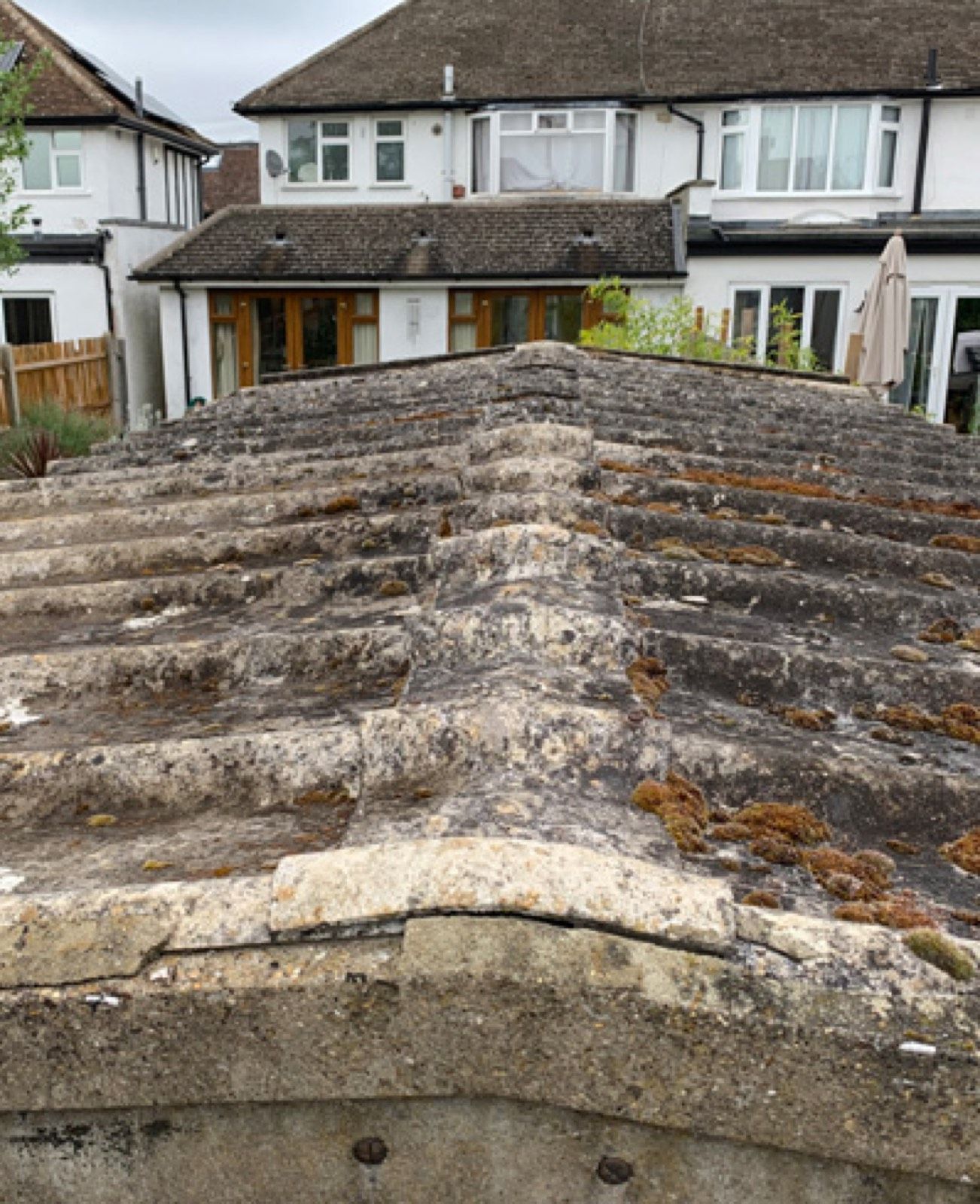
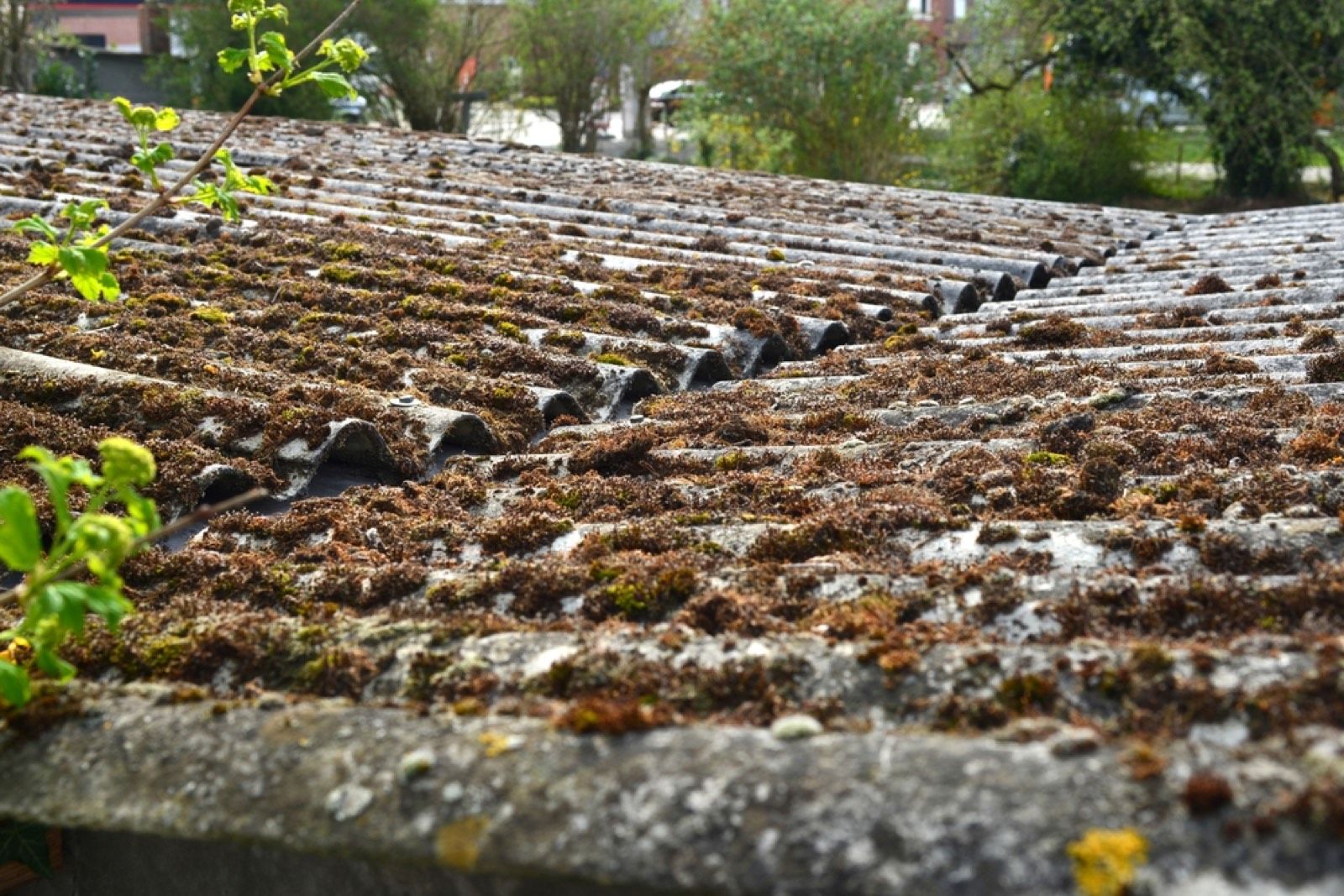
Asbestos cement is at its safest when it is whole and painted and left alone. The trouble with roofs is that they are never left alone. Decades of rain, frost and summer heat work on the surface, the cement face breaks down, moss takes hold, and the binding that locks the fibres in starts to give way. A sheet that was solid in 1975 can be soft and flaking by now, and a flaking sheet sheds fibres into the air far more readily than a sound one. The bolts rust, the edges lift, and a winter gale will sometimes do the breaking for you and scatter pieces across the garden.
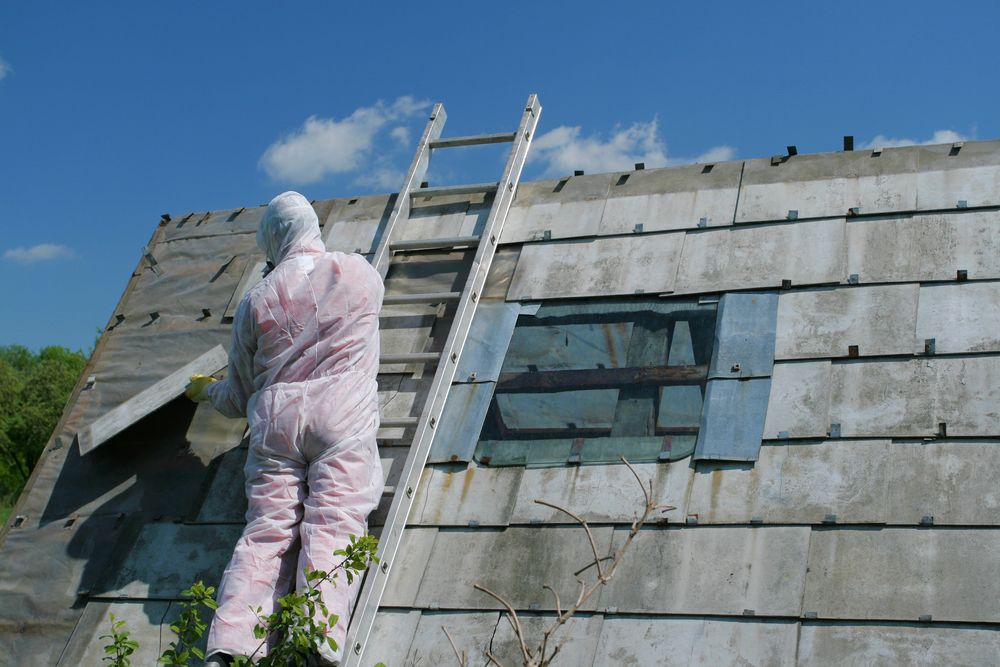
That is what separates a roof from a tile under the carpet. It is up high, it is exposed, and it is degrading in plain sight. Cement soffits and fascias go the same way, splitting and powdering along the run where the weather gets at them, and a fascia that has started to delaminate will drop dust onto the path below every time the wind picks up. People often make it worse by climbing up to clear a gutter or jet-wash the moss off, which is about the most direct way there is to disturb the fibres. A pressure washer turned on an asbestos roof is one of the worst things you can do to it, because it blasts loose material straight into the air and over everything nearby.
When asbestos is broken up like this it releases fibres that cause asbestosis, lung cancer and mesothelioma, often thirty or forty years after the exposure. Nothing shows up at the time, which is exactly why a failing roof gets ignored until it cannot be. The point of dealing with it properly is to take the material away before the weather, or a well-meaning afternoon with a ladder, turns a stable roof into a scattered one.
How We Take a Roof Down
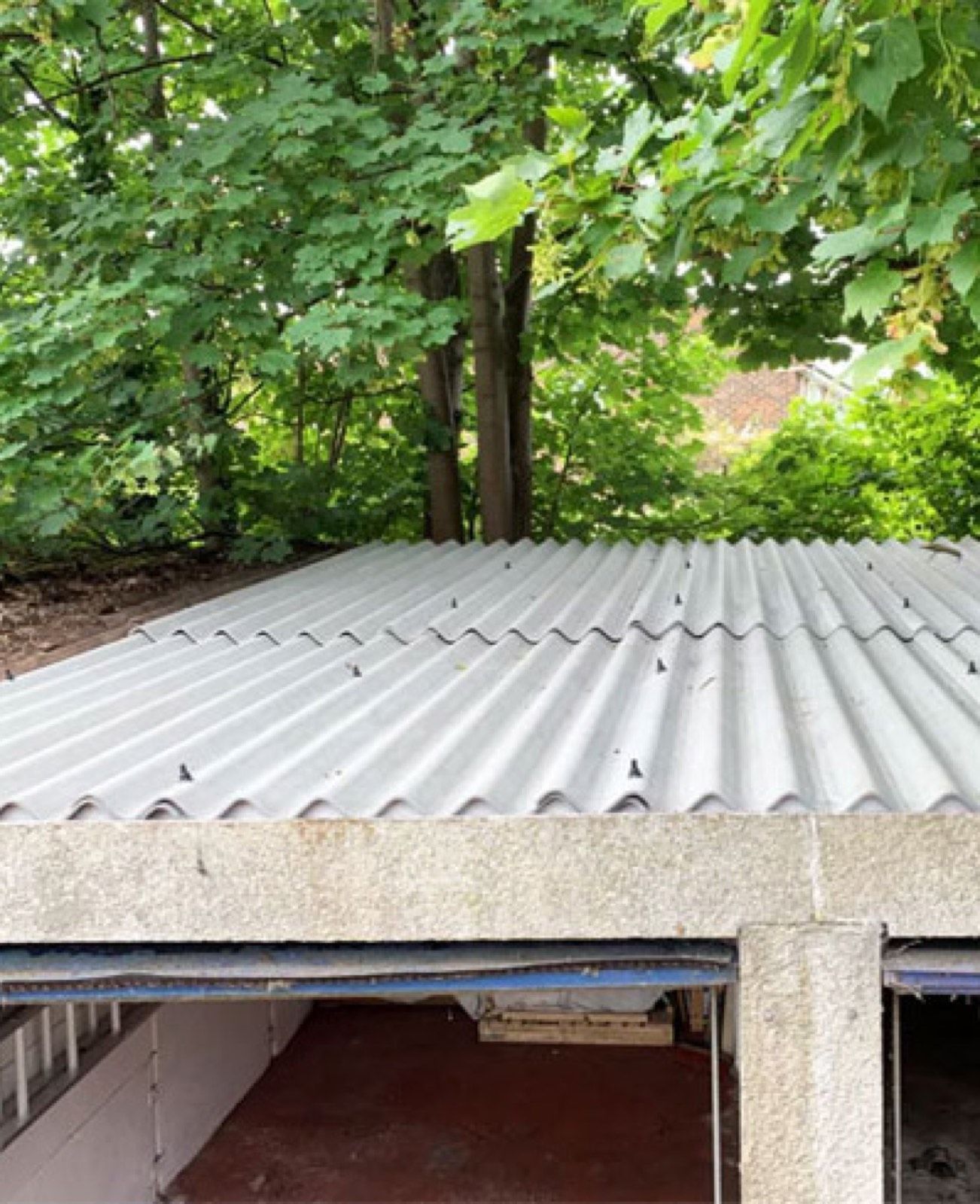
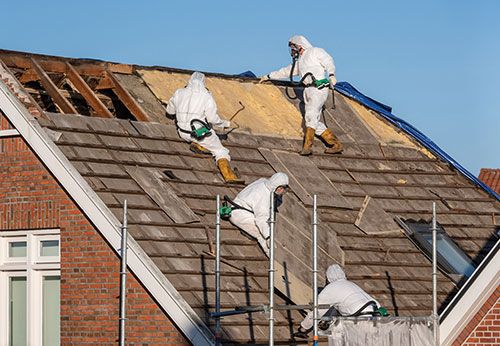
We work from the principle that the sheets should leave the property in one piece. Breaking them on site is what fills the air with fibres, so wherever a sheet is still sound we lift it off whole, lower it down rather than dropping it, and wrap it for disposal at a licensed facility. Soffits, fascias and cement guttering come off the same controlled way, run by run, not torn off and skipped. The aim throughout is to keep the dust down and the working area contained, so the rest of the house and the gardens either side are not left with anything to breathe in.
Nothing comes off the roof until we know what it is. Two grey sheets that look identical can test completely differently, so anything suspect is sampled and sent to a UKAS-accredited laboratory first, with results back in a few working days. A larger extension or outbuilding roof takes longer than a single small structure, simply because there is more to lift, lower and wrap, but the method does not change with the size of the job, only the time on site. We would rather take the extra hours and keep every sheet intact than rush it and crack one.
With the asbestos gone and the area checked over, we can put a new roof on to suit the building. Galvanised steel box-profile is the usual like-for-like swap on a workshop or outbuilding, three-layer torch-on felt suits a flat-roof extension, and there is the option of a tiled finish or asbestos-free fibre cement where you want it to match the house. Soffits and fascias can be reinstated in a modern, fibre-free board once the old runs are out. Boxing out is there as well if a soffit run is better covered and sealed than fully replaced.
Bigger Roofs and the Licensed Standard
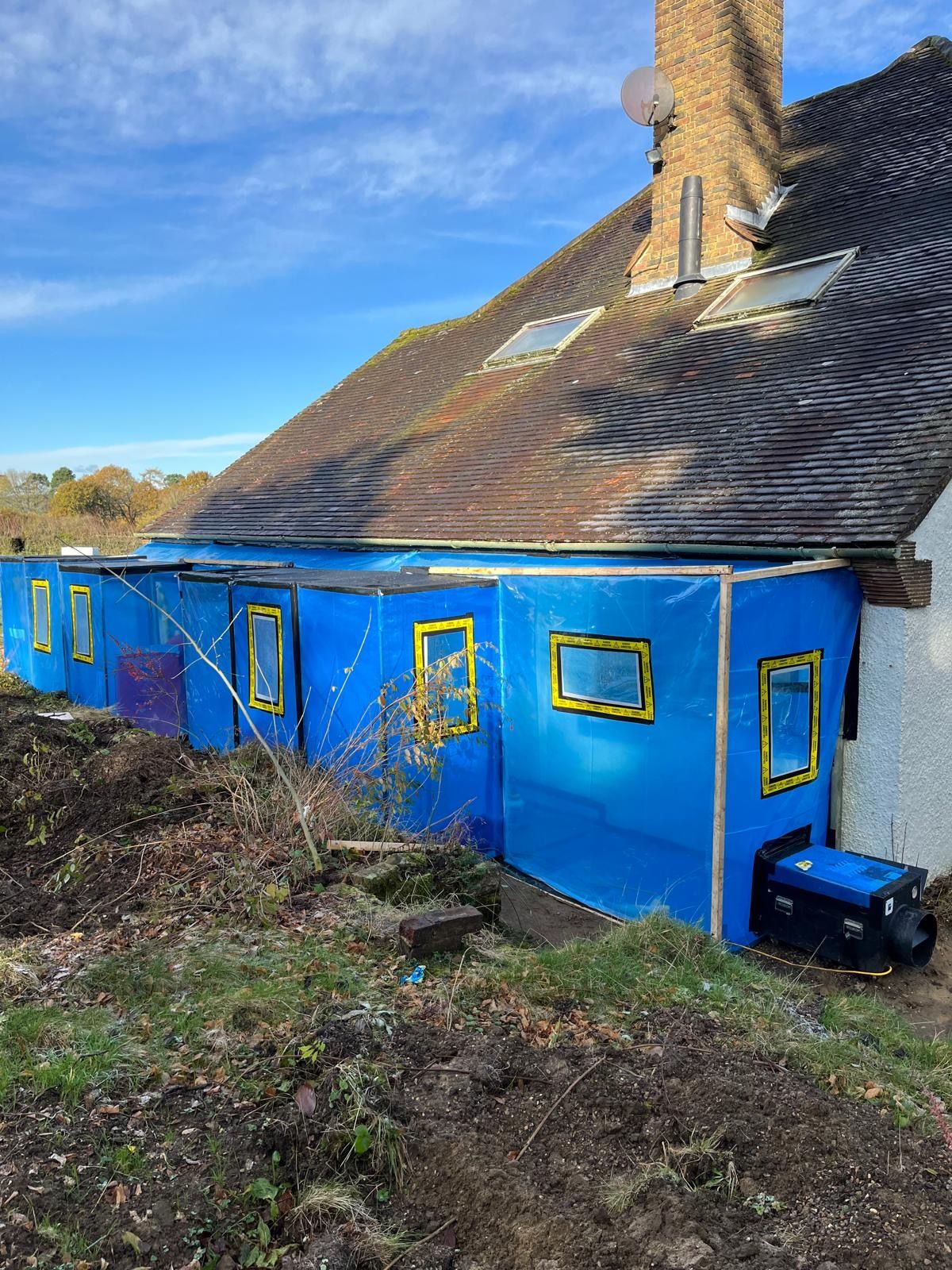
Not every roof is a quick lift. Some of the larger outbuilding and extension roofs around Woking, and the more degraded sheeting, fall into higher-risk territory, and that work is held to a stricter standard set by law. We give the HSE the fourteen days of notice the regulations require before that kind of job starts.
On licensed work the area is sealed under full enclosure, the air is monitored throughout, and the job is not signed off until four-stage clearance testing by an independent analyst confirms the space is clean. You are not relying on our word that it is safe, you are relying on a separate analyst whose job is to check it. Every removal, large or small, ends with the waste consignment paperwork showing the material reached a licensed facility, which is the proof you will want if you ever come to sell.
Clearaway Asbestos has cleared roofs, soffits and outbuildings across Woking and the wider Surrey GU postcodes for more than seven years, and we hold Spectra licence number 142305706. If you have a roof you are worried about, call the team on 0800 024 6168 and we will arrange a site visit.
Licensed Asbestos Removal, Woking
Woking, Surrey · Licensed Removal
View this project"Graham and his guys picked up some asbestos roof sheets from my property in Chessington. Would highly recommend this company to anyone. Really good service and very professional. Thank you"
Why Choose Clearaway
Specialist Crew
Asbestos work is all we do, every day, across the South East.
Fully Licensed
Licensed asbestos removal contractor (Licence No. 142305706). Full public liability insurance on every job.
Local & Fast
Surrey-based. Most domestic jobs are booked in and finished within a week.
Our Own Team
We never subcontract. The people who quote your job are the people who do it.
Frequently Asked Questions
Our Removal Process
From first call to final certificate, every job follows the same clear four-step process.
Survey
We inspect the property and confirm the material. Sampling available if required.
Quote
Fixed written price covering removal, disposal and any replacement work.
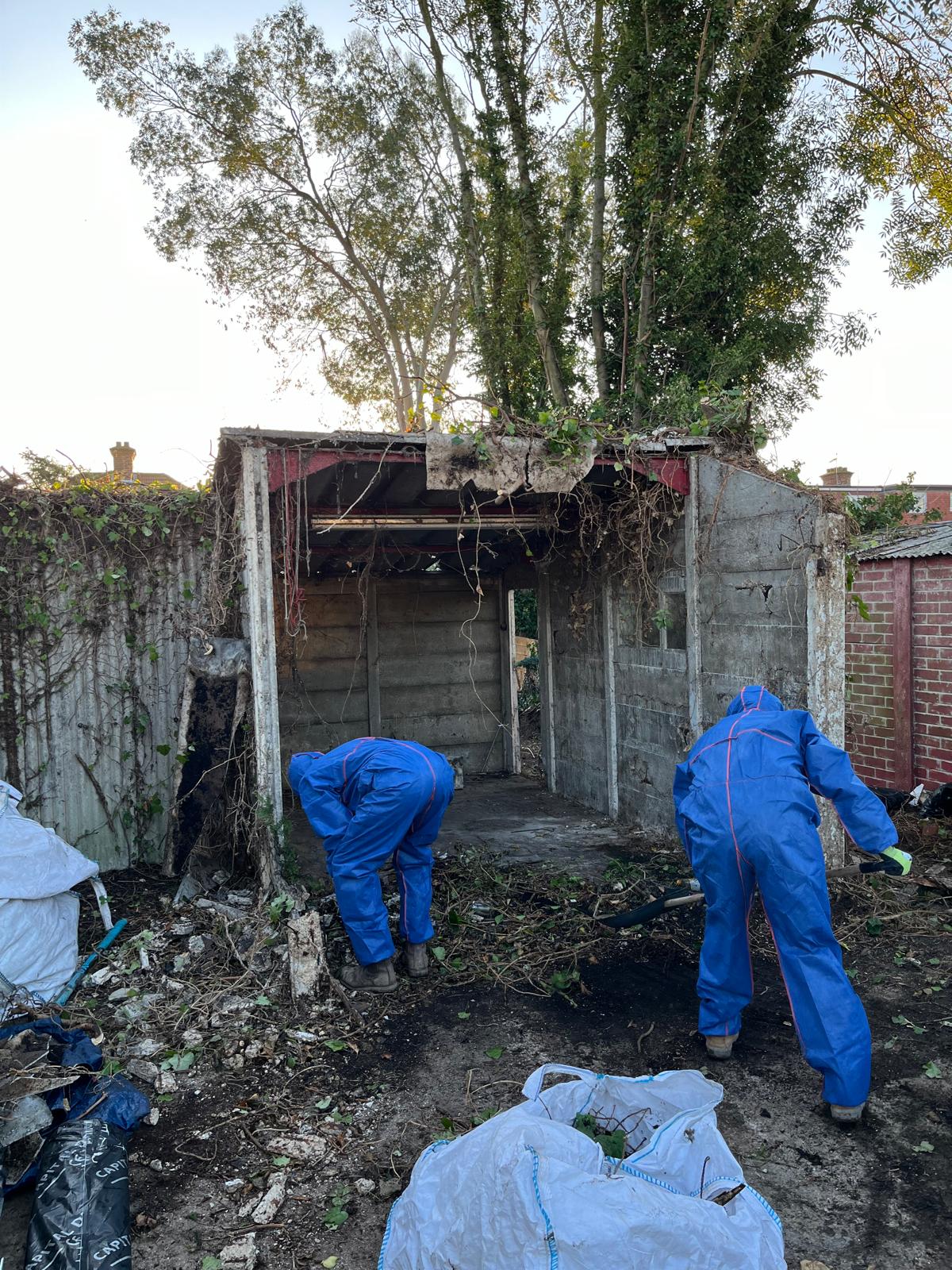
Removal
Material is removed safely, double-wrapped and taken to a licensed disposal facility.
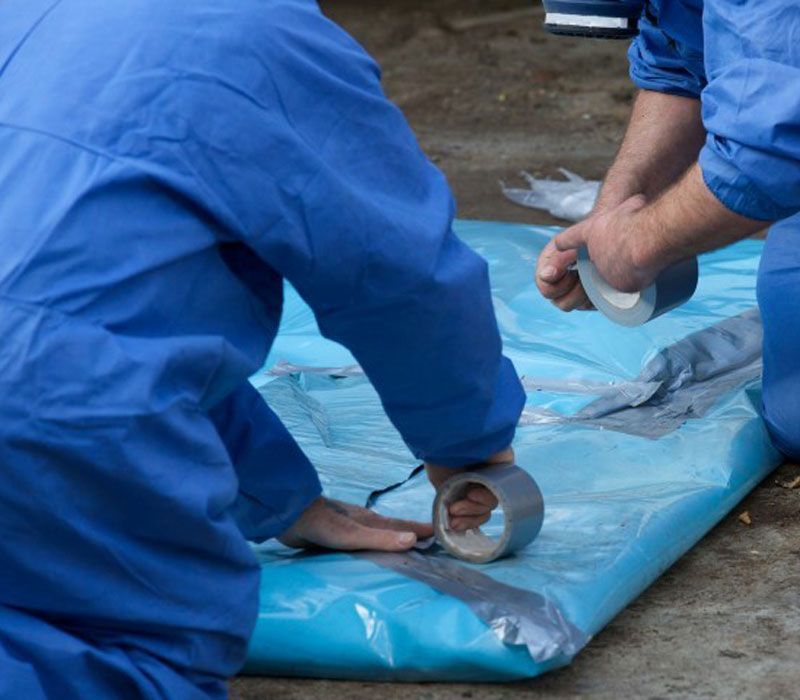
Certificate
You receive a waste consignment note and disposal certificate confirming legal handling.
Get in Touch
Send a few details about your project and we will come back the same working day with a fixed price. We cover Surrey, London and the South East, including Esher, Cobham, Kingston, Richmond, Epsom, Guildford, Woking and Croydon.