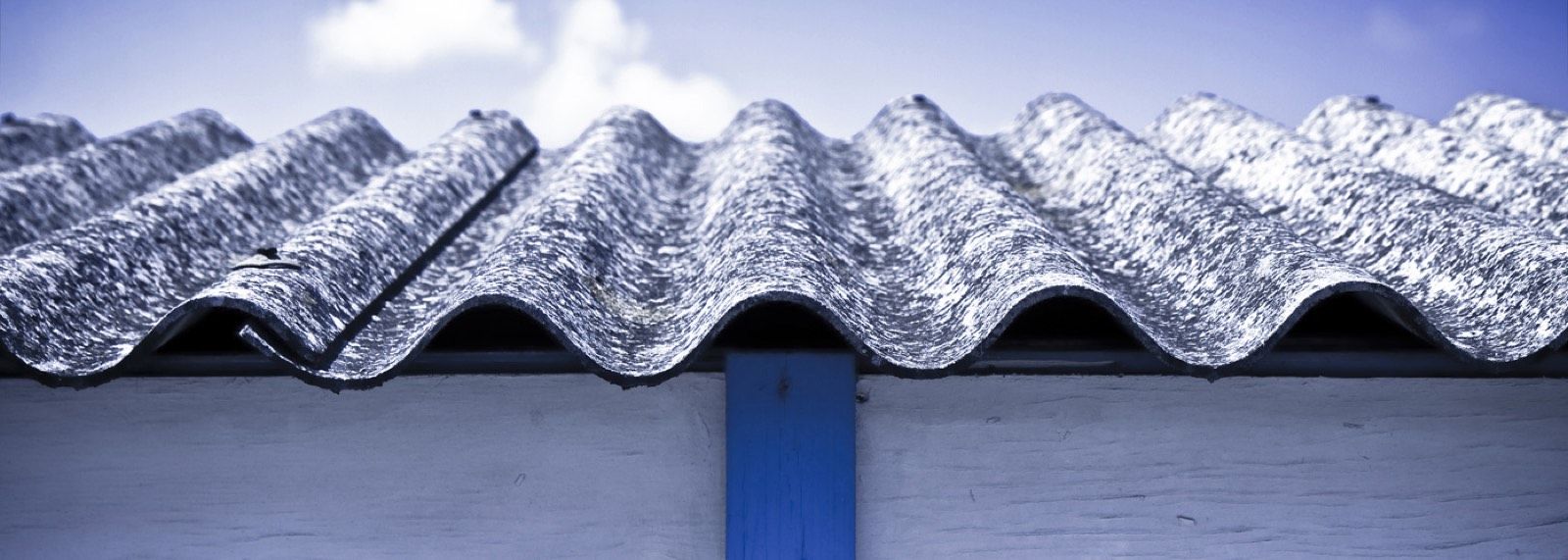
Asbestos Roofing Removal in Weybridge
Licensed asbestos roof removal across Weybridge, from the cement sheets on rear extensions and outbuildings to the soffits, fascias and gutters on the 1930s semis out towards Oatlands. Whole-sheet stripping, a clean replacement, and the paperwork to back it.
The Roofs That Take the Weather
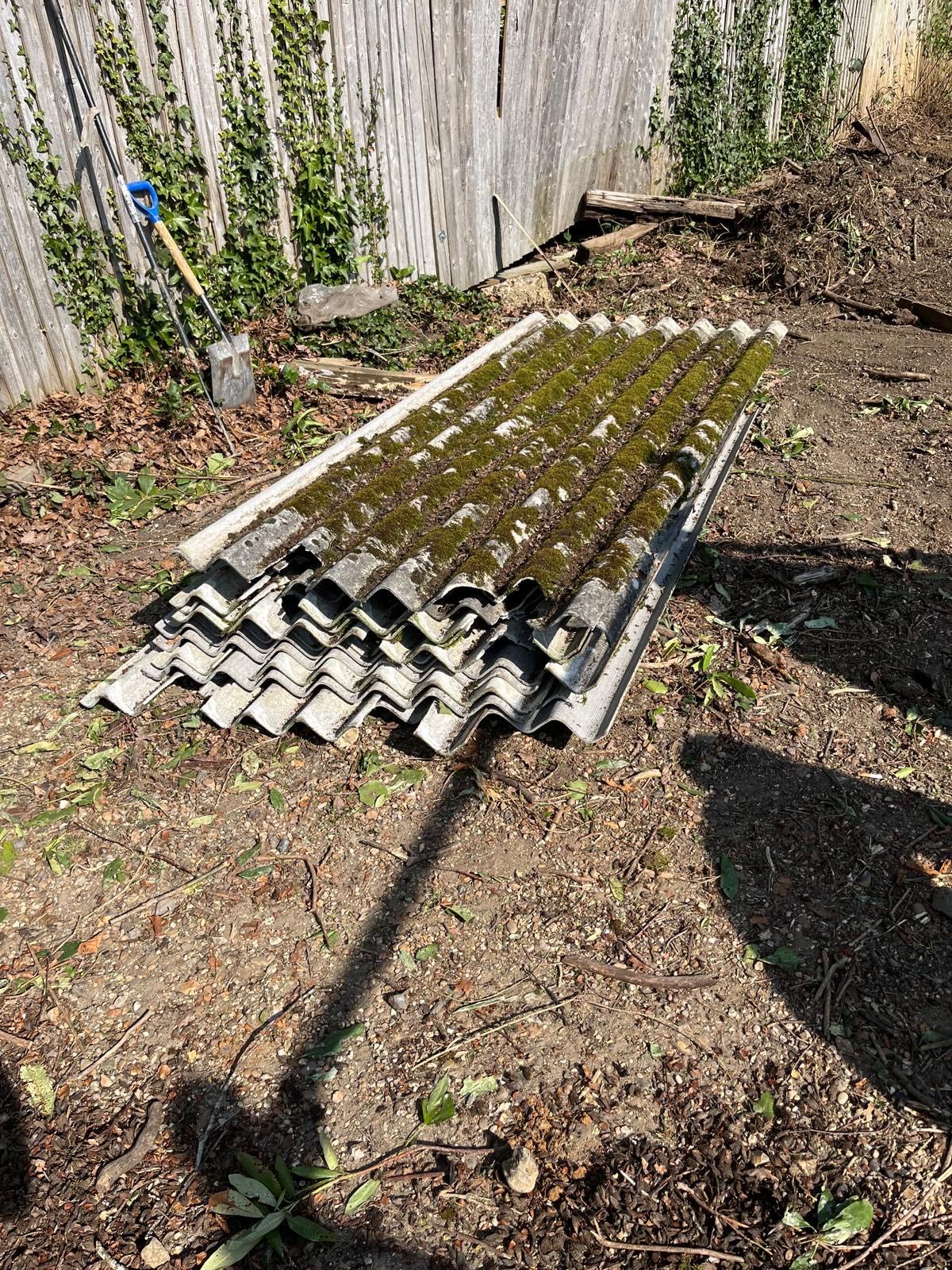
Drive around Weybridge and a lot of the older roofing is hiding in plain sight. Behind the bigger houses near St George's Hill and Monument Hill there are flat-roof extensions, lean-tos, workshops and garden outbuildings, and a good number of them were topped with corrugated asbestos cement somewhere between the 1950s and the 1980s. The interwar semis running out towards Oatlands and Walton carry it in a quieter way, in the cement soffits, the fascia boards and the old guttering tucked under the eaves. None of it was a strange choice at the time. The material was cheap, it shed rain, and it went up fast, so the trade used it everywhere across the KT13 postcode until the UK ban landed in 1999.
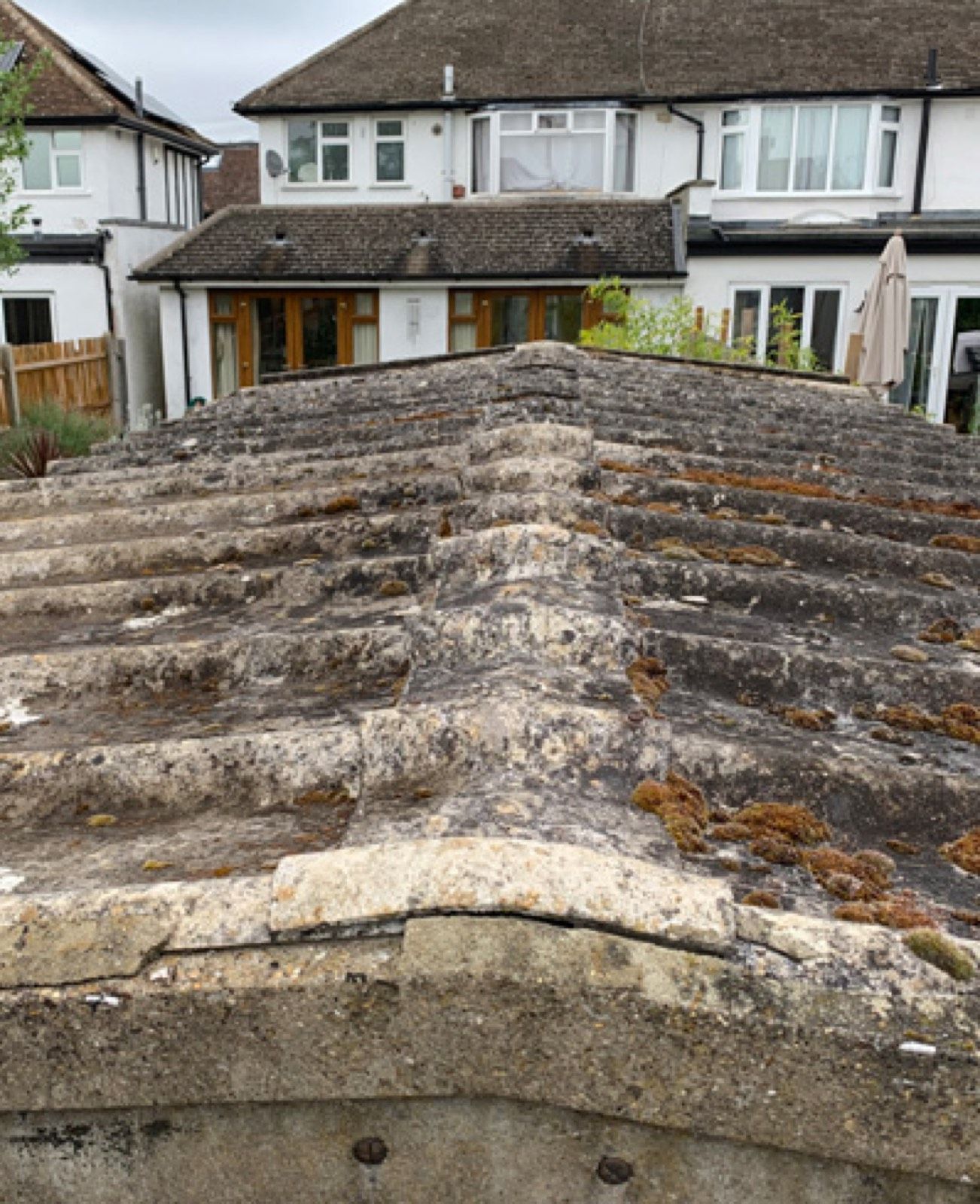
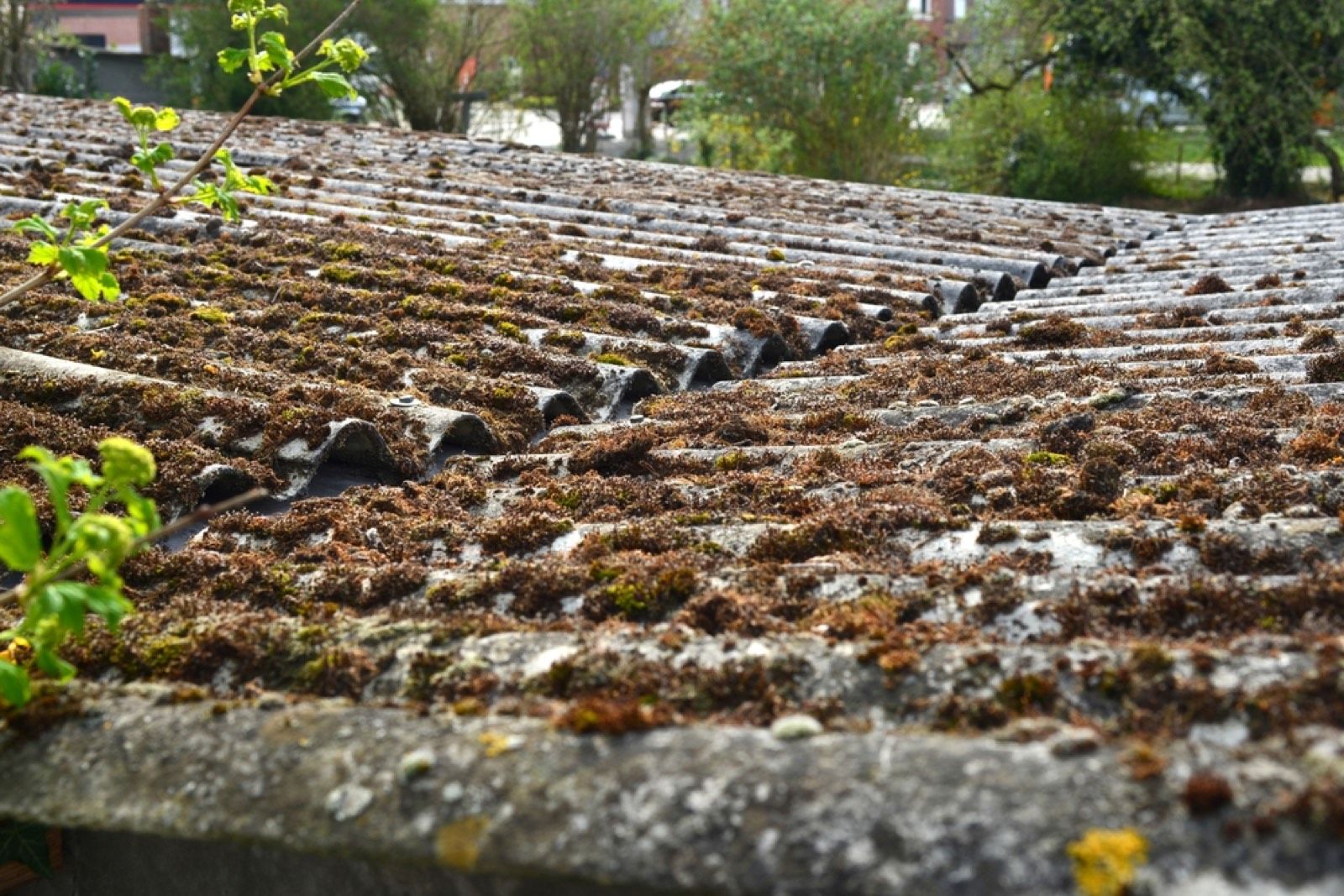
A roof is the part of a building that never gets a break. It takes every winter, every frost, every gust off the Thames, and asbestos cement does not age gracefully under that. The surface goes chalky, moss works into the dips, hairline cracks open along the corrugations, and the sheet that was solid forty years ago starts to crumble at the edges. That is the difference between a roof and most other asbestos in the house. A sealed floor tile or a boxed-in pipe is left alone. A roof is out in the open, breaking down a little more every season. It is also the part owners notice last, because nobody stands in the garden looking up at the outbuilding until a leak or a sale forces the question.
Why a Failing Roof Is the Higher Risk
Asbestos cement holds its fibres tight while the sheet stays whole and sound. The trouble with roofing is that weather does the breaking for you. Once a sheet is cracked, flaking or shot through with moss, fibres can lift off in the wind and wash down into the gutters and the ground below, and that happens whether anyone touches it or not. So a worn outbuilding roof or a row of crumbling soffits is not something to keep putting off. It is the form of asbestos most likely to be releasing fibres on its own. A roof that has already started to fail does not settle back down. Left through another few Weybridge winters it only sheds more, and the cleanup gets larger the longer it waits.
Those fibres are far too fine to see, and once breathed in they settle deep in the lungs. The diseases they cause, asbestosis, lung cancer and mesothelioma, often take 20 to 40 years to show, which is exactly why this is licensed, regulated work and not a job for a borrowed ladder on a dry Saturday. Height makes a deteriorating roof worse again. Snapping a brittle sheet two storeys up, with the wind catching the dust, spreads it far further than the same break at ground level. The combination of weathered material and working at height is the reason roof removal is handled properly or not at all.
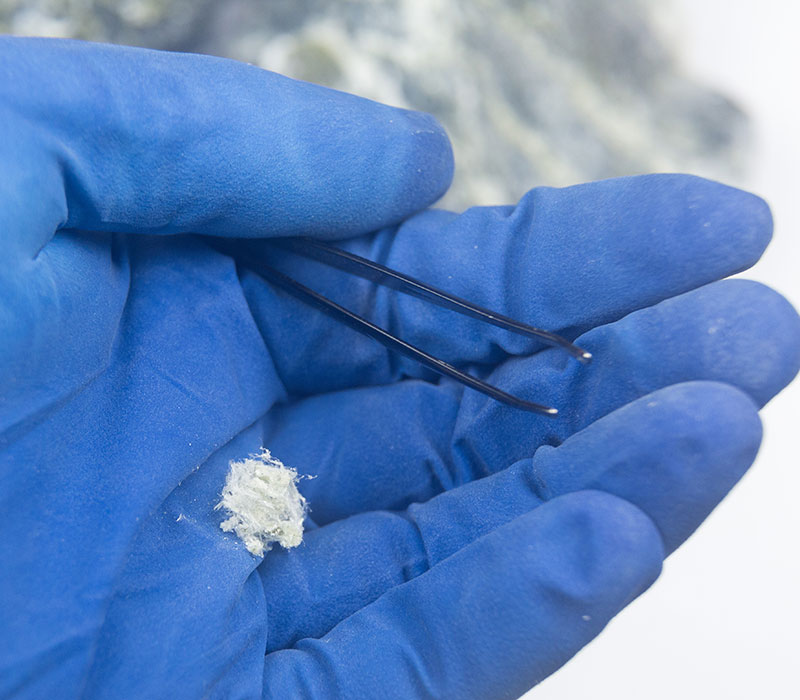
There is no telling a contaminated sheet from a safe one by eye, even for people who work with it constantly. Two soffit boards that look identical can return completely different lab results. Anything we suspect goes to a UKAS-accredited laboratory before a tool touches it, the samples taken under controlled conditions, with results back inside a few working days. We test, then we remove, never the other way round.
Stripping Extensions and Outbuilding Roofs Whole
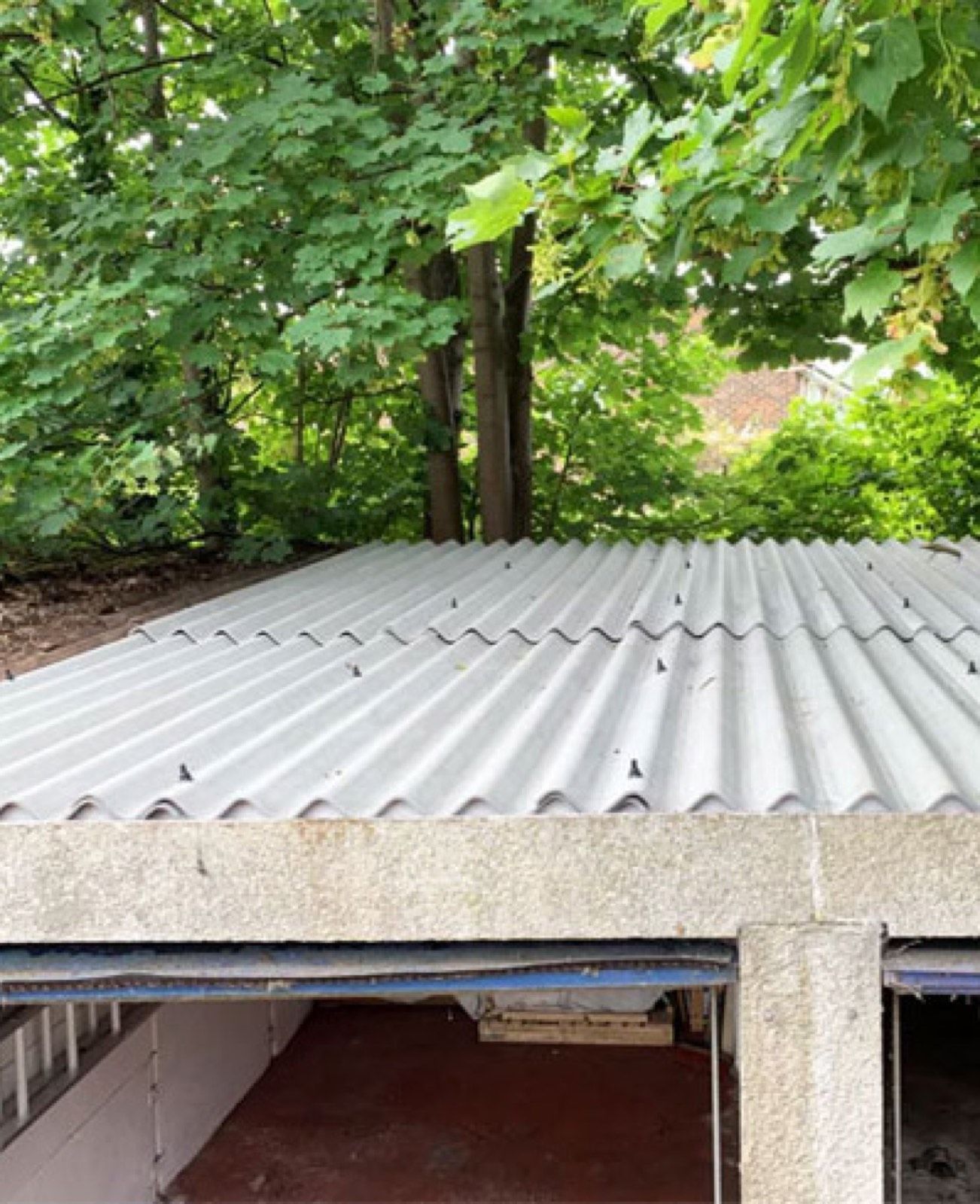
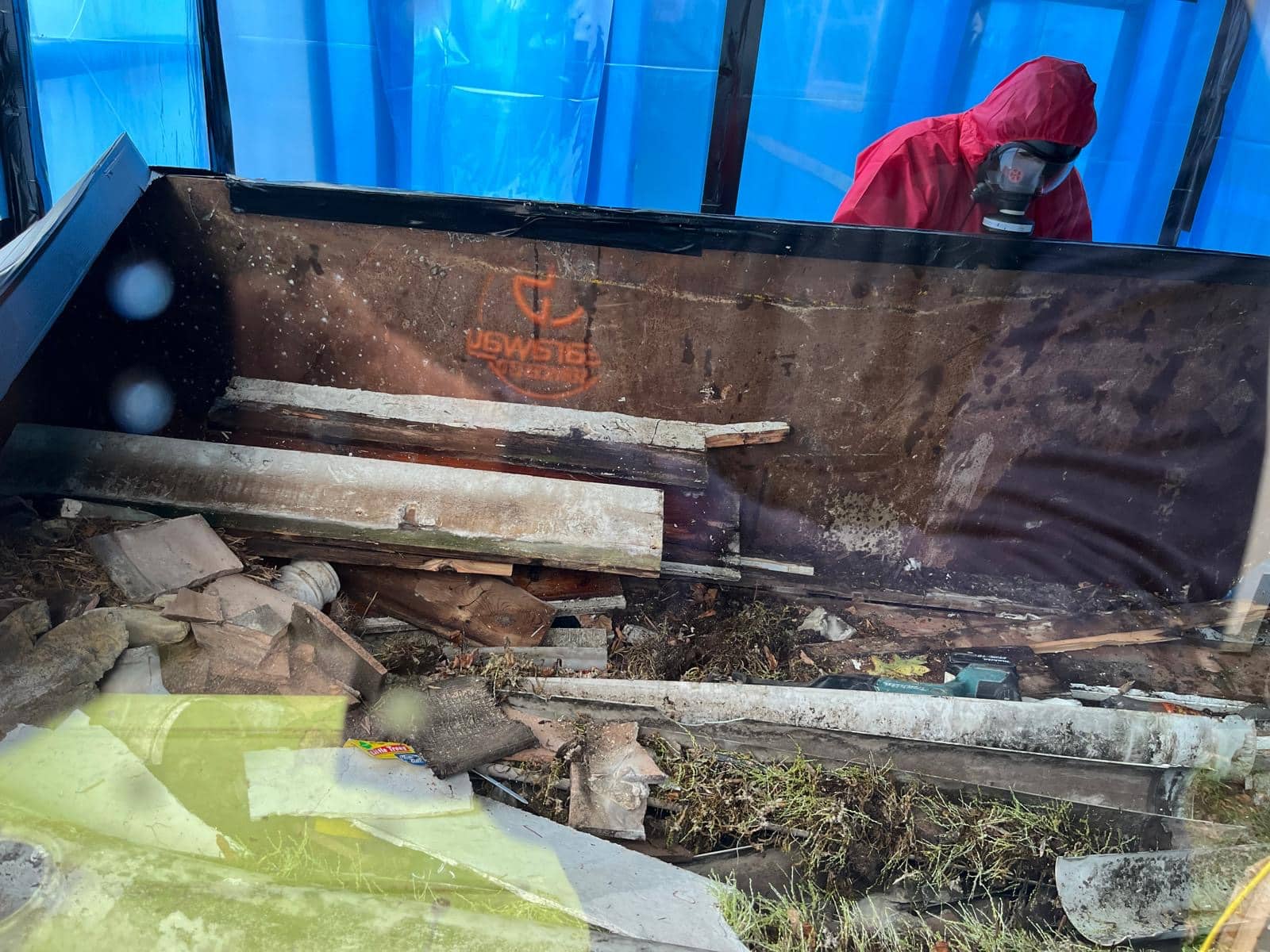
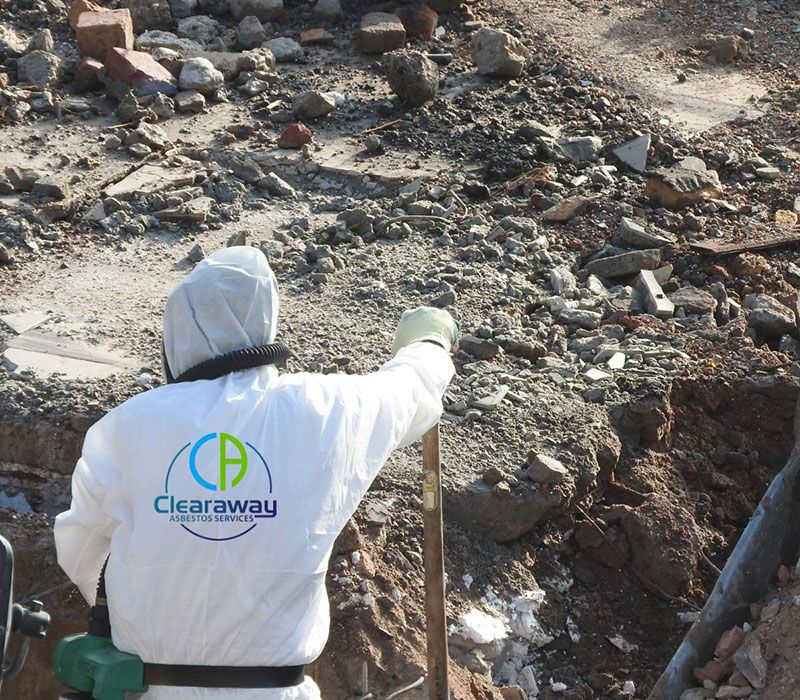
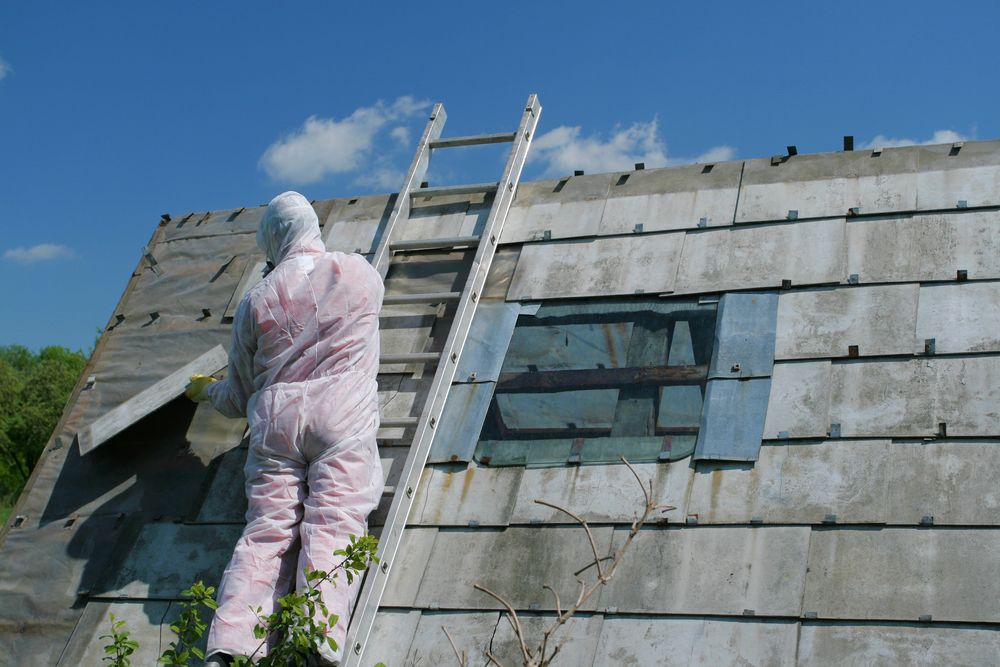
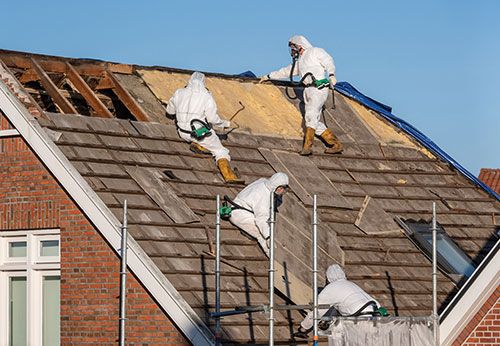
The aim on every roof is the same. Get the sheets down in one piece. A whole sheet keeps its fibres locked inside, while a sheet that snaps or gets dropped throws dust across the garden and the neighbouring fences, so we unbolt and lift each one intact rather than breaking it loose. The corrugated cement comes off a flat-roof extension, a lean-to or a garden workshop the same careful way, and the soffits, fascias and gutters on the older semis are eased off whole and lowered down rather than ripped away. Everything is double-wrapped on the ground and taken straight to a licensed disposal facility, with the waste consignment notes to show where it went. Where a roof sits high or runs across several outbuildings, we set up the access first so nobody is leaning off a ladder with a brittle sheet in hand, because most of the damage on a roof job comes from a sheet cracking on the way down.
With the asbestos gone we check the area is clean before any new roof goes back on. The replacement is matched to the building rather than forced into one option. A larger extension or outbuilding usually suits galvanised steel box-profile sheeting or a three-layer torch-on felt finish, a flat or tiled roof works where the look matters, and asbestos-free fibre cement gives you the old profile without the danger. Soffits and fascias go back in modern uPVC or a fibre-cement board that will not need touching again, which on the Oatlands semis tidies up the whole eaveline at the same time. Boxing out, sealing and covering the material instead of taking it away, is sometimes an option on a sound roof, though on weathered roofing a clean strip is almost always the better long-term call.
Bigger Roofs and Licensed Work
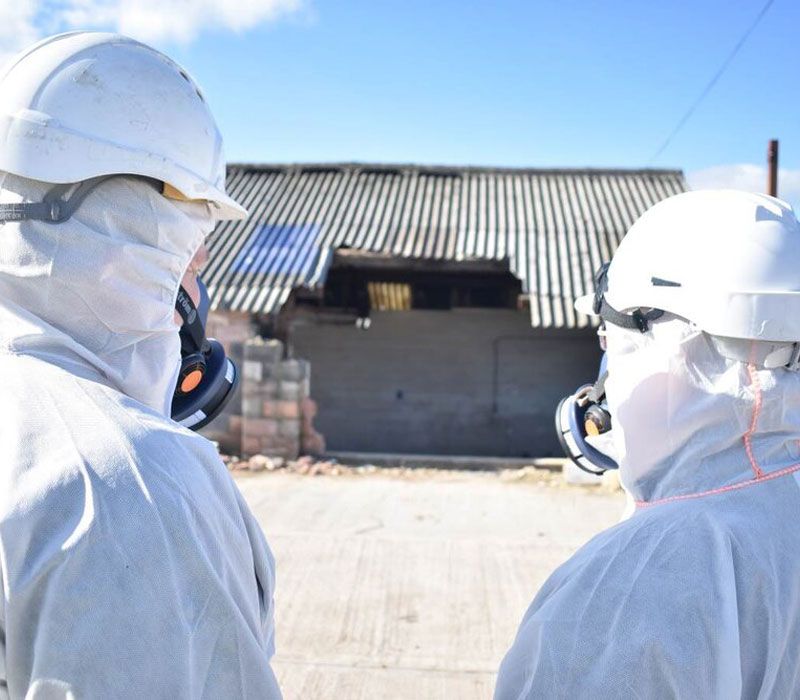
Most domestic roof jobs in Weybridge are non-licensed cement work and are finished inside a day or two, depending on the spread of the roof and how high it sits. A single extension or outbuilding roof is usually quick. A larger property near St George's Hill with several outbuildings, long runs of soffit and high gable roofing takes longer and needs proper access and scaffolding, and the bigger the roof, the more sheets there are to bring down without breaking one.
Where the survey finds a higher-risk licensed material, the work steps up to the strictest standard. We give the HSE the 14 days of notice the law requires, work under full enclosure with continuous air monitoring, and finish with independent four-stage clearance testing by an analyst before the area is signed off. Smaller cement roofs do not always need that level of control, but we treat every job as licensable until the sampling proves otherwise, because guessing is exactly what causes the damage.
We hold Spectra licence number 142305706, we have worked across Surrey, Sussex and south-west London for more than seven years, and every roof we strip ends with the consignment notes and certificates that prove the material left the site and was disposed of legally. To get an asbestos roof in Weybridge looked at, call 0800 024 6168 and we will arrange a free site visit and a fixed written quote.
Licensed Asbestos Removal, Weybridge
Weybridge, Surrey · Licensed Removal
View this project"Clearaway Asbestos did a brilliant job coming out to survey our old garage roof for asbestos. They were professional and we were impressed with the job they did replacing the garage roof"
Frequently Asked Questions
Our Removal Process
From first call to final certificate, every job follows the same clear four-step process.
Survey
We inspect the property and confirm the material. Sampling available if required.
Quote
Fixed written price covering removal, disposal and any replacement work.
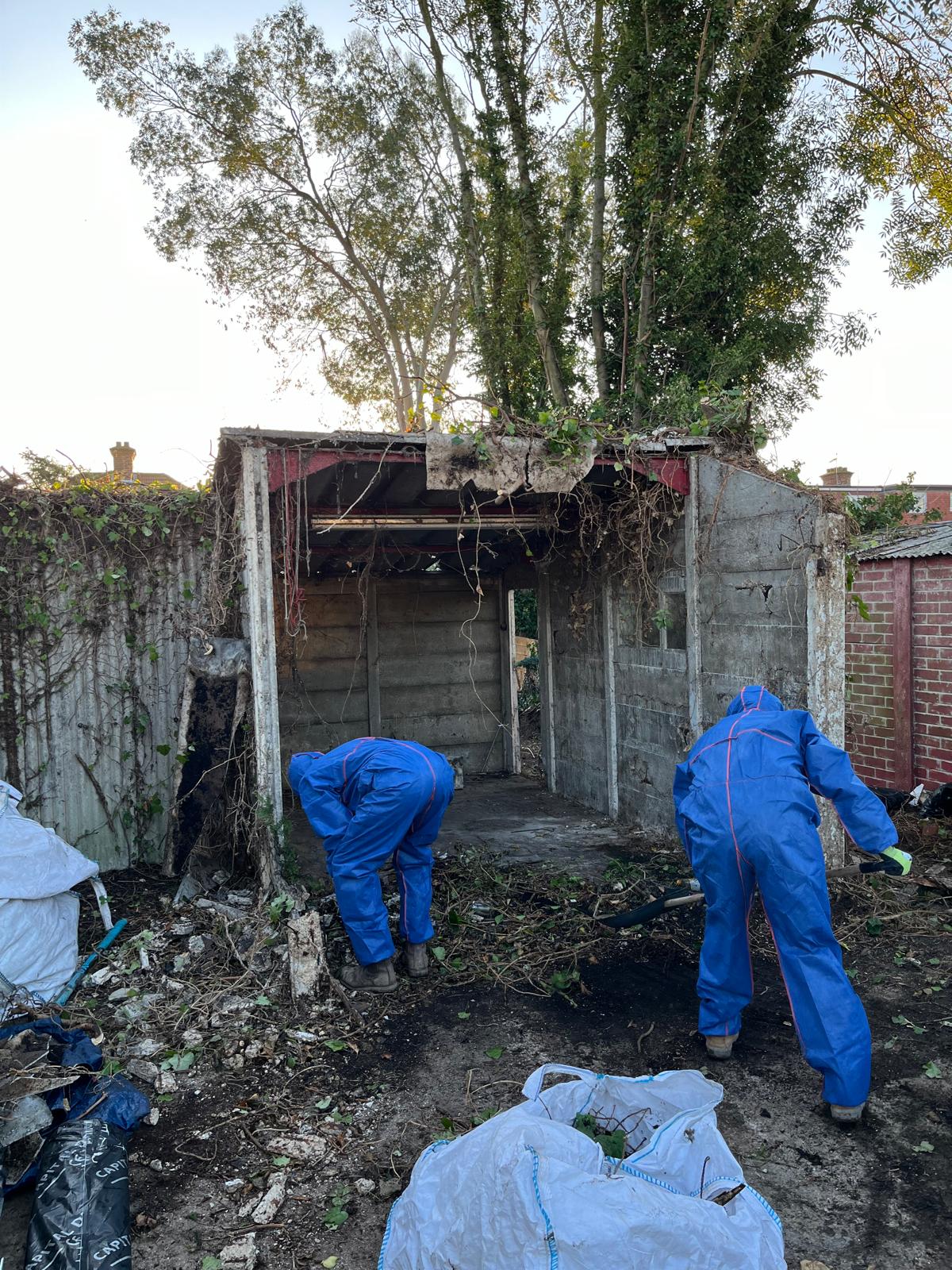
Removal
Material is removed safely, double-wrapped and taken to a licensed disposal facility.
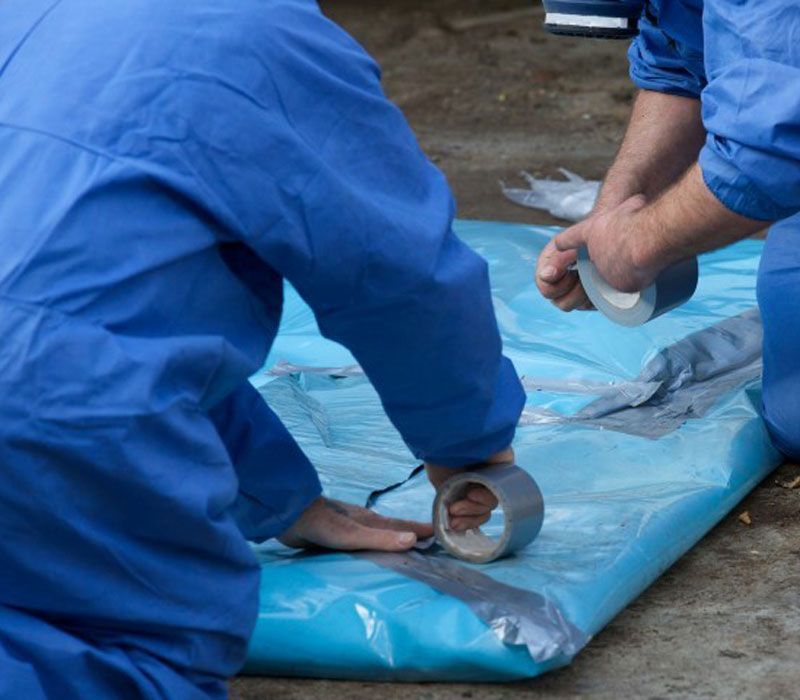
Certificate
You receive a waste consignment note and disposal certificate confirming legal handling.
Why Choose Clearaway
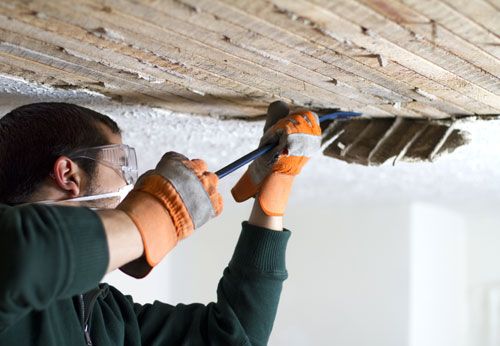
Specialist Crew
Asbestos work is all we do, every day, across the South East.
Fully Licensed
Licensed asbestos removal contractor (Licence No. 142305706). Full public liability insurance on every job.
Local & Fast
Surrey-based. Most domestic jobs are booked in and finished within a week.
Our Own Team
We never subcontract. The people who quote your job are the people who do it.
Get in Touch
Send a few details about your project and we will come back the same working day with a fixed price. We cover Surrey, London and the South East, including Esher, Cobham, Kingston, Richmond, Epsom, Guildford, Woking and Croydon.