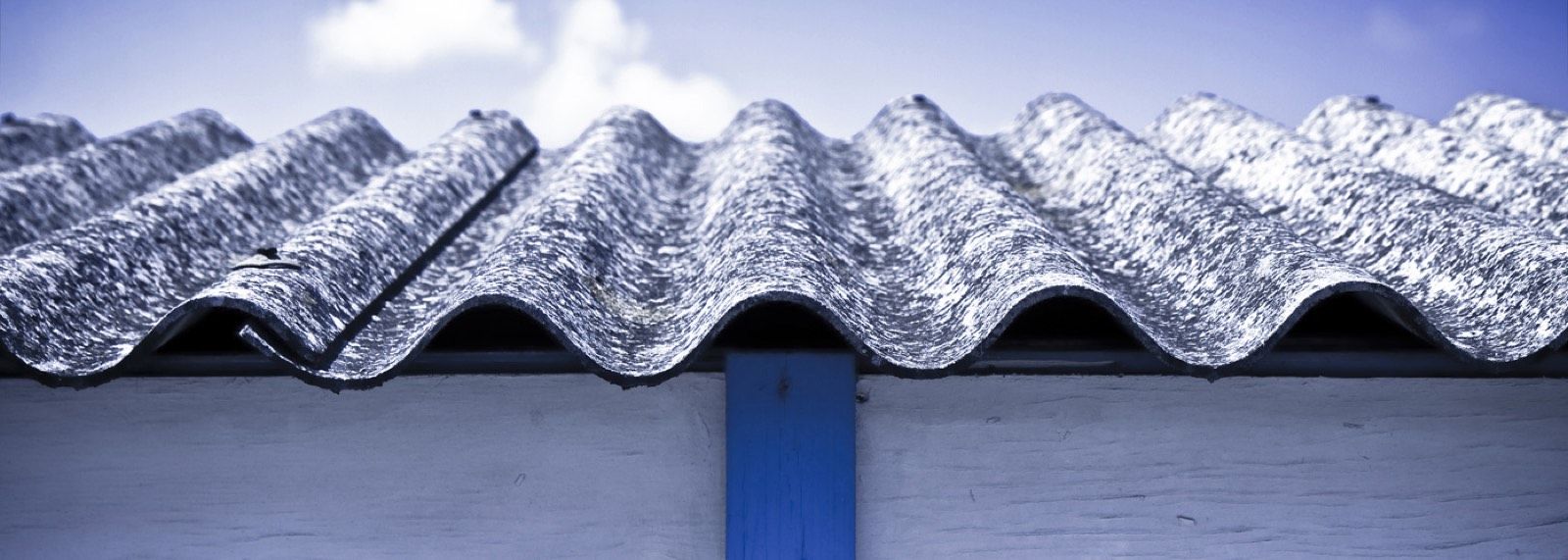
Asbestos Roofing Removal in Twickenham
Licensed asbestos roof removal across Twickenham, from the flat-roof extensions and garden outbuildings of St Margarets to the cement soffits on the Whitton semis. Whole-sheet stripping, replacement options, and the certificates to prove the work was done safely.
The Roofs Behind Twickenham's Houses
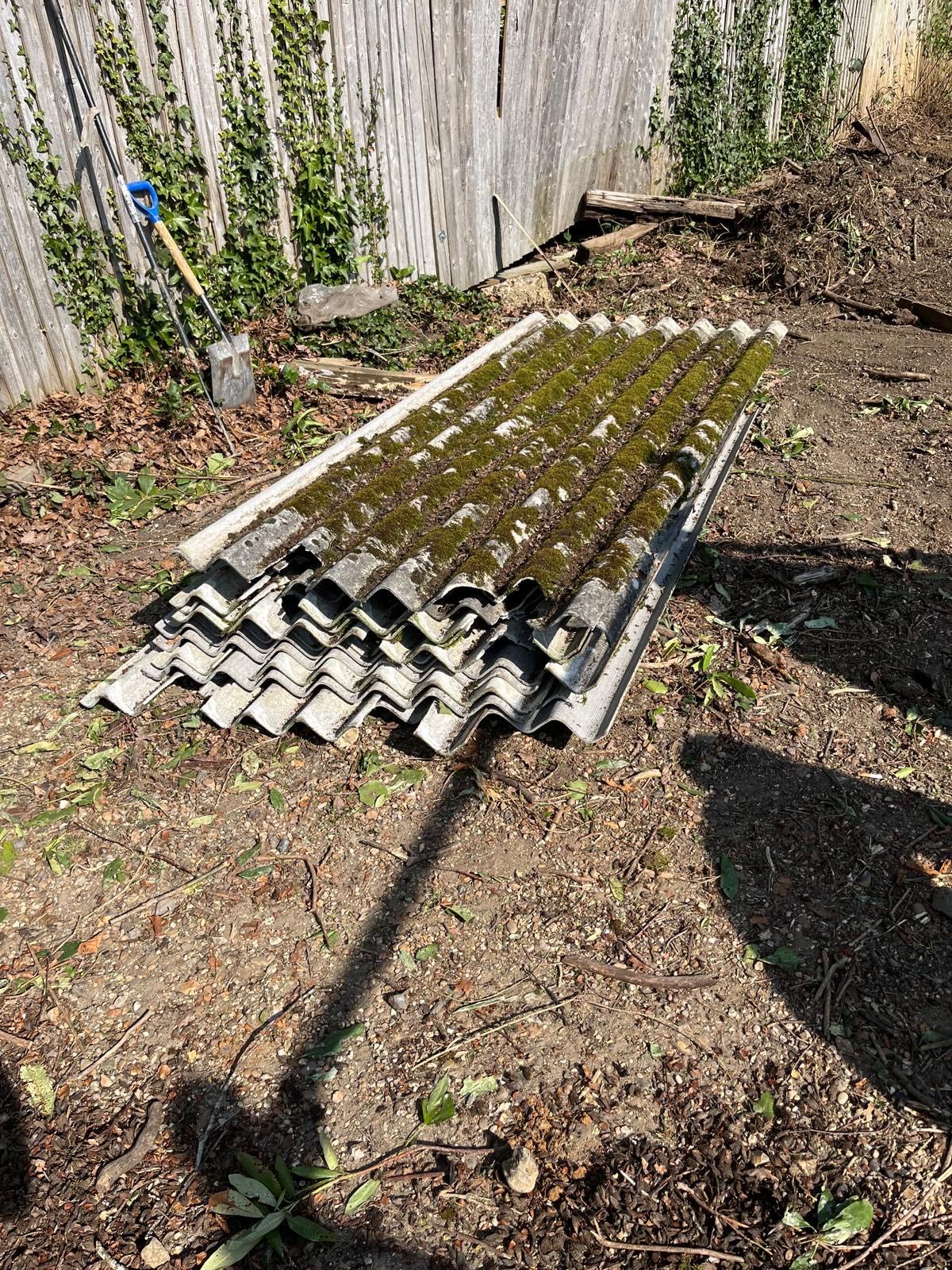
Walk the back gardens of Twickenham and you find a second layer of building the street never shows. Behind the Victorian terraces near the town centre and the interwar semis out towards Whitton sit lean-tos, garden workshops, old coal stores and flat-roof extensions thrown up across decades of additions. A great many of them are roofed in corrugated cement, and on the larger houses down towards the river the same material runs along the soffits, gutters and fascia boards under the eaves.
This is the asbestos most owners forget about, because it is rarely the thing you see from the front door. It went on after the war, weathered through every winter since, and stayed put while the rooms underneath were decorated and re-decorated. The TW1 and TW2 streets are full of it. None of it was unusual at the time. Cement sheet was cheap, it kept the rain out, and it covered everything from a single rear kitchen extension to the long roof of a workshop behind a bigger property near Strawberry Hill. Twickenham gives that pattern more room than most places. The riverside village character is still there in the older streets, but the housing stretches from the Victorian and Edwardian decades right through the years between the wars, and every era added its own outbuildings and extensions behind the main house. The bigger the plot, the more there usually is out the back, and the longer the runs of soffit and fascia along the eaves.
All of it predates the year asbestos was banned in the UK, which came in 1999. Left whole and painted it sits there harmlessly. It is the weather, the years and the eventual repair job that turn an old roof into a problem, and that is the point at which it stops being someone else's worry and becomes yours.
Why a Weathered Roof Is the Higher Risk
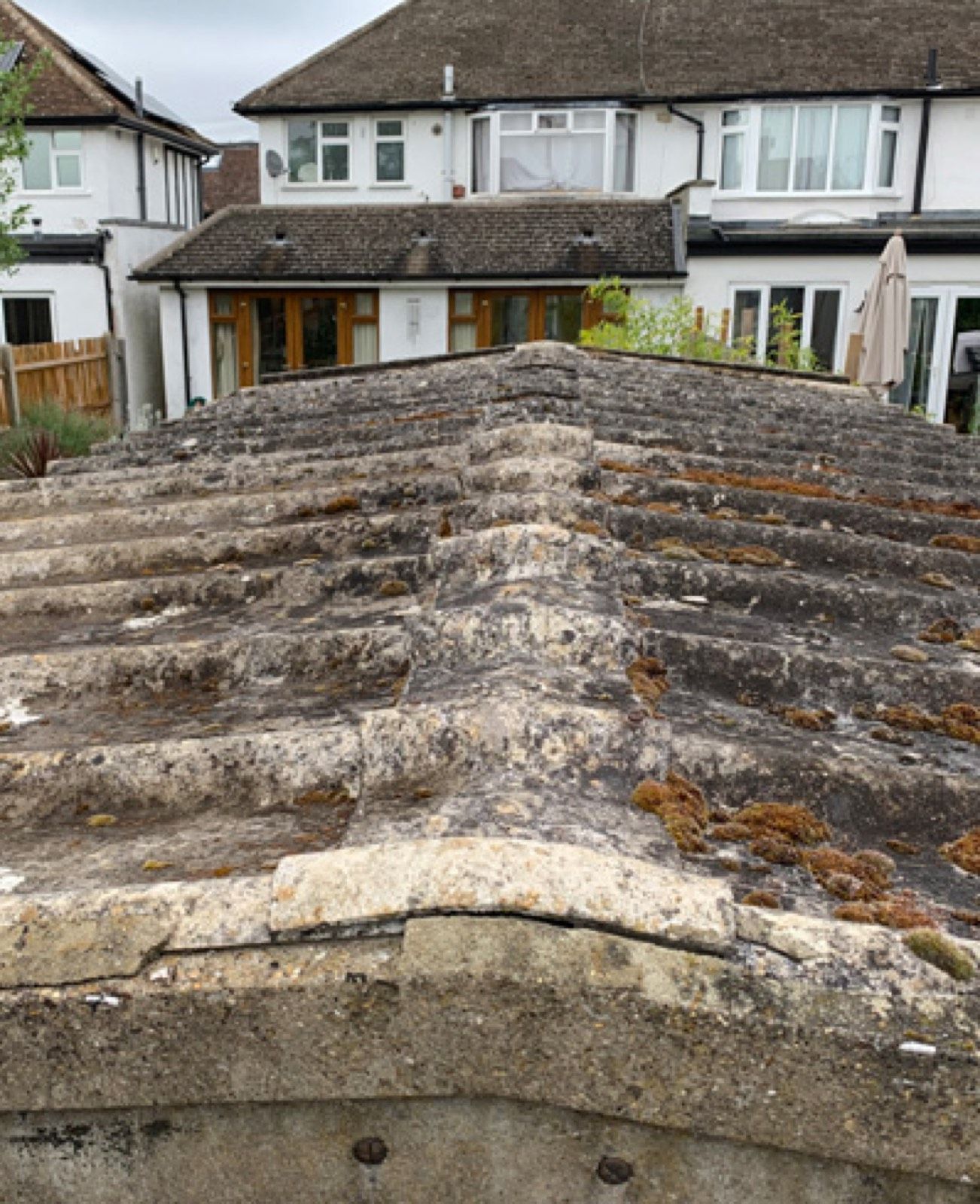
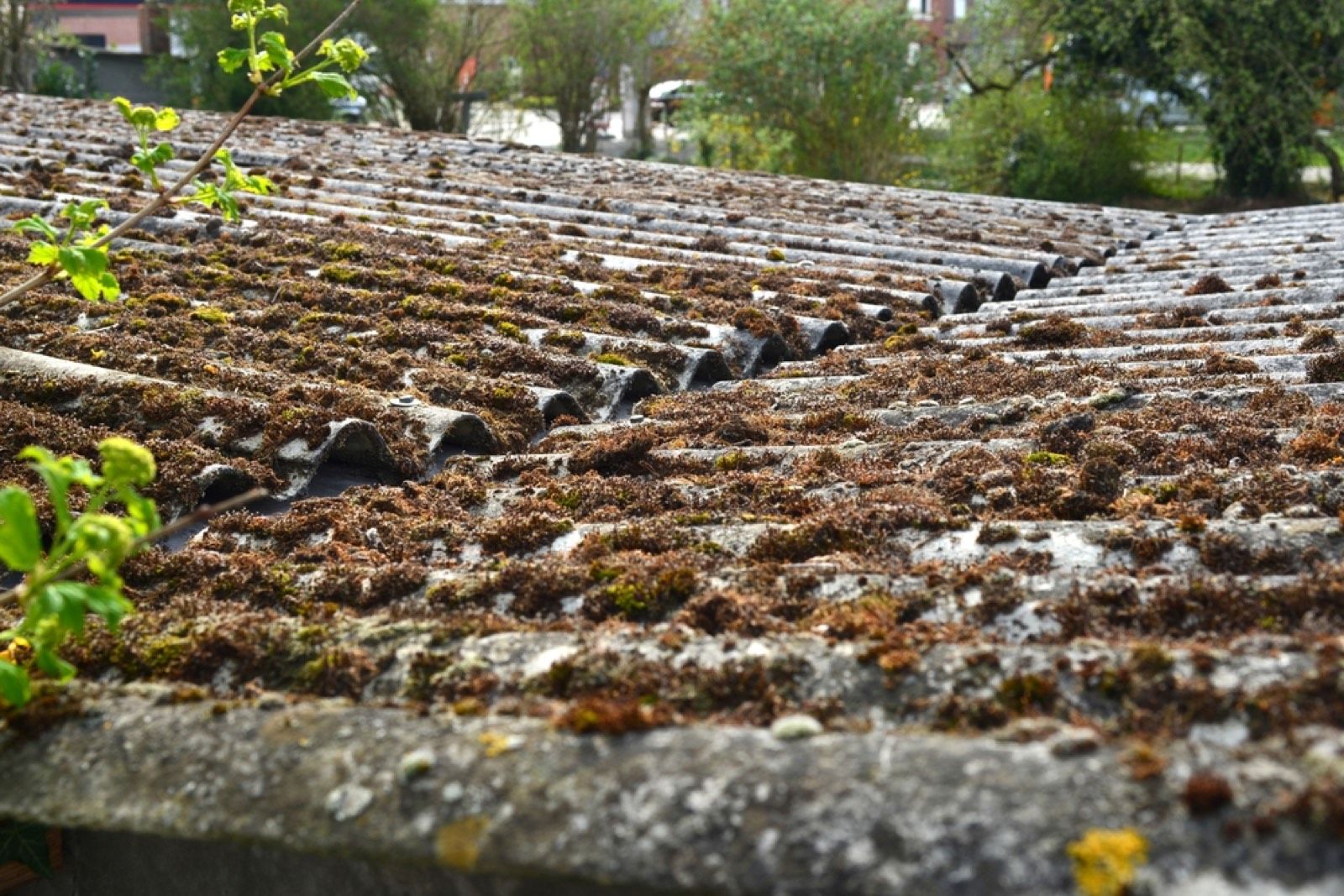
A cement roof sheet is most dangerous when it has started to break down. Decades of frost, sun and rain crack the surface, the cement softens, and the fibres that were once locked tight begin to work loose. A roof you can crumble at the edge with a thumbnail is shedding far more than one that is sound. That is what makes a deteriorating extension or outbuilding roof more of a hazard than a sheet someone painted and left well alone ten years ago. The trouble in Twickenham is that these roofs have had a long time to go off. A flat-roof extension put on in the 1970s has seen fifty winters, and an outbuilding at the bottom of the garden gets even less attention than the house, so the moss builds up, the surface goes chalky, and the edges flake where the fixings have worked loose. By the time an owner notices, the roof is often near the end of its life, which is exactly when it is shedding most.
Soffits and fascia boards carry their own version of the same problem. They sit high under the eaves on the larger Twickenham houses, out of sight and out of mind, until a roofer or a decorator goes up a ladder, finds them soft and flaking, and starts knocking them about. Replacing guttering, fitting new windows or clearing a blocked downpipe can all bring someone into contact with them without anyone realising what the board is made of. Drilling, cutting or snapping any of it releases fibres that lodge in the lungs and cause asbestosis, lung cancer and mesothelioma, often decades after the work was done.
None of it can be confirmed by eye. A flaking soffit and a sound one can look identical from the ground, and two sheets off the same roof can come back from the lab differently. Anything we suspect on a Twickenham property is sampled and sent to a UKAS-accredited laboratory before a tool touches it. Results usually land within a few working days, and we will not begin removal until we know exactly what is up there. It is a small step that decides everything about how the rest of the job is run.
How We Strip an Extension or Outbuilding Roof
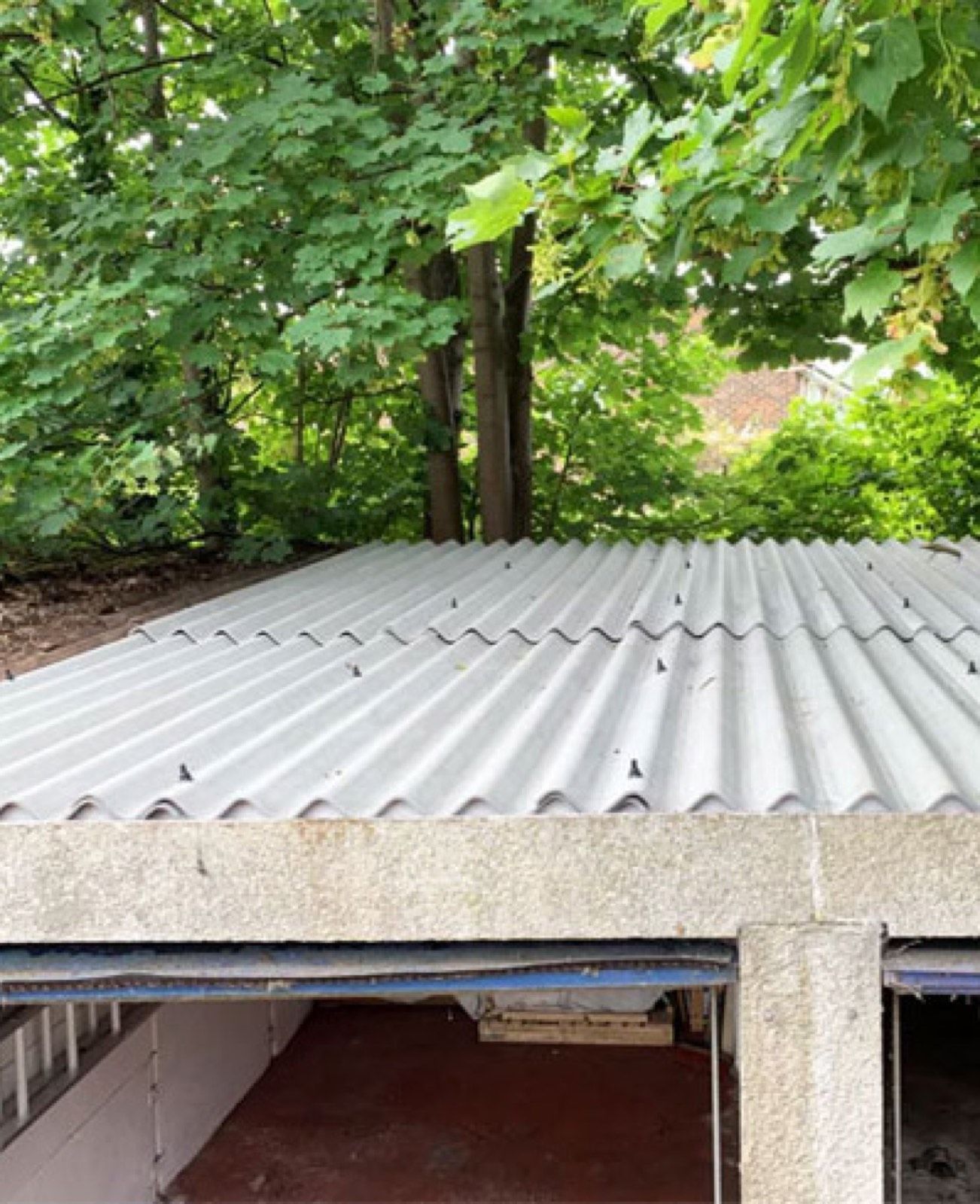
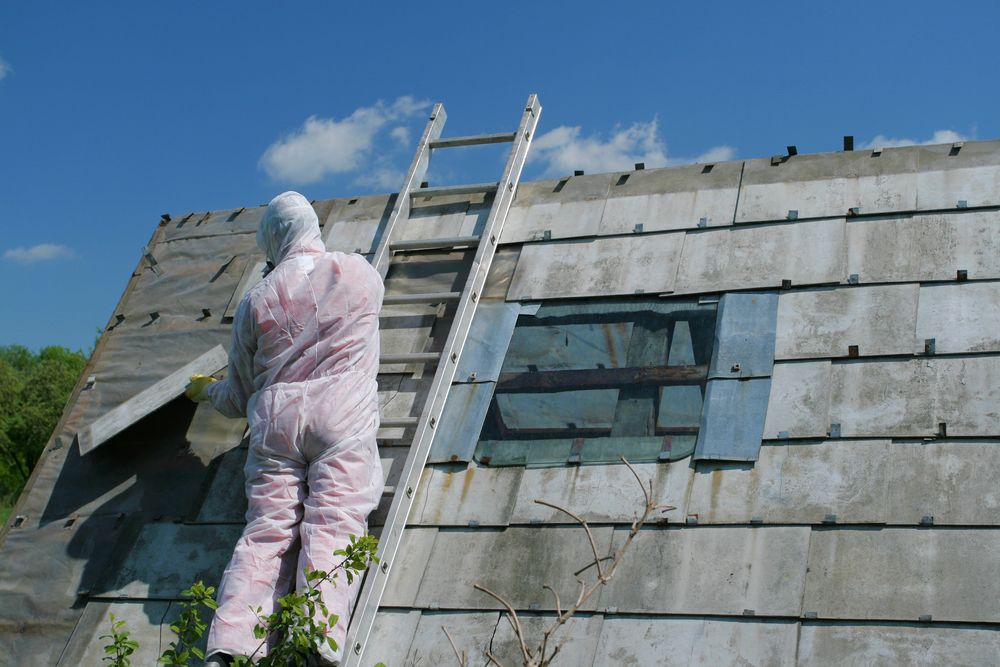
The aim on every roof is to bring the material down in one piece. We lift and unbolt cement sheets whole wherever they are still intact rather than breaking them up at height, because a broken sheet throws fibres and an intact one does not. The fixings are eased out rather than snapped, the sheets are lowered rather than dropped, and they go straight to a licensed facility along with any old felt, flashing or bolts that came off with them. The structure underneath is then cleared and checked before anything new goes back on.
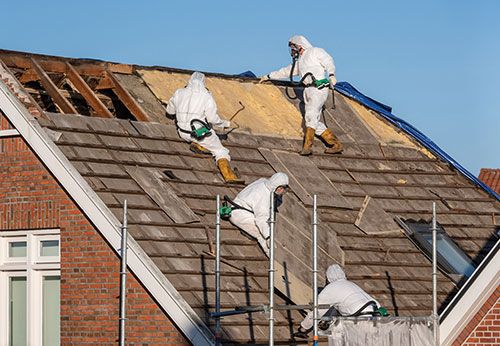
Soffits, gutters and fascia boards are taken down the same careful way, section by section under the eaves rather than ripped off in a rush. Working high on a larger house calls for proper access and a tidy method, so nothing is left to fall into the garden below. On a single rear extension the whole strip is often a one-day job. A longer outbuilding roof, or a full run of soffits and fascias around a bigger riverside house, takes proportionally longer, and the timing depends on the size of the roof, the access and how far gone the material already is.
With the asbestos gone you are rarely left with bare rafters for long. Where you want the extension or outbuilding weathertight again we fit a replacement to suit the building, whether that is galvanised steel box-profile, three-layer torch-on felt, a flat or tiled roof, or asbestos-free fibre cement. The right choice depends on what sits on top, how visible it is from the house, and whether it is a working roof or a cover for storage. Soffits and fascias go back in a modern board that does the same job without the risk. Boxing out is an option where it makes more sense to cover and protect than to replace, though on a roof that has already started to break down, taking it off is usually the cleaner answer.
Licensed Standards and the Paperwork
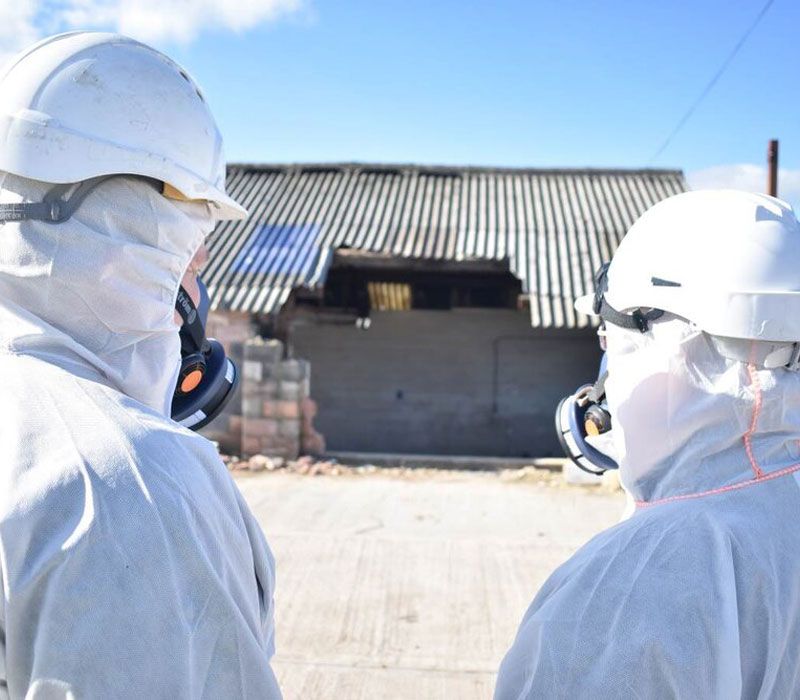
Most extension and outbuilding roof sheets are non-licensed work, which still means full containment, the right protective equipment and disposal at a licensed facility, but not the heaviest controls. That is the case for a good share of the cement roofs we take off in Twickenham. It does not mean the job is casual. The sheets are still kept whole, the waste is still bagged and tracked, and the area is still cleaned down before we leave. Where sampling shows a higher-risk material, the standard steps up. We give the HSE the 14 days' notice the law requires, work under full enclosure with air monitoring throughout, and finish with four-stage clearance testing by an independent analyst before the area is signed off. The sample result taken at the start is what decides which of these two routes a job follows, which is the main reason we test before we quote rather than guess on the day.
Every job, large or small, ends with the same proof. You get a waste consignment note showing the material went to a licensed facility, plus survey and air-test results where the work called for them. It matters if you ever come to sell, and it matters more on a property where the roof was only part of a wider renovation and a buyer's surveyor will want to see it was handled properly.
We hold Spectra licence number 142305706 and have worked across Twickenham and the wider TW postcodes for more than seven years, on everything from a single flaking lean-to to the soffits running the length of a larger riverside house. To arrange a free site visit and a fixed written quote anywhere in Twickenham, call the team on 0800 024 6168.
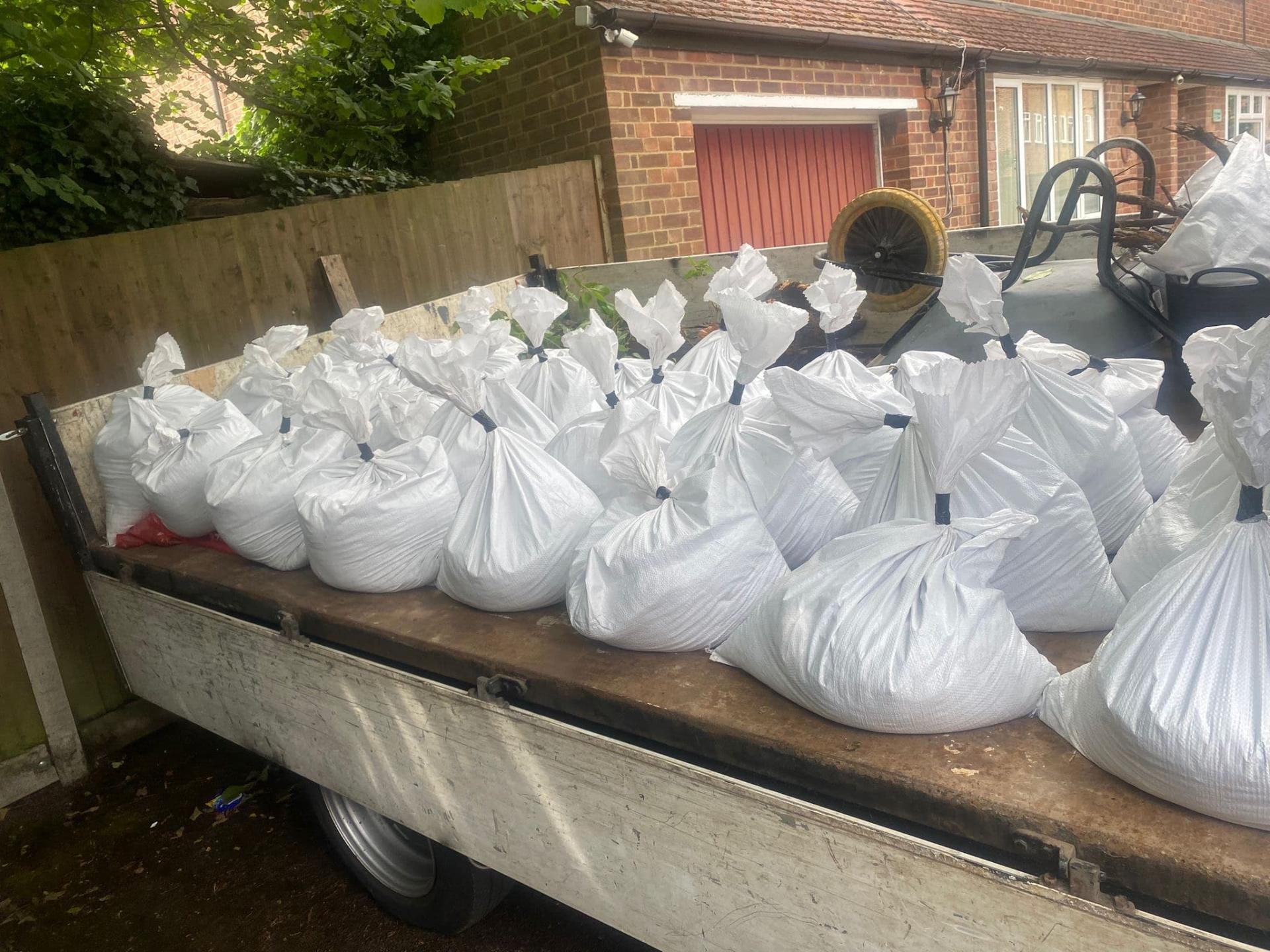
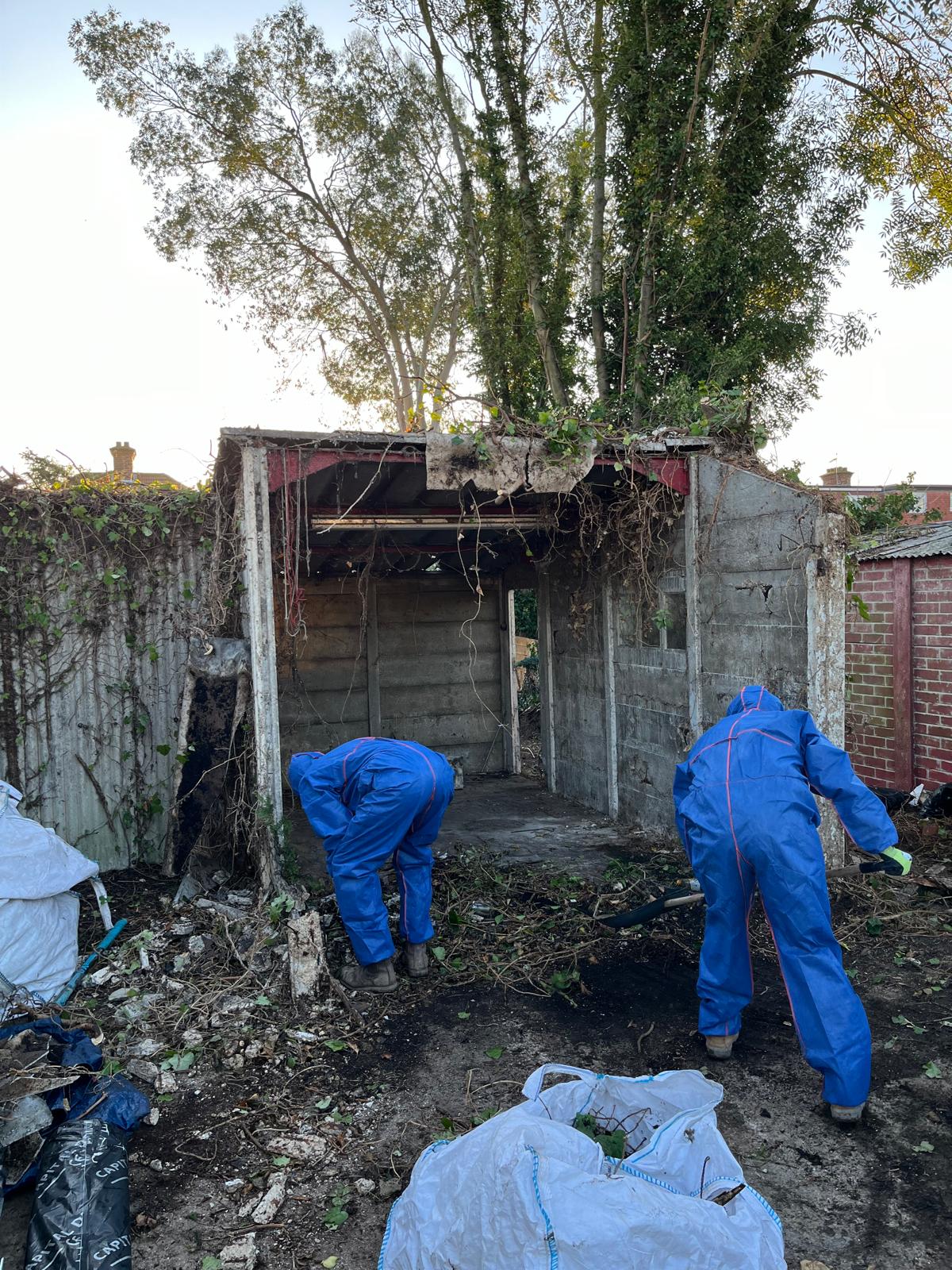
Asbestos Soil Fragments Clearance, Chessington
Chessington, Surrey · Soil Clearance
View this project"Graham and his staff done a great job of removing my concrete and asbestos garage thank you"
Our Removal Process
From first call to final certificate, every job follows the same clear four-step process.
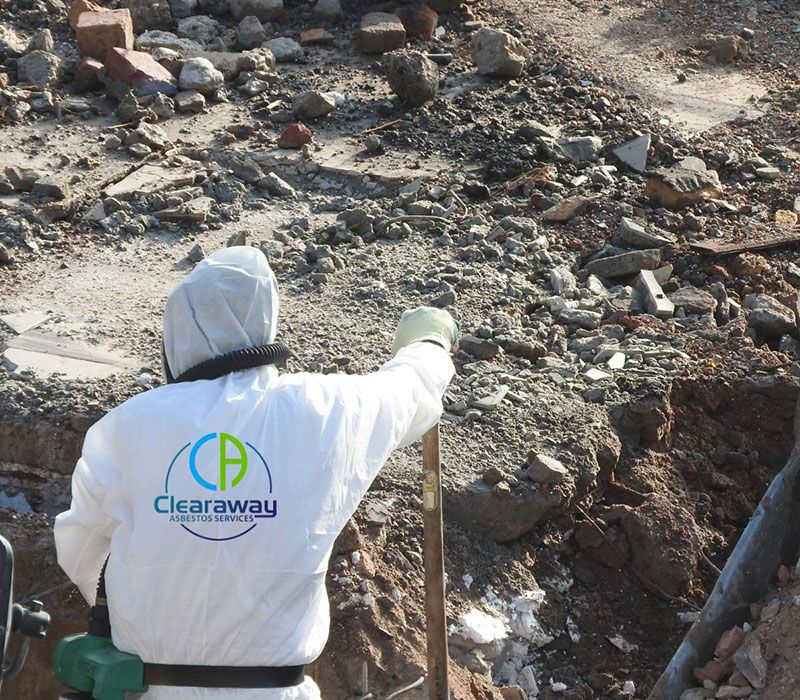
Survey
We inspect the property and confirm the material. Sampling available if required.
Quote
Fixed written price covering removal, disposal and any replacement work.
Removal
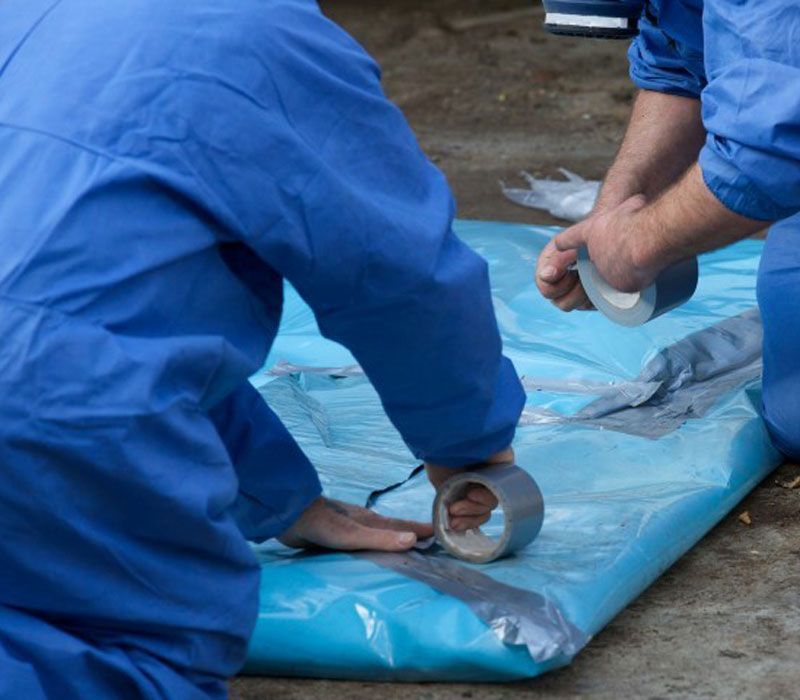
Material is removed safely, double-wrapped and taken to a licensed disposal facility.
Certificate
You receive a waste consignment note and disposal certificate confirming legal handling.
Frequently Asked Questions
Why Choose Clearaway
Specialist Crew
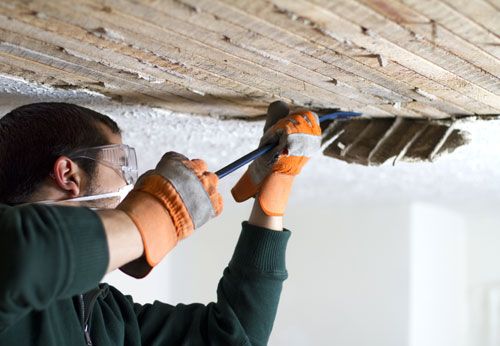
Asbestos work is all we do, every day, across the South East.
Fully Licensed
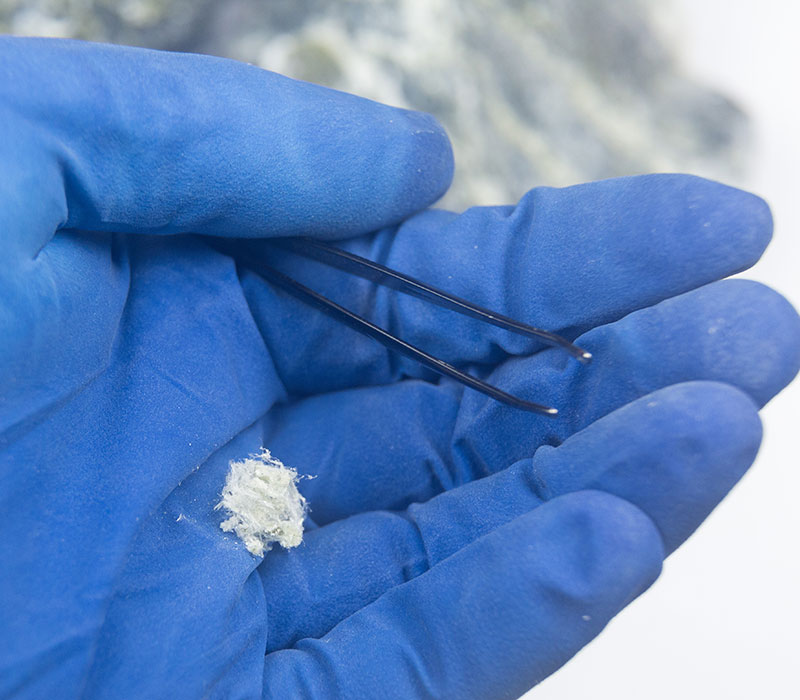
Licensed asbestos removal contractor (Licence No. 142305706). Full public liability insurance on every job.
Local & Fast
Surrey-based. Most domestic jobs are booked in and finished within a week.
Our Own Team
We never subcontract. The people who quote your job are the people who do it.
Get in Touch
Send a few details about your project and we will come back the same working day with a fixed price. We cover Surrey, London and the South East, including Esher, Cobham, Kingston, Richmond, Epsom, Guildford, Woking and Croydon.