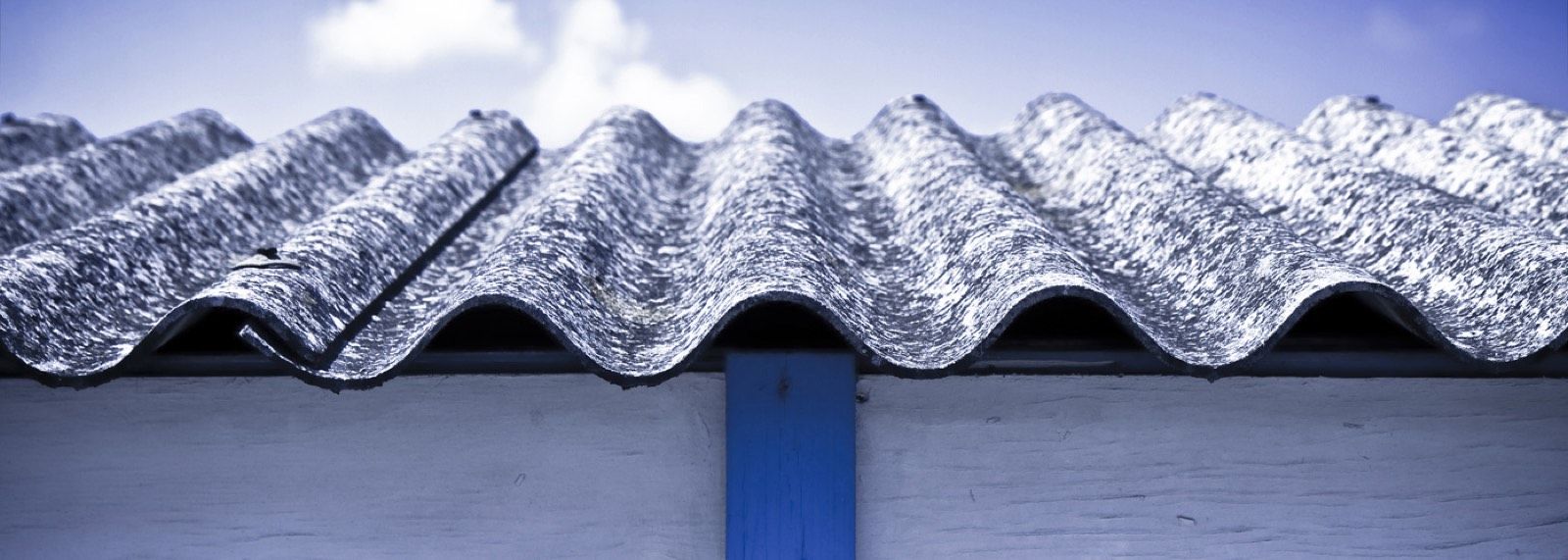
Asbestos Roofing Removal in Dorking
Licensed removal of asbestos cement roofing across Dorking, from outbuildings and lean-tos behind the larger houses off the Deepdene to the soffits and fascias on the interwar semis towards Pixham and North Holmwood.
The Roofs the Surrey Hills Weather Hardest
Drive around Dorking and you start to notice the roofs that were never meant to be seen. A flat-roof extension at the back of a Victorian terrace off South Street. A lean-to against the side of a 1930s semi. An outbuilding or workshop tucked behind one of the larger houses on the Deepdene side, its roof a run of corrugated cement laid decades ago. These are the roofs that take the full force of every winter coming off the North Downs, and a good number of them still contain asbestos.
The town sits beneath Box Hill at the southern edge of the Surrey Hills, and the weather here is not gentle on old building materials. Cement roof sheeting was fitted across Dorking from the 1950s through to the 1980s on sheds, extensions and any structure where a cheap, fire-resistant roof would do. Most of it predates the 1999 ban outright. The bigger houses on the older parts of town often came with more than a single shed roof, a run of outbuildings, a long covered way, a workshop the size of a small barn, and all of it sheeted in the same grey corrugated cement.
Removing that material safely, on roofs that are often higher and larger than a simple lock-up garage, is a steady part of what we do across the RH4 and RH5 postcodes. A garage roof you can almost reach from the ground. A two-storey rear extension or an outbuilding behind a large period house is a different job, and it needs treating as one.
Why a Tired Roof Is the Bigger Risk
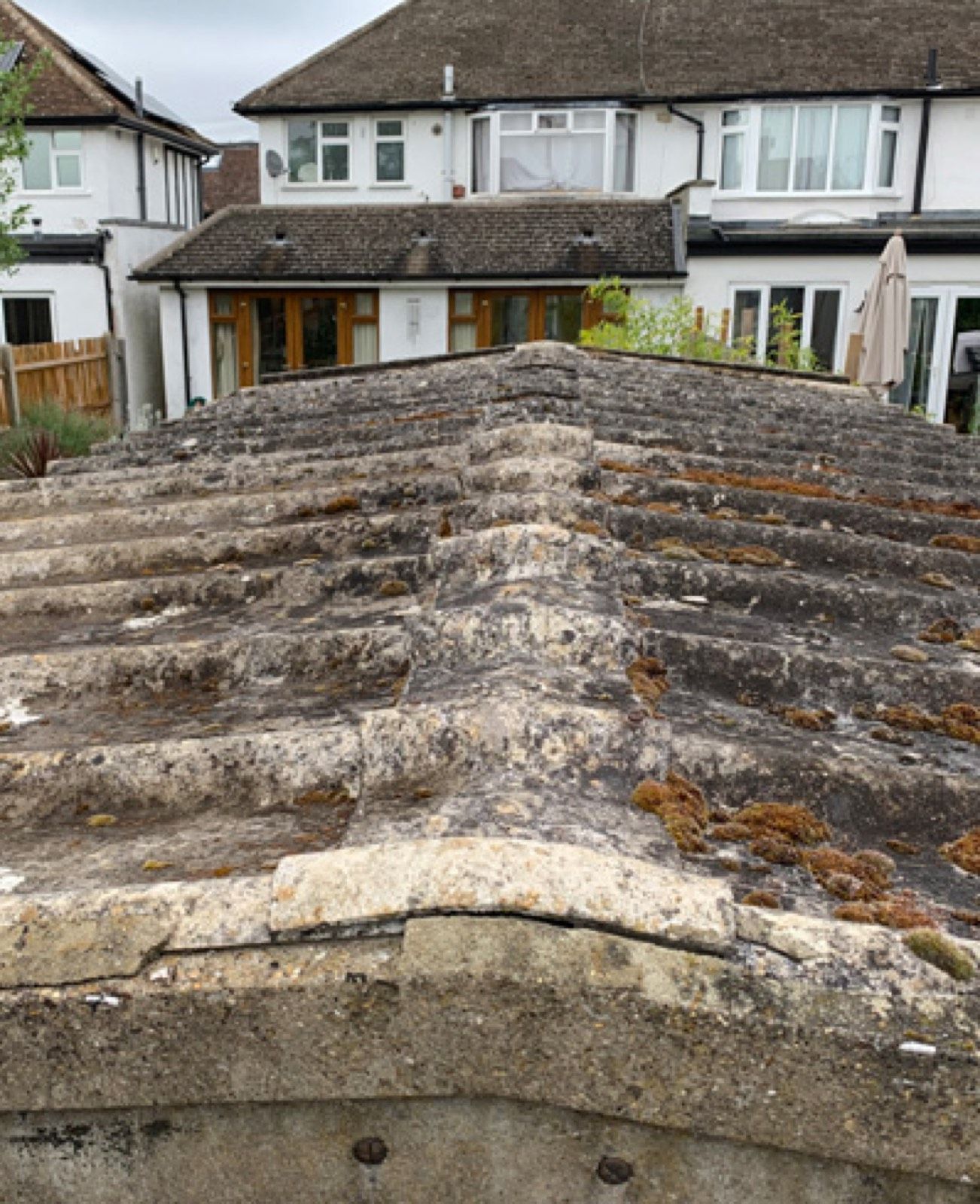
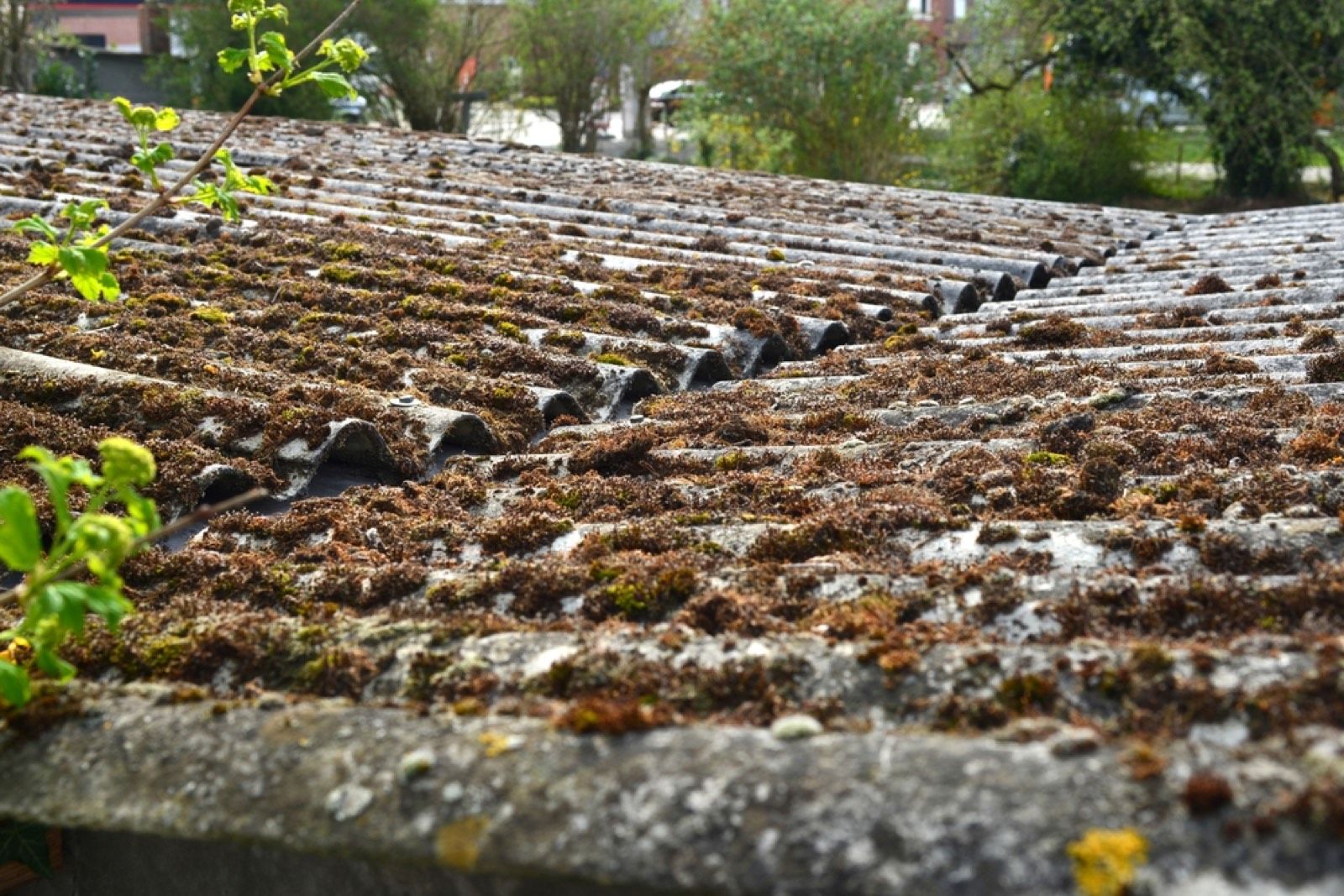
Asbestos cement is at its safest when it is whole and left alone. The fibres are bound into the sheet, and an intact roof in good order poses little danger to anyone living under it. The trouble starts with age and weather. Years of rain, frost and sun on an exposed Dorking roof break down the cement matrix that holds the fibres in place. The surface goes chalky and friable, moss works into the cracks, and a sheet that was solid in 1975 becomes brittle enough to crack under a footfall or a fallen branch.
A deteriorating roof is a higher risk than a settled one precisely because it is already shedding. Hairline cracks let fibres wash off in the rain and blow off in the wind, and the moment anyone climbs up to patch a leak or clear a gutter, the disturbance releases far more. Those fibres are too fine to see. Breathed in, they can sit in the lungs for twenty to forty years before causing asbestosis, lung cancer or mesothelioma. That long delay is why the law treats this material so carefully, and why a failing extension roof is not a job for a borrowed ladder on a Saturday morning.
The larger the roof, the more this matters. A small shed sheds a small amount. A long outbuilding roof or a wide extension covered in failing sheets is a far bigger surface area, and the temptation to deal with it cheaply, by lifting a few sheets, jet-washing the moss off, or breaking it up to fit a skip, is exactly what turns a manageable roof into a contamination problem across the whole garden. The safe route is slower and it does not involve a pressure washer.
How We Take a Larger Roof Down
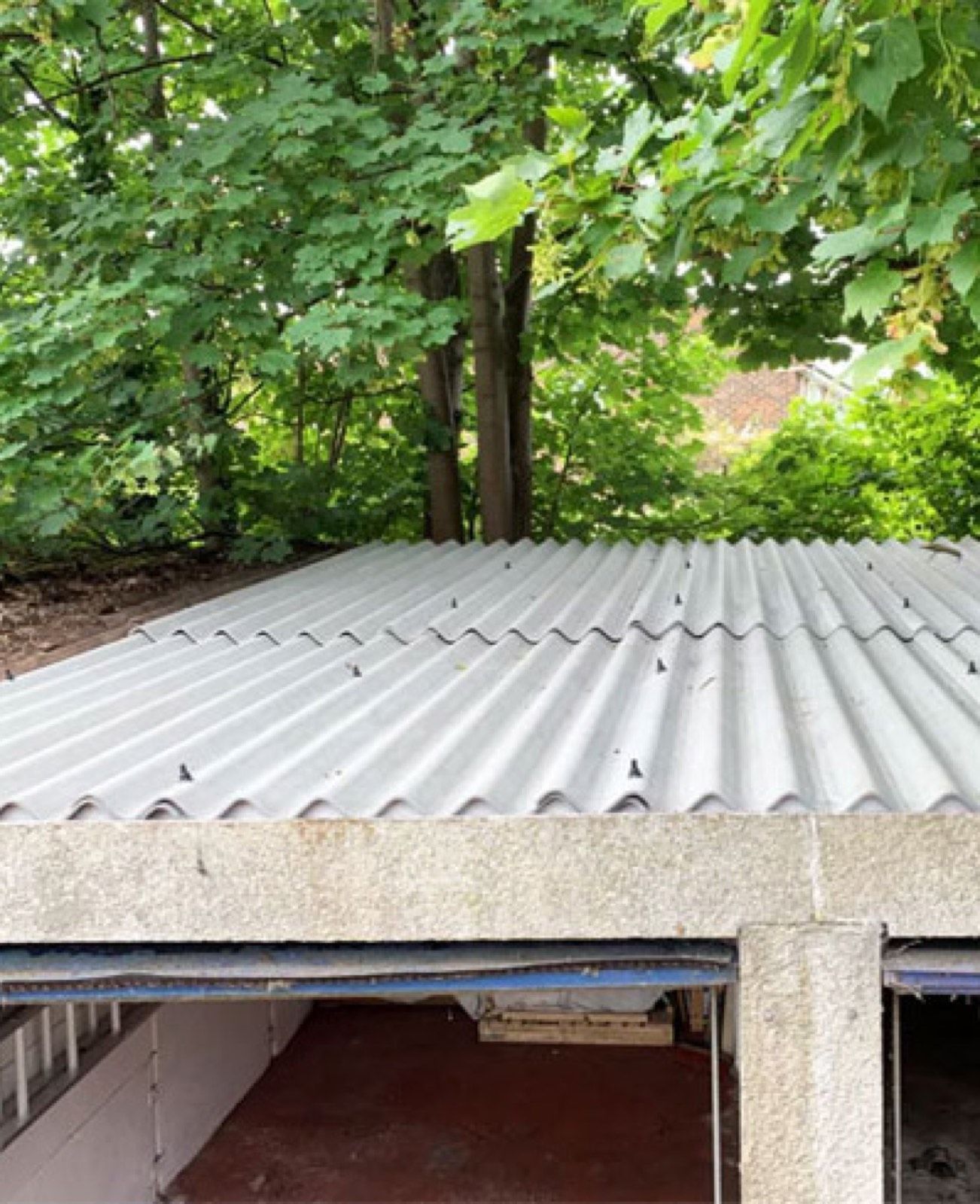
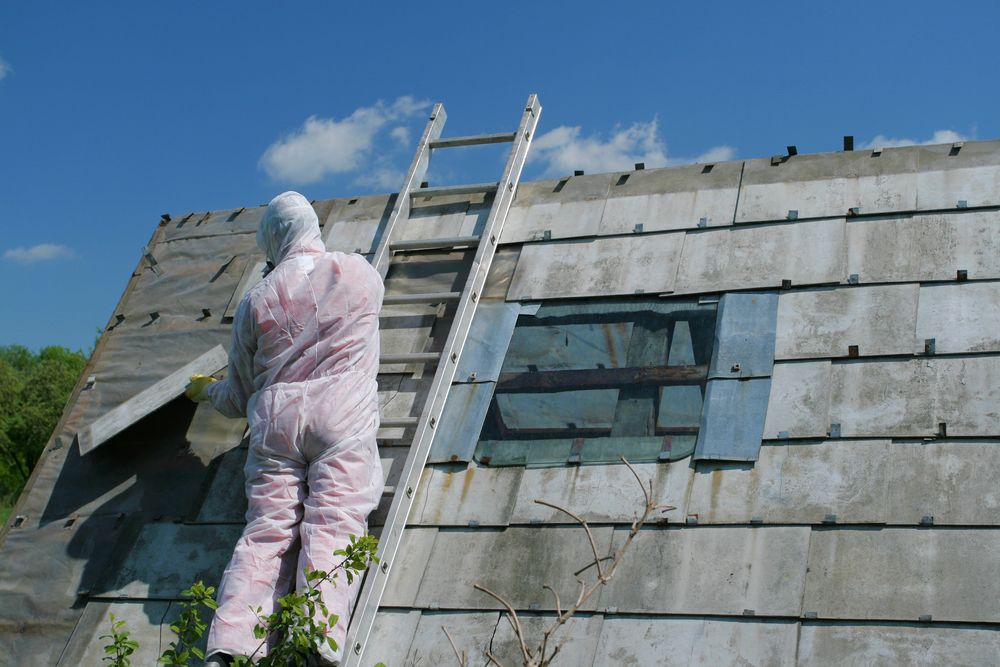
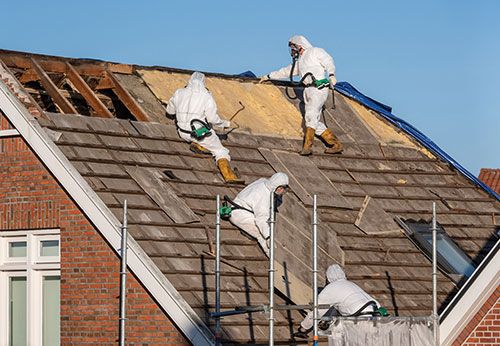
The aim on every roof is the same: keep each sheet whole. Breaking or snapping cement sheeting is what throws fibres into the air, so we lift the fixings and take the sheets down intact wherever they will come, working from proper access rather than off a ladder balanced against a gutter. On a larger or higher roof, a rear extension, a sizeable outbuilding, a long lean-to, that means setting up the right platform first so the team can move safely and handle full sheets without forcing them. Once they are down, the sheets are double-wrapped and taken straight to a licensed disposal facility.
Soffits, fascia boards and rainwater goods are the other half of the work. Plenty of Dorking's interwar semis and period terraces carry cement soffits and old asbestos guttering tucked up under the eaves, easy to miss until a roofline is being redone. These are removed with the same care as the sheets, kept intact and bagged rather than ripped off. You cannot tell asbestos cement from a later replacement by eye, so anything we suspect is sampled and sent to a UKAS-accredited laboratory before work starts, with results back in a few working days. We will not begin stripping a roof until we know exactly what is up there.
A lot of these jobs come from people part-way through something else. A roofer flags a suspect soffit and downs tools. A loft conversion or a knock-through runs into sheeting nobody knew was there. A survey before a sale turns up an outbuilding roof that needs dealing with before contracts move. In all of those cases the order is the same: confirm it first, then plan the removal around the rest of the building work rather than against it.
A New Roof and the Paperwork to Match
Taking the old material off is rarely the end of it. An extension or outbuilding still needs a watertight roof, so once the area is checked clear we fit a replacement to suit the structure. For a larger pitched roof or a workshop, galvanised steel box-profile sheeting is quick to fit and lasts for decades. A flat-roof extension might take three-layer torch-on felt or a modern flat roof, and where the original look matters we use asbestos-free fibre cement that reads the same as the old sheeting without the risk. Replacement soffits and fascias go back in a maintenance-free board to finish the roofline cleanly. The point is that you are not left with a stripped frame and a problem to solve later, the roof comes off and a sound one goes on in its place.
Most cement roof sheeting is non-licensed work, but the higher-risk materials are not, and we treat them accordingly. Where licensed work is needed we give the HSE the 14 days of notice the law requires, work under full enclosure with air monitoring throughout, and finish with four-stage clearance testing by an independent analyst before the area is signed off. Every job, large or small, ends with the waste consignment notes and certificates that prove the material was removed and disposed of legally, which matters every time a Dorking property is sold or surveyed.
We hold Spectra licence number 142305706, and we have spent more than seven years working on roofs across Surrey, Sussex and south-west London. To arrange a free site visit and a fixed written quote for asbestos roofing removal in Dorking, call 0800 024 6168.
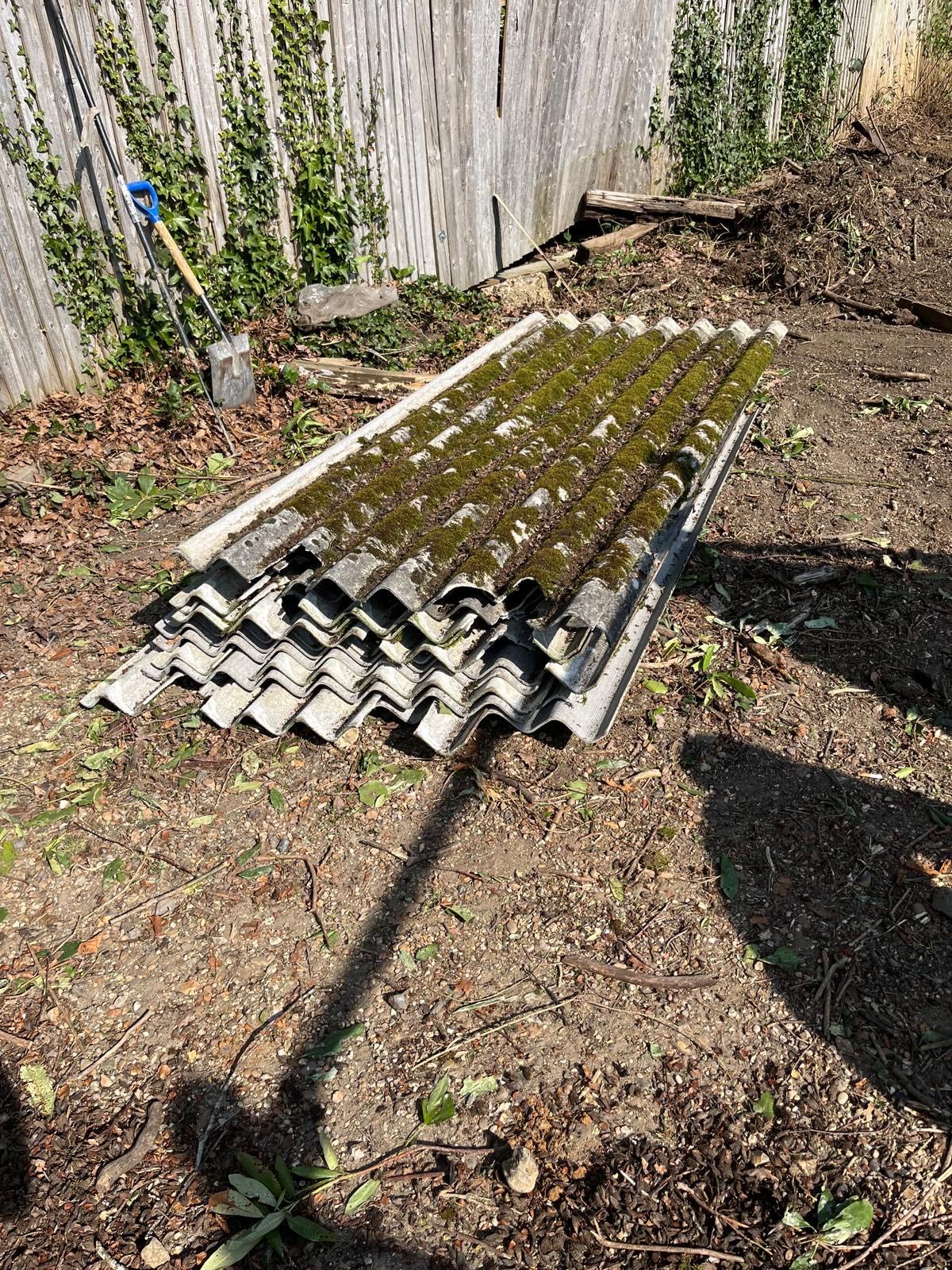
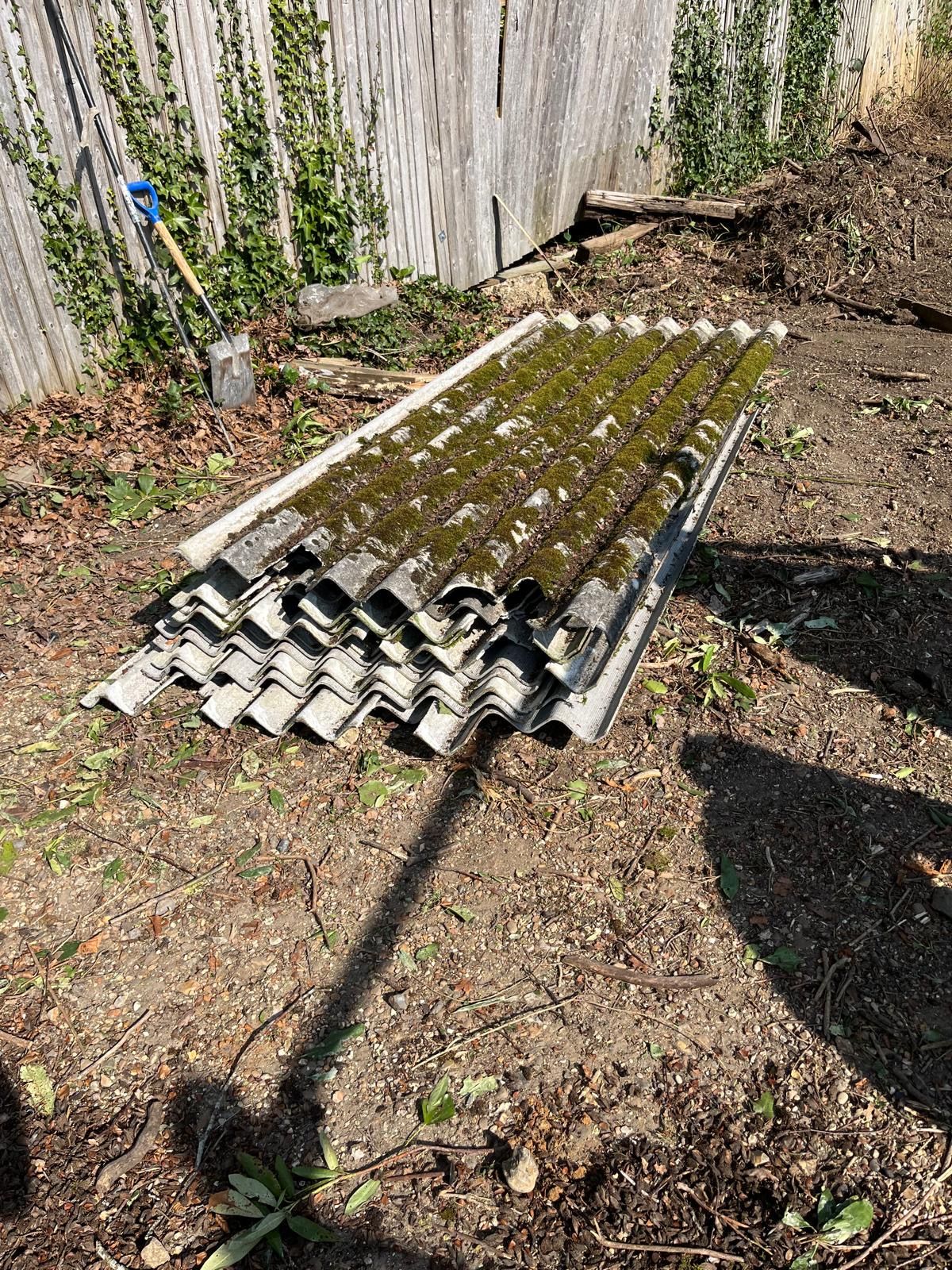
Corrugated Asbestos Sheet Removal, Esher
Esher, Surrey · Sheet Removal
View this project"Clearaway Asbestos did a brilliant job coming out to survey our old garage roof for asbestos. They were professional and we were impressed with the job they did replacing the garage roof"
Why Choose Clearaway
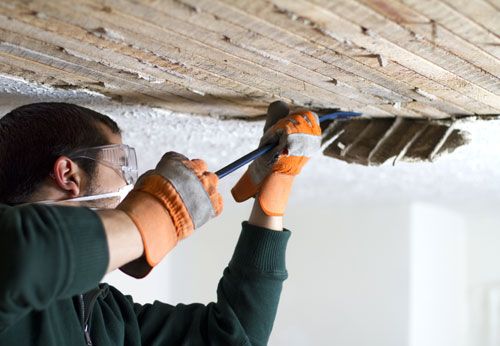
Specialist Crew
Asbestos work is all we do, every day, across the South East.
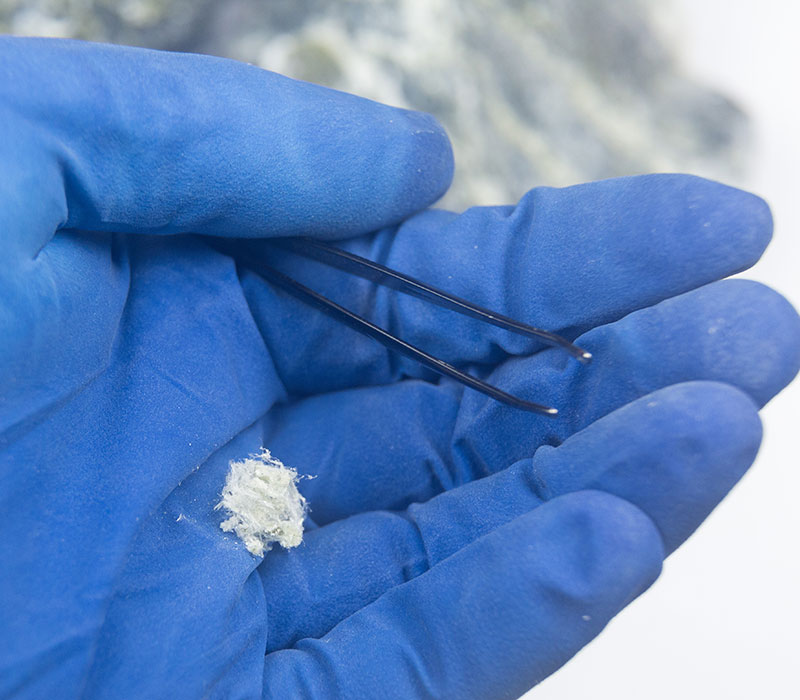
Fully Licensed
Licensed asbestos removal contractor (Licence No. 142305706). Full public liability insurance on every job.
Local & Fast
Surrey-based. Most domestic jobs are booked in and finished within a week.
Our Own Team
We never subcontract. The people who quote your job are the people who do it.
Frequently Asked Questions
Our Removal Process
From first call to final certificate, every job follows the same clear four-step process.
Survey
We inspect the property and confirm the material. Sampling available if required.
Quote
Fixed written price covering removal, disposal and any replacement work.
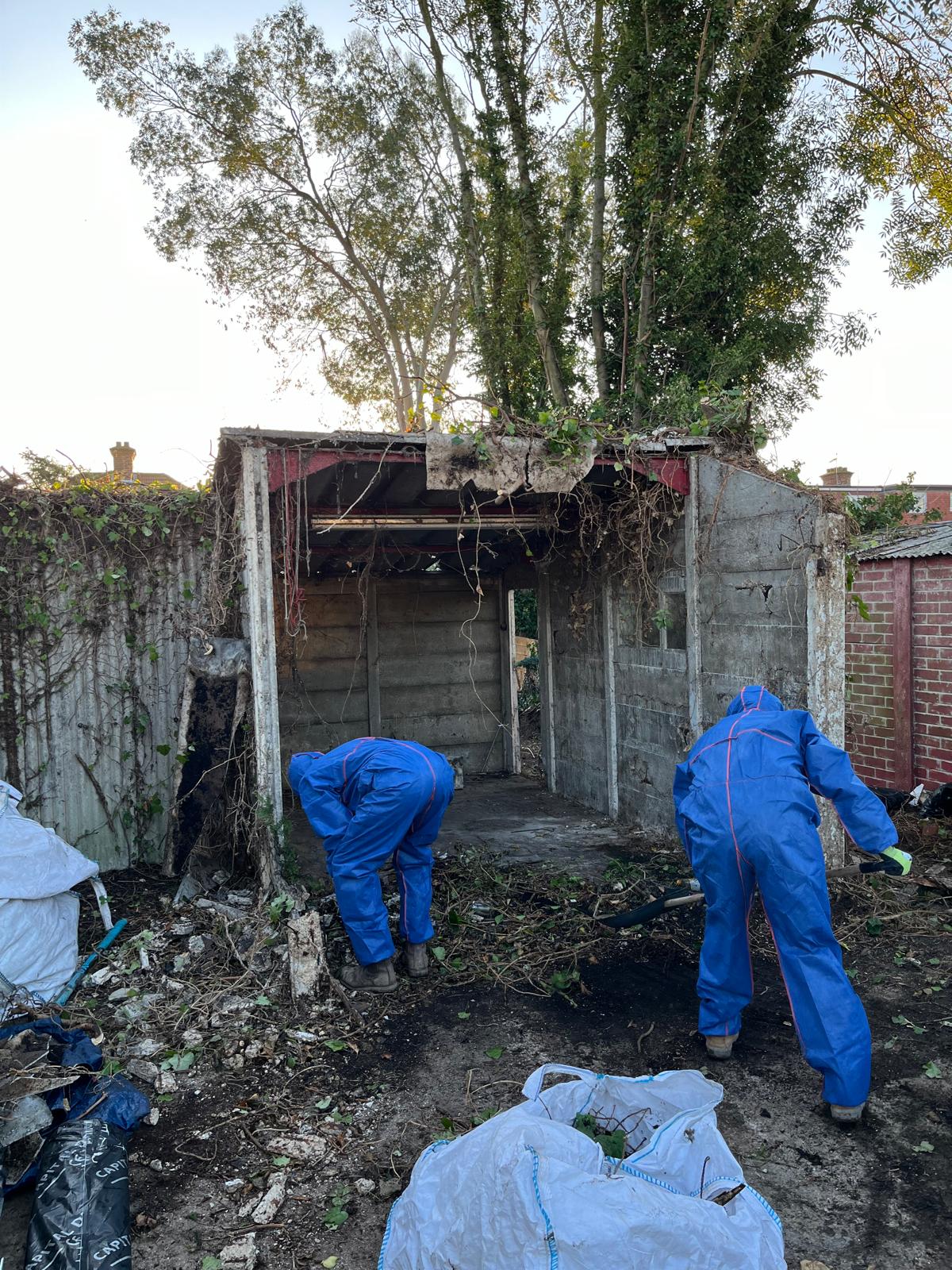
Removal
Material is removed safely, double-wrapped and taken to a licensed disposal facility.
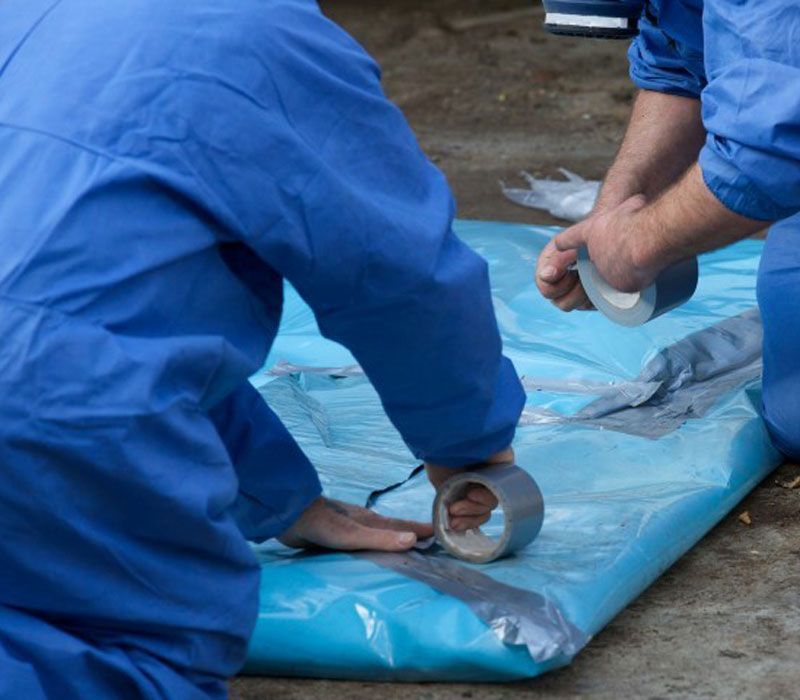
Certificate
You receive a waste consignment note and disposal certificate confirming legal handling.
Get in Touch
Send a few details about your project and we will come back the same working day with a fixed price. We cover Surrey, London and the South East, including Esher, Cobham, Kingston, Richmond, Epsom, Guildford, Woking and Croydon.