Asbestos Roofing Removal in Banstead
Banstead sits high on the North Downs, and its interwar and postwar semis carry cement roofs on extensions, sheds, lean-tos and outbuildings. We take that old roofing down whole, from Nork across to Burgh Heath.
The cement roofs above Banstead's back gardens
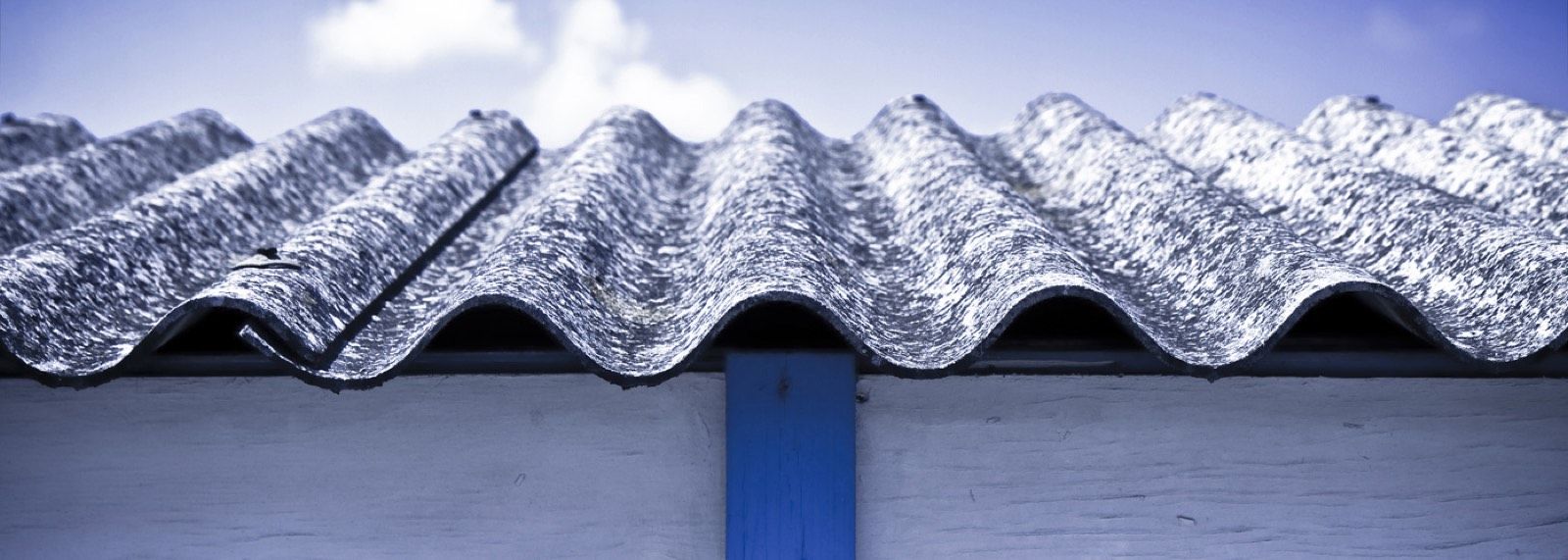
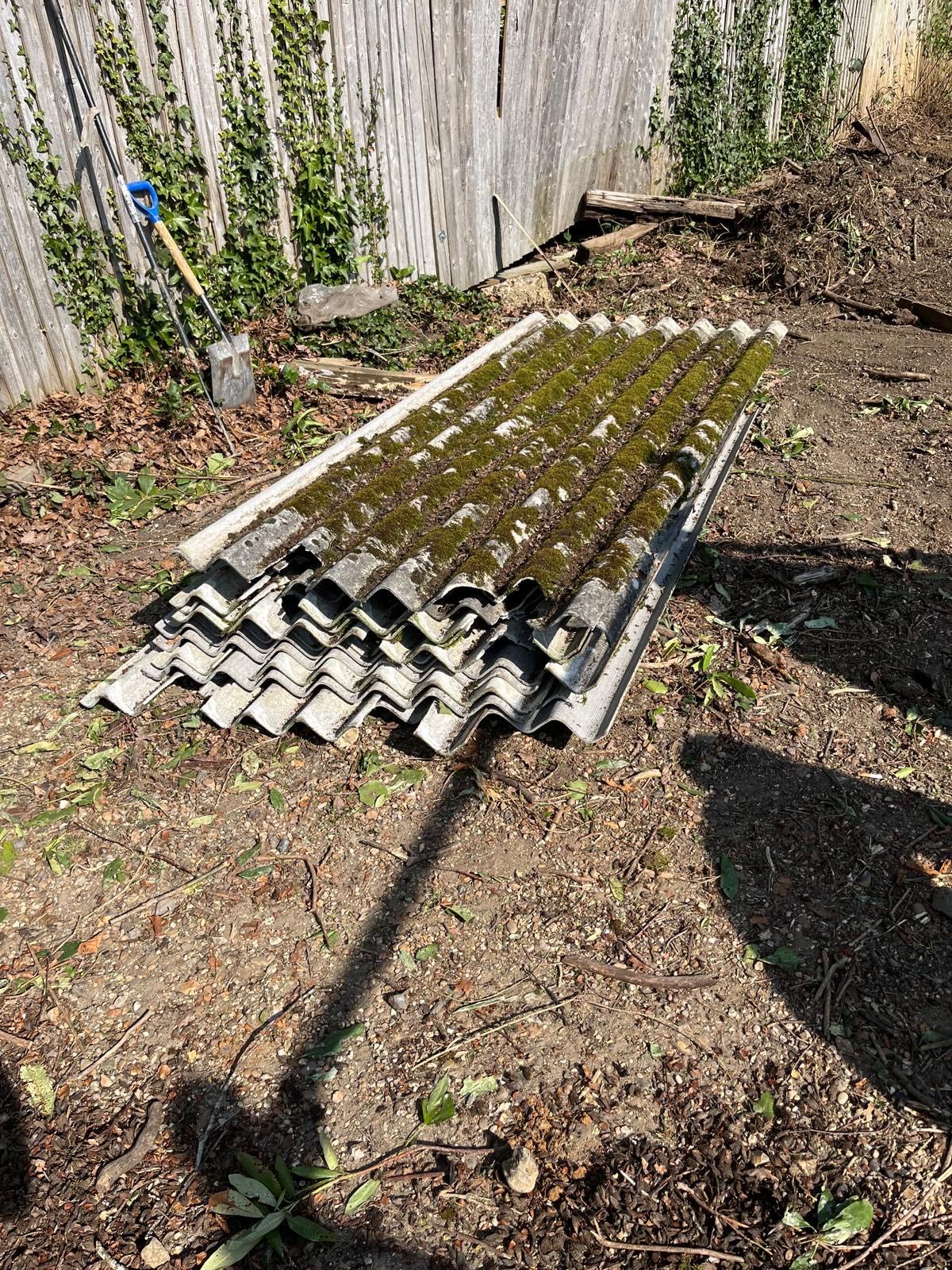
Drive around Nork or out towards Burgh Heath and you see the same pattern on plot after plot. The houses are interwar and postwar semis and detached homes, set back on generous gardens, and almost every one has picked up a few outbuildings over the decades. A side extension with a flat or shallow roof. A shed at the bottom of the garden. A lean-to off the back wall. A small workshop or store behind a larger house. A lot of those roofs were built or recovered with corrugated cement sheet, the grey ridged material that was the cheap, fireproof choice from roughly the 1950s into the 1980s.
That material is asbestos cement. On the day it went up it was reasonably safe, because the fibres were bound tight in the sheet. The problem is age. Plenty of these roofs have now sat through 40, 50, even 60 winters up here, and that exposure breaks the surface down. Banstead also catches the weather coming over the open ground at Banstead Downs and the commons, so the wind and frost work on these sheets harder than they would in a sheltered town.
It is worth saying what this page does not cover. The lock-up garage roof is its own job, and we deal with that separately. Here we are talking about everything else on the plot: the extension roofs, the sheds and lean-tos, the outbuildings tucked behind the bigger houses on the road out to Tadworth, and the cement soffits, gutters and fascia boards that run along the edge of so many of these interwar semis. They are all the same material, and they all reach the point where they need taking off.
Why a worn roof is the higher risk
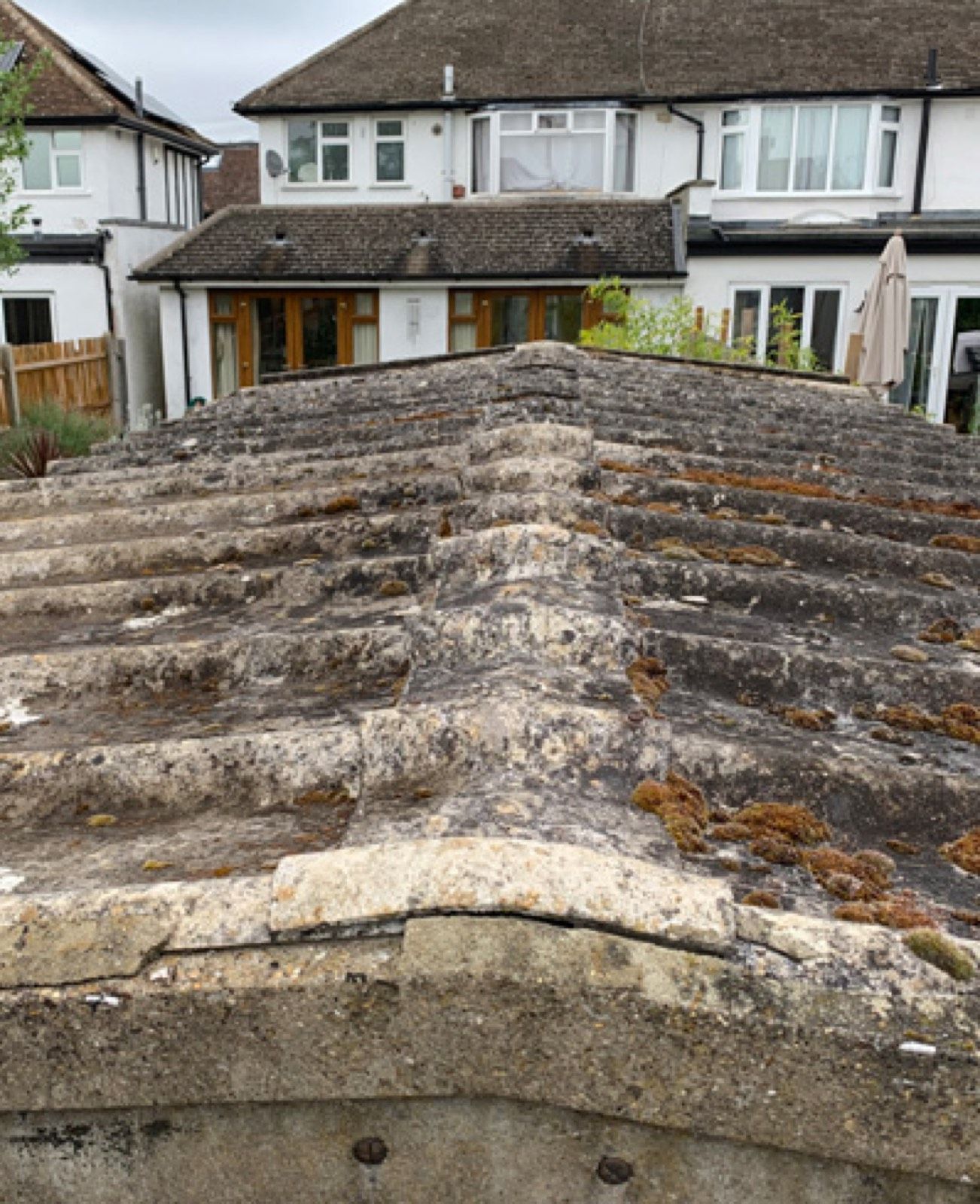
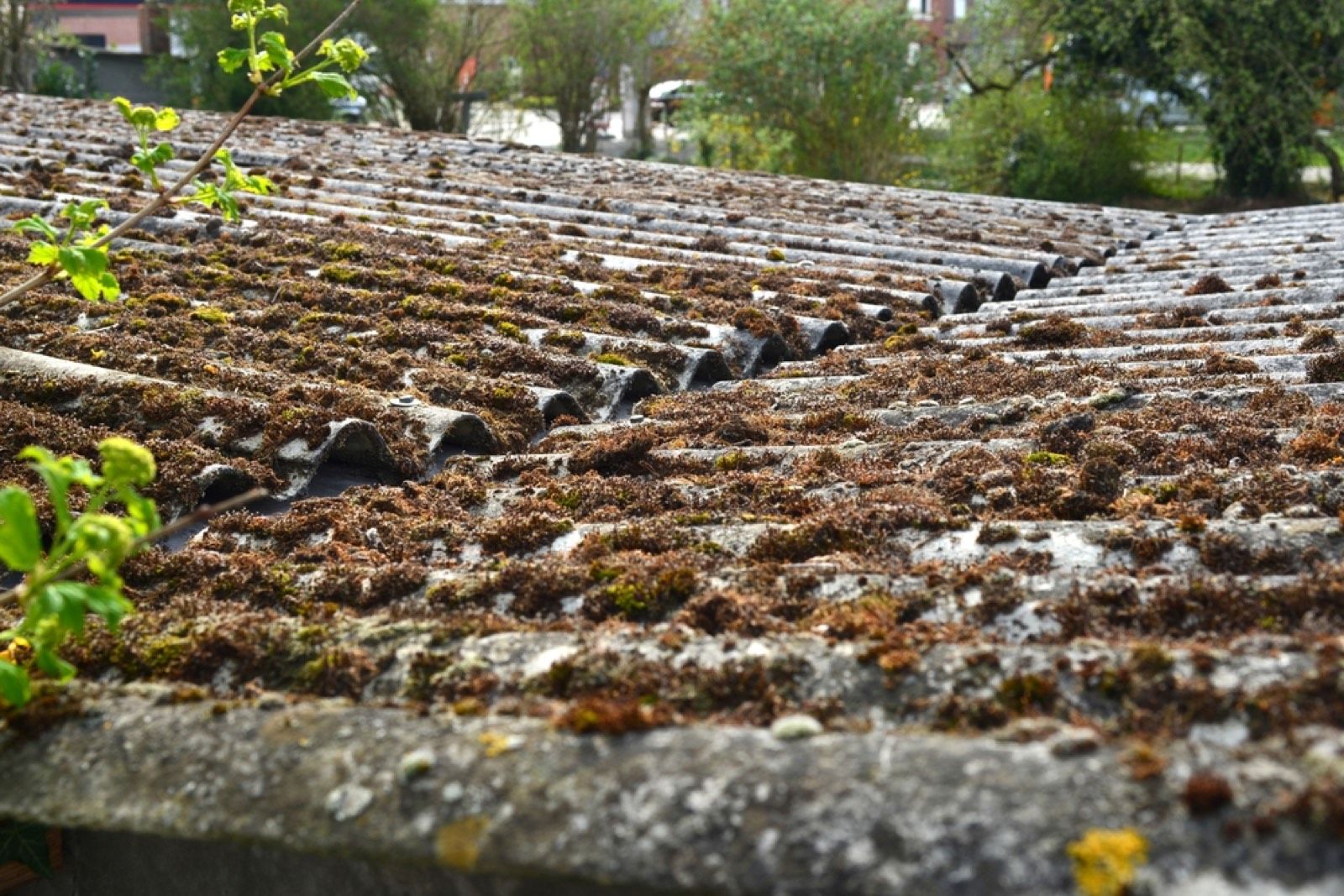
A cement roof in good order is low risk. A weathered one is a different matter. Over the years rain leaches the cement binder out of the surface, frost gets into the cracks, and moss takes hold and lifts the top layer. What you end up with is a sheet that has gone soft and chalky on the outside, and that surface releases loose fibres into the air and down into the gutter every time it rains or the wind blows.
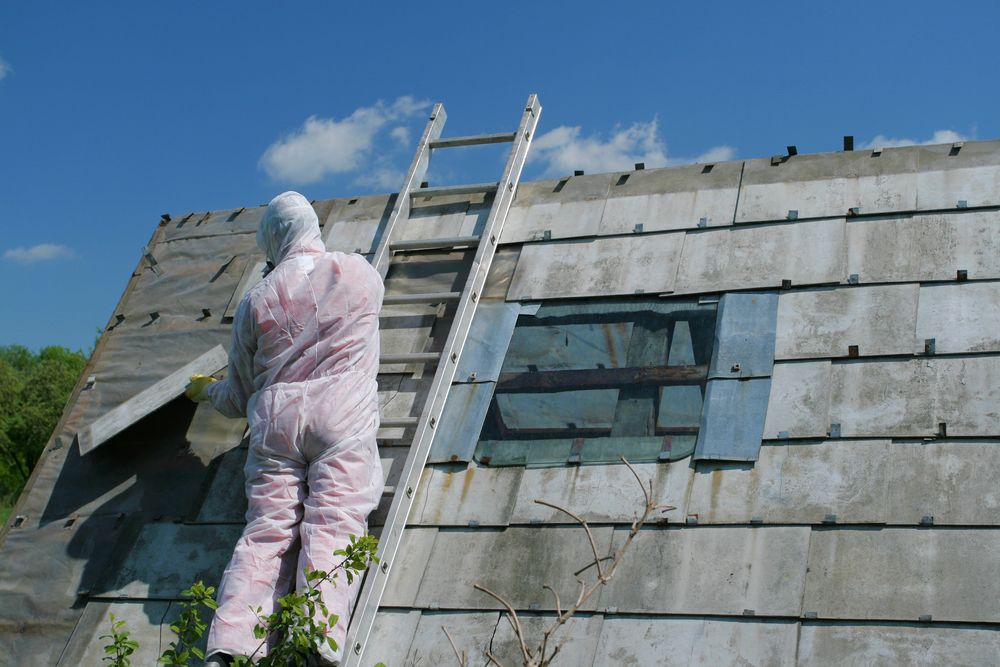
You can read the warning signs from the garden. A flaking, powdery grey finish. Hairline cracks running with the corrugations. Green moss growth and the dark streaks below it. A roof that has clearly been patched or has a corner missing. Soffits, gutters and fascia boards in cement that have started to crack or sag. None of that gets better on its own, and the worse a roof looks the more it is shedding. This is the reason a deteriorating cement roof is worth dealing with before it comes apart further, rather than after.
The one thing that makes it worse is breaking the sheets up. A panicked weekend with a hammer, dragging cracked sheets off a lean-to, throwing them in a builder's bag, is the single fastest way to fill a back garden with airborne fibre. The sheets are meant to come off whole and stay whole. Height adds to that on these plots, because a shed roof at chest height is one thing, but the roof on a two-storey rear extension or a long run of soffits up under the eaves of a semi means working at a level where a slip turns a controlled job into a broken sheet on the patio.
How we strip a Banstead roof
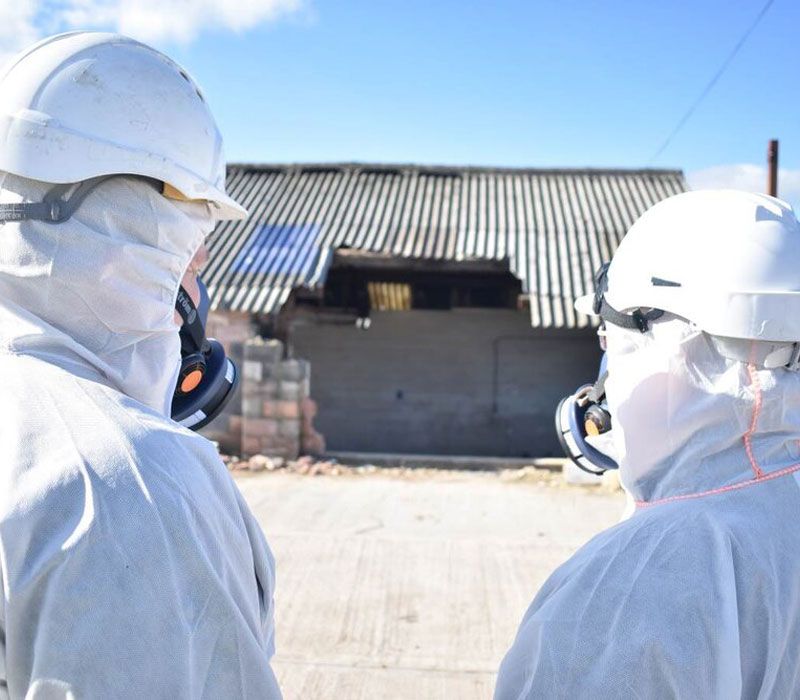
Graham runs these jobs himself, and Clearaway is based just over in Chessington in KT9, so a Banstead roof is a short run out for us. We start by confirming what we are dealing with. You cannot tell asbestos cement from a modern fibre cement replacement by eye, so a small sample goes to a UKAS-accredited laboratory and the result comes back in a few working days.
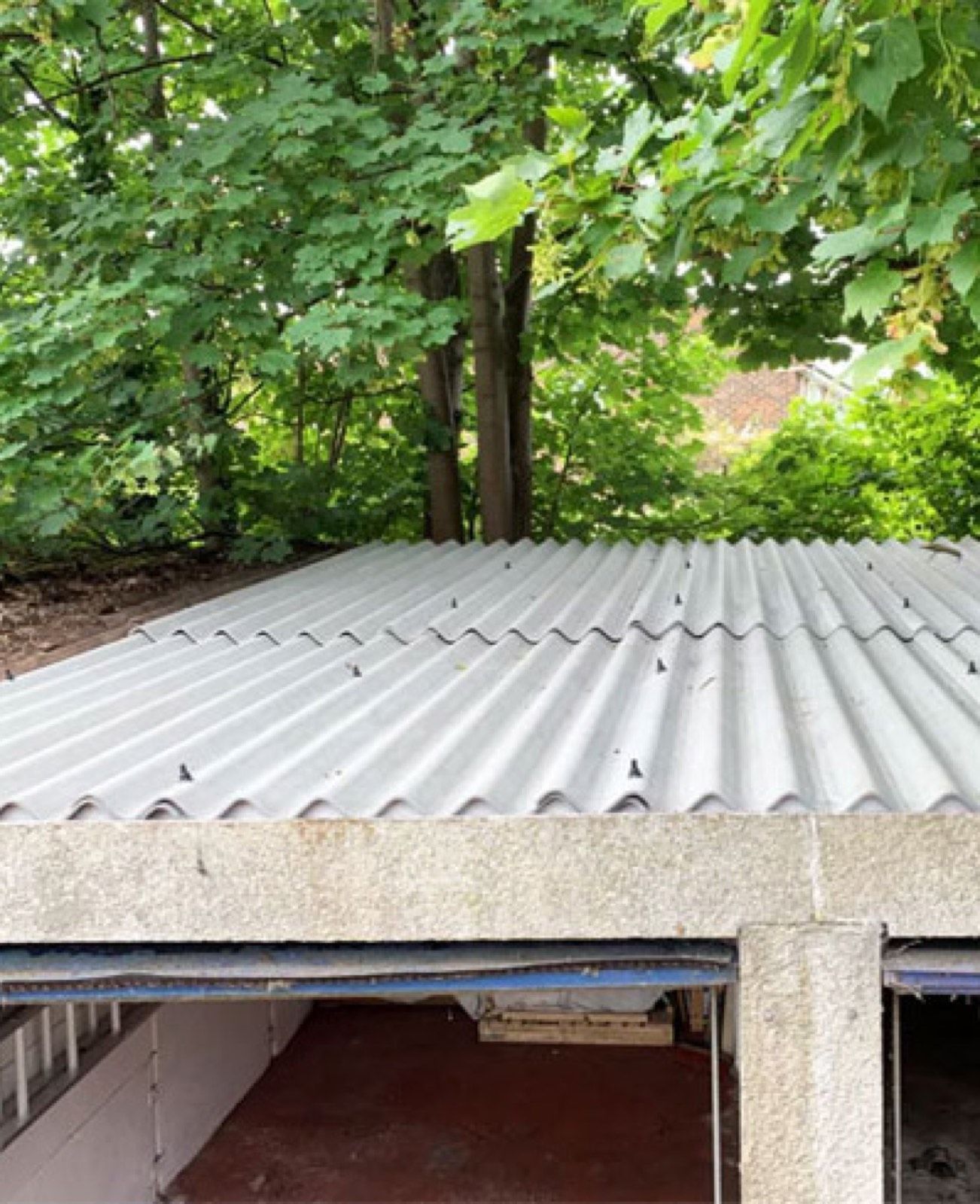
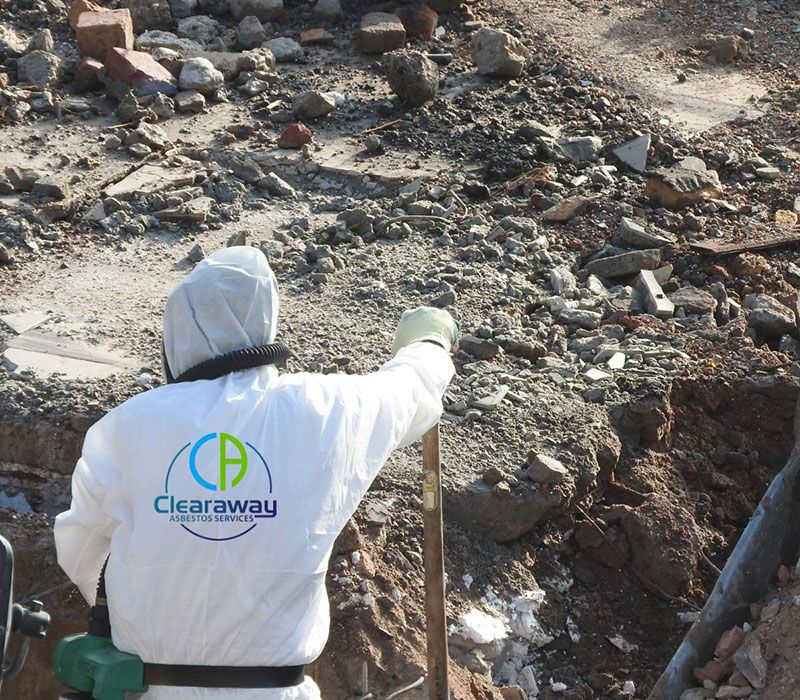
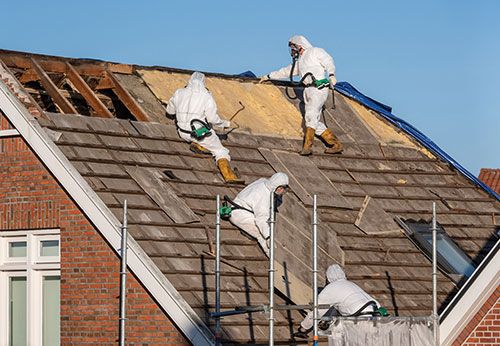
The removal itself is methodical. We damp the sheets down to hold the dust, unbolt the fixings rather than smashing through them, and lift each sheet off in one piece. A typical garden shed or lean-to roof might be 8 to 12 sheets and comes off in a few hours. A larger extension roof, or a run of cement soffits and guttering around an interwar semi, takes longer but follows the same rule of keeping every piece intact. The old material is double-wrapped, kept off your lawn, and carried to a licensed disposal site. On most domestic roofs there is no need for a skip, so the drive and the road stay clear for the neighbours.
Once the asbestos is gone you have a clean deck to recover. Most people on these plots go for galvanised steel box-profile sheet, which is light and lasts. Others choose three-layer torch-on felt for a flat extension roof, a tiled finish to match the house, or modern asbestos-free fibre cement that looks like the original without the risk. We can box out the new edges so it sits tidy.
The licensed standard and getting it booked
Most outbuilding and extension roof sheet on these houses is non-licensed work, which means we can survey it, sample it and remove it without a long wait. Some material on the higher-risk side, such as certain insulating boards found tucked under a roof or in a soffit run, falls under the licensed standard. Where that applies the law is strict and we follow it to the letter: 14 days of notice to the HSE before a single sheet moves, a full sealed enclosure around the work, and four-stage clearance testing signed off by an independent analyst before the area is handed back. That last step matters, because it means an outside party, not us, confirms the air is clean.
The sensible order is always to find out what you have before you commit to anything. A look at the roof and a sample tells you whether you are facing a quick non-licensed strip or the fuller licensed process, and it is far cheaper than guessing wrong. A single sample result back inside a few working days can be the difference between a job booked the same week and a job that stalls. If you are buying a house near the High Street or out at Nork with a suspect garden roof, the same check protects the purchase before you exchange.
Clearaway holds Spectra licence number 142305706 and has spent more than seven years working on roofs like these across Banstead and the wider Reigate and Banstead area. If you have a cement roof, a cracked lean-to or a run of old soffits you are unsure about, call us on 0800 024 6168 and we will tell you where you stand.
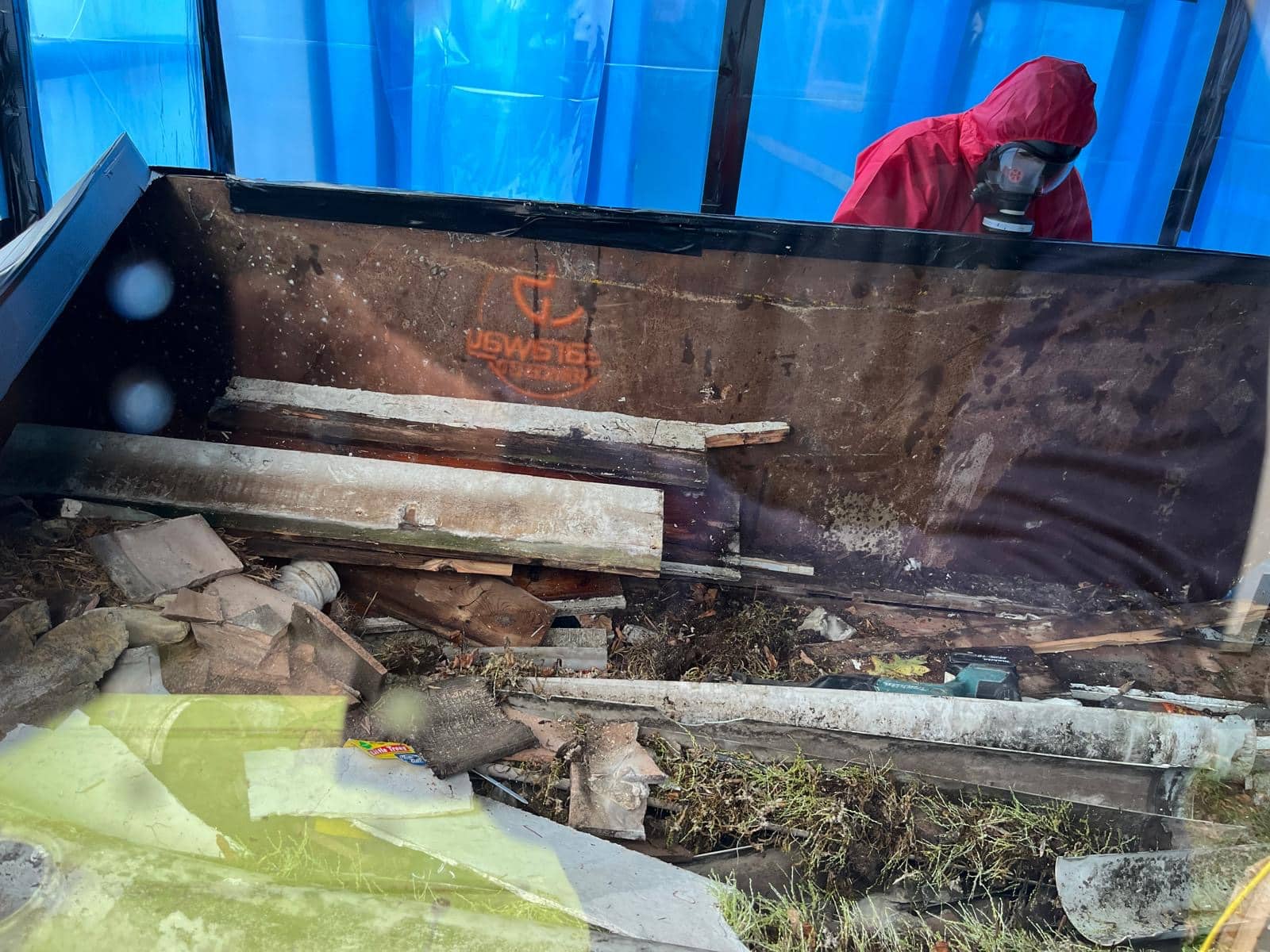
Licensed Asbestos Removal, Weybridge
Weybridge, Surrey · Licensed Removal
View this project"Clearaway Asbestos did a brilliant job coming out to survey our old garage roof for asbestos. They were professional and we were impressed with the job they did replacing the garage roof"
Our Removal Process
From first call to final certificate, every job follows the same clear four-step process.
Survey
We inspect the property and confirm the material. Sampling available if required.
Quote
Fixed written price covering removal, disposal and any replacement work.
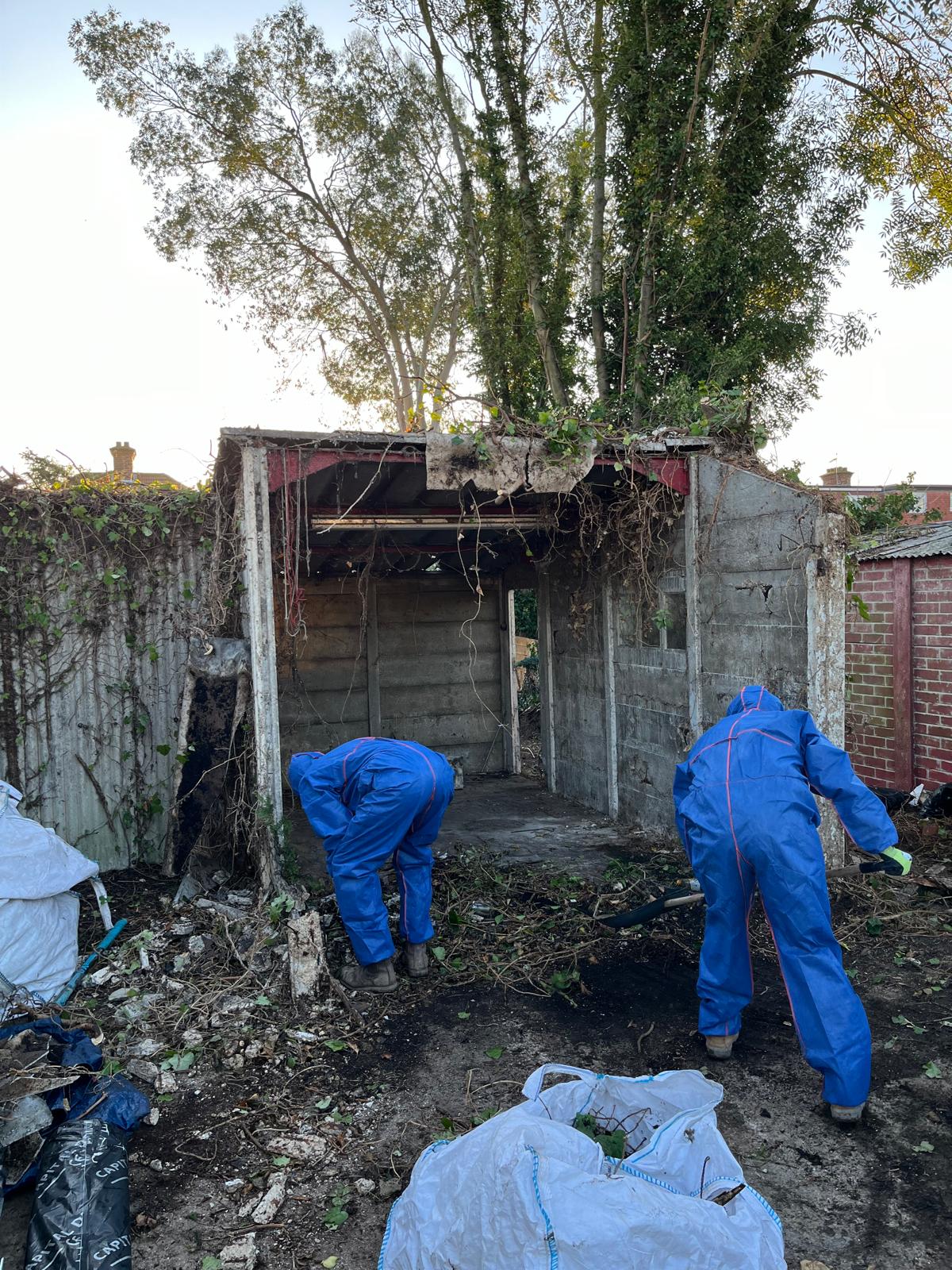
Removal
Material is removed safely, double-wrapped and taken to a licensed disposal facility.
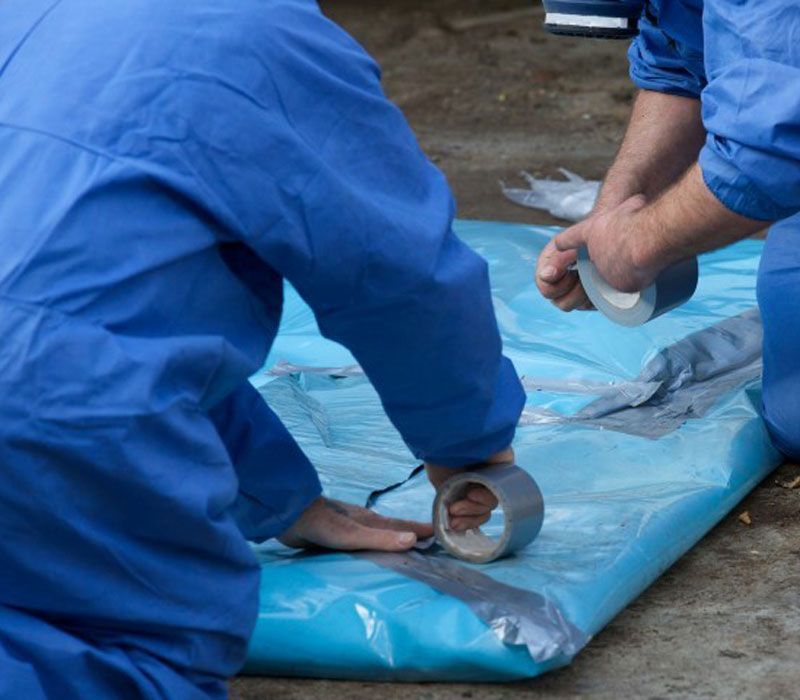
Certificate
You receive a waste consignment note and disposal certificate confirming legal handling.
Frequently Asked Questions
Why Choose Clearaway
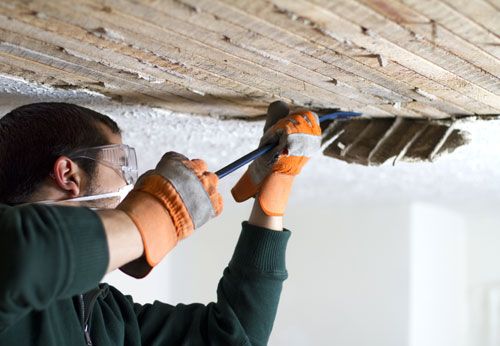
Specialist Crew
Asbestos work is all we do, every day, across the South East.
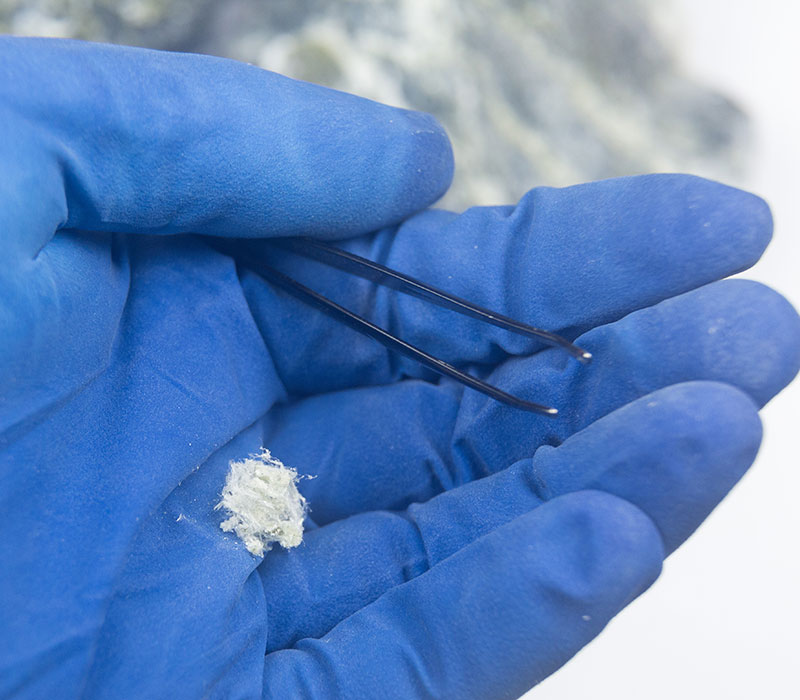
Fully Licensed
Licensed asbestos removal contractor (Licence No. 142305706). Full public liability insurance on every job.
Local & Fast
Surrey-based. Most domestic jobs are booked in and finished within a week.
Our Own Team
We never subcontract. The people who quote your job are the people who do it.
Get in Touch
Send a few details about your project and we will come back the same working day with a fixed price. We cover Surrey, London and the South East, including Esher, Cobham, Kingston, Richmond, Epsom, Guildford, Woking and Croydon.