Asbestos Garage Removal in Staines
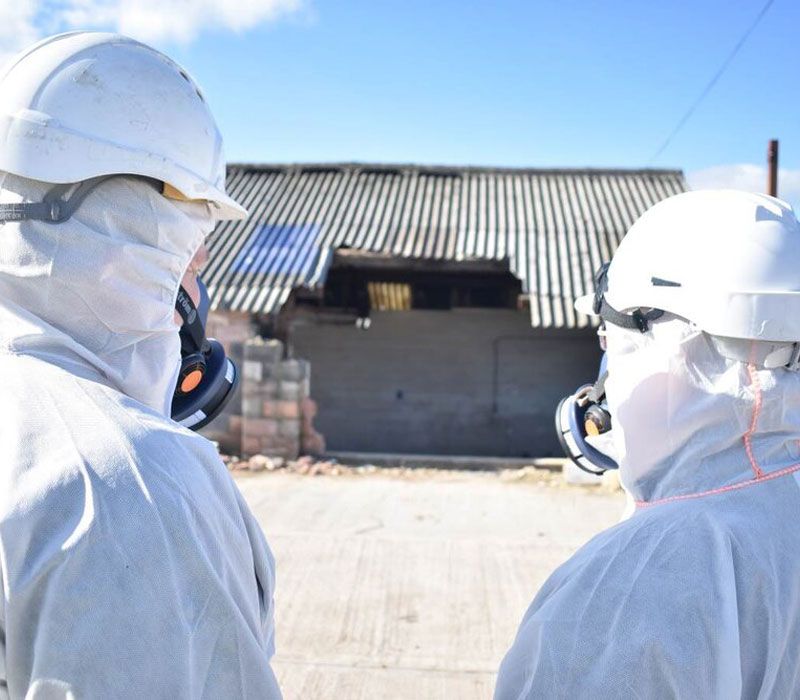
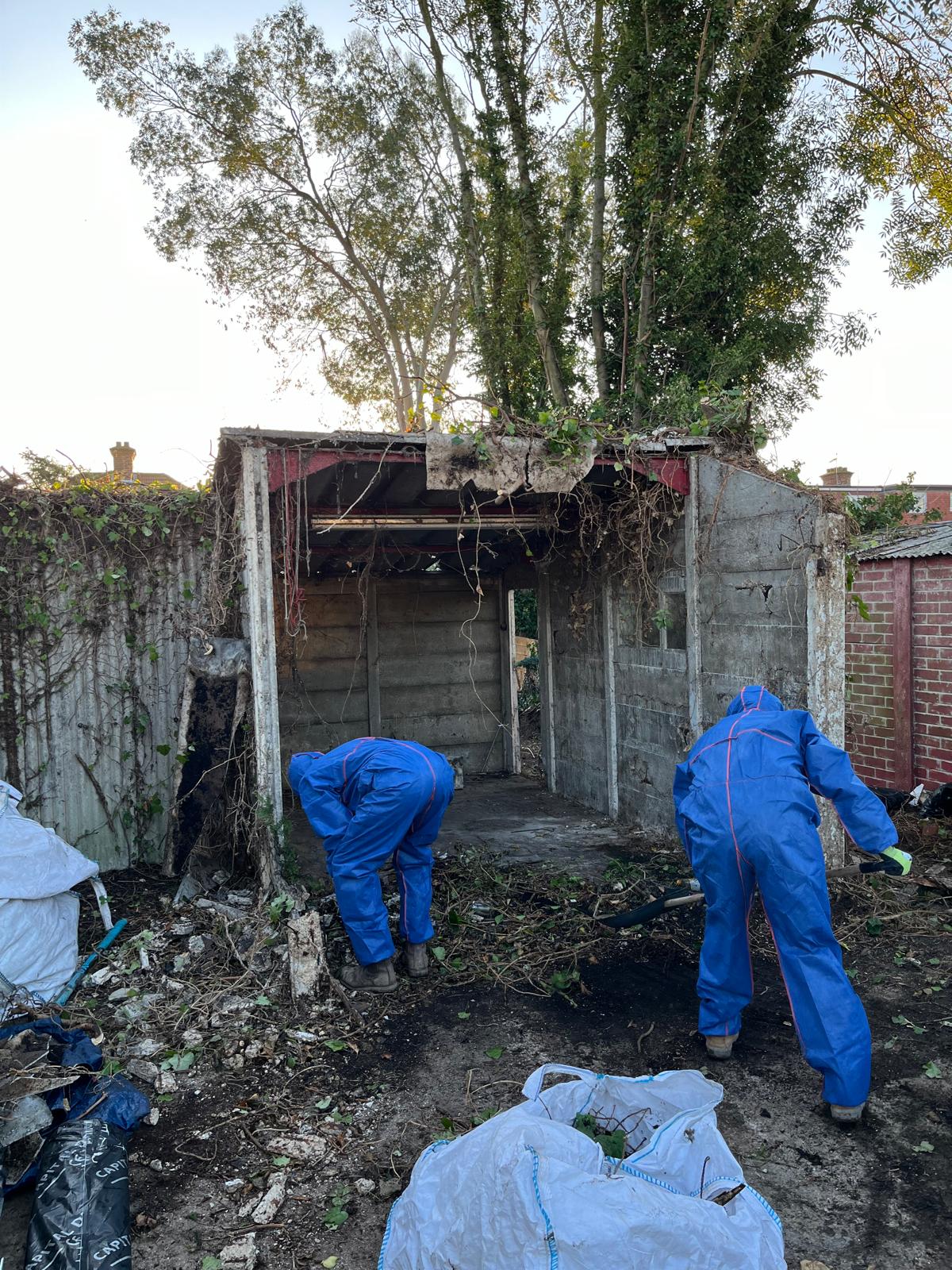
Drive down almost any older street in Staines, out towards Laleham or Egham Hythe, and you will spot them: low concrete garages with grey corrugated roofs. Most of those sheets are cement, and most are asbestos. Taking them down safely is what this page is about.
The grey garage roof on the Staines plot
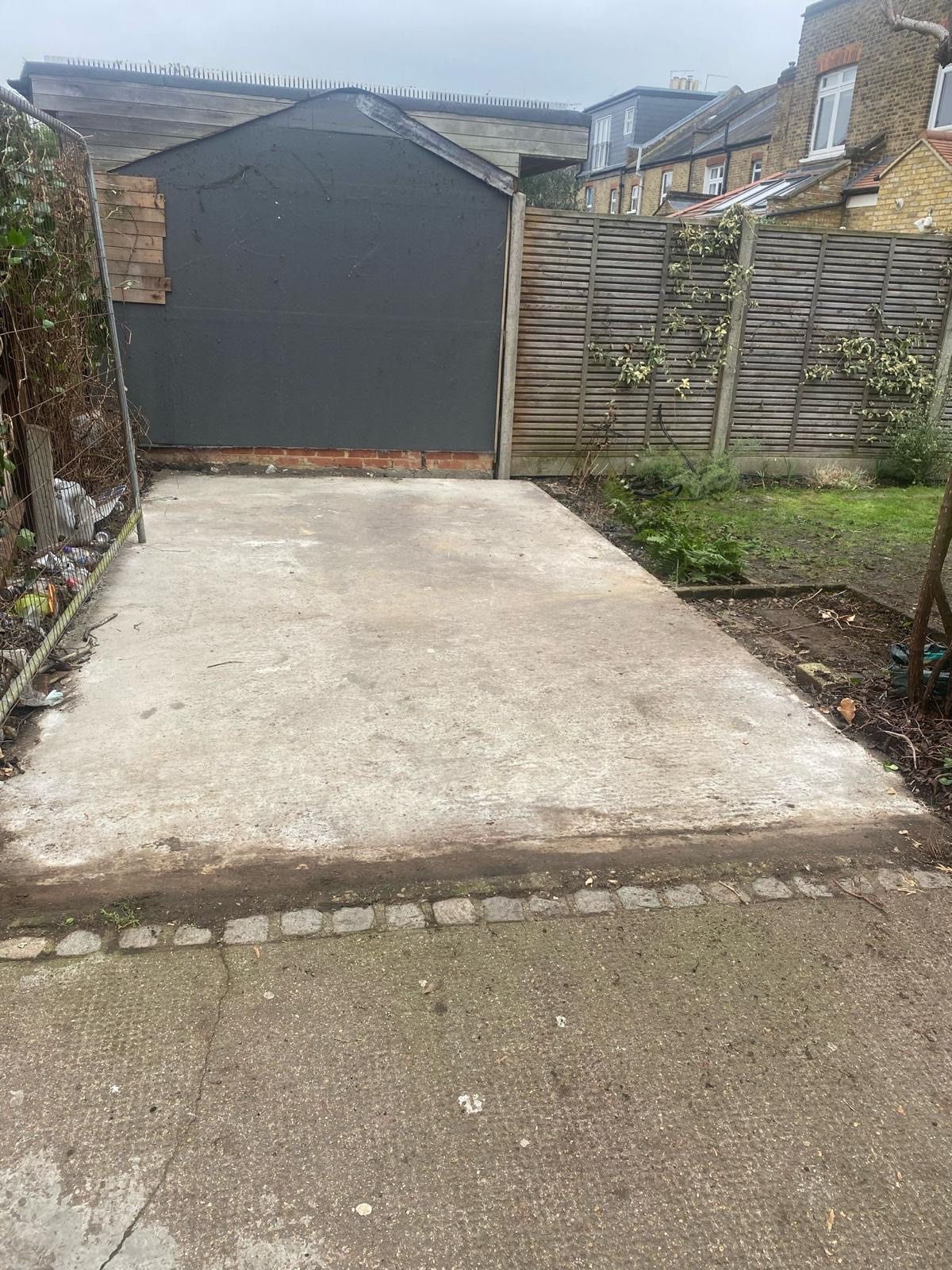
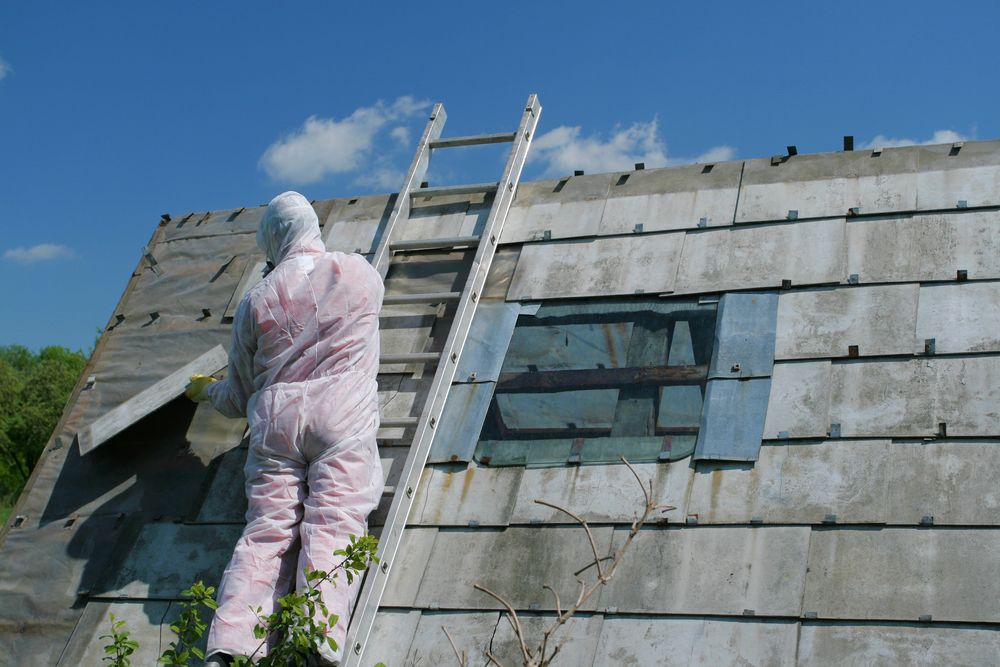
The suburban plots out towards Laleham and Egham Hythe were laid out with room for a car, and that usually meant a separate garage at the side or bottom of the drive. Plenty of them are still standing, often with the same roof they were given when they went up. If yours has a low pitch covered in grey corrugated sheets that have gone chalky and streaked with moss, you are almost certainly looking at asbestos cement. It was the cheap, fireproof, easy-to-fix choice from the 1950s through to the 1980s, and on a Staines plot it is the most common place we find asbestos. The same sheets turn up on garden sheds, lean-tos and the odd outbuilding, but the detached or semi-detached garage is the classic one.
The cement itself is hard, and the fibres stay locked inside while the sheet is sound. The trouble is age. Sixty or seventy winters this close to the river have left these roofs brittle, cracked along the ridges and soft where water has been sitting in the corrugations. The fixing holes go rusty and oversize, the sheets start to sag between the purlins, and the surface weathers down until the fibres sit nearer the top than they did. A roof in that state is the kind that lets go, and the riskiest moment is almost always someone climbing up to clear leaves, free a gutter or drape a tarpaulin over a leak. That is the point to stop and have it taken down properly rather than patched again.
You cannot reliably tell asbestos cement from a modern fibre cement copy by eye, because the later asbestos-free sheets were made to look almost identical. The age of the garage is the strongest clue you have. If the plot and the house are pre-1980s and the garage looks original to it, the safe assumption is that the roof is asbestos until a sample says otherwise. It is not a reason to panic, just a reason not to drill it, cut it or walk on it in the meantime.
How a single garage roof comes down
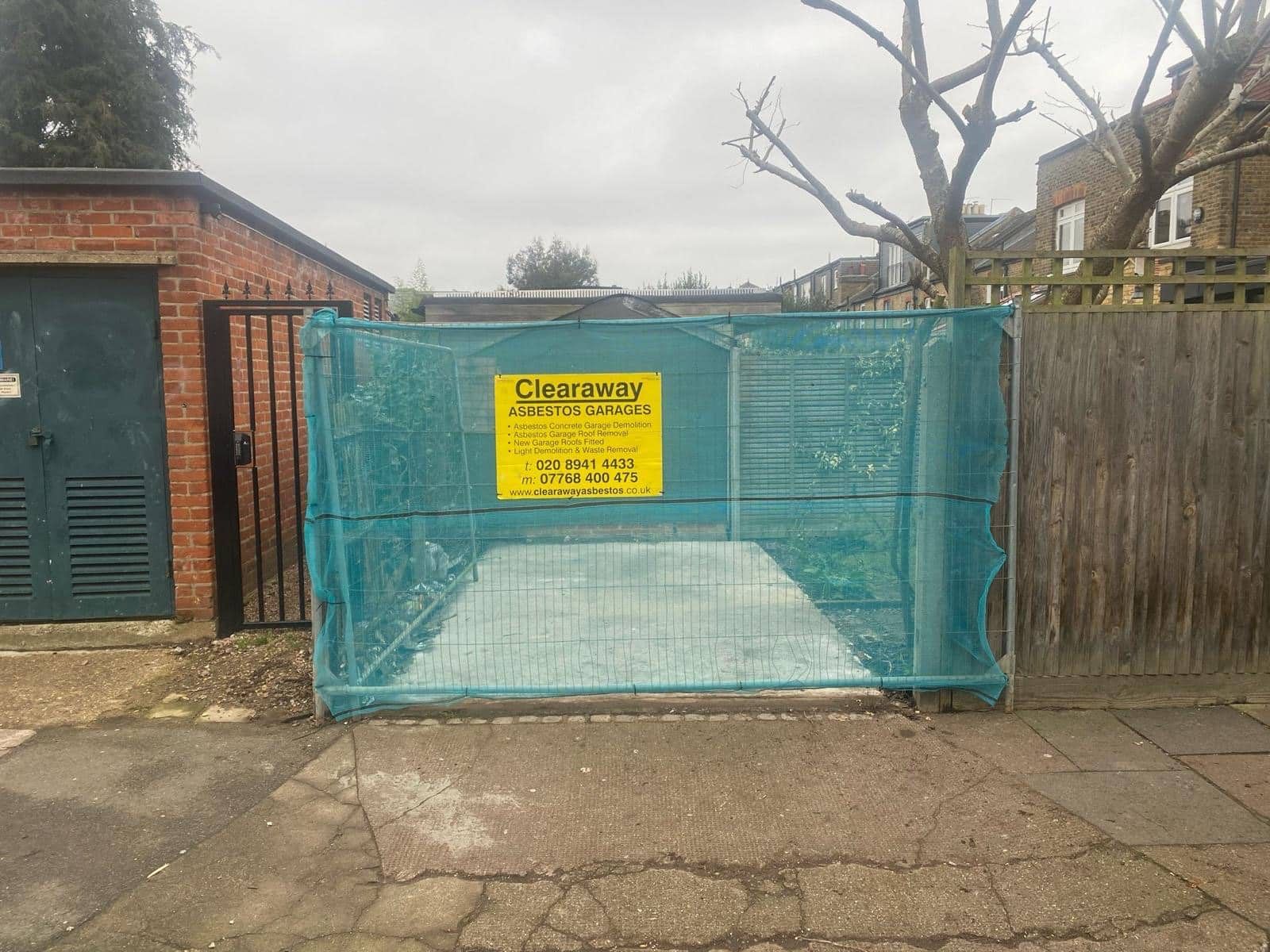
A typical Staines garage roof is not a big job, and it helps to know that going in. Most of the lock-ups around here run to roughly eight to twelve corrugated sheets, each about two and a half metres long and a little under a metre wide. Worked properly, that is a single day on site, and a clean one is often four to six hours from arriving to loading up. Knowing the rough sheet count up front is also how we can tell you what the day looks like before we start.
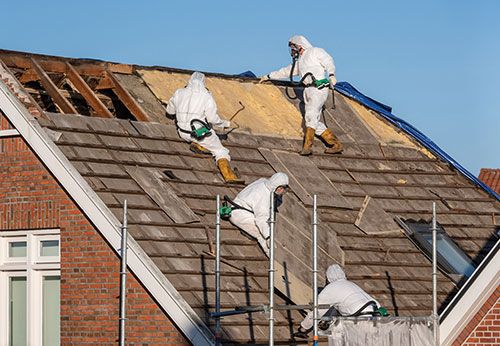
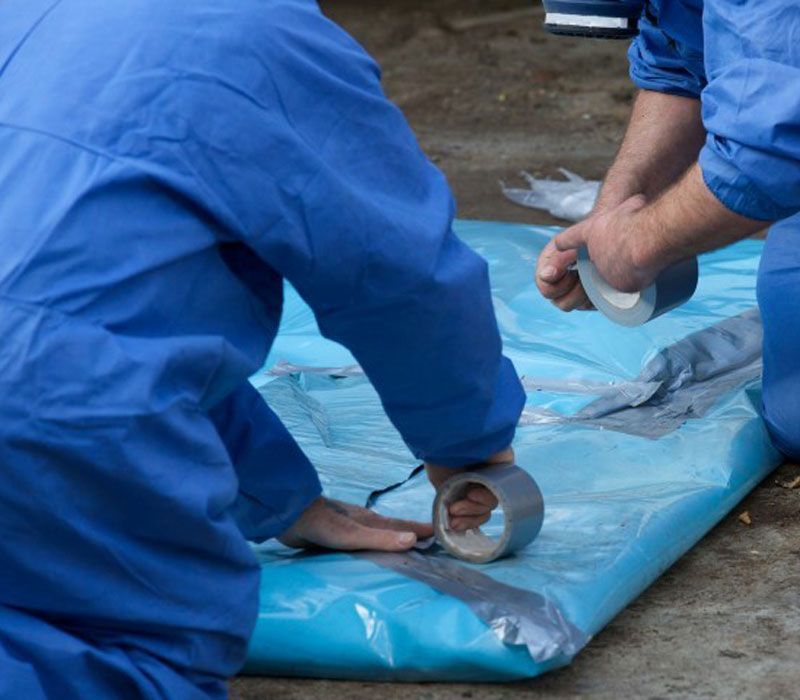
The sheets come down whole, not smashed. We unbolt or carefully cut the fixings, lift each sheet off in one piece, lay it down, wrap it in heavy gauge plastic and seal and label it. Whole sheets matter, because a broken sheet is what puts fibres in the air, while an intact one keeps them locked in the cement where they belong. We damp things down as we go and keep the working area controlled so nothing drifts across the fence to a neighbour. Because the wrapped load goes straight onto the van, there is usually no skip sitting on the drive or out across the road, so access for you and anyone next door stays clear through the day. The waste then goes to a licensed disposal site with the consignment paperwork to match, which is the part that matters if you ever sell the house and someone asks where the old roof went.
Asbestos cement garage roofing is non-licensed work, so it does not need the 14 days of HSE notice that the higher-risk licensed jobs require before a single sheet can be touched. That is a large part of why a sound garage roof can usually be booked in and finished quickly rather than weeks out. The exception is if we open it up and find something else, say insulating board lining the inside or lagging on a pipe run through the garage, which is a different and higher-risk material. If that turns up we will tell you straight away and explain what changes.
What goes back on once the asbestos is gone
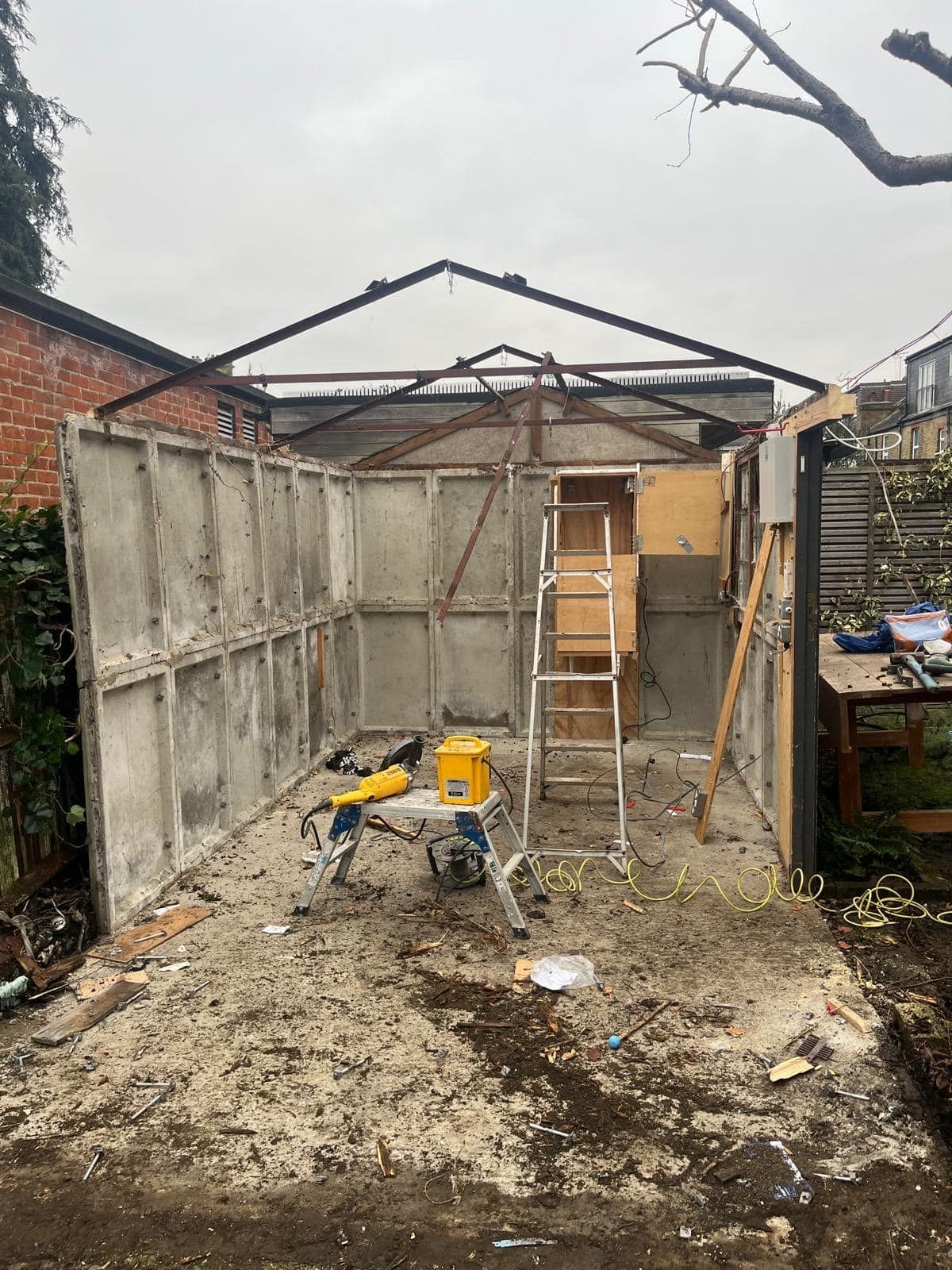
A garage with the roof off needs covering again, and there are a few sensible routes depending on what you want from the building and what you are happy to spend. Galvanised steel box-profile is the usual swap on a pitched garage. It goes on fast, it is light enough not to overload the old walls, and it gives you back a weatherproof roof in the same single-pitch shape the garage was built for. For a flat or near-flat garage roof, a three-layer torch-on felt system is the standard, hard-wearing answer, and done well it will outlast the sheets it replaced. If you want something that reads more like part of the house rather than an outbuilding, a tiled roof or a properly built warm flat roof is an option worth pricing. And if you simply want the same look without the asbestos, modern asbestos-free fibre cement sheets give you a like-for-like grey corrugated finish.
Where the old sheets met the verges, the eaves or a neighbouring wall, we can box out and seal the exposed timber and edges so the new roof is tidy and watertight rather than left raw and open to the weather. That boxing out is often the difference between a roof that looks finished and one that looks like a quick fix. The aim is that you walk away with a garage you can actually use and keep, not a stripped shell that becomes next year's problem.
We will talk through which covering suits your garage and your budget before anything is ordered, so the replacement is a decision you have made rather than one made for you. Some people want the cheapest sound roof that keeps the car and the lawnmower dry. Others are tidying up the whole plot before a sale and want something that lifts the look from the road. Either is fine, but it is worth deciding before the old roof comes off so the new one can follow on without the garage sitting open.
Local, licensed and quick to reach Staines
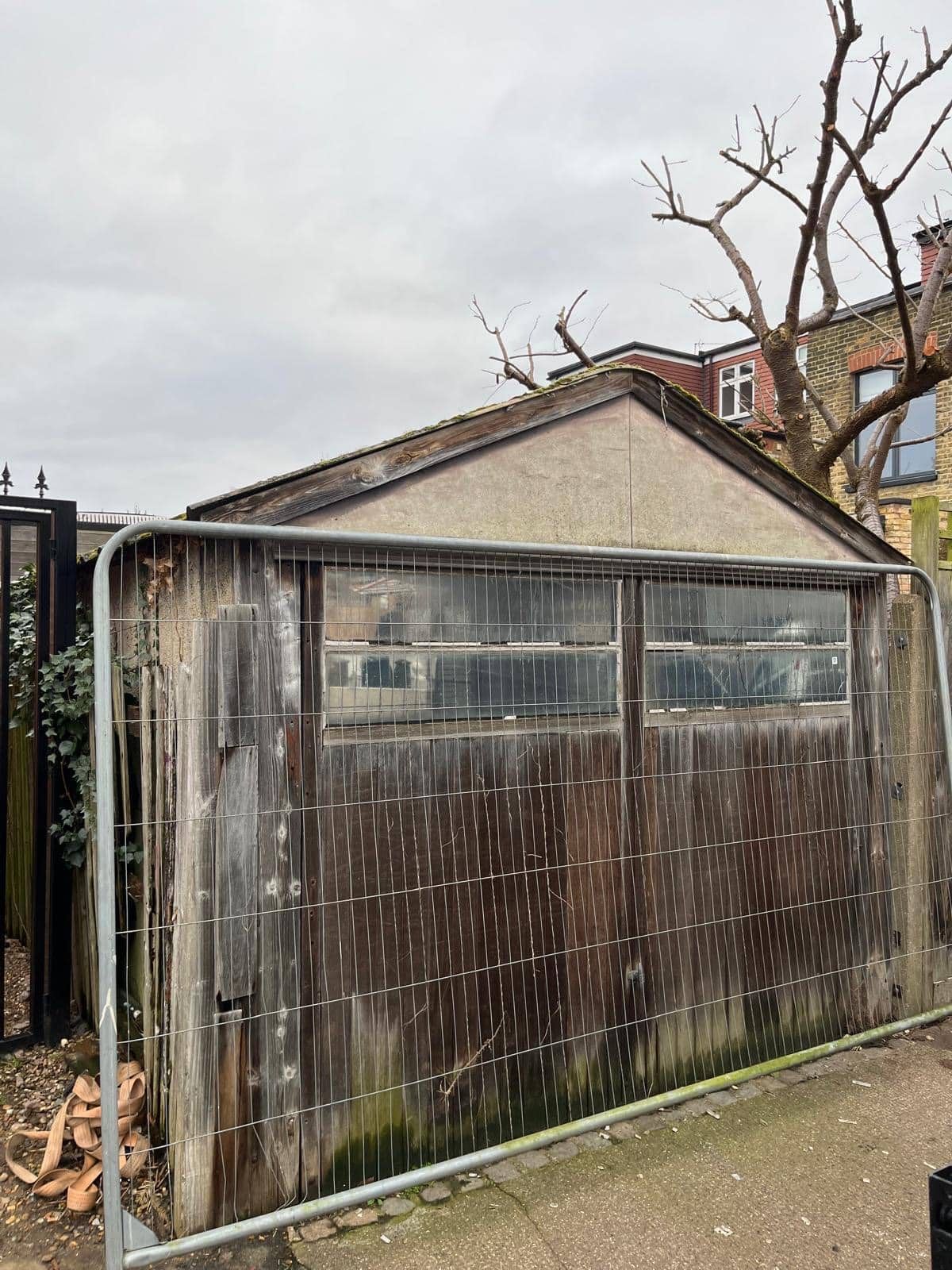
Clearaway is based in Chessington, KT9, a short run up the road from Staines, and the owner Graham runs the local jobs himself rather than sending out a stranger. In practice that means the person who comes to look at the garage and quote it is usually the same person who turns up to take the roof down. You are dealing with someone who knows the TW18 and TW19 streets, the terraces around Church Street, the 1930s ribbons along Kingston Road and Laleham Road, and the kind of suburban plots out towards Egham Hythe where these garages tend to sit. Knowing the area is not a sales line, it just means fewer surprises about access, parking the van and getting the load away.
For the higher-risk licensed work we hold a Spectra licence, number 142305706, the kind of job that needs full enclosure, 14 days of HSE notice and four-stage clearance testing signed off by an independent analyst before anyone goes back in. A standard garage roof does not need all of that, but it tells you the same outfit handles the serious materials and not only the straightforward sheets, and that any sample we take goes to a UKAS-accredited laboratory rather than a guess on the doorstep. We have been working across this part of Surrey for more than seven years, doing exactly these garage and shed roofs alongside the bigger work. To talk through your garage roof in Staines and what it would take to clear it, call 0800 024 6168.
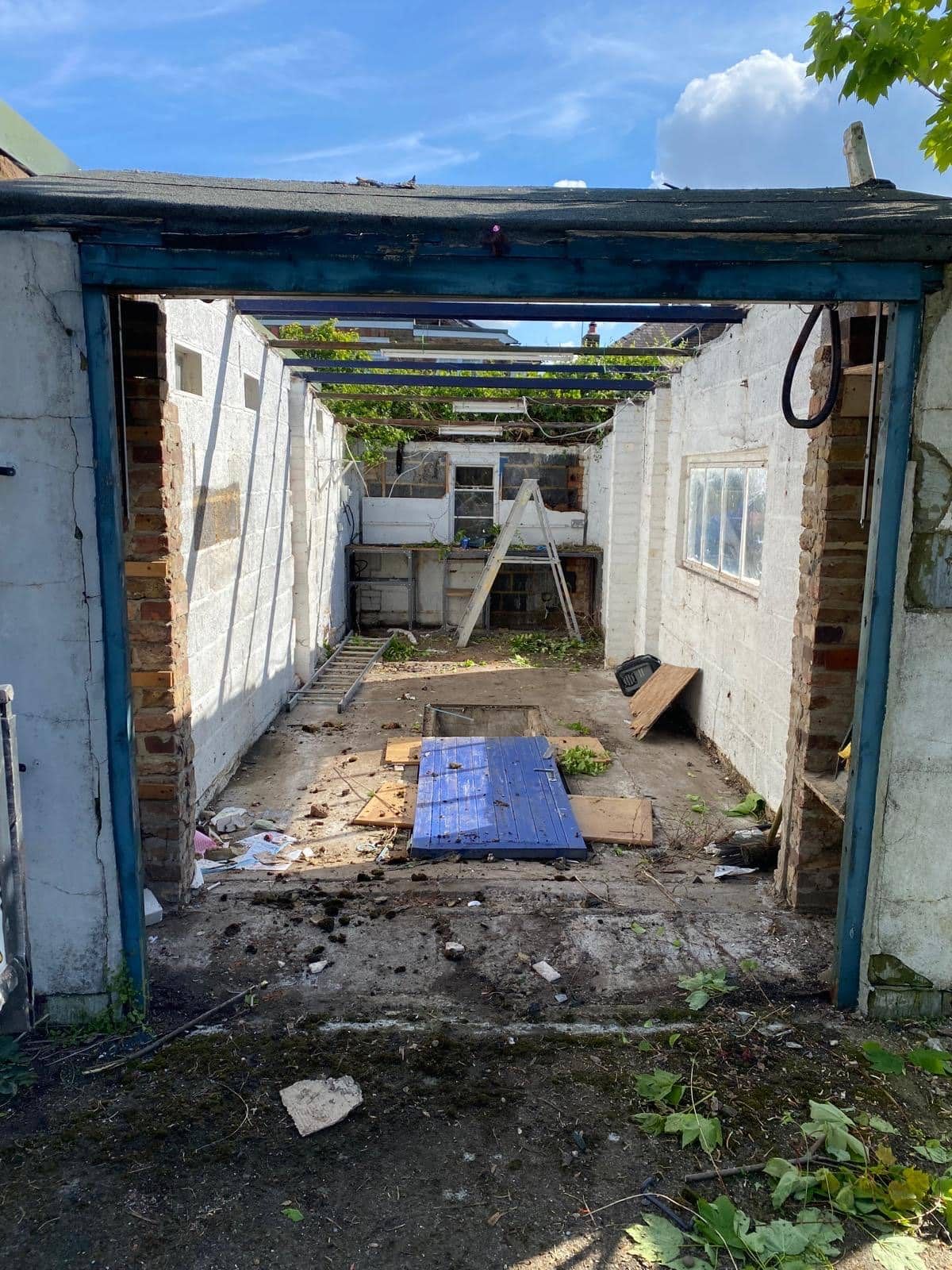
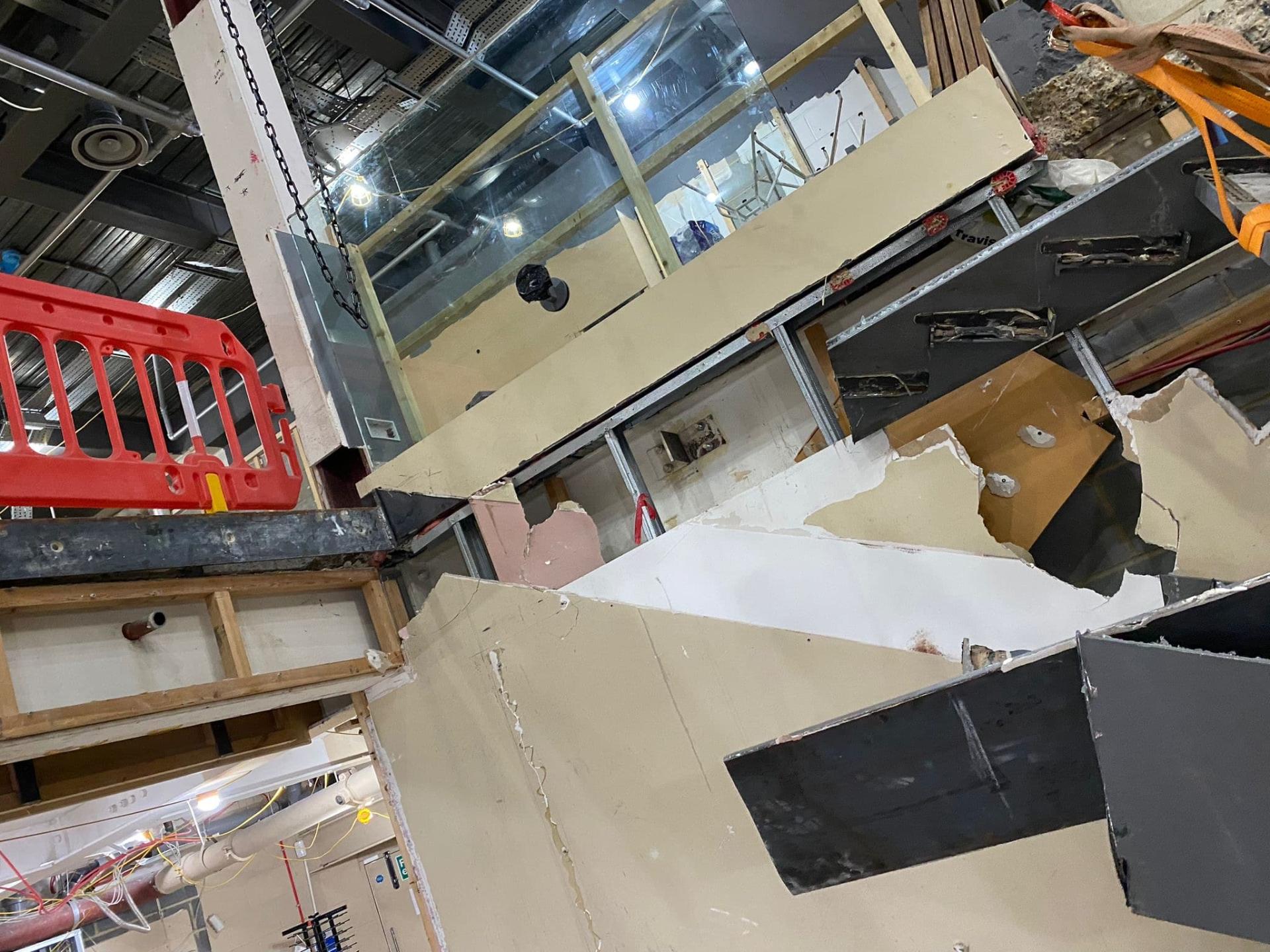
Commercial Building Strip-Out, Kensington
Kensington, South London · Strip-Out
View this project"Graham has organised two jobs for me, both of which ran smoothly and on time. Clive and the team are really great, they completed the work in the agreed time and left the site spotless. Would recommend using Clearaway if you need any work done."
Why Choose Clearaway
Specialist Crew
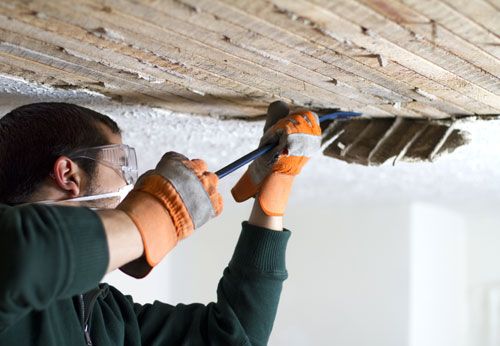
Asbestos work is all we do, every day, across the South East.
Fully Licensed
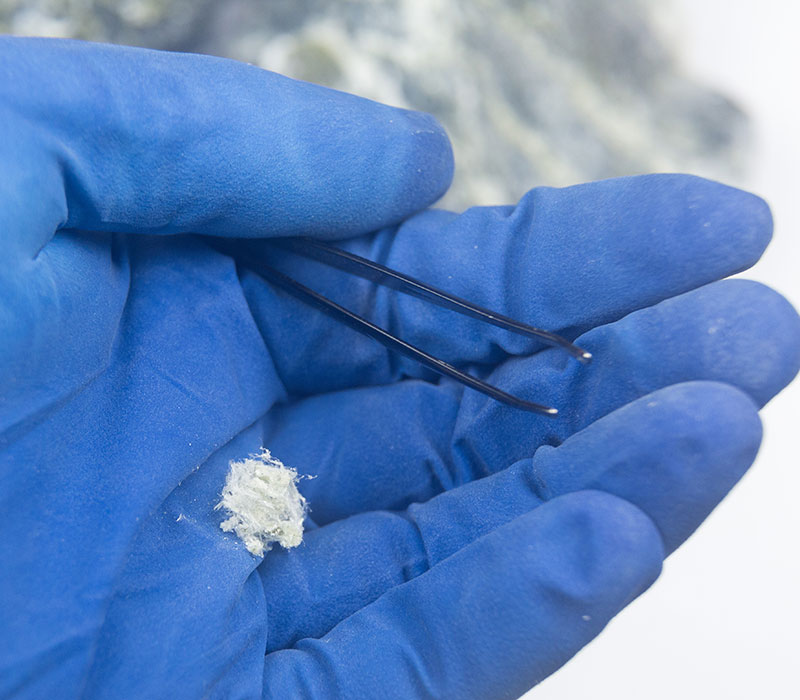
Licensed asbestos removal contractor (Licence No. 142305706). Full public liability insurance on every job.
Local & Fast
Surrey-based. Most domestic jobs are booked in and finished within a week.
Our Own Team
We never subcontract. The people who quote your job are the people who do it.
Frequently Asked Questions
Our Removal Process
From first call to final certificate, every job follows the same clear four-step process.
Survey
We inspect the property and confirm the material. Sampling available if required.
Quote
Fixed written price covering removal, disposal and any replacement work.
Removal
Material is removed safely, double-wrapped and taken to a licensed disposal facility.
Certificate
You receive a waste consignment note and disposal certificate confirming legal handling.
Get in Touch
Send a few details about your project and we will come back the same working day with a fixed price. We cover Surrey, London and the South East, including Esher, Cobham, Kingston, Richmond, Epsom, Guildford, Woking and Croydon.