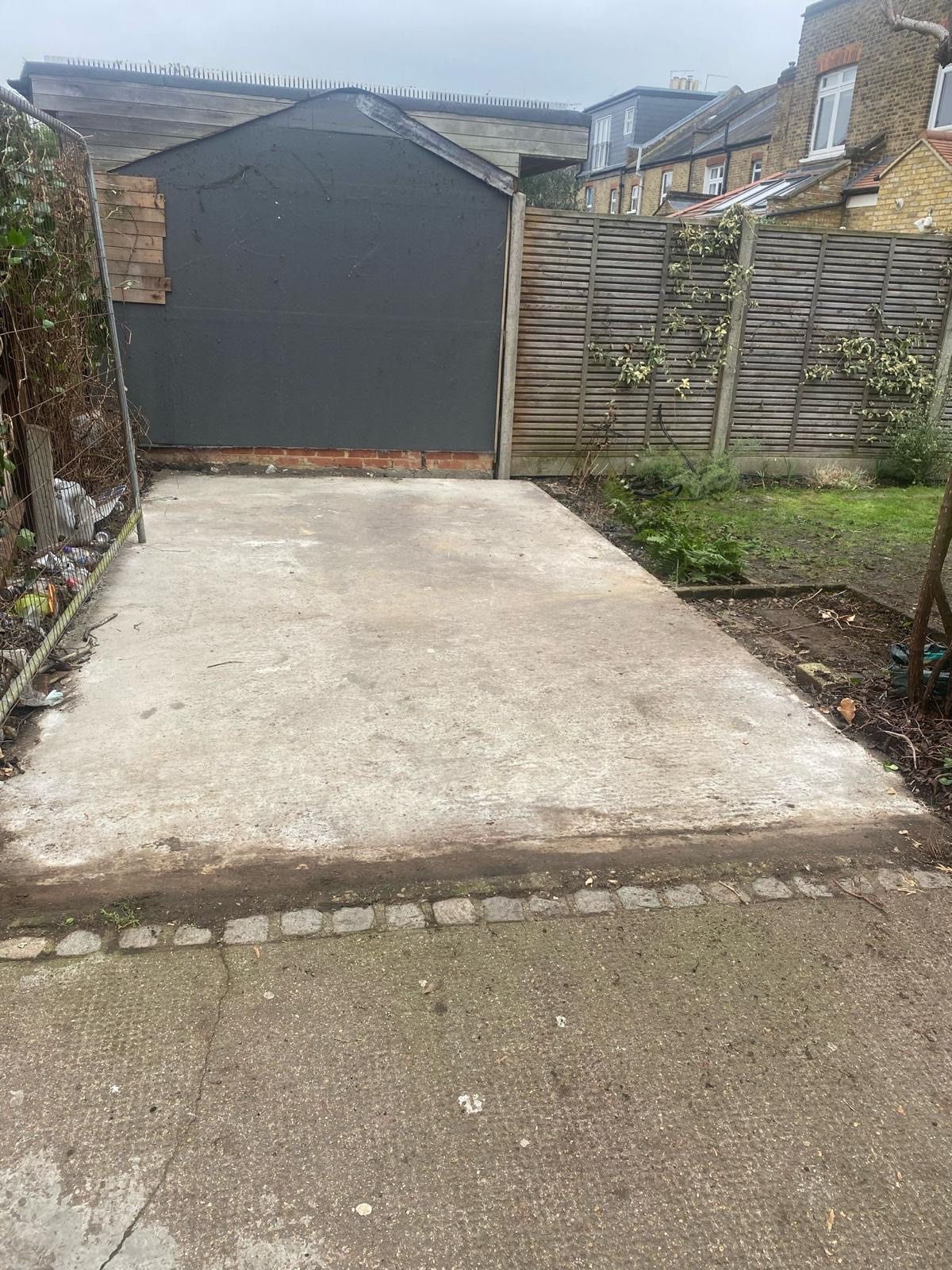
Asbestos Garage Removal in Kensington
Kensington is a borough of tall period houses and mansion blocks, not driveways and lock-ups. The few garages here sit in cobbled mews or behind the larger houses, and now and then one carries an old cement roof.
Garages Are Rare Behind These Frontages
Drive through most of Kensington and you will not see the rows of pebbledash semis with a garage at the side that you get further out of town. W8, SW7 and SW5 went up mostly in the nineteenth century, white stucco terraces around Kensington Square and Stanford Road, red-brick mansion blocks along Cromwell Road and Earls Court Road, and the housing was never built around the car. People parked on the street then and they park on the street now. Plenty of the tall houses were long ago split into flats and maisonettes, which only pushed parking further out to the kerb.
What external structures exist tend to hide. There are the cobbled mews behind the grand frontages, once stables and coach houses, many now garages or knocked through into homes. There are flat-roof extensions tucked at the back of the larger houses around Holland Park and Campden Hill, and the odd outbuilding behind a period house. A handful of these still have a corrugated cement roof or cement panels on them, fitted somewhere between the 1950s and the 1980s and left to weather ever since.
So we will say it plainly. If you have a mews garage or coach house with an old cement roof, or a flat-roof extension or outbuilding with cement sheets on top, that is a job we do all the time. But the honest picture is that most of the asbestos we deal with in Kensington is not on a garage at all. It is indoors, in the fabric of period flats and houses, and we cover that on the ceiling, floor tile and survey pages rather than dress it up as roof work here.
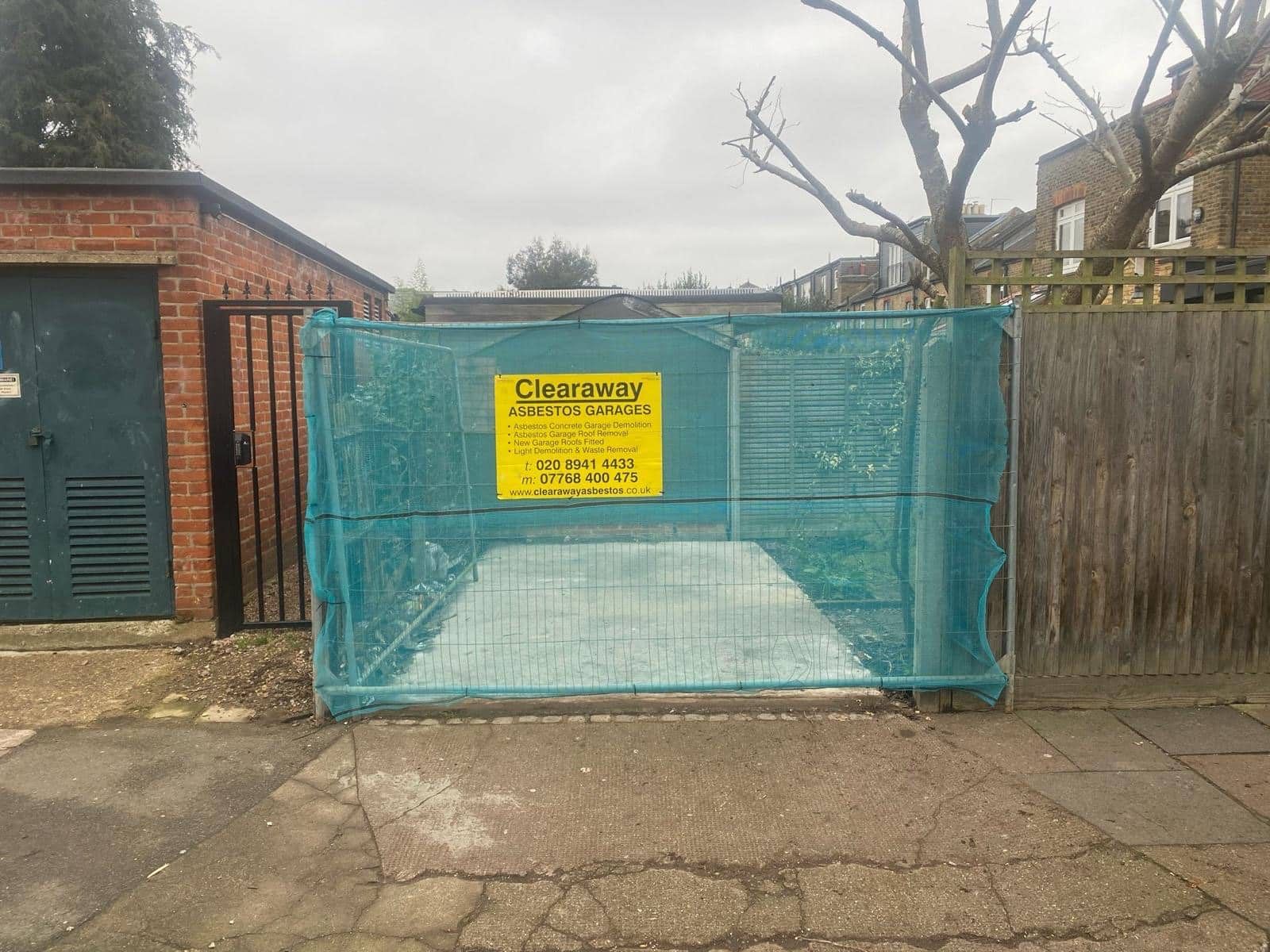
The Cement Roof on a Mews Garage
The classic find is corrugated cement sheeting, the grey wavy roof you will recognise the moment you see it. On a mews garage or a single outbuilding that is usually somewhere around eight to twelve sheets, each one a metre or so wide and running the slope of the roof. Decades of London weather take the surface off them. Rain, frost and moss work into the fibres, and a sheet that looked solid in 1975 can be soft and flaking by the time you climb up to it now. The same goes for old cement panels on a mews wall or a low coach-house lean-to.
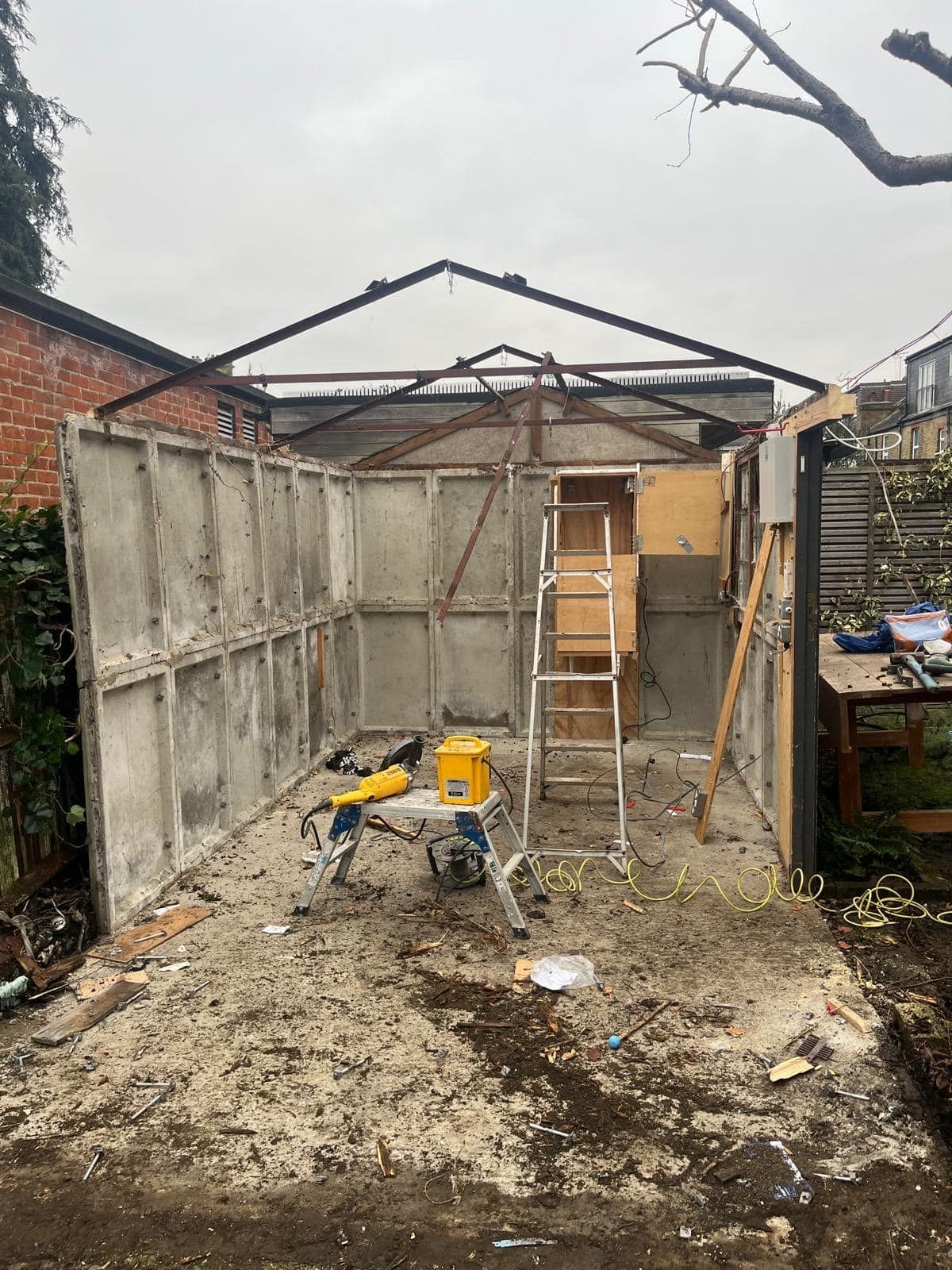
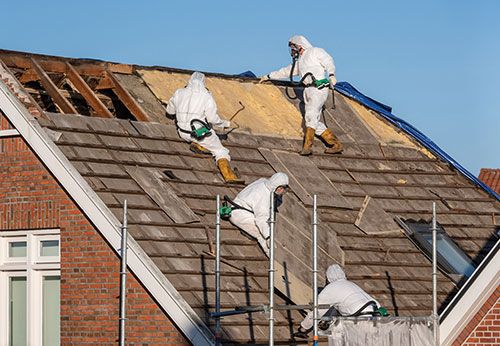
We take the sheets down whole rather than breaking them up, which keeps loose fibres to a minimum. The roof is damped down first, then each sheet is unfixed by hand, lowered, wrapped and double-bagged on the spot. A single garage roof like this is normally a few hours of work, often wrapped up inside one day from arrival to a clear site. There is usually no skip either, because the wrapped sheets go straight onto our vehicle and away to a licensed tip. That matters a great deal in a tight mews where the cobbles are narrow, the entry is shared and there is nowhere to leave a container blocking a neighbour in for days.
Corrugated cement roofing of this kind is lower-risk, non-licensed work in most cases, so it does not need the 14 days of HSE notice that the higher-risk licensed jobs carry. Even so, nothing is rushed. Sheets are kept intact, the area is kept damp so dust does not lift, the waste is documented under the right paperwork, and it is gone the same day rather than stacked up in the mews waiting on a collection.
Replacing the Roof and Fitting Around the Borough
Once the cement is off you have a bare structure, so the next question is what goes back on. On a mews garage or outbuilding most people go for a galvanised steel box-profile roof, which is light, quick to fit and lasts. A flat-roof extension behind one of the larger houses is more often suited to a three-layer torch-on felt finish, and from the ground that reads as a plain flat roof. A tiled roof or asbestos-free fibre cement sheet are both options too, and where there is old cement panelling on a wall or soffit we can box it out in a clean modern board instead.
Kensington adds a layer most areas do not. Much of the borough is conservation area and a great many houses and mansion blocks are listed, so even a small roof at the back can mean checking whether the wider project needs listed building consent, and choosing a replacement that suits the setting rather than whatever is cheapest. A mews with no driveway means parking suspensions and a bit of access planning before anyone turns up. Original plasterwork and joinery near the work get covered and protected, and on a shared mews we keep the entry clear so the neighbours can still come and go.
None of that changes the asbestos job itself. It just means we plan the access, the parking and the timing around the building before the first sheet comes down. If the roof sits over a flat-roof extension that backs onto other homes, we work out the lift and the route for the wrapped sheets in advance, so nothing waits around in a shared space. The aim is a day that runs cleanly in a spot where there is genuinely no room for mess, then a tidy new roof on top and the site handed back as we found it.
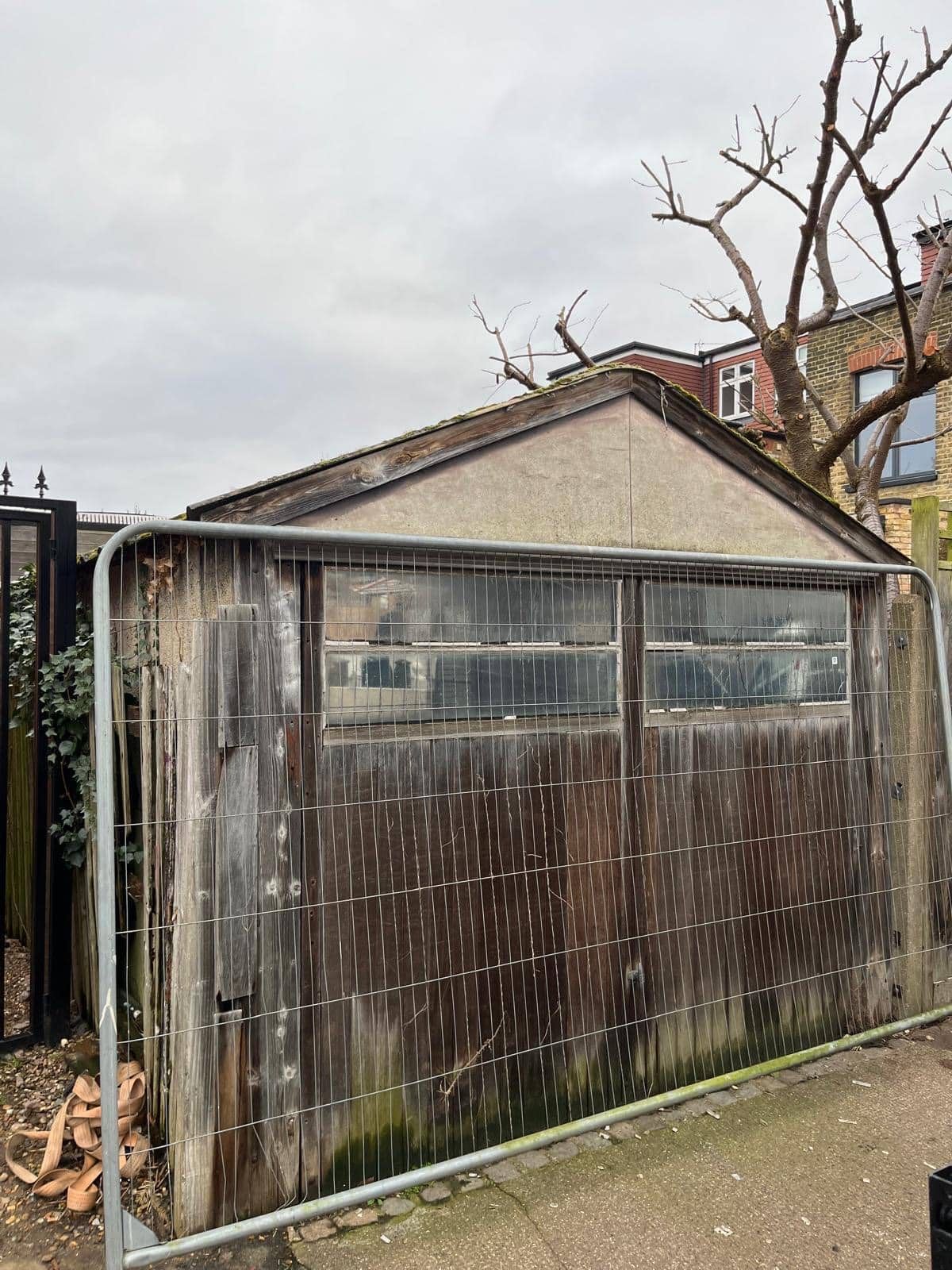
Honest Advice on a Kensington Garage Roof
If you are not sure whether the roof on your mews garage or the panels on an outbuilding actually contain asbestos, you cannot tell by eye. The safe first step is a small sample sent to a UKAS-accredited laboratory, with the result back in a few working days, rather than guessing or paying for removal you may not need. If it comes back clear, you have lost nothing. If it is positive, you know exactly what you are dealing with.
And if the suspect material turns out to be inside the property, an old artex ceiling, insulating board around a boiler, floor tiles with black bitumen under them or lagging on pipes in a basement or riser, that is the more common picture in this borough and we handle all of it. In an occupied flat or a mansion block with shared stairwells, that indoor work means sealing the room and air testing before anyone goes back in, which is a different job from stripping a garage roof. We will point you to the right approach rather than treat every enquiry as a roof when most of them are not.
Clearaway is based in Chessington and the owner Graham runs local jobs himself, and we have been working across this part of London for more than seven years. We hold the Spectra licence number 142305706. For a straight answer on a garage roof, an outbuilding or anything indoors, call 0800 024 6168.
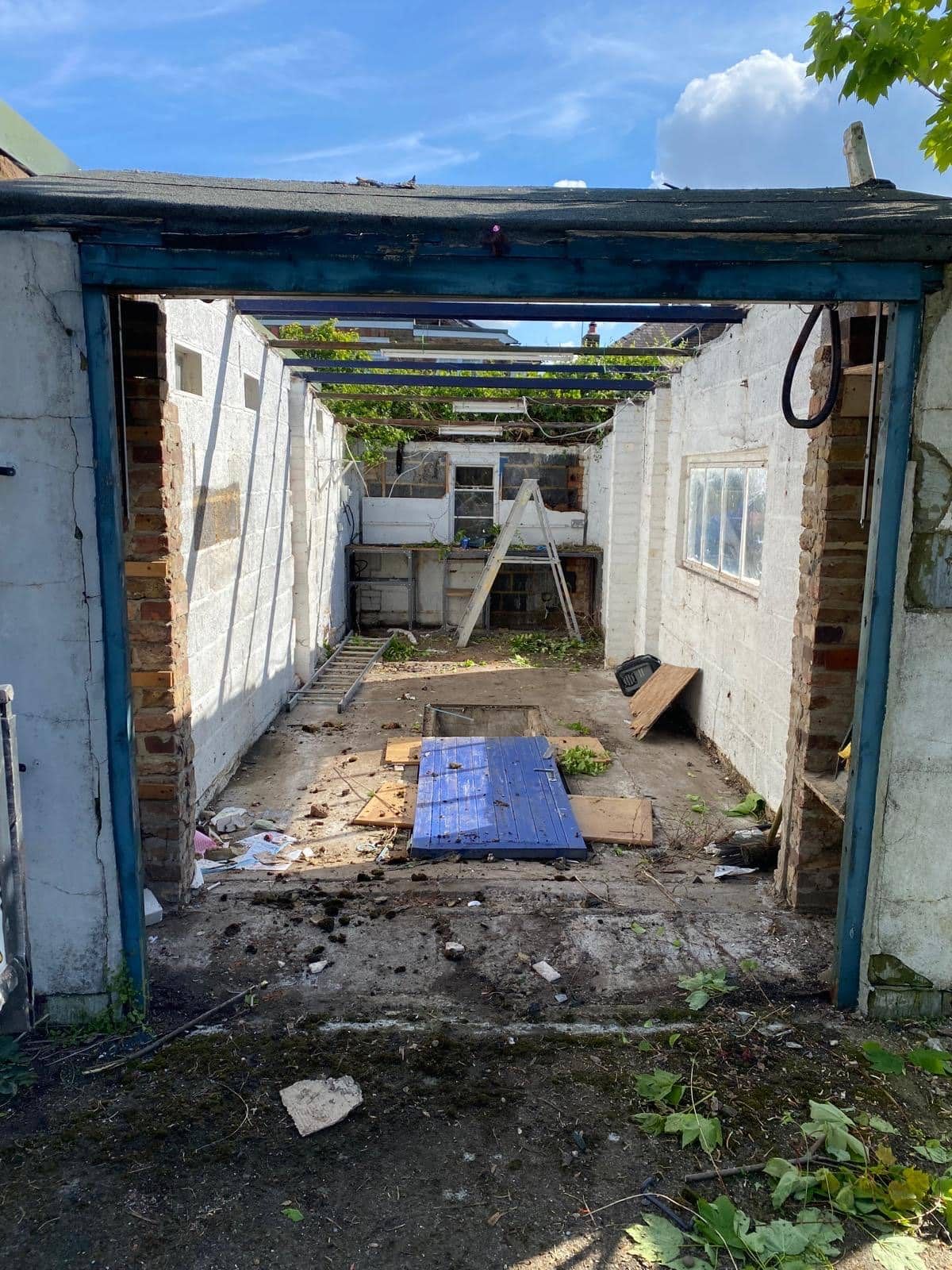
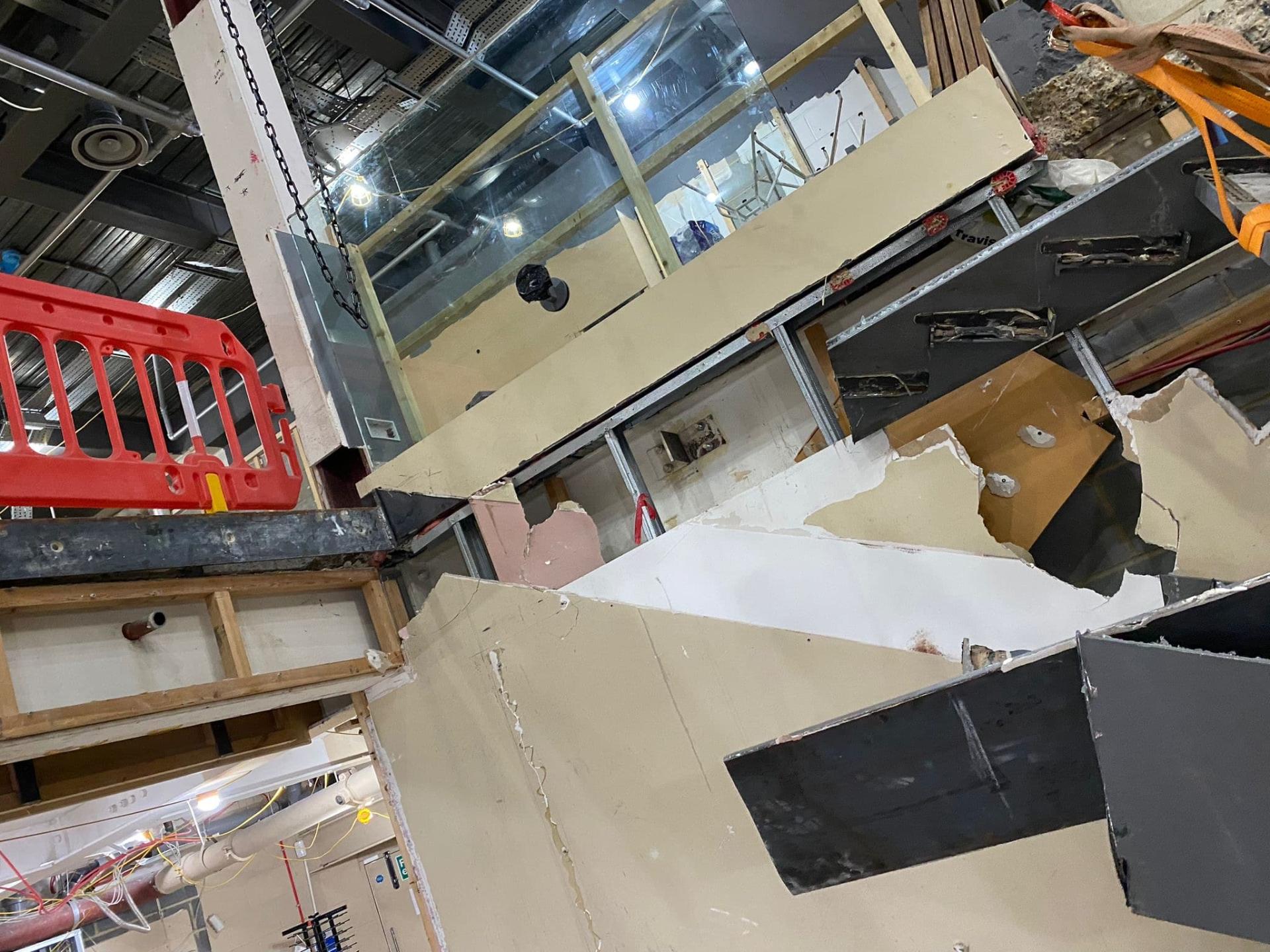
Commercial Building Strip-Out, Kensington
Kensington, South London · Strip-Out
View this project"Graham and his guys picked up some asbestos roof sheets from my property in Chessington. Would highly recommend this company to anyone. Really good service and very professional. Thank you"
Our Removal Process
From first call to final certificate, every job follows the same clear four-step process.
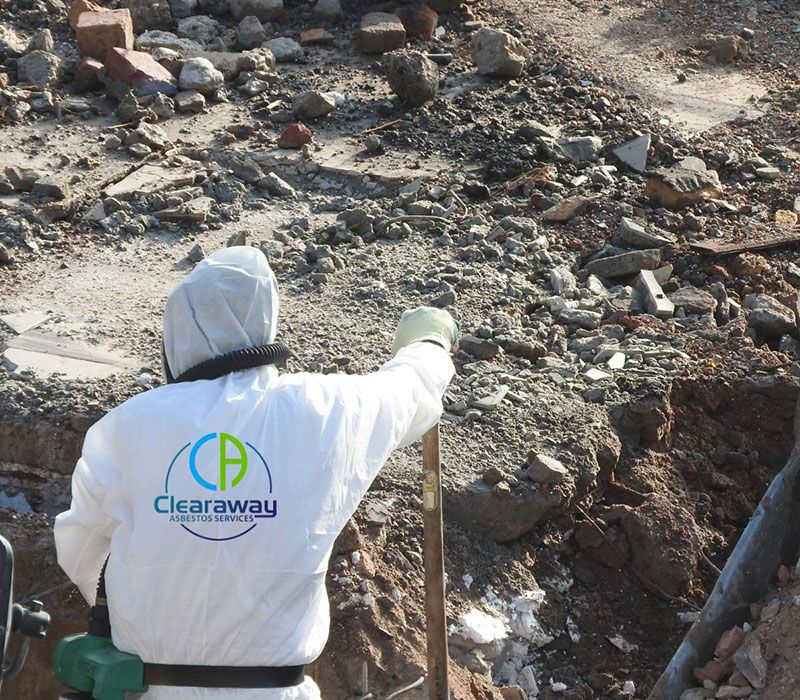
Survey
We inspect the property and confirm the material. Sampling available if required.
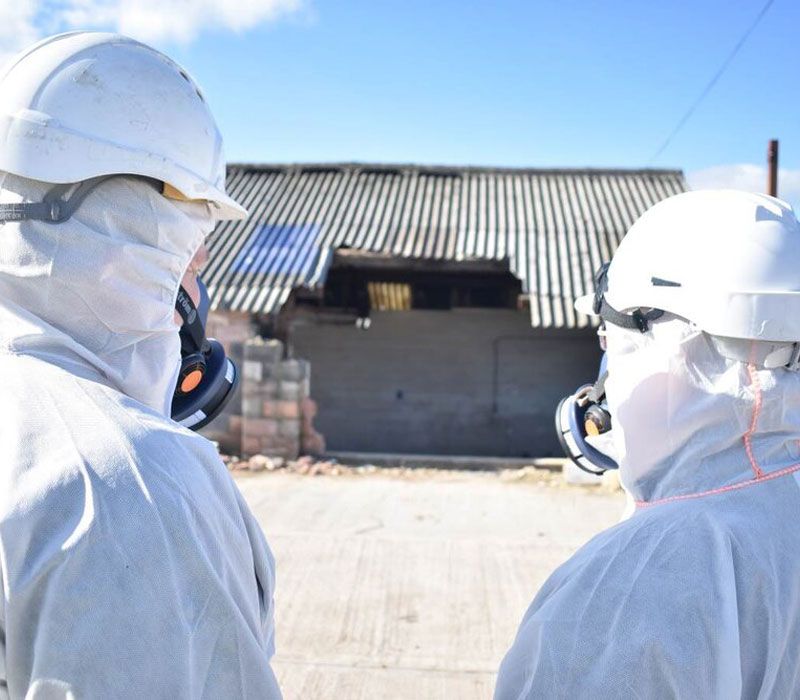
Quote
Fixed written price covering removal, disposal and any replacement work.
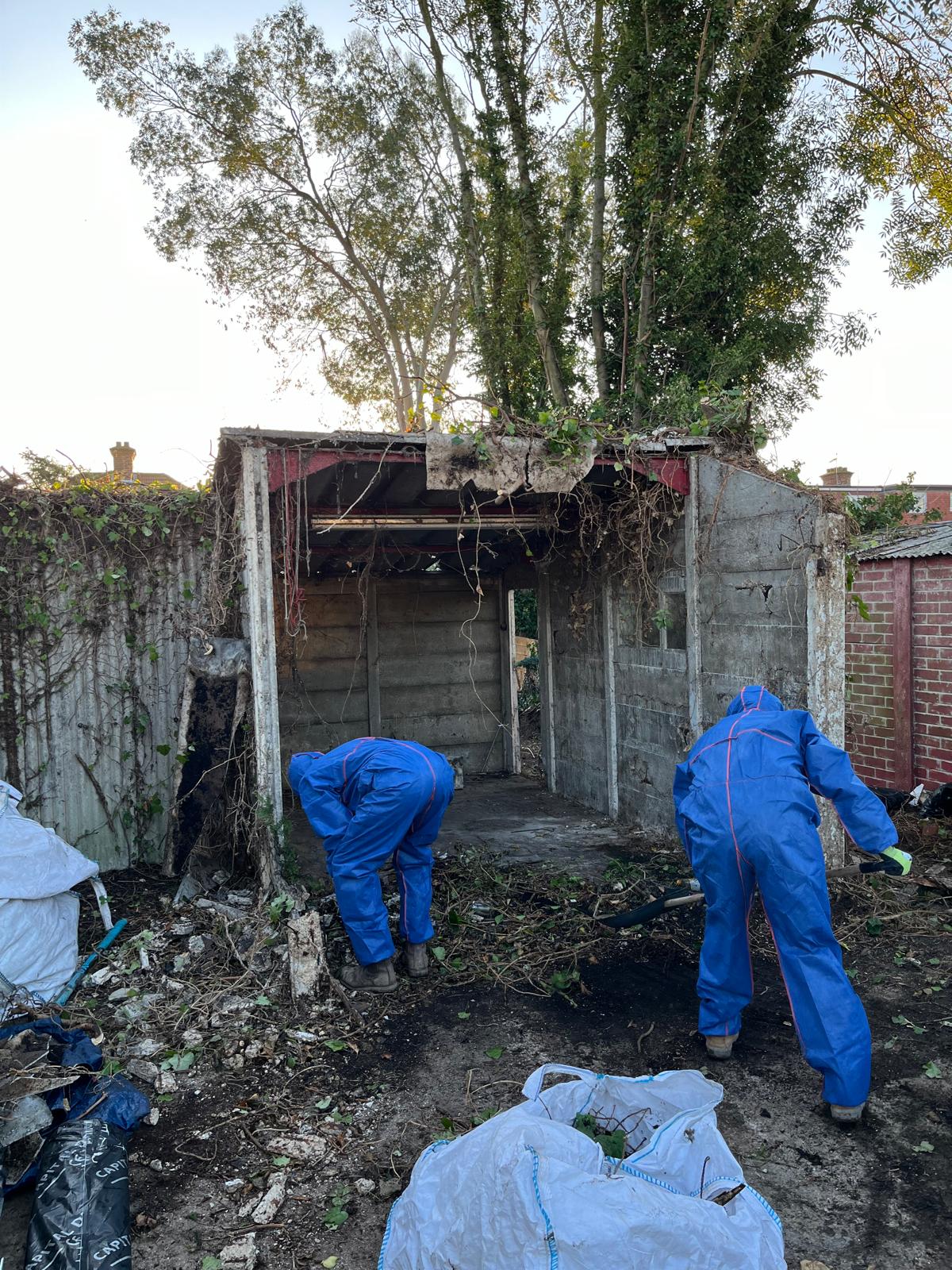
Removal
Material is removed safely, double-wrapped and taken to a licensed disposal facility.
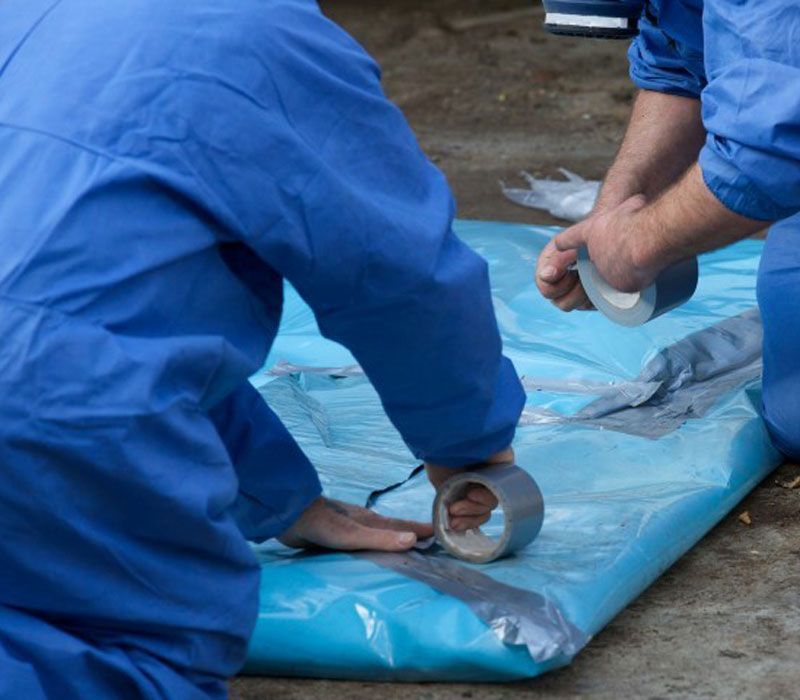
Certificate
You receive a waste consignment note and disposal certificate confirming legal handling.
Frequently Asked Questions
Why Choose Clearaway
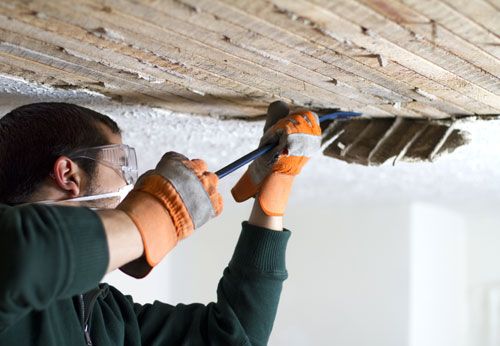
HSE Licensed Removal
Higher-risk material handled under full enclosure, with the 14 days of HSE notice the law requires and independent clearance testing.
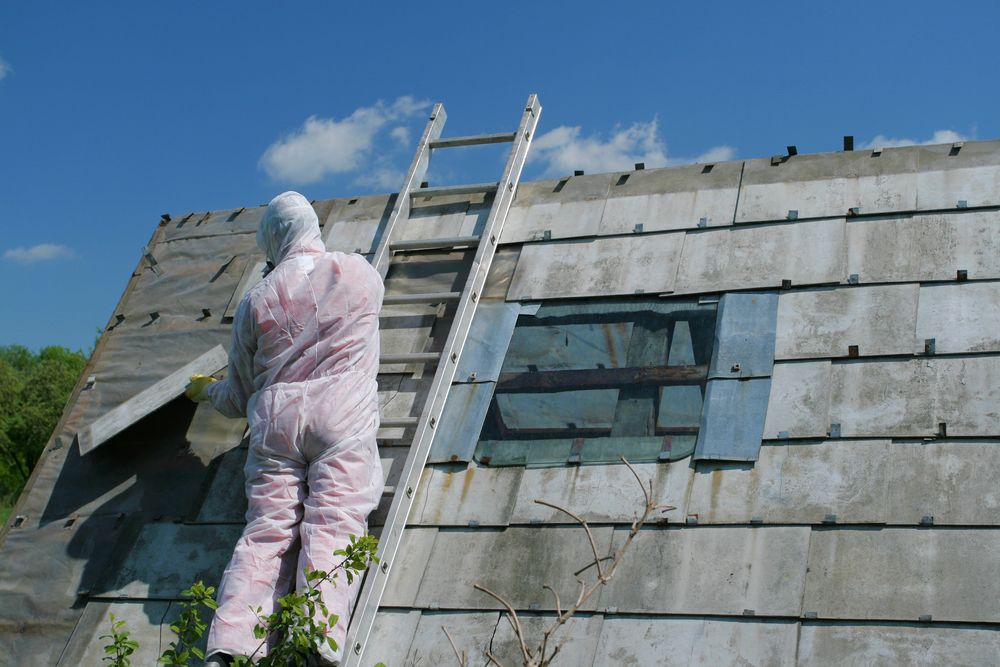
Planning Aware
Used to conservation areas and listed buildings: scaffold and access planned around the restrictions, original fabric protected.

Fully Licensed
Licensed asbestos removal contractor (Licence No. 142305706). Full public liability insurance on every job.
Our Own Team
We never subcontract. The people who quote your job are the people who do it.
Get in Touch
Send a few details about your project and we will come back the same working day with a fixed price. We cover Surrey, London and the South East, including Esher, Cobham, Kingston, Richmond, Epsom, Guildford, Woking and Croydon.