Asbestos Garage Removal in East Grinstead
Drive down almost any postwar road off the centre of East Grinstead and the garages give it away. A low corrugated cement roof, grey and mossed over, fitted decades ago and never touched since. That sheeting is where we come in.
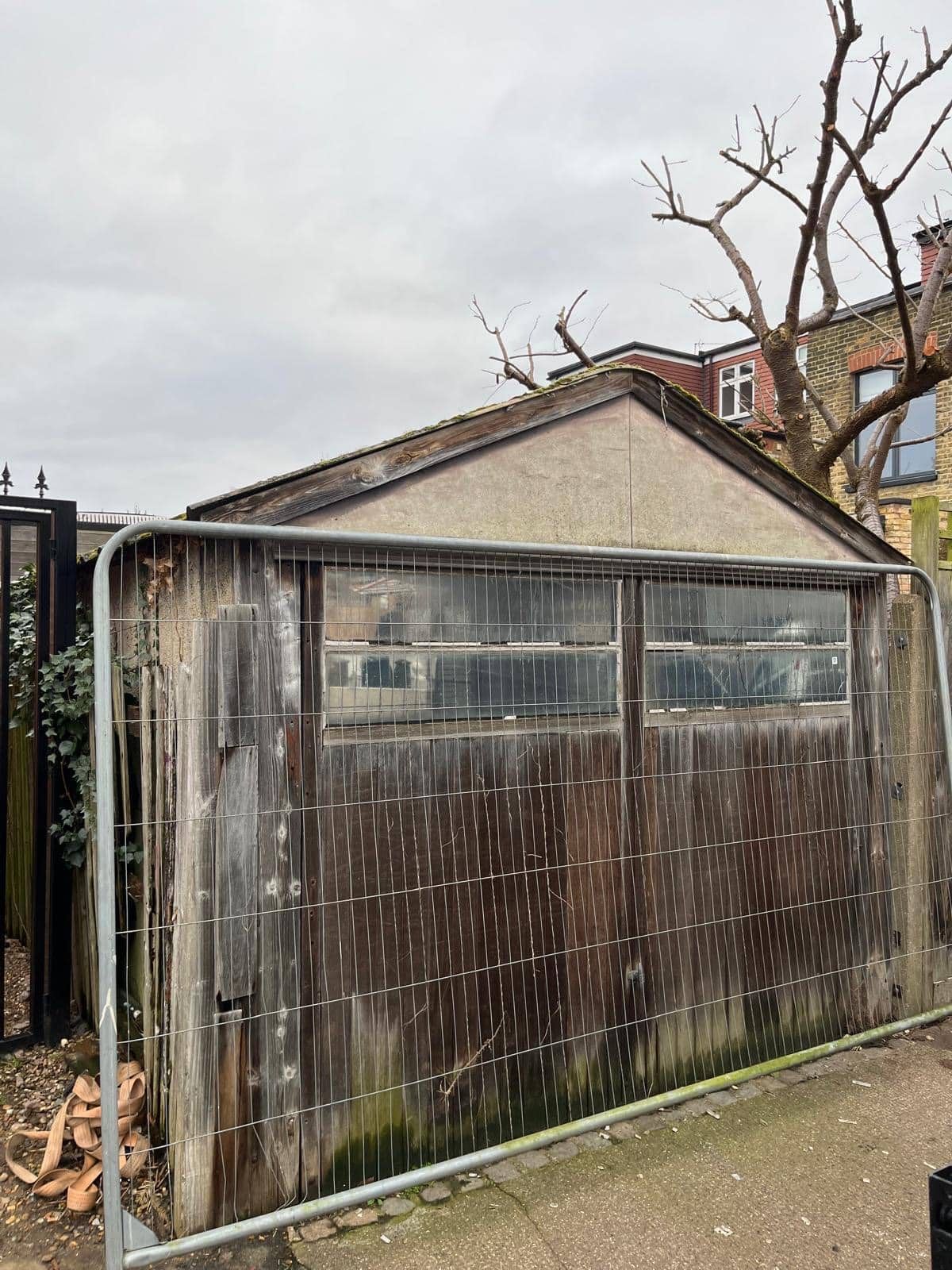
The grey garage roof on Sussex drives
East Grinstead grew outward in waves, and the detached and semi-detached garages came with the houses. Felbridge, Ashurst Wood and the roads spreading from the High Street are full of them. The brick or block walls tend to outlast everything, but the roof is a different story. A run of corrugated cement sheets, laid in the 1950s through to the 1980s, sits up there soaking up High Weald weather year after year. Up on the Weald the wind drives the rain hard against a low pitch, and a garage roof takes more punishment than people give it credit for.
Those sheets are cement bound with asbestos fibres. Intact and painted, they sit quietly and cause nobody any bother. The trouble starts as they age. Frost gets into the surface, moss holds the damp against the cement, and the corrugations crack along the fixing line where the bolts hold them down. A roof that looked fine from the drive turns brittle, and a panel that should lift off whole can shatter under a careless hand. East Grinstead has plenty of these still in place, because a garage roof is the last thing anyone thinks to replace until it starts letting water in over the car.
The genuinely old part of the town, the timber-framed buildings along the High Street, predates all of this by centuries. Asbestos belongs to the newer housing, the garages and sheds and outbuildings that filled in around the medieval core through the twentieth century. So when a roof needs dealing with here, age alone is a fair clue to what it is made of. That is the work we travel south from Chessington to take on.
What a single garage roof actually holds
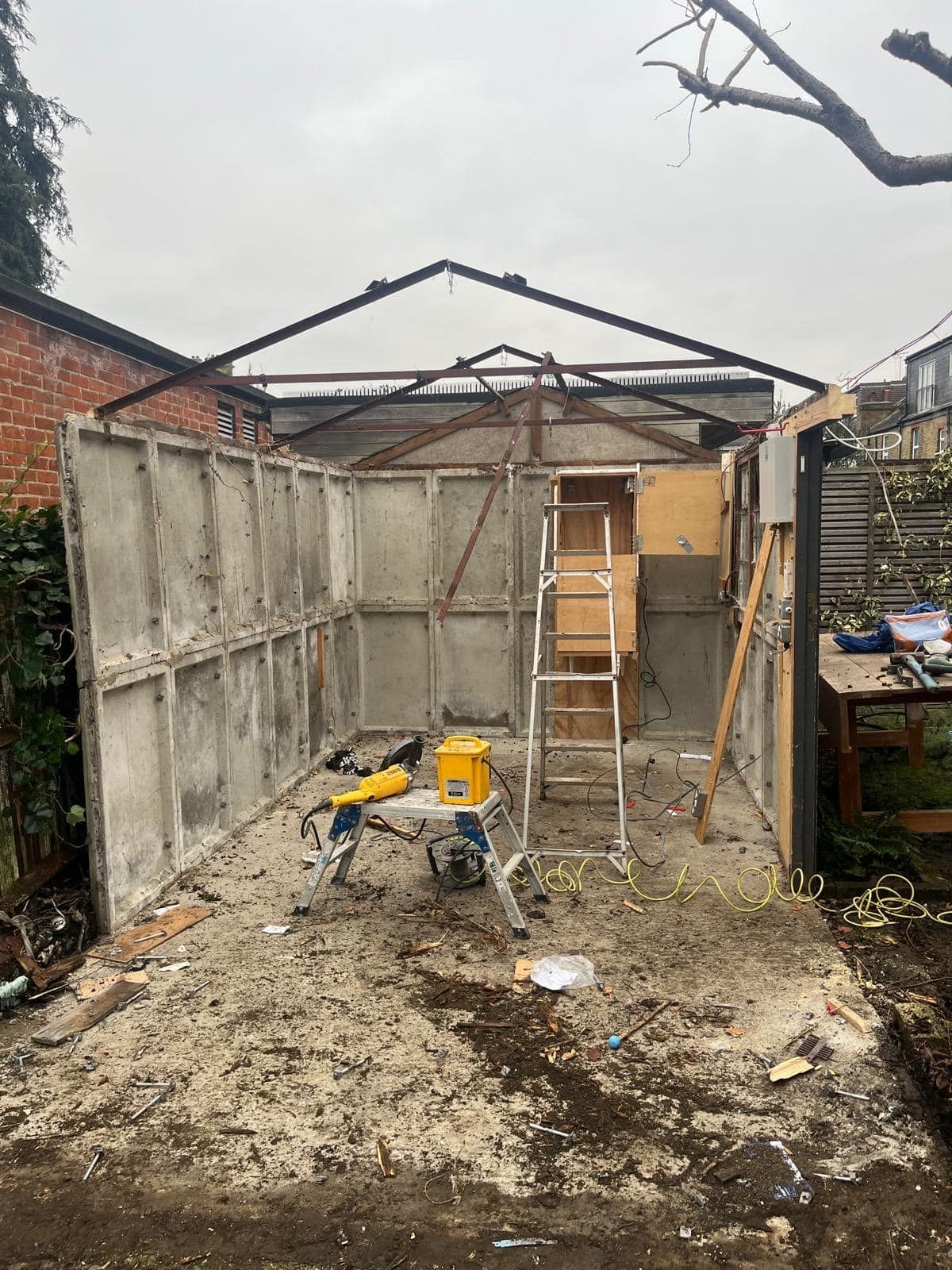
A standard single garage roof carries somewhere around 16 corrugated cement sheets, each one roughly 3 metres long, laid in two pitched slopes that cover close to 30 square metres in total. People are often surprised by the figures, because from the ground it reads as one grey expanse rather than a counted set of panels. A double garage or a long run behind a larger house carries proportionally more, and we count the sheets before we quote so there are no surprises on the day.
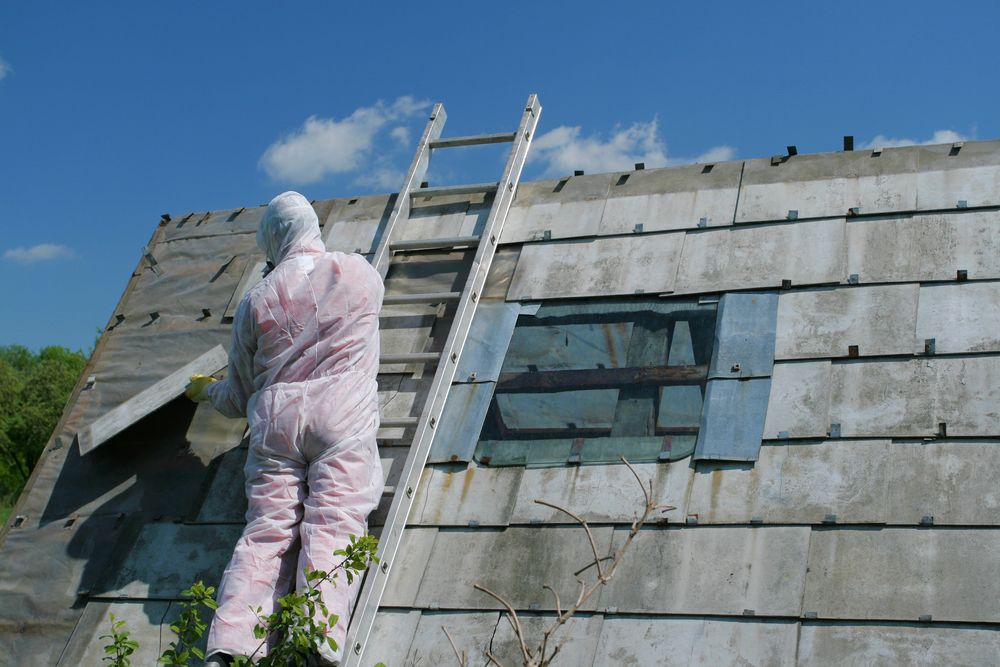
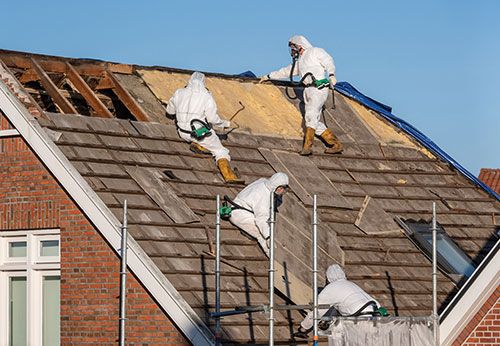
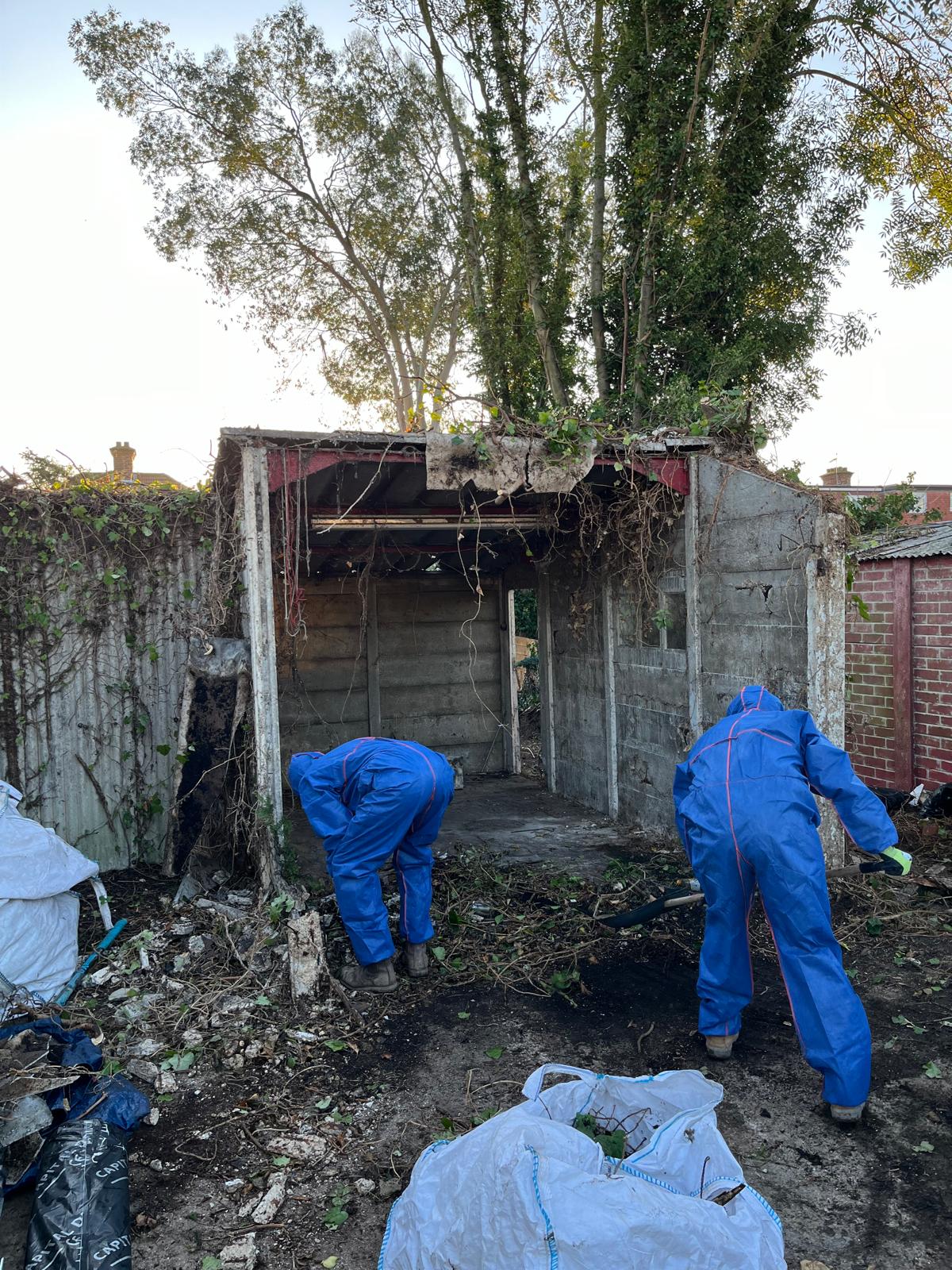
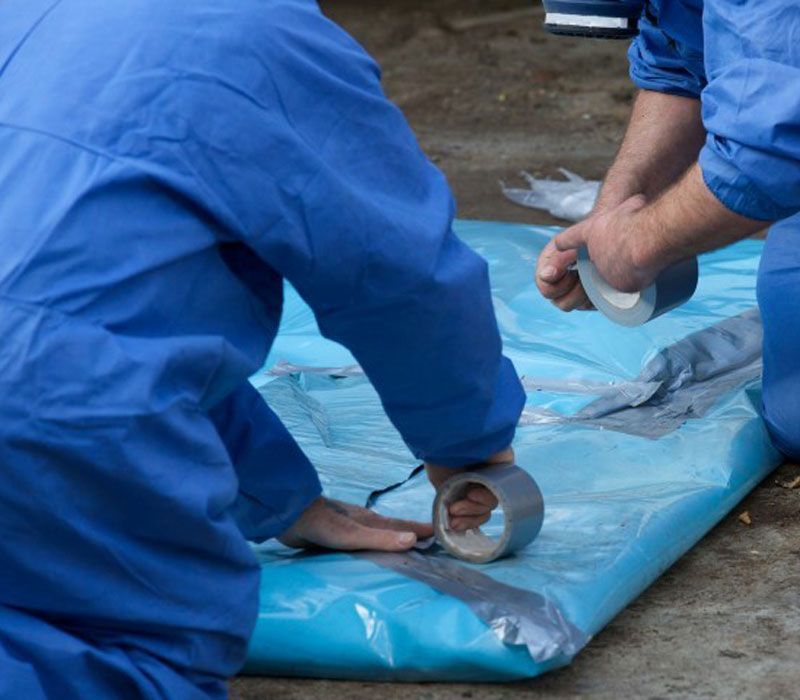
We take the sheets down whole. They are unbolted at the fixings one at a time, lifted off in one piece, wrapped in heavy sheeting and kept damp so nothing breaks loose into the air or onto the drive. Snapping a sheet to make it lighter is exactly what spreads fibres, so it never happens here. The fixings themselves, the bolts and any soft washers, come away with the panel rather than getting left to drop. Whole removal keeps the dust down and keeps your driveway and the road outside it clear while we work.
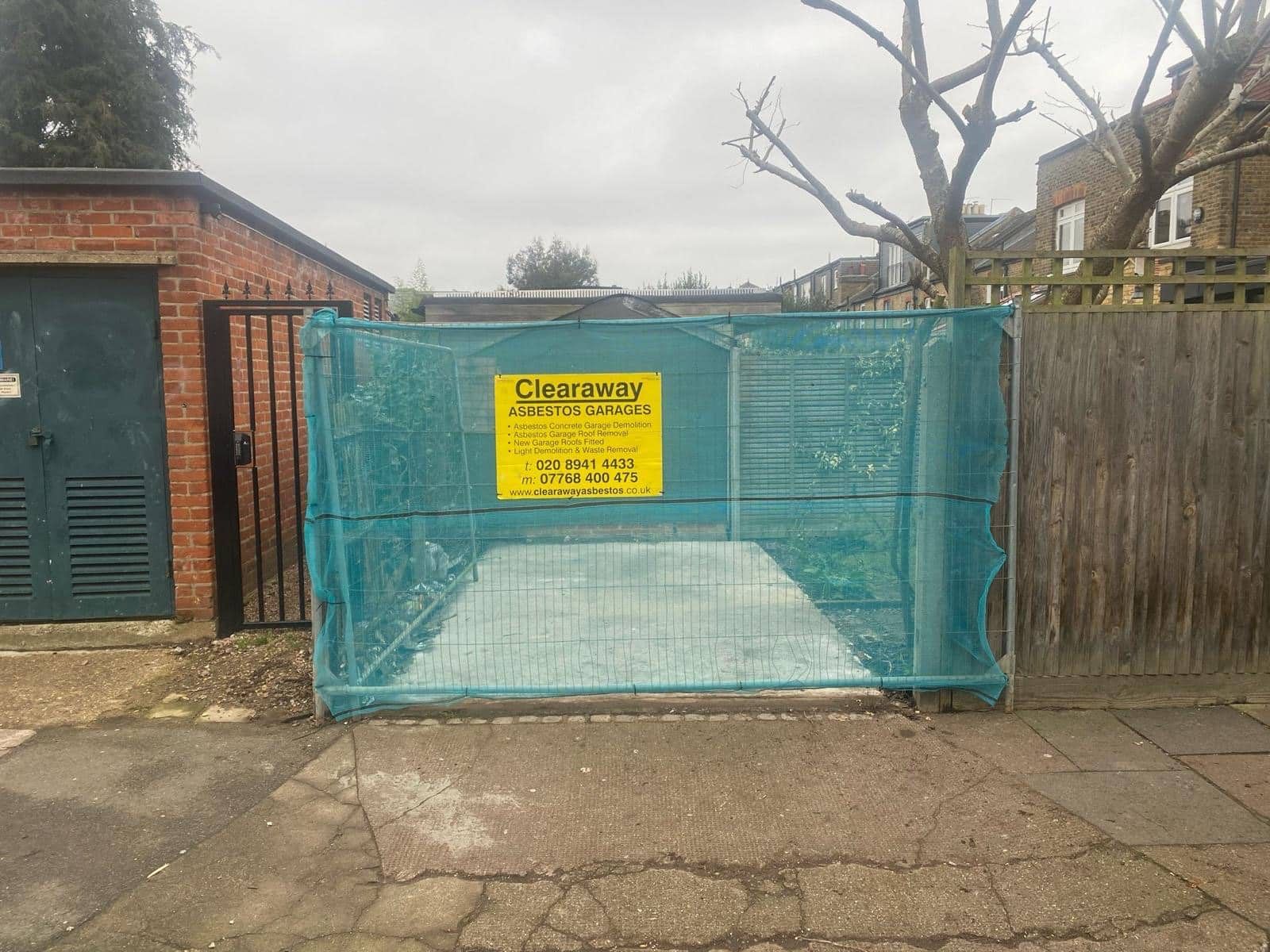
For a single garage the strip itself runs about 3 to 4 hours, and most jobs are wrapped up inside the day with no skip parked outside the house. The wrapped sheets leave in our own sealed transport and go to a licensed disposal site, with the paperwork to show where they went. Graham runs the jobs on the ground, so the same person who looks at the roof and quotes it is the one there when it comes off. For a household in East Grinstead that means one point of contact from the first look to the cleared drive. Before we leave, the area where the sheets came down is swept and checked over, so there are no broken fragments left on the ground for you to deal with afterwards.
Putting a new roof back on
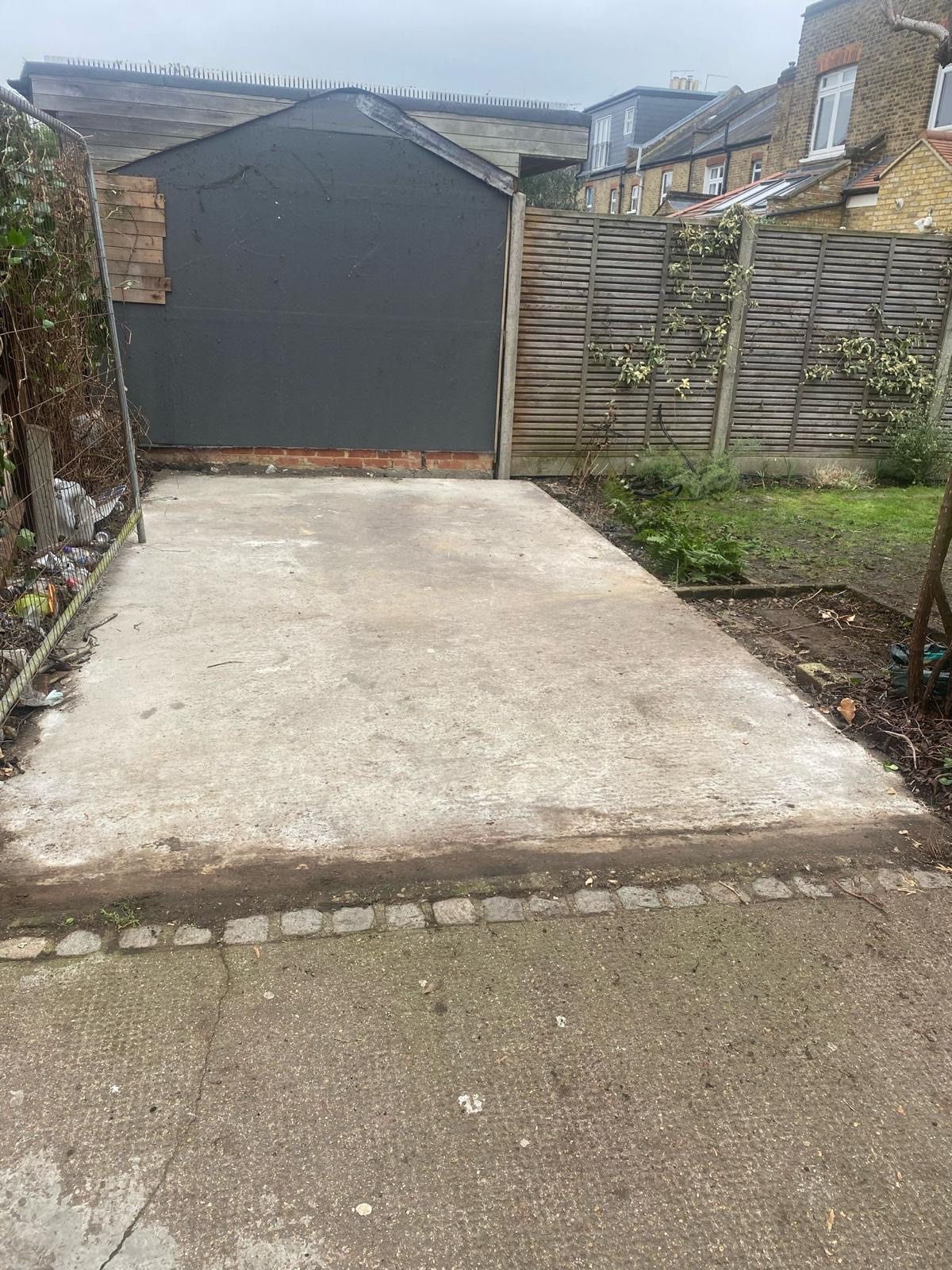
Once the cement sheeting is off, the garage needs covering again, and there are a few sensible routes depending on the building and the budget. Galvanised steel box-profile sheeting in a 0.7mm gauge is the common like-for-like replacement, light to fix and built to shed water across the same span the old sheets covered. It goes back on quickly once the roof is clear, so a garage rarely sits open for long.
If you want a softer line than profiled steel, a three-layer torch-on felt system suits a flatter pitch and gives a fully sealed finish that copes well with the wet weather coming off the Weald. A tiled roof is an option where the structure can carry the weight and the look calls for it, and modern asbestos-free fibre cement sheeting is there for anyone who wants the original corrugated profile back without the asbestos in it. Boxing out exposed timbers, the eaves or an old soffit line is part of the same visit where it makes sense, so the finished garage is tidy rather than patched.
We will talk through what actually fits your garage rather than push one answer at every roof. A detached block garage on a Felbridge plot and a lean-to garage squeezed behind a terrace near the centre are not the same job, and the new roof should match the building it sits on and the way the rest of the property looks. The aim is a roof that looks like it belongs there, not an obvious repair. Where a garage shares a gutter or a wall with the house, we set the new roof line up so the rainwater still runs off the way it always did.
Booking the work and what it costs to check
You cannot tell by looking whether a sheet contains asbestos, and the garages around East Grinstead vary in age and origin. Where there is any doubt, the first step is a small sample taken under controlled conditions and sent to a UKAS-accredited laboratory, with results back in a few working days. That confirms exactly what the roof is before anyone commits to stripping it, and it is a far cheaper step than guessing wrong.
Most garage roofs are non-licensed work and run straightforwardly inside the day. If a job touches higher-risk material it moves to the stricter licensed standard, which means 14 days of notice to the HSE before the work can begin, full enclosure of the area, and four-stage clearance testing signed off by an independent analyst before the space is handed back to you. We will tell you which side of that line your roof falls before any work begins, never after the fact. For a straightforward cement garage roof, that stricter regime rarely comes into it at all.
Clearaway works under Spectra licence 142305706 and has been clearing asbestos across this part of Sussex and Surrey for more than seven years, on everyday garage roofs and the larger residential and commercial jobs alike. If you have a tired cement garage roof in East Grinstead and want to know what is on top before the weather decides for you, call 0800 024 6168.
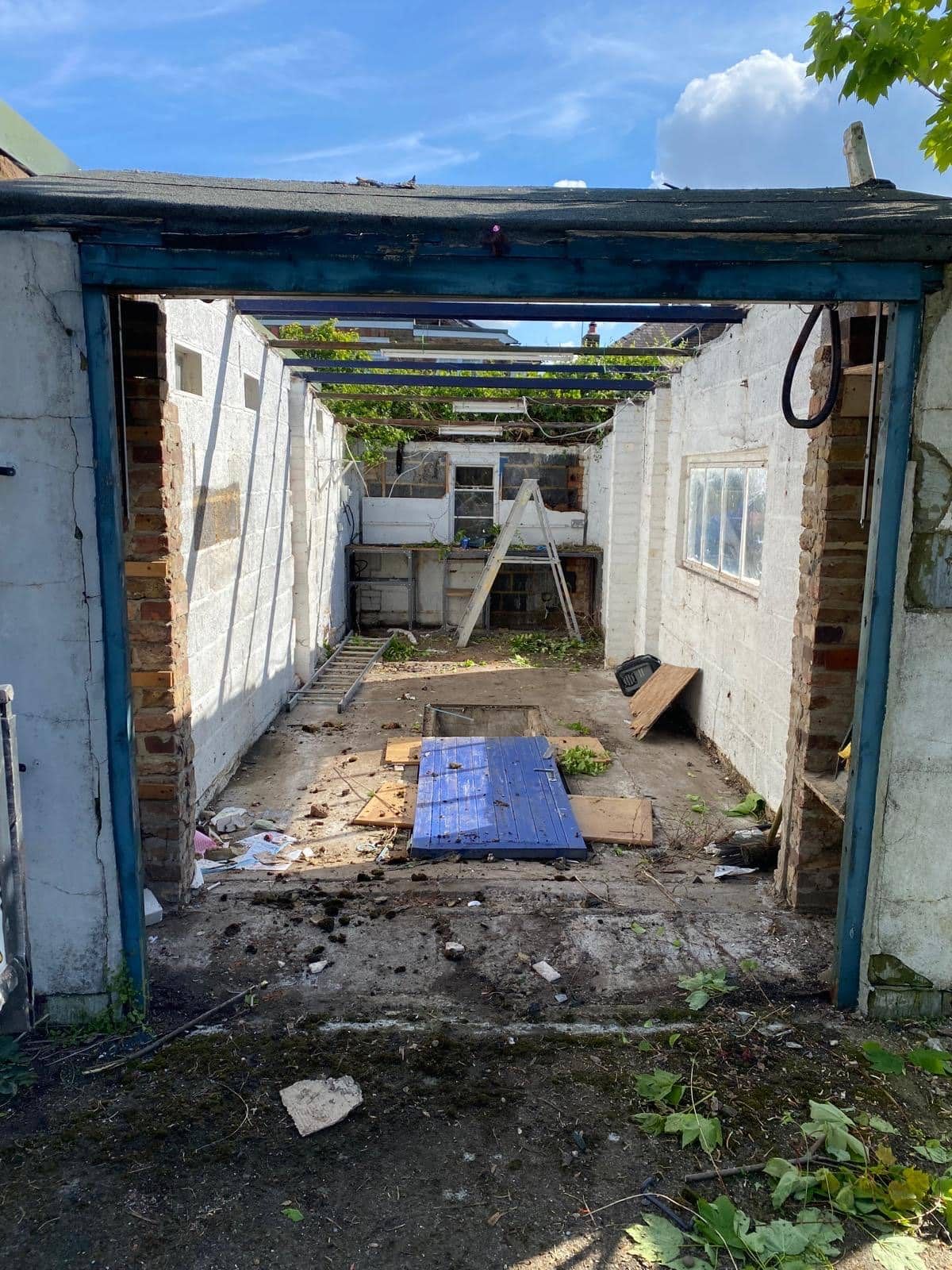
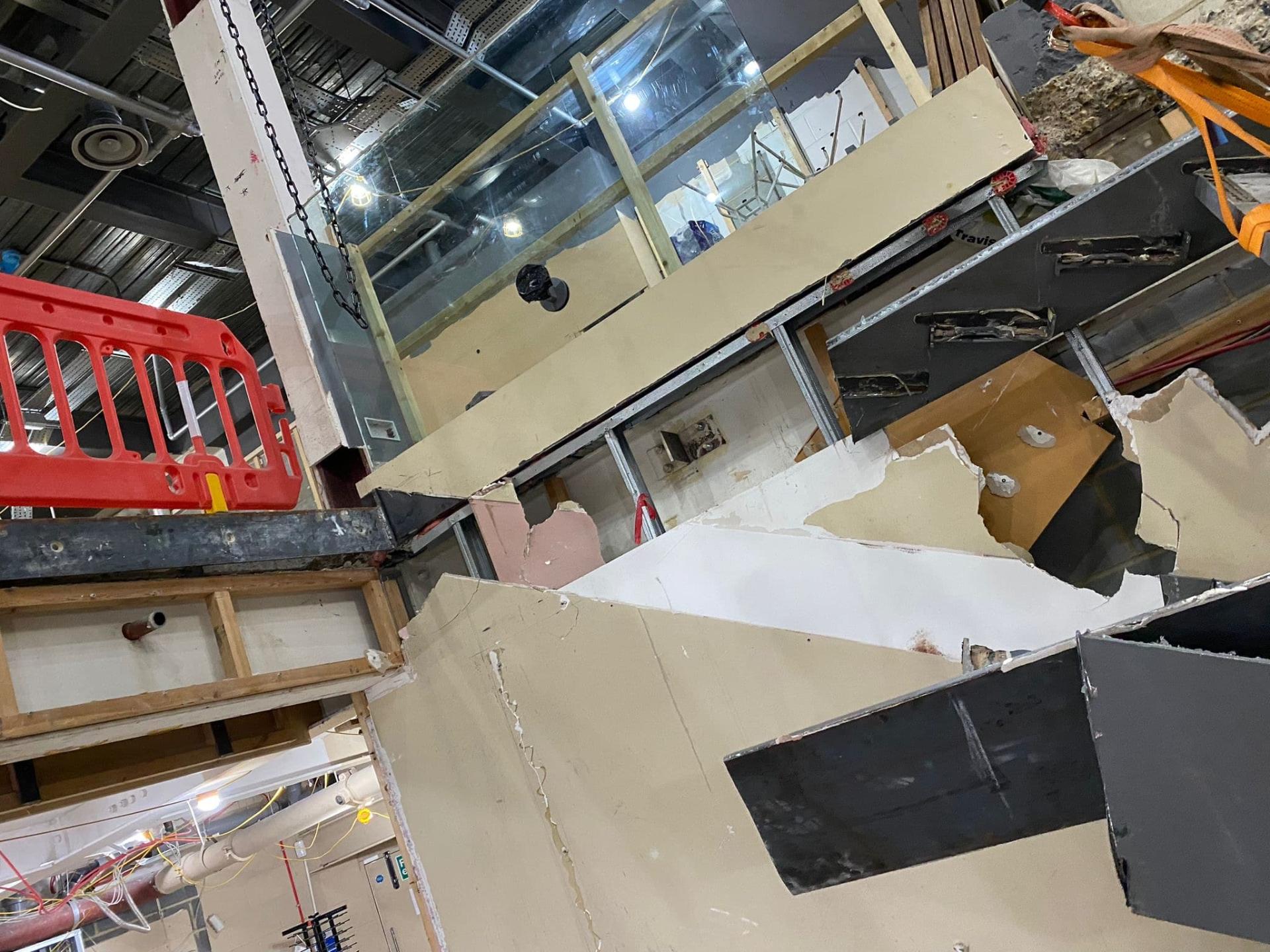
Commercial Building Strip-Out, Kensington
Kensington, South London · Strip-Out
View this project"Graham and his team done an excellent job of removing and replacing my asbestos garage roof and I wouldn't hesitate in recommending them"
Why Choose Clearaway
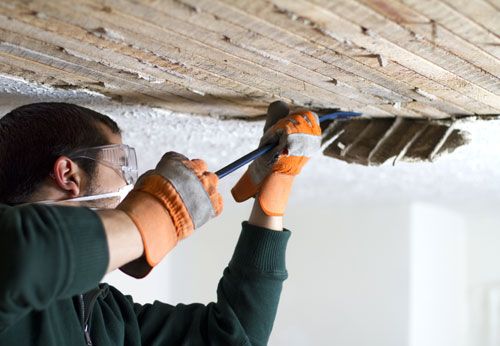
Specialist Crew
Asbestos work is all we do, every day, across the South East.
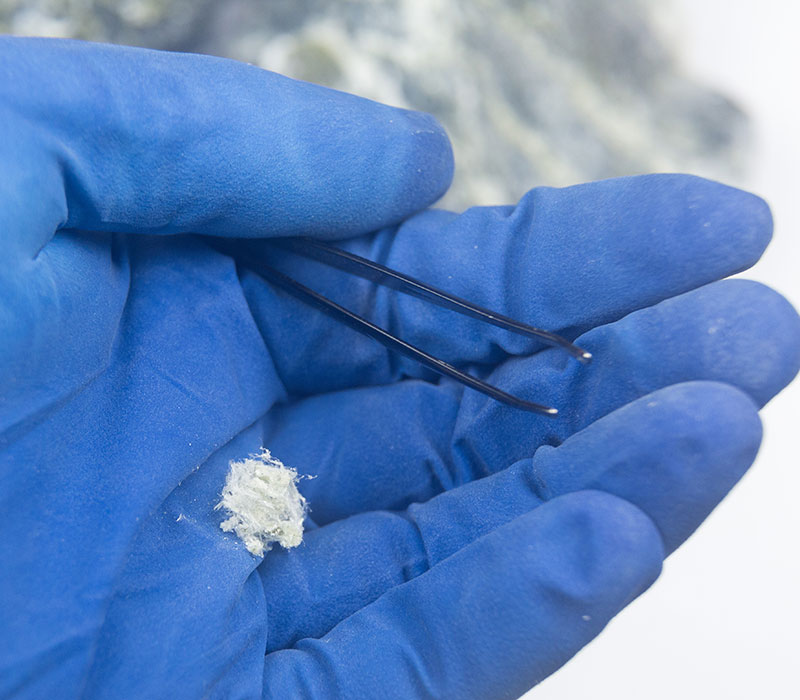
Fully Licensed
Licensed asbestos removal contractor (Licence No. 142305706). Full public liability insurance on every job.
Local & Fast
Surrey-based. Most domestic jobs are booked in and finished within a week.
Our Own Team
We never subcontract. The people who quote your job are the people who do it.
Frequently Asked Questions
Our Removal Process
From first call to final certificate, every job follows the same clear four-step process.
Survey
We inspect the property and confirm the material. Sampling available if required.
Quote
Fixed written price covering removal, disposal and any replacement work.
Removal
Material is removed safely, double-wrapped and taken to a licensed disposal facility.
Certificate
You receive a waste consignment note and disposal certificate confirming legal handling.
Get in Touch
Send a few details about your project and we will come back the same working day with a fixed price. We cover Surrey, London and the South East, including Esher, Cobham, Kingston, Richmond, Epsom, Guildford, Woking and Croydon.