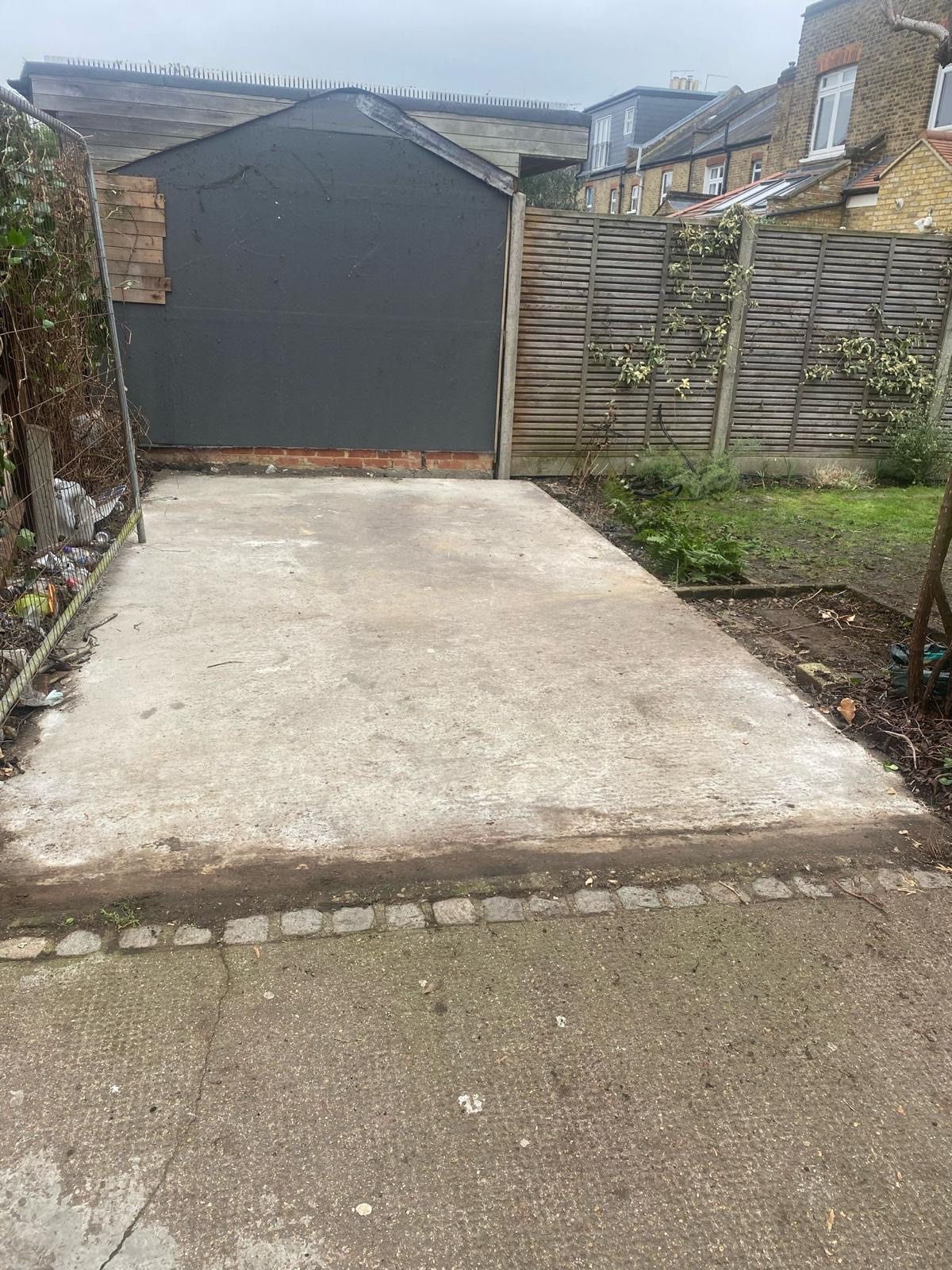
Asbestos Garage Removal in Chertsey
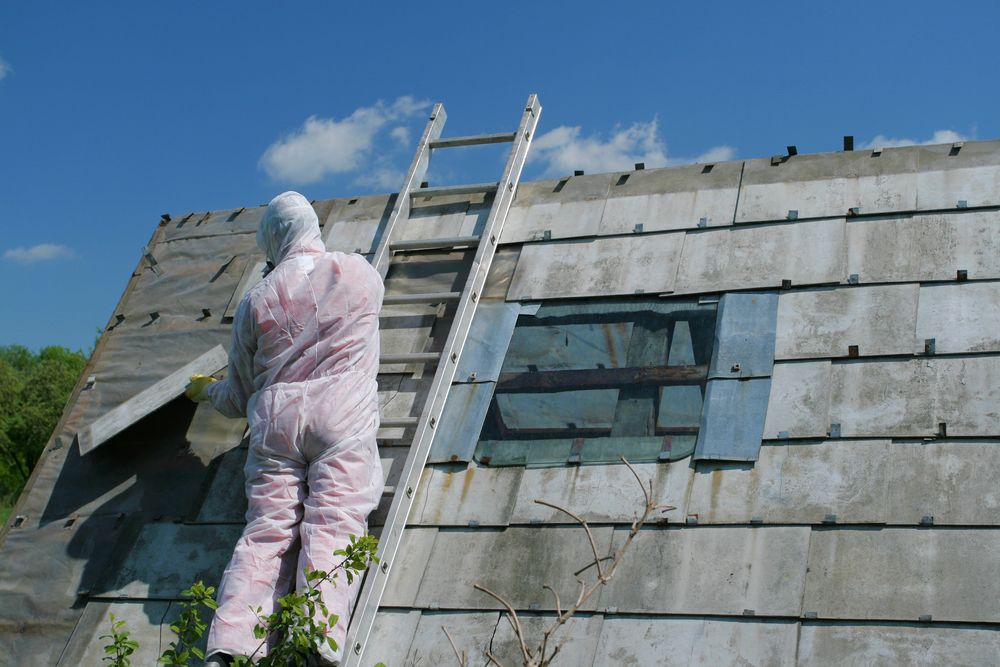
Plenty of Chertsey homes still have an old corrugated cement garage roof out the side or back, fitted decades ago and weathered ever since. We take those roofs down whole and clear them properly, most jobs in a single day.
The Chertsey garage roof and where it came from
Drive around the postwar streets off Guildford Street and Windsor Street, or out towards the semis and detached houses spreading from the centre, and you keep seeing the same thing. A single garage or lock-up beside the house, low pitched, with a roof of grey corrugated sheeting that has gone green and brittle at the edges. Most of these went up between the 1950s and the 1980s, when cement sheet reinforced with asbestos was the cheap, quick way to cover a garage or a shed. It was light, it was rigid, and at the time nobody thought twice about it.
Those same sheets are still up there on a lot of Chertsey drives, decades past their fitting and decades of Surrey weather on top. The river sits right there, the M25 and M3 throw damp and frost across the town all winter, and corrugated cement does not cope well with forty or fifty years of that. The surface goes chalky, hairline cracks open along the corrugations, and moss works into the laps. Cement asbestos sheeting was not banned in the UK until 1999, so anything from before then is suspect until it has been checked.
You cannot tell what is in it by looking, which is the whole problem. A weathered garage roof that has cracked and shed its surface is exactly the kind of material that releases fibres when it is disturbed, and a garage is the one bit of the property people are forever drilling into, leaning ladders on, or knocking about during a clear-out. Pressure washing one of these roofs or walking on it to clear a gutter is the worst thing you can do, because that is the moment fibres come loose. Left alone it sits there quietly. The trouble starts the day someone decides to deal with it themselves.
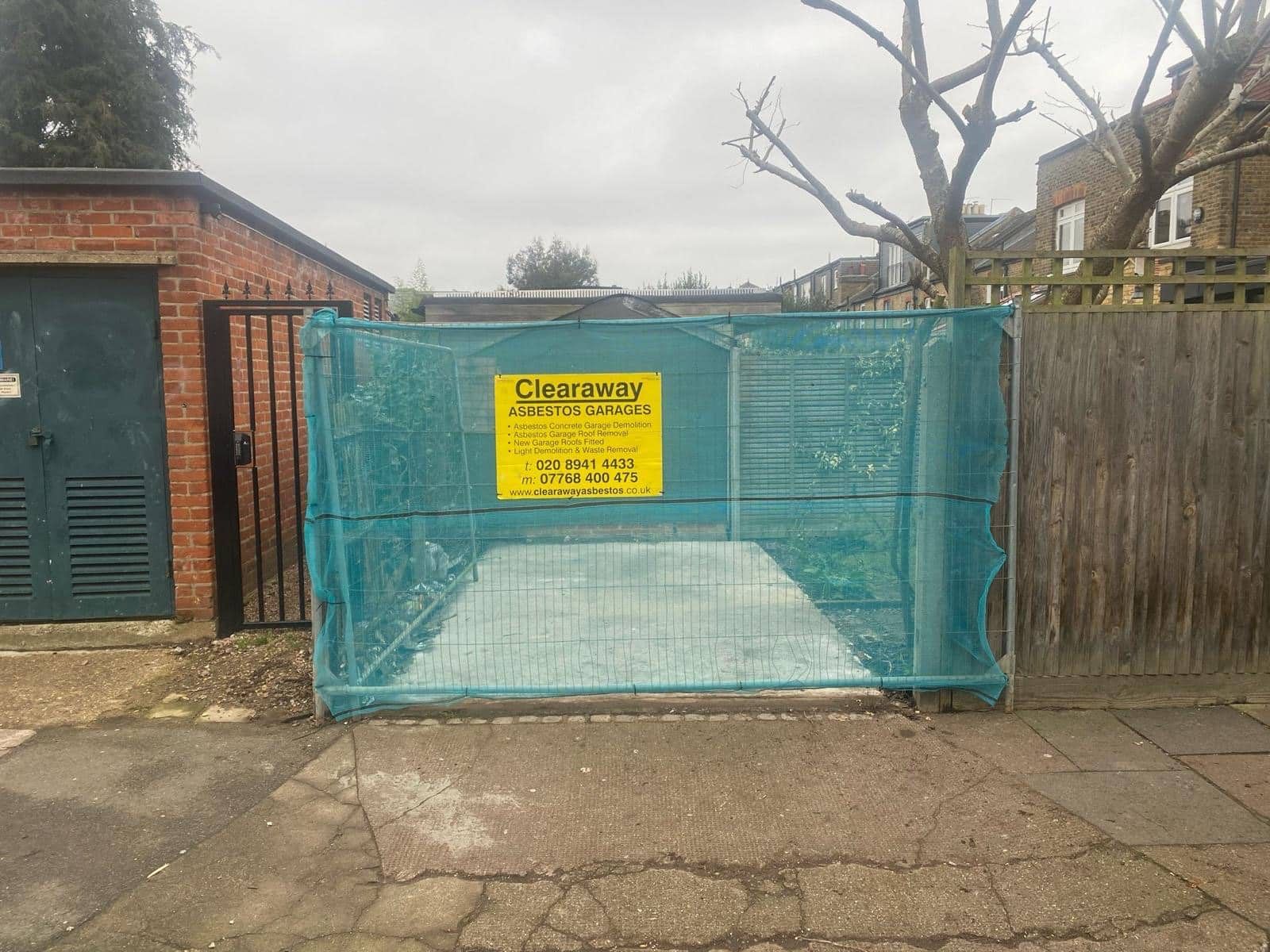
What a single garage roof actually involves
A standard single garage in Chertsey is roughly three metres wide and five to six metres long, so the roof works out at around fifteen to eighteen square metres. That is covered by somewhere between ten and fourteen corrugated cement sheets, each one about three metres in length, lapped over the timber purlins underneath and bolted down with hook bolts that have rusted solid over the years. None of it should be broken up in place.
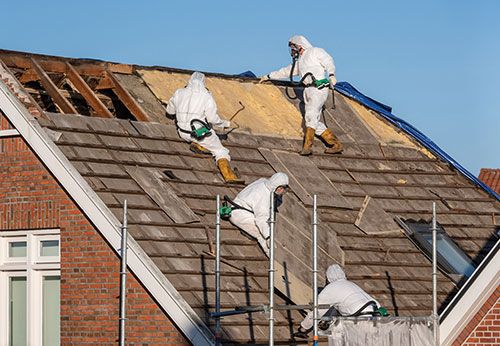
The method is to unbolt each sheet and lift it off whole, keep it intact, wrap it and remove it. Whole sheets mean far less fibre in the air than snapping or smashing them, which is why a roof like this is never just ripped down. The bolts are cut or eased rather than hammered, the sheets are lowered, not dropped, and they are wrapped in heavy gauge sheeting and taped before they leave the roof line. The work area underneath is covered first so nothing falls onto the floor of the garage.
On a normal single-garage roof with clear access, the strip itself takes only a few hours, and the bulk of a day goes on setting up, double-bagging the waste to the right standard and getting it away to a licensed disposal site. There is no skip sitting on the drive, so your road and your neighbours stay clear and the cement waste goes straight off site rather than sitting out in the open. The waste is tracked on the proper paperwork all the way to the facility, which is part of why none of it ends up broken on the pavement. Access is the one thing that changes the timing. A garage tucked behind a side gate, or one with a shared drive on the tighter terraced streets near the centre, takes a little longer to set up than a roof you can reach straight off the front.
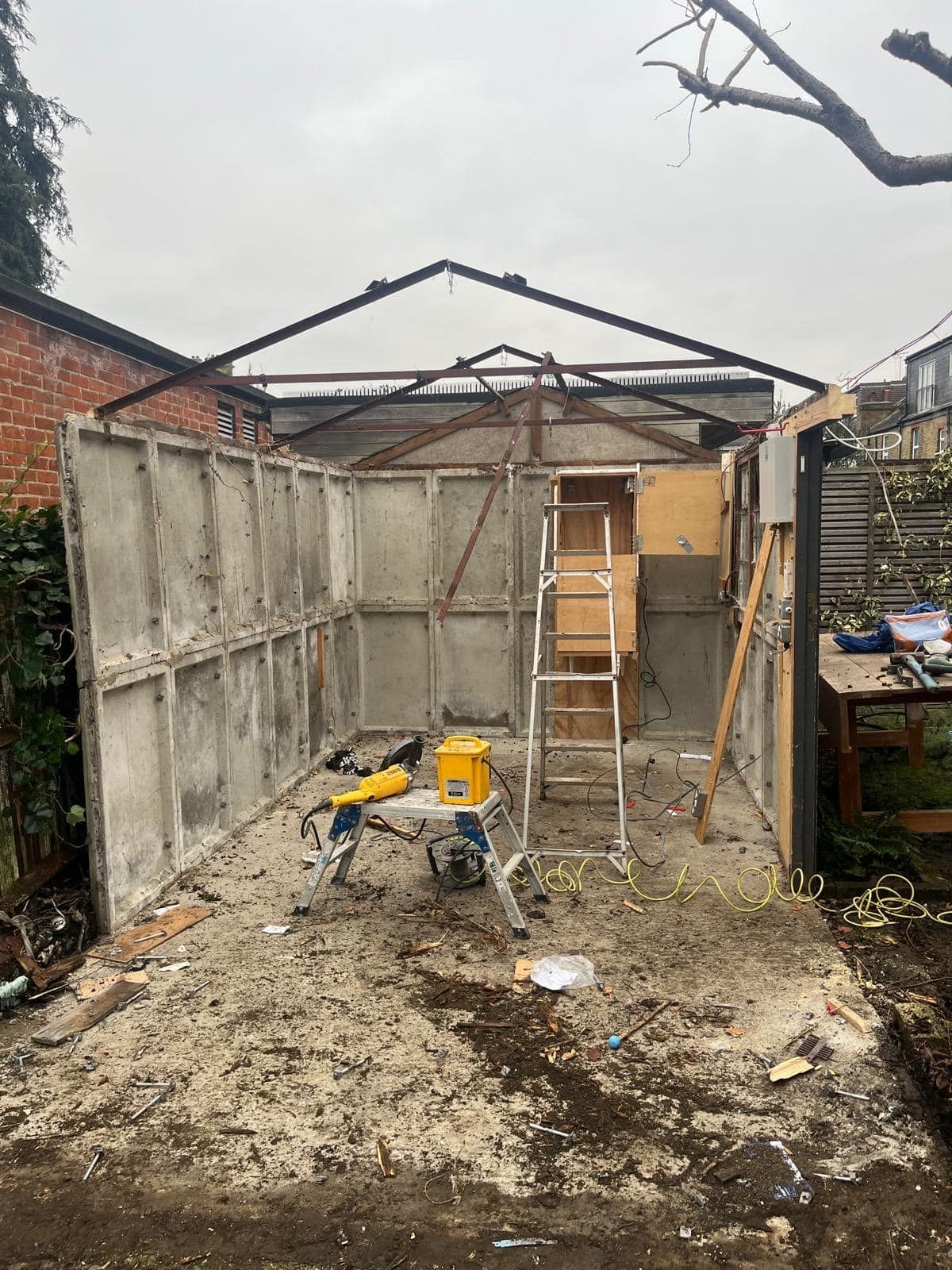
Sampling first, then the replacement roof
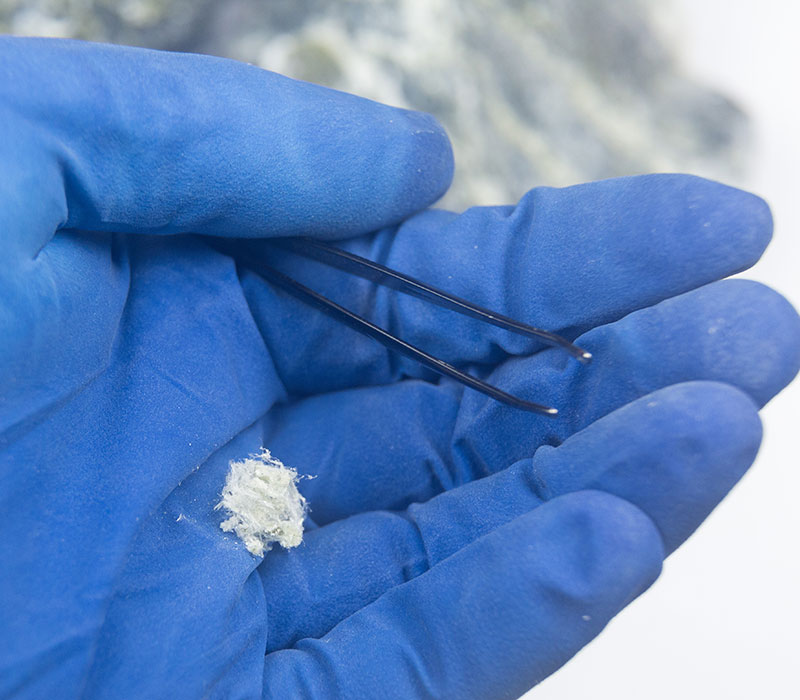
Before any sheet comes off, a small piece can be taken under controlled conditions and sent to a UKAS-accredited laboratory, which confirms whether it is asbestos cement and comes back in a few working days. That keeps everyone honest about what is being handled and how it has to be removed. It is a cheap step and it settles the question properly rather than by guesswork.
Once the old roof is gone you are left with a bare frame, and there are a few sensible ways to recover a Chertsey garage. Galvanised steel box-profile sheeting is the common like-for-like swap, with the 0.7mm gauge being a solid choice that will outlast the old cement by a wide margin. A three-layer torch-on felt system suits a flatter garage roof and seals it well against the rain coming off the river side of town. Some owners go for asbestos-free fibre cement that keeps the original look, others for a tiled or flat finish to match the house. Where exposed timbers or a soffit have also been boxed in with cement board, that can be stripped and boxed back out at the same time so the whole structure is sound and clean.
The purlins and the wall plate are worth a proper look once the sheets are off, because forty years under a leaking cement roof can leave timber soft or rotten in places. Any that has gone is better replaced before the new covering goes on, rather than sheeting straight over a weak frame. Done that way a recovered Chertsey garage roof should see out the rest of the building and never need touching for asbestos again.
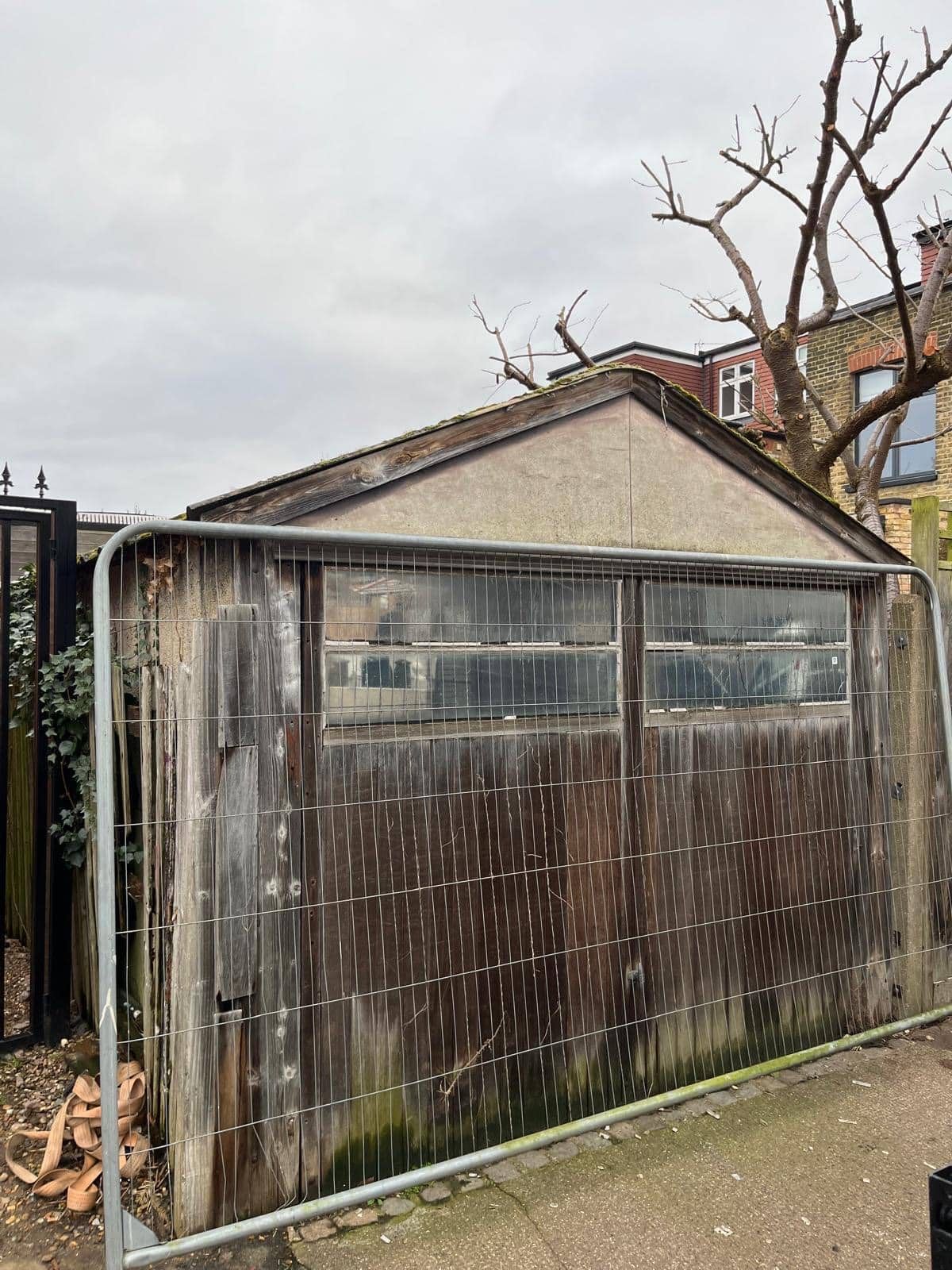
Why Chertsey owners get the garage sorted
Most people only think about the garage roof when something forces the issue. A sheet cracks in a storm, a buyer's surveyor flags it, or a planned conversion of the garage into a room or office means the old covering has to come off first. Selling tends to be the trigger on the larger Chertsey houses, where a survey picks up the lock-up roof and the sale stalls until it is dealt with. With the town sitting close to the M25 and M3, the run over from Chessington in KT9 is straightforward, and Graham who owns the firm runs the jobs himself rather than sending an unknown crew. A single garage roof is bread-and-butter work, predictable and quick, not the drama people brace themselves for.
For a standard garage or shed roof the work is non-licensed, done to the proper standard with the waste tracked to a licensed facility. If sampling turns up higher-risk licensed material on the wider structure, that follows the stricter route instead, with 14 days of notice to the HSE, full enclosure and four-stage clearance testing signed off by an independent analyst before anyone uses the space again. Either way it is handled the same careful way. Clearaway holds Spectra licence 142305706 and has worked across Chertsey and the surrounding Runnymede area for more than seven years, so the standard does not slip on the small jobs. To get a garage roof looked at, call 0800 024 6168.
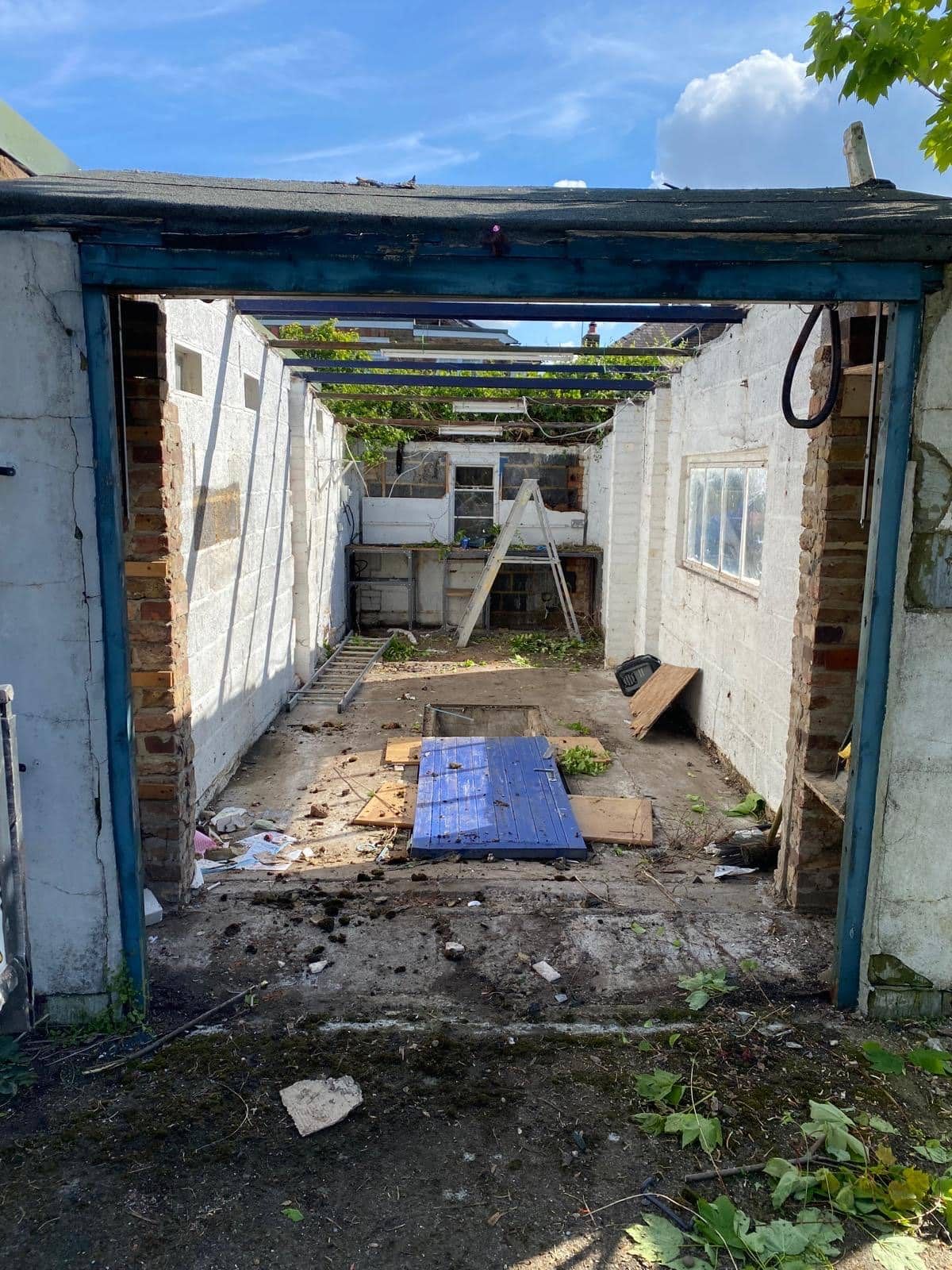
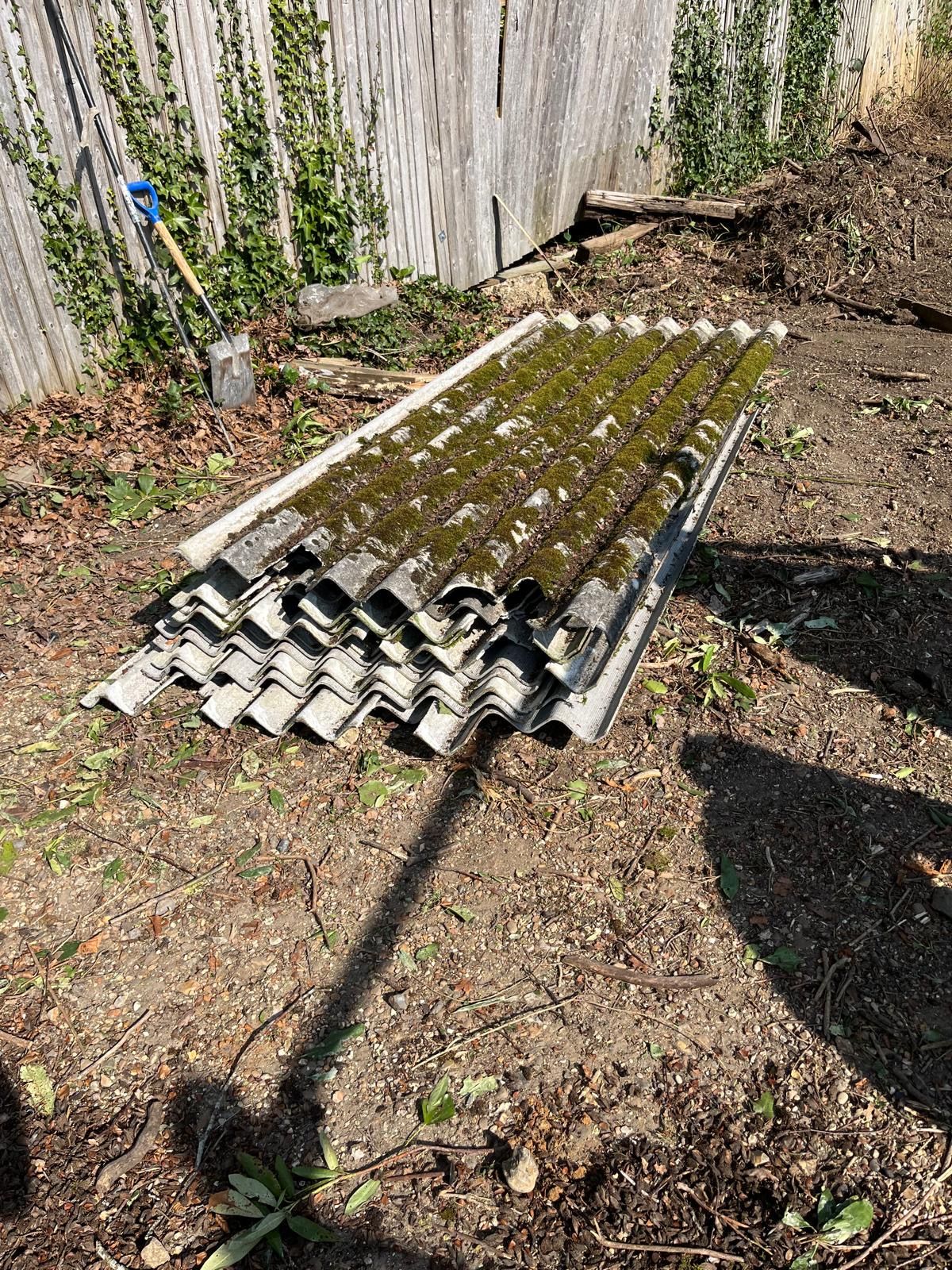
Corrugated Asbestos Sheet Removal, Esher
Esher, Surrey · Sheet Removal
View this project"Graham and his team done an excellent job of removing and replacing my asbestos garage roof and I wouldn't hesitate in recommending them"
Our Removal Process
From first call to final certificate, every job follows the same clear four-step process.
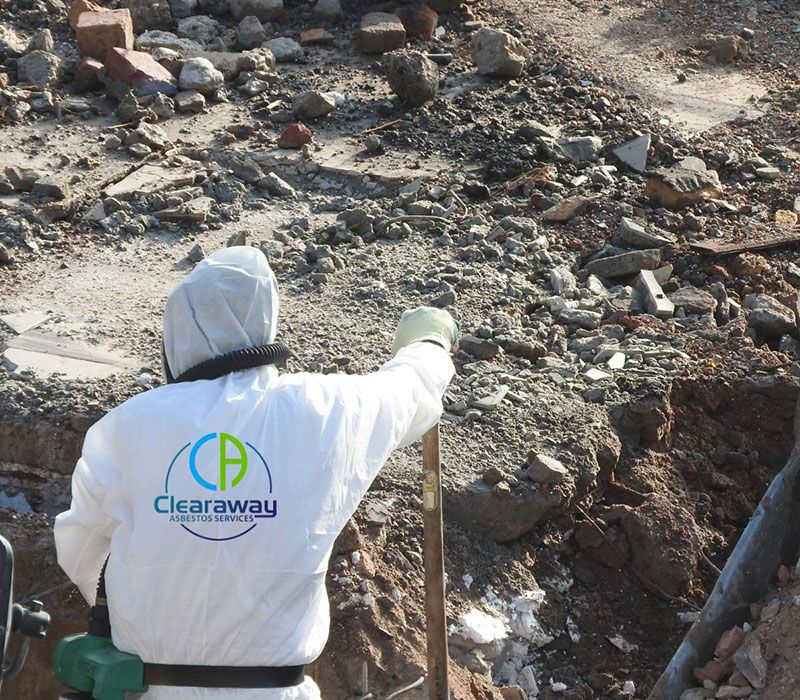
Survey
We inspect the property and confirm the material. Sampling available if required.
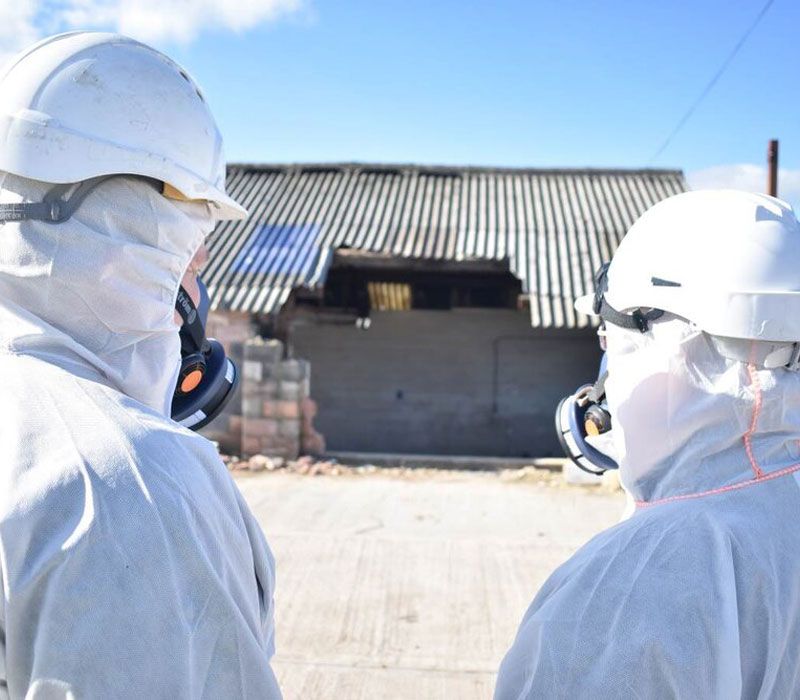
Quote
Fixed written price covering removal, disposal and any replacement work.
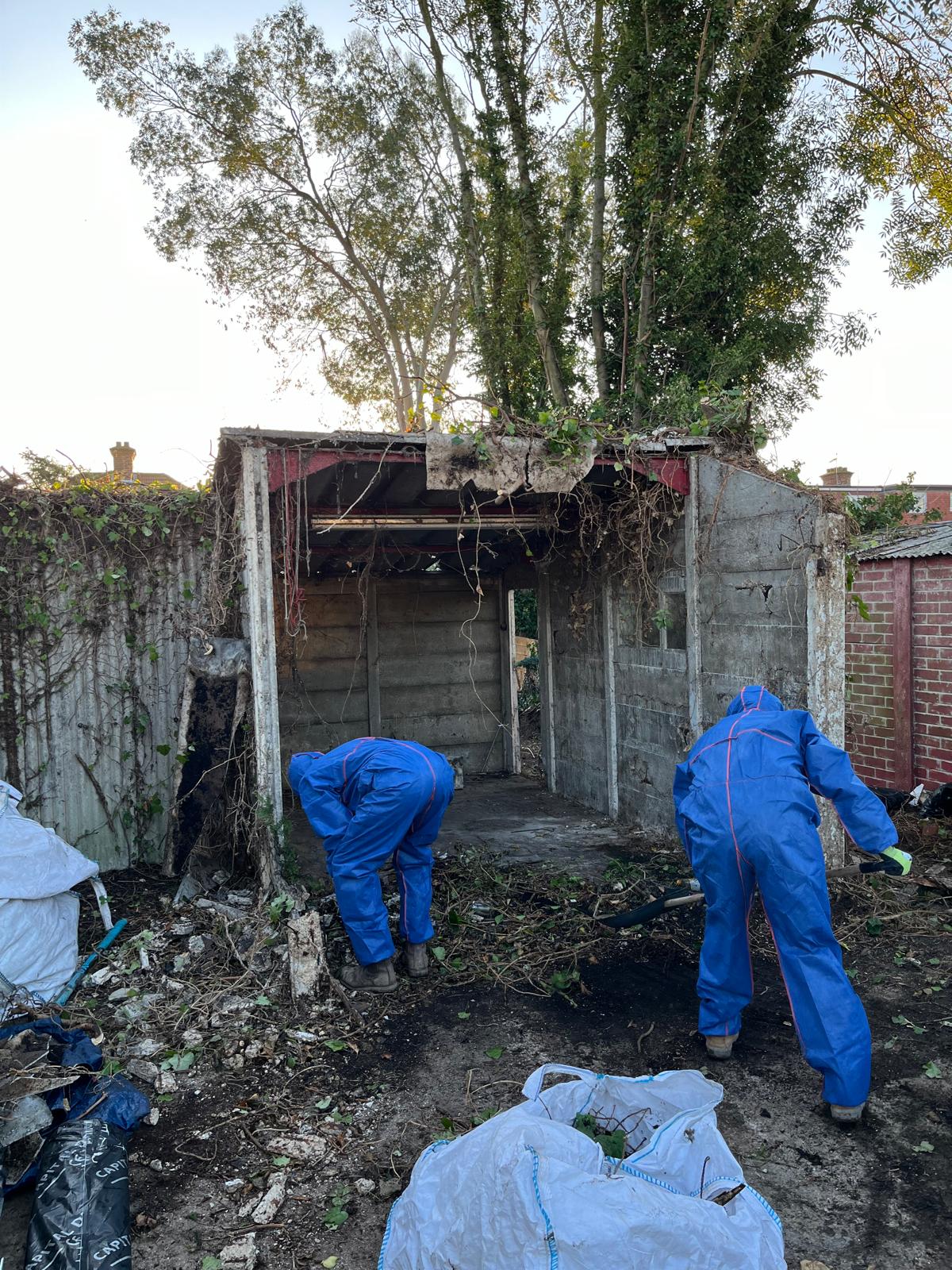
Removal
Material is removed safely, double-wrapped and taken to a licensed disposal facility.
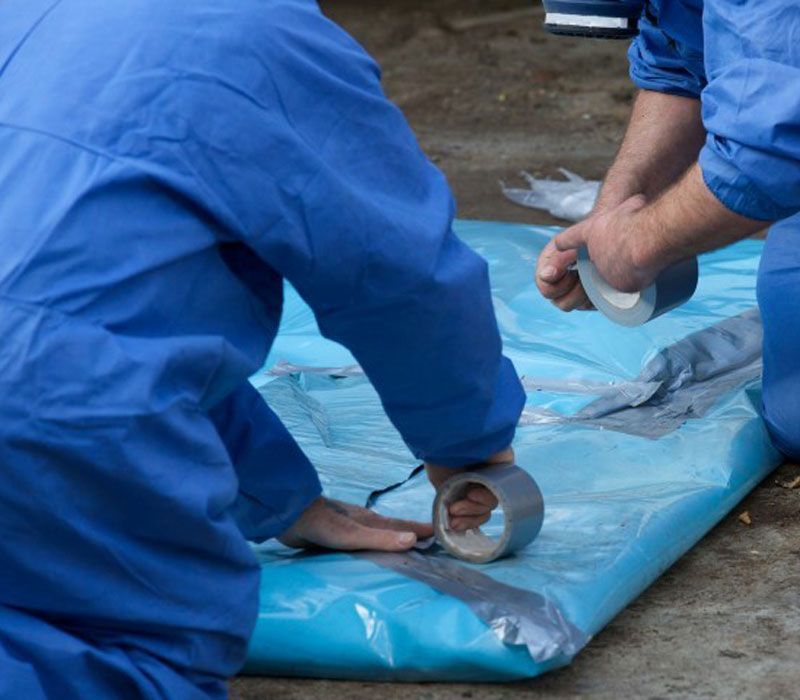
Certificate
You receive a waste consignment note and disposal certificate confirming legal handling.
Frequently Asked Questions
Why Choose Clearaway
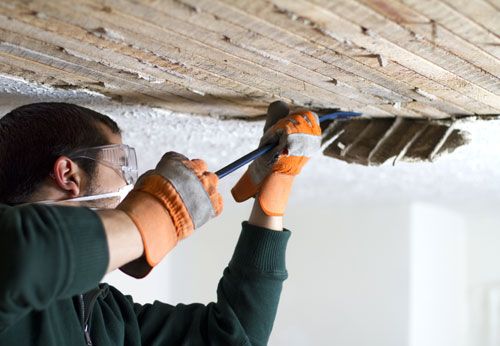
Specialist Crew
Asbestos work is all we do, every day, across the South East.
Fully Licensed
Licensed asbestos removal contractor (Licence No. 142305706). Full public liability insurance on every job.
Local & Fast
Surrey-based. Most domestic jobs are booked in and finished within a week.
Our Own Team
We never subcontract. The people who quote your job are the people who do it.
Get in Touch
Send a few details about your project and we will come back the same working day with a fixed price. We cover Surrey, London and the South East, including Esher, Cobham, Kingston, Richmond, Epsom, Guildford, Woking and Croydon.