Asbestos Floor Tile Removal in Sunbury
Lift the old lino or carpet in a Sunbury-on-Thames kitchen and you often find hard floor tiles bedded in black adhesive. On the interwar and postwar floors around Sunbury Cross, those tiles and the glue beneath can hold asbestos.
Why Sunbury floors hide old tiles
Most of the housing between Lower Sunbury and Sunbury Cross went up between the wars and in the decades after, and a lot of those floors have never been fully stripped back to the slab. A kitchen gets a new vinyl sheet laid straight over the last one. A hallway gets carpet rolled on top of whatever was already down. Pull all of that up during a refit and you reach the original layer, and in this corner of Spelthorne that layer is frequently thermoplastic or vinyl floor tiles in nine-inch squares, set into a dark, tarry adhesive that has been there since the floor was first put down.
Those tiles were sold by the million from the 1950s through to the 1980s, which lines up almost exactly with the decades much of Sunbury was being built and extended. The river-edge cottages along Thames Street are old enough to have been refloored several times over, so one room can carry three or four layers stacked on each other. The semis and detached homes spreading up towards Kempton and the Cross went down in the same window, and the larger houses that were later split into flats often kept their original ground-floor tiles under newer coverings. Floor tiles are not the only place asbestos sits in a Sunbury home, but they are one of the easiest to walk straight past, because nobody thinks twice about a floor they have stood on for forty years.
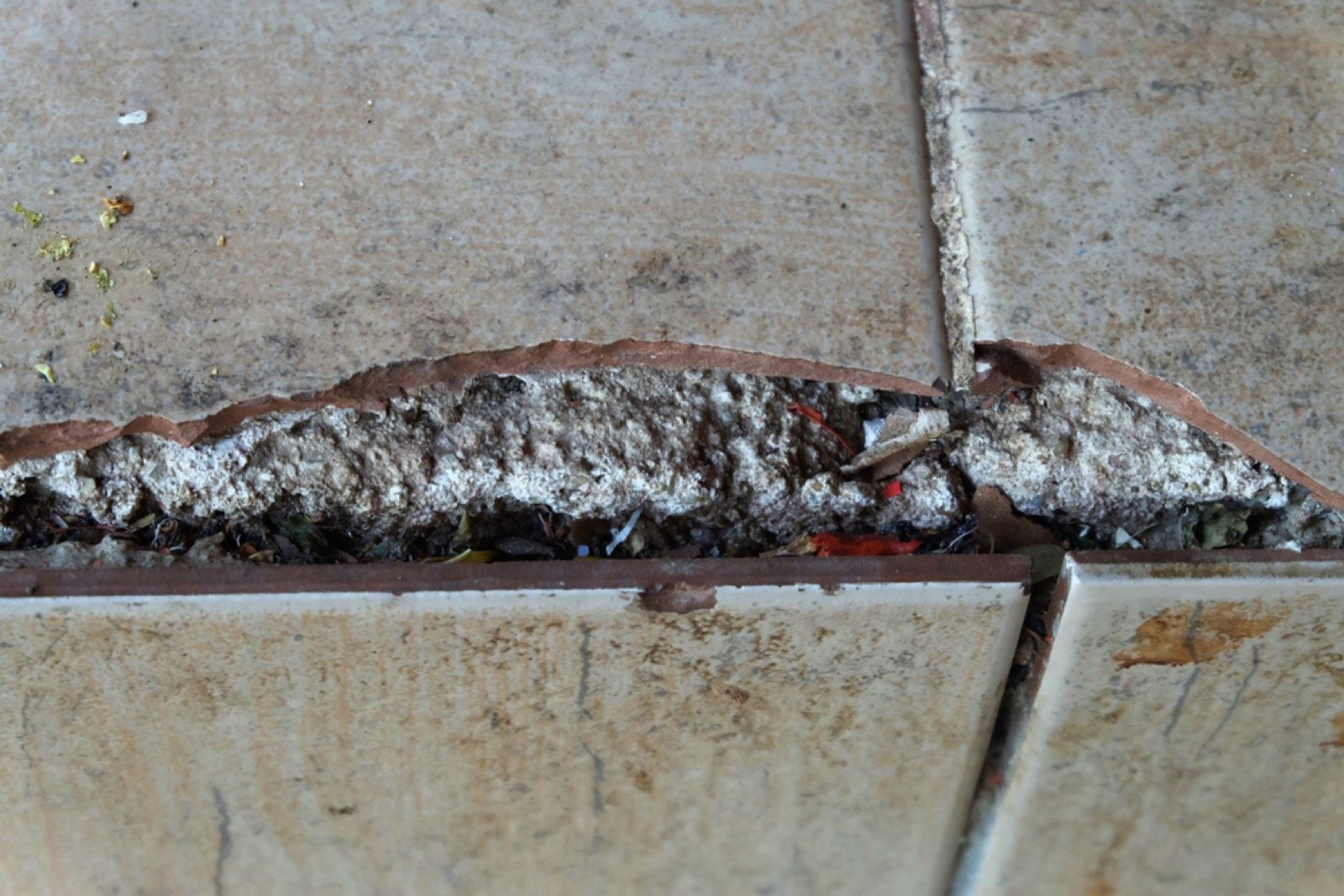
The tiles themselves are the smaller half of the problem. The black bitumen adhesive holding them down to the screed is the part that tends to create the real work, and it is the part most homeowners and fitters do not see coming until the tiles are already up and the glue is staring back at them.
The black adhesive under the tiles
When old floor tiles come up, the tile itself lifts away in one piece and the glue stays welded to the concrete below. That black, almost glassy skin is bitumen adhesive, and on a floor of this age it can contain asbestos in its own right, separate from the tile that sat on it. You can have a floor where the tiles test clean and the adhesive does not, or the reverse, which is exactly why both layers get sampled and neither gets guessed at.
Getting that adhesive off a screed is slow, deliberate work. It does not peel back the way the tiles do, and it cannot be rushed. Heat it with a gun or grind it dry and you risk pushing fibres straight into the air of the room, so it is taken up under controlled conditions, kept damp throughout, and bagged as it comes off the floor rather than swept up loose at the end. On a standard Sunbury kitchen of a few square metres the tiles themselves might come up inside an hour, while the bitumen bedded into the screed can take several hours more, and a larger floor longer again. That gap between the quick tiles and the stubborn glue is the single thing people underestimate most.
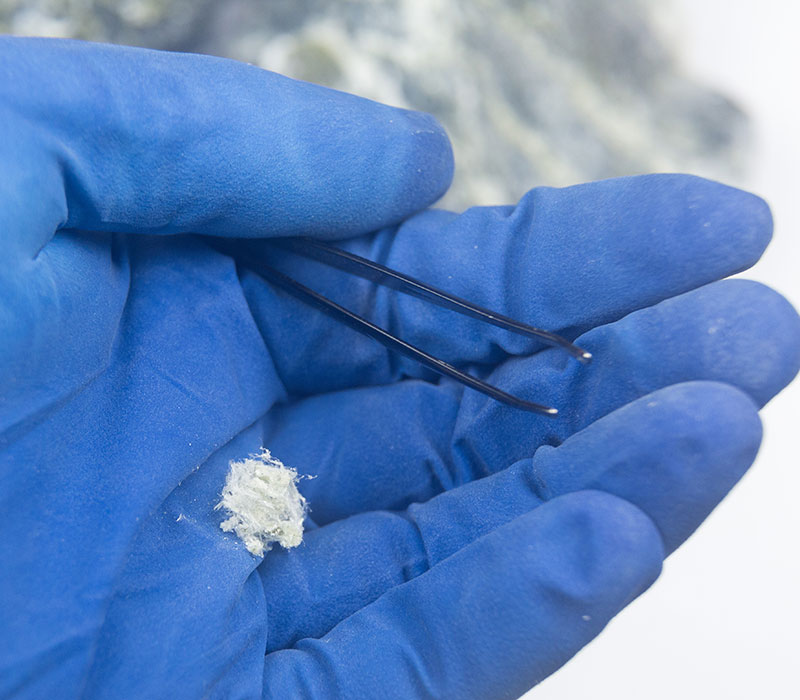
Before any of it is touched, a small piece of the tile and a scraping of the adhesive go to a UKAS-accredited laboratory, so there is a clear answer on what is in the tile and what is in the glue before a tool goes near the floor. You cannot tell asbestos floor adhesive apart from ordinary old floor adhesive by eye, and neither can a flooring fitter. The lab result is what decides whether the floor is a simple lift or a job that needs the fuller set of controls around it.
Working in a home you still live in
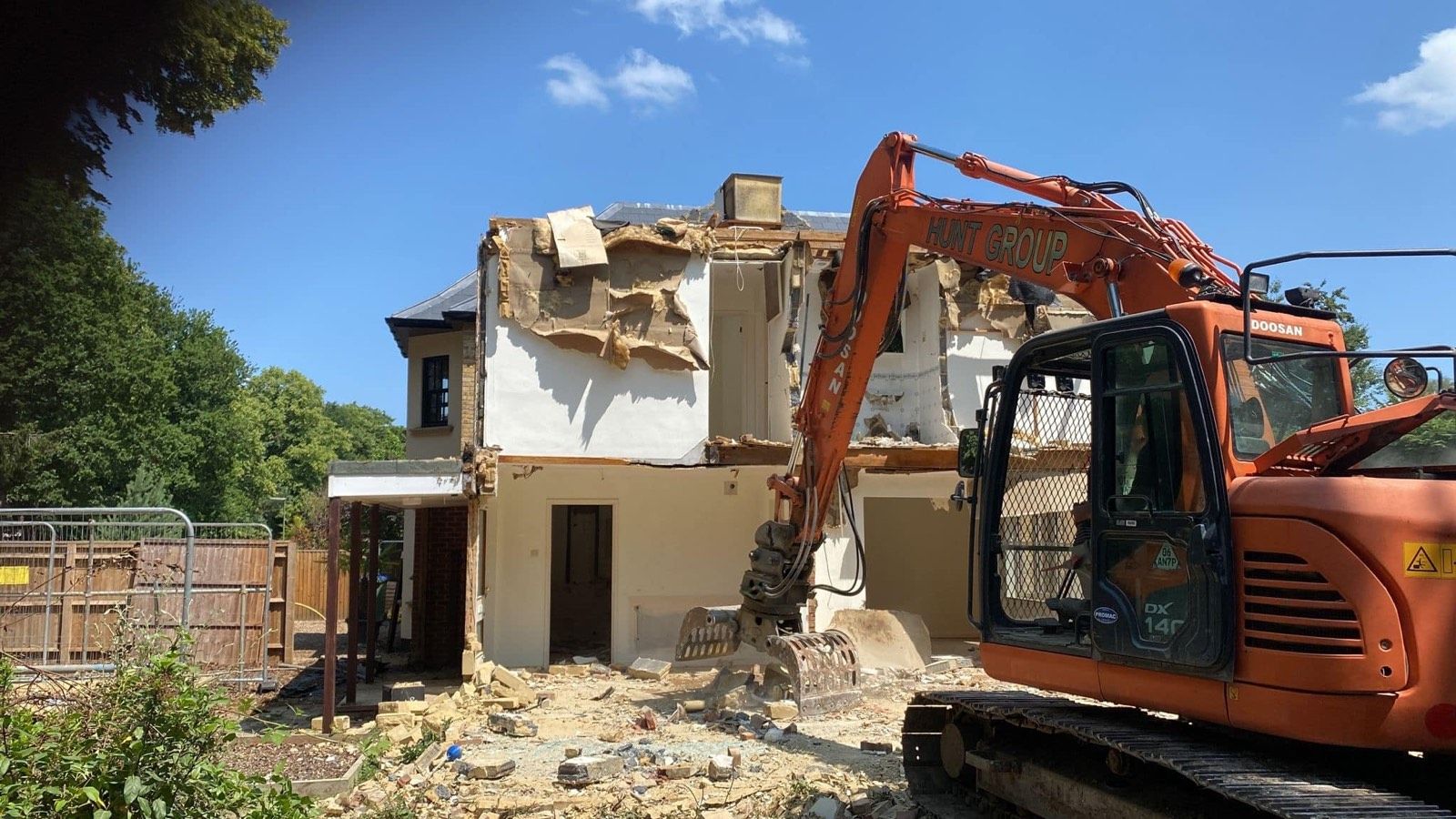
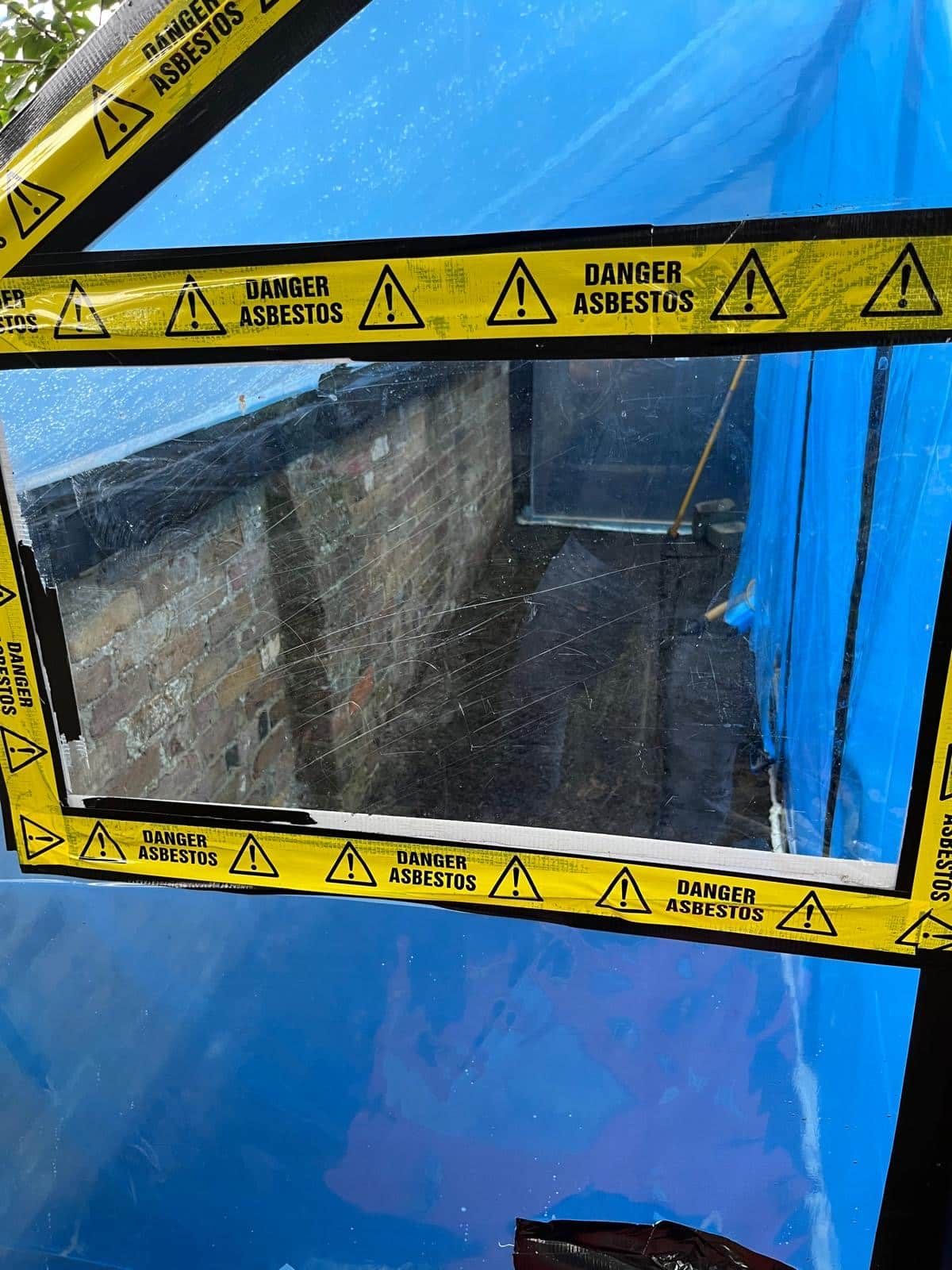
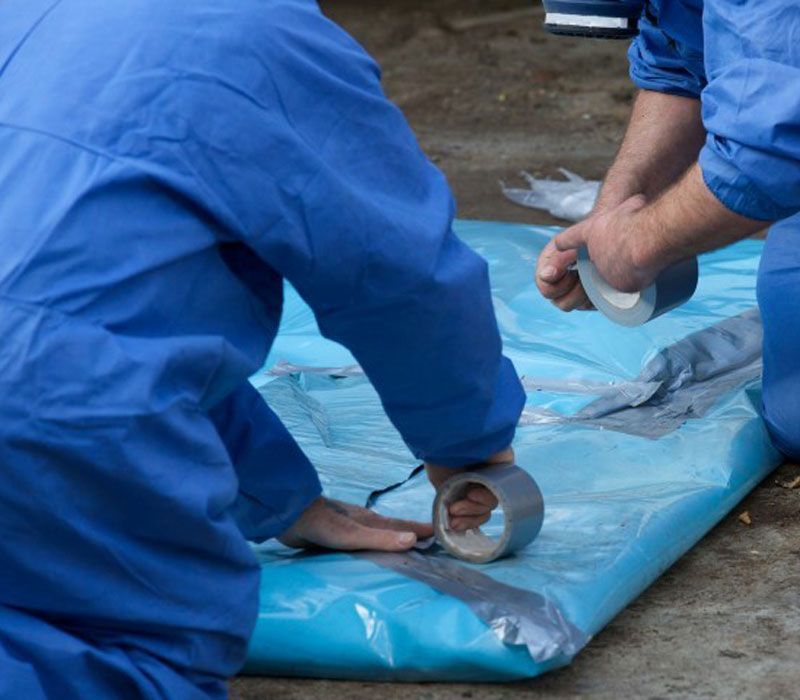
Floor tile work in Sunbury almost always lands in an occupied house, halfway through a refit, with the family still using the rooms either side. That shapes how the whole job is run from the first hour. The room with the floor coming up is sealed off from the rest of the house before anything is lifted, so nothing can drift down the hall into a kitchen, a living room or a bedroom while the work is going on. Doorways are taped over, gaps are closed up, and the air inside the working area is drawn through commercial-grade filtration rather than left to settle wherever it likes.
The tiles and the adhesive come up whole or in lifted pieces, double-bagged on the spot as they are removed, and carried out to a licensed disposal facility rather than a household skip. There is no skip sitting out on the drive for the duration, which counts for a lot on the tighter roads near Lower Sunbury and the riverside lanes where there is barely room to park, let alone leave a skip blocking the kerb for a week. Most single-room floors in a Sunbury home are cleared inside a day, though a large kitchen-diner with adhesive welded right across the slab will run beyond that.
When the floor is fully up and the screed underneath is clean, the air in the room is tested by an analyst before anyone steps back inside to use it. That clearance test is the hard line between a floor that is finished and a floor that is signed off as safe. We do not call a Sunbury floor done, and we do not let the new covering go down, until the air reads clear and the slab is ready to build on again.

Booking a Sunbury floor tile removal
Clearaway works out of Chessington, a short run up through Hampton and across the river into Sunbury, and Graham who owns the firm runs the jobs himself rather than sending out a stranger you have never spoken to. If you have lifted a corner of carpet and found hard tiles set in black glue, or your fitter has downed tools over what is under the old lino, the first step is a single sample to the UKAS-accredited lab, not a full strip-out. Sampling is the cheaper, faster way to find out exactly what you are dealing with before a single tile is moved, and the result comes back in a few working days.
Most domestic floor tile jobs in Sunbury turn out to be non-licensed work once the lab confirms the material, and they run as a contained lift with air testing at the end. Where the adhesive, or the material around it, comes back as higher-risk and licensed, the stricter standard applies in full and without shortcuts. That means 14 days of notice to the HSE before work starts, a fully sealed enclosure built around the area, and four-stage clearance checked by an independent analyst before the room is ever handed back. The lab result, not a guess on site, is what sets which of those two routes your floor follows.
Clearaway holds Spectra licence number 142305706 and has worked on homes across Sunbury and the rest of Spelthorne for more than seven years. To talk through a floor that has surfaced during your refit, call 0800 024 6168 and Graham will tell you whether it needs a sample, a straightforward lift, or the full licensed treatment.
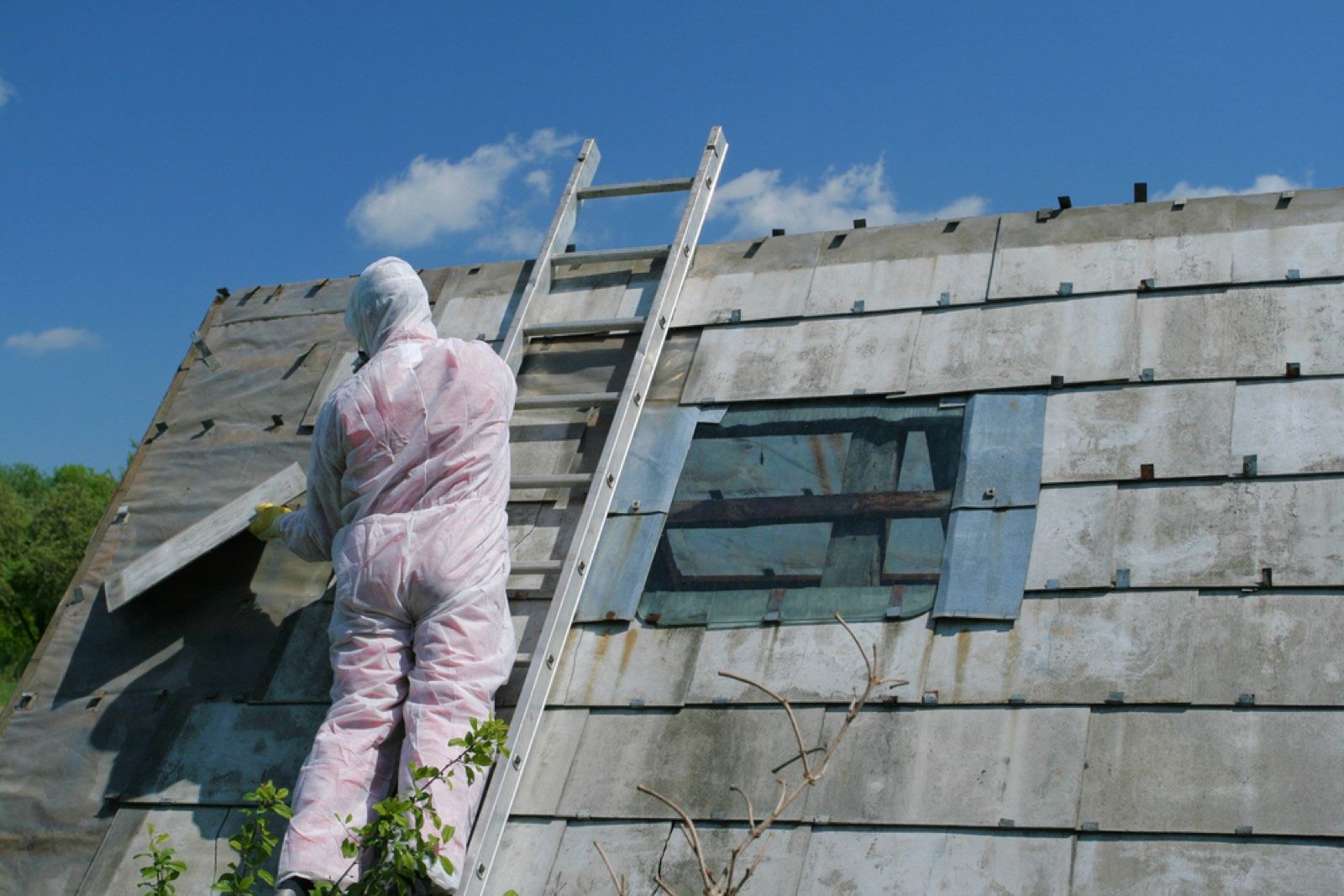
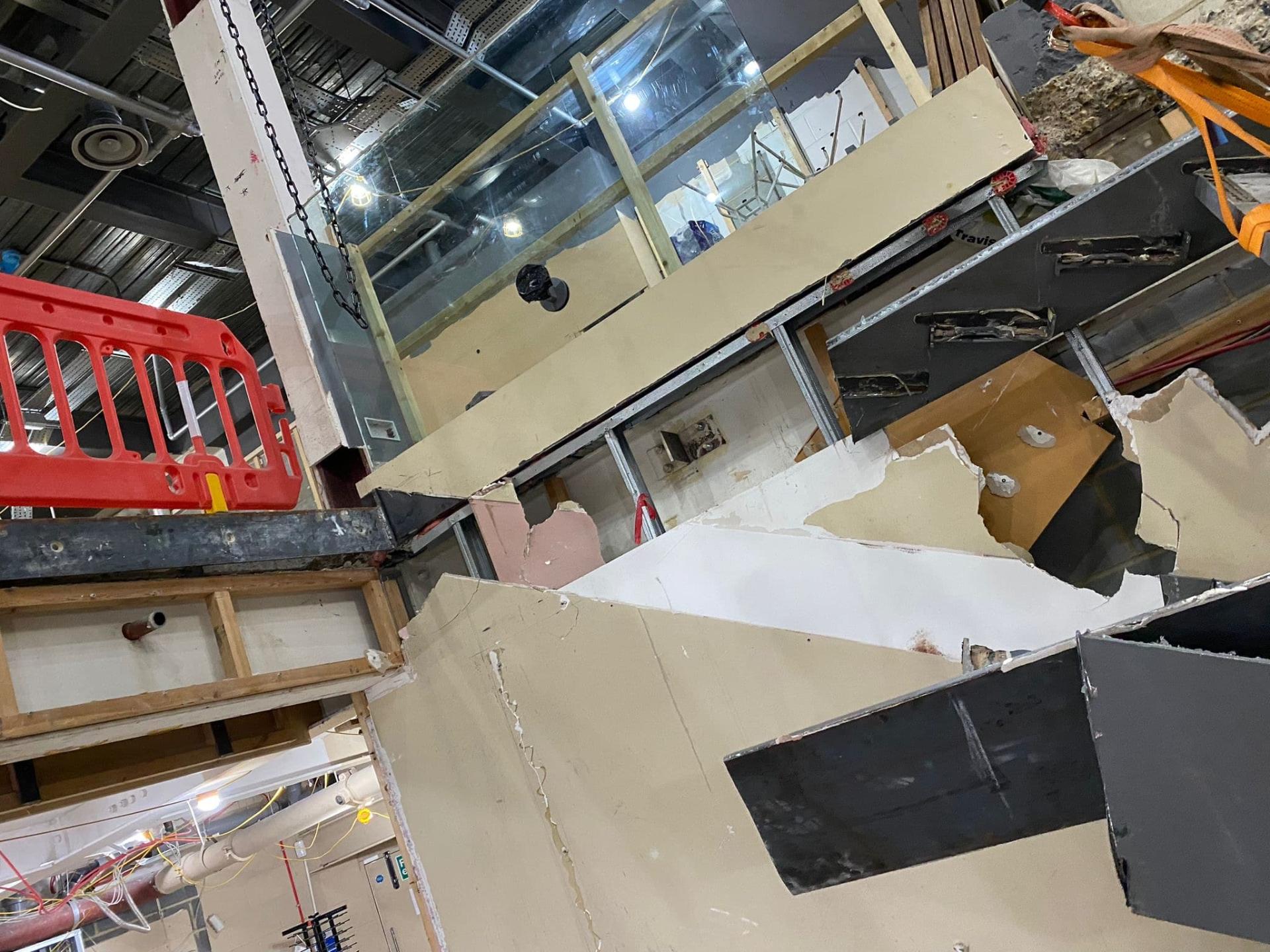
Commercial Building Strip-Out, Kensington
Kensington, South London · Strip-Out
View this project"Graham and his guys picked up some asbestos roof sheets from my property in Chessington. Would highly recommend this company to anyone. Really good service and very professional. Thank you"
Frequently Asked Questions
Our Removal Process
From first call to final certificate, every job follows the same clear four-step process.
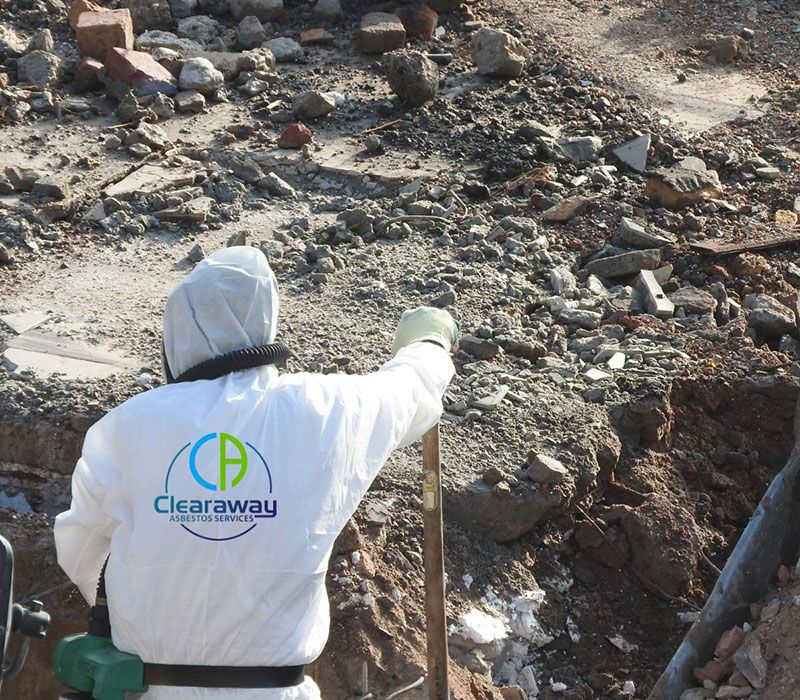
Survey
We inspect the property and confirm the material. Sampling available if required.
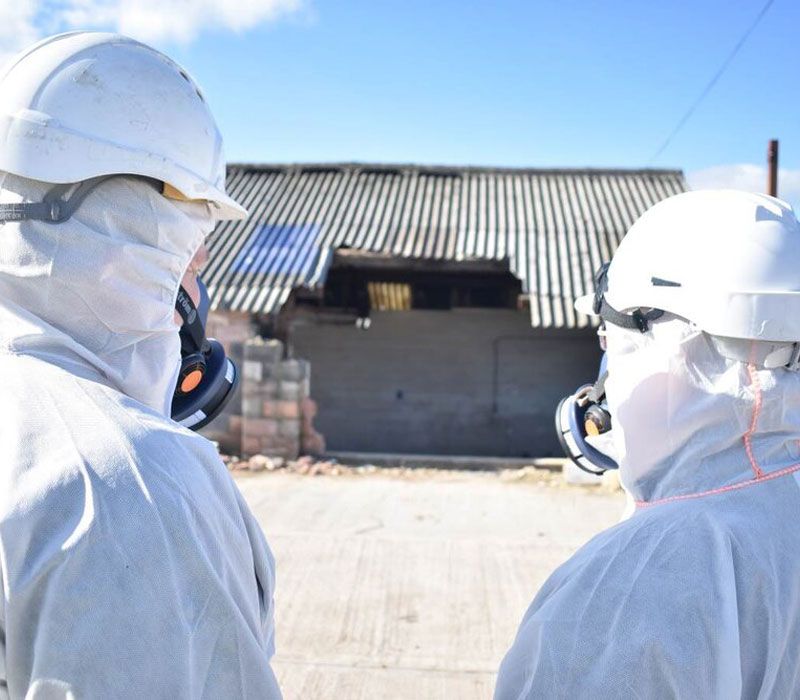
Quote
Fixed written price covering removal, disposal and any replacement work.
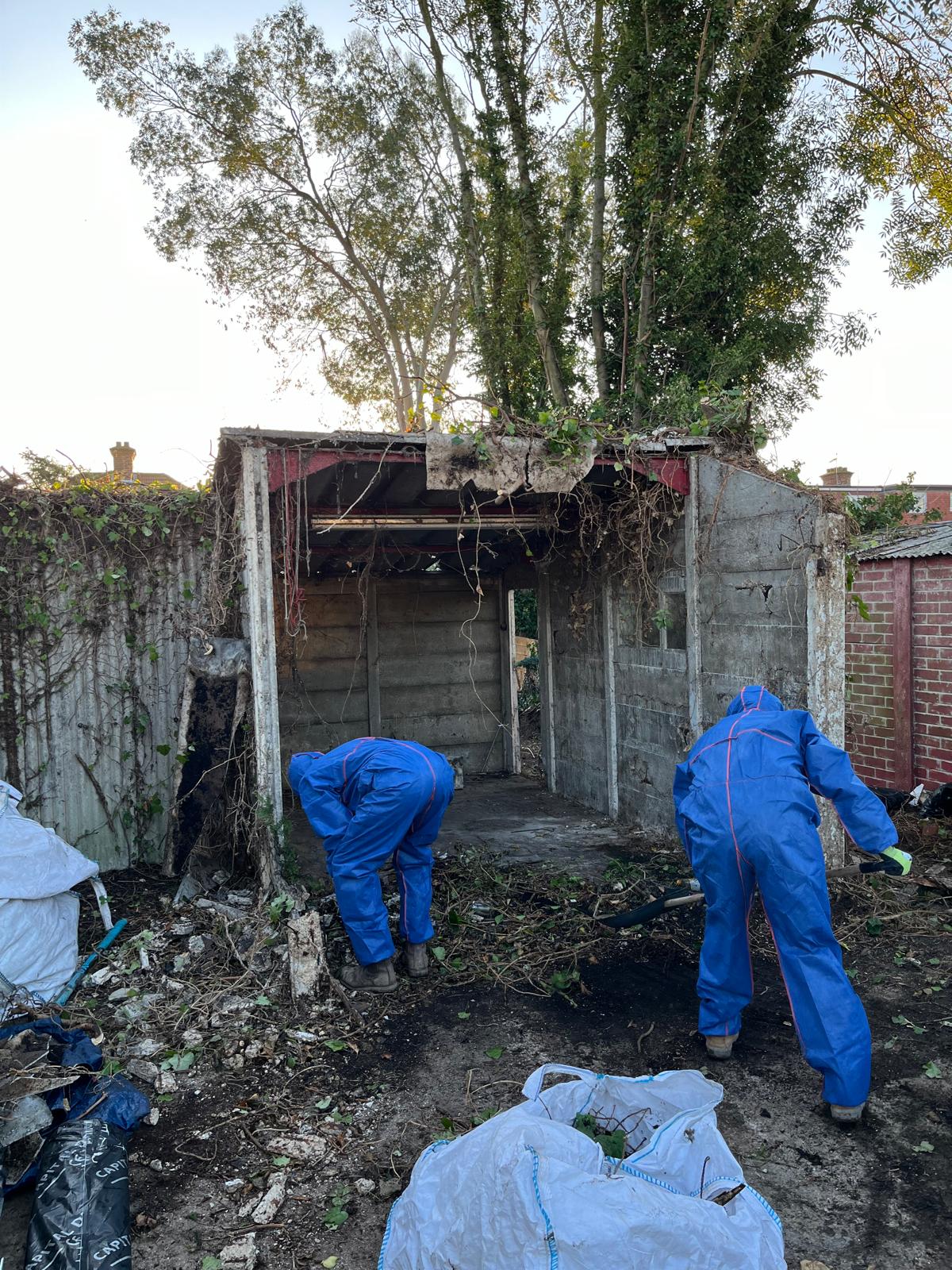
Removal
Material is removed safely, double-wrapped and taken to a licensed disposal facility.
Certificate
You receive a waste consignment note and disposal certificate confirming legal handling.
Why Choose Clearaway
Specialist Crew
Asbestos work is all we do, every day, across the South East.
Fully Licensed
Licensed asbestos removal contractor (Licence No. 142305706). Full public liability insurance on every job.
Local & Fast
Surrey-based. Most domestic jobs are booked in and finished within a week.
Our Own Team
We never subcontract. The people who quote your job are the people who do it.
Get in Touch
Send a few details about your project and we will come back the same working day with a fixed price. We cover Surrey, London and the South East, including Esher, Cobham, Kingston, Richmond, Epsom, Guildford, Woking and Croydon.