Asbestos Floor Tile Removal in Staines
Lift the old lino in a Staines kitchen and you often find the original floor tiles, and a layer of black adhesive welded into the screed. On TW18 and TW19 floors, that bedding compound is the part to handle carefully.
What surfaces under a Staines floor refit
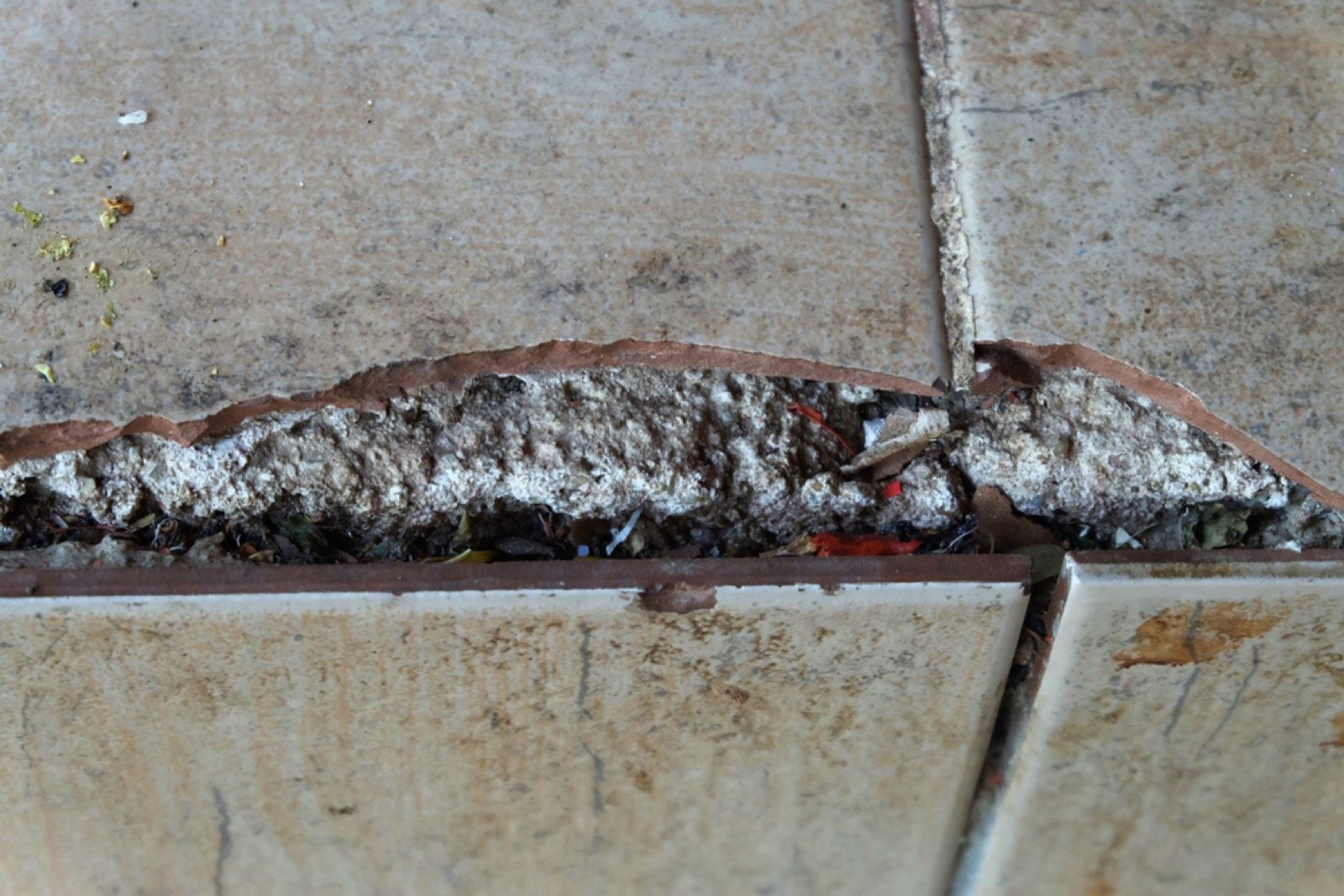
Most floor tile jobs around Staines start the same way. Someone pulls up tired carpet or a sheet of cracked vinyl in a kitchen off Kingston Road, or a hallway in one of the Church Street terraces, and underneath sits a grid of small, hard tiles in a dull brown or grey. Thermoplastic and vinyl tiles like these were laid in huge numbers from the 1950s into the 1980s, which covers a lot of the housing here, from the Victorian and Edwardian rows near the town centre to the 1930s semis and the postwar estates filling out Ashford and Stanwell.
The tiles themselves are usually the smaller worry. The bigger one is the glue. These floors were stuck down with a black bitumen adhesive, a tar-like layer spread across the screed before the tiles went on. That adhesive frequently contained asbestos, and decades on it has set rock hard against the concrete. So a job that looks like lifting a few tiles is really two materials, the tile and the bedding compound beneath it, and the compound is the stubborn one. People often spot the tiles, plan around them, and only realise the black layer is the problem once the first tile lifts and the glue stays put.
You cannot tell by eye which floors are a problem. The safe assumption on any older Staines property is to treat the tiles and the black glue as suspect until a sample says otherwise. Disturbing them with a scraper, a multi-tool or a floor sander is exactly the action that releases fibres, which is why the lifting is the part to get right.
We see the same floors come up right across the town. A galley kitchen in a terrace off Church Street, a hall in a 1930s semi out along Laleham Road, a utility room or a downstairs loo in one of the postwar houses behind the bus station. The tile pattern varies, but the story rarely does. Old floor covering on top, a hard tiled layer underneath, and that black bitumen skin holding it all to the screed. Knowing it is there before you start is half the battle.
Why the black adhesive is the real job
Pull a single tile and it often pops up with a brittle snap. The bitumen, though, tends to stay welded to the screed in a thin black skin. Builders sometimes try to grind or sand it off to get a flat surface for new flooring, and that is the worst thing to do with it. Mechanical abrasion on an asbestos-containing adhesive throws fine dust into the air across the whole room, and in a lived-in house that dust travels.
Many homes in Staines have these floors at the heart of the building. A kitchen, a hallway, a downstairs toilet, the sort of rooms a family walks through dozens of times a day. The older properties down near the river add another quirk, because solid ground floors with no proper damp barrier can leave the screed slightly damp, and a damp bituminous layer behaves differently again when you start working it. None of that stops the floor coming up. It just means the adhesive deserves more respect than the tiles, and a plan that does not rely on grinding.
The approach is to lift tile and adhesive together where possible, keeping the material in larger pieces rather than reducing it to powder. Where the bitumen clings on, it is softened and worked off in a controlled way and bagged as it comes, not sanded back in clouds of dust. Hand tools and gentle heat do most of the work, because slow and damp beats fast and dusty every time on a floor like this. The aim through the whole job is simple. Keep the fibres locked in the waste, not loose in your home, and leave a clean screed ready for whatever flooring comes next.
How the work is contained in your home
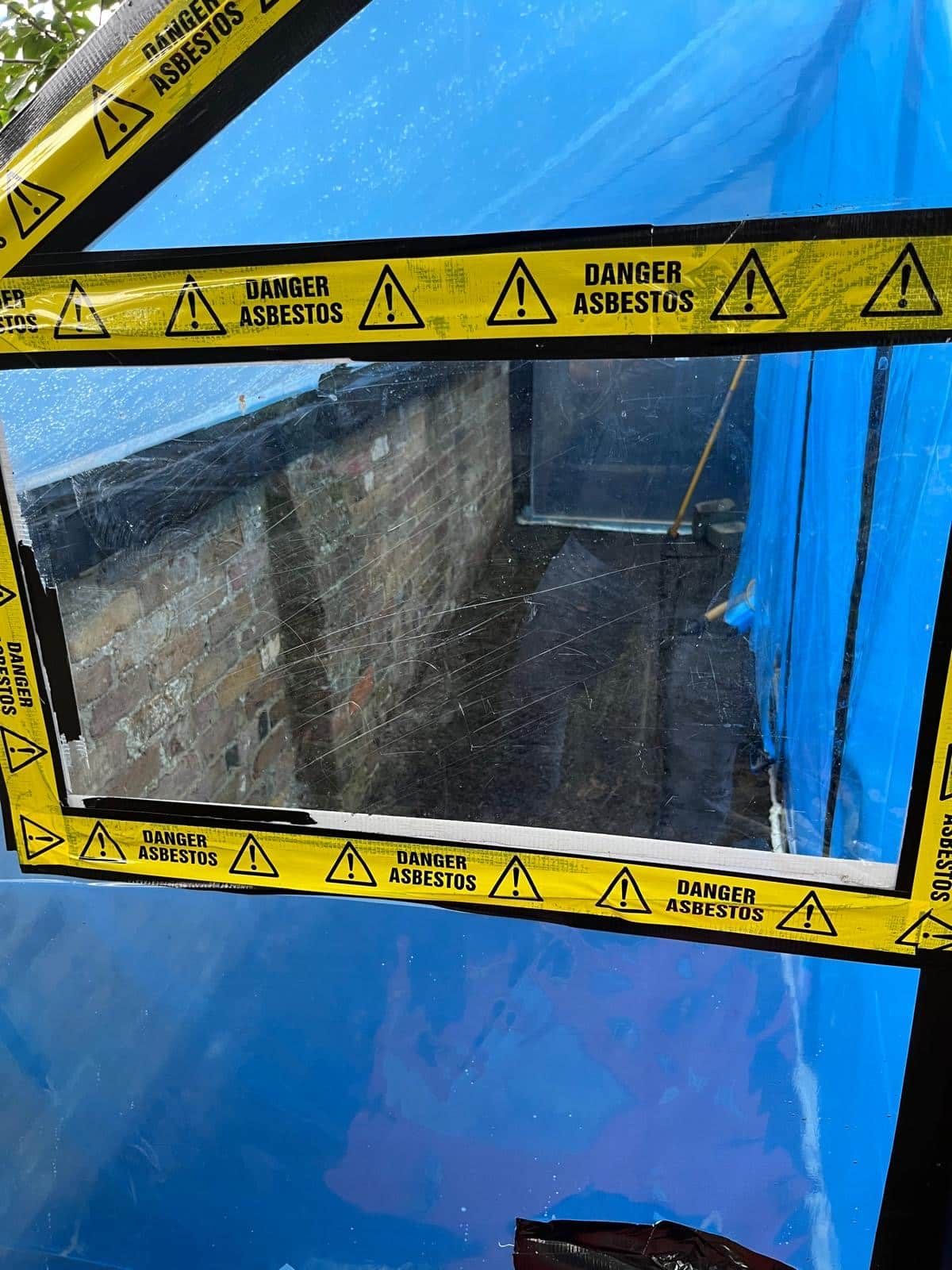
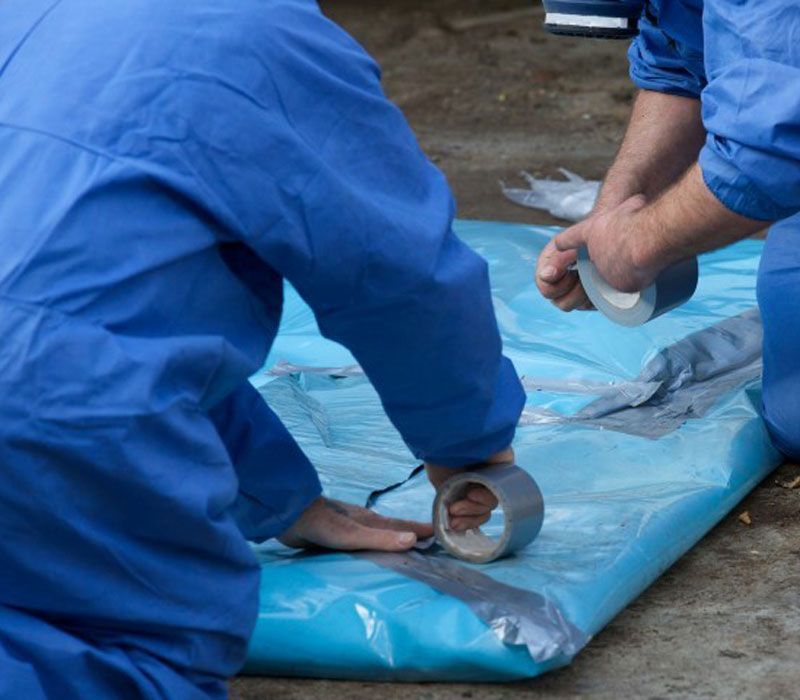
Because these floors sit inside occupied rooms, containment matters more than it would in an empty garage. The working area is sealed off from the rest of the house with sheeting, so dust cannot drift down the hall or up the stairs while the floor is coming up. Where the layout allows, the room is isolated as its own zone and the rest of the home carries on around it.
The lifted tiles and the scraped adhesive go straight into proper sealed waste bags, double-bagged and labelled, then removed for licensed disposal. Nothing is left bagged up in the garden or put in the household bin, and the screed is cleaned down rather than swept dry, so any residual dust is captured rather than stirred up. Once the floor is clear and the waste is out, the air in the room is tested before the space goes back into normal use, so you have a result that says the air is clean rather than just a tidy-looking floor. That clearance step is the difference between a job that looks finished and one that is genuinely safe to walk back into.
Most domestic floor tile jobs in a Staines house are small enough to be self-contained and finished without the area being out of action for long. Graham, who owns Clearaway and runs the local jobs himself, will look at where the floor sits, how the room connects to the rest of the house and whether it is a straightforward lift or a heavier adhesive removal, then explain what the work involves before anything is touched.

Sampling first, then the right level of removal
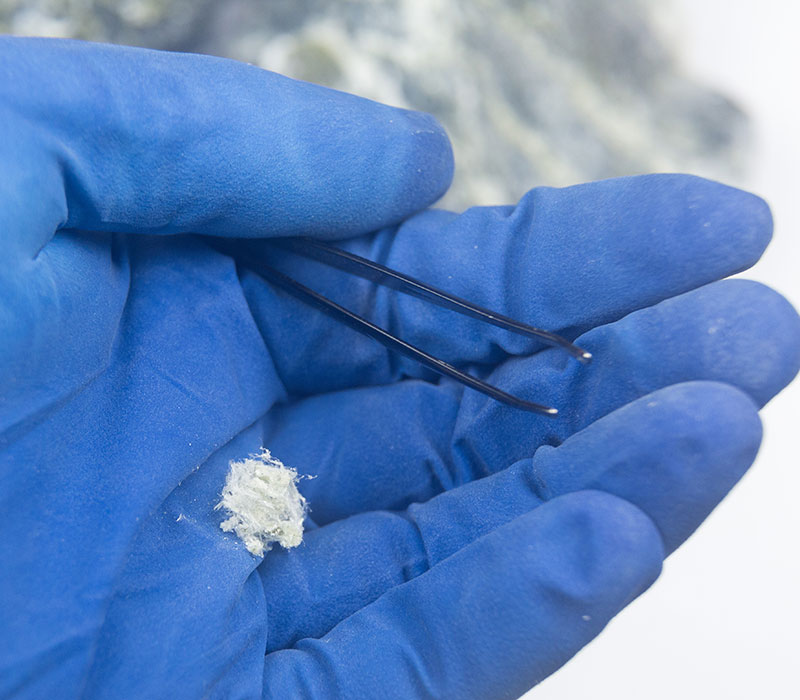
The sensible first move on any suspect floor is a sample, not a demolition. A small piece of the tile and the black adhesive is taken under controlled conditions and sent to a UKAS-accredited laboratory, with results back in a few working days. That tells you exactly what you are dealing with before a renovation kicks off, which is far cheaper and calmer than discovering it halfway through a kitchen rip-out with the units already on order.
Many floor tile and adhesive jobs fall under non-licensed work, handled with full containment and air testing but without the heavier process. Where a particular floor or the wider job warrants licensed work, the higher-risk route applies, with 14 days of notice to the HSE, a full enclosure and four-stage clearance testing signed off by an independent analyst. The sample result and the condition of the floor decide which path is right, so you are not paying for more than the job needs, and never getting less than the law requires.
Clearaway has spent more than seven years working across Staines and the wider TW18 and TW19 area, and holds Spectra asbestos licence number 142305706. If you have lifted an old floor and found tiles and that telltale black glue underneath, or you are planning a refit and want it checked before the work starts, call 0800 024 6168 and Graham will talk you through it.
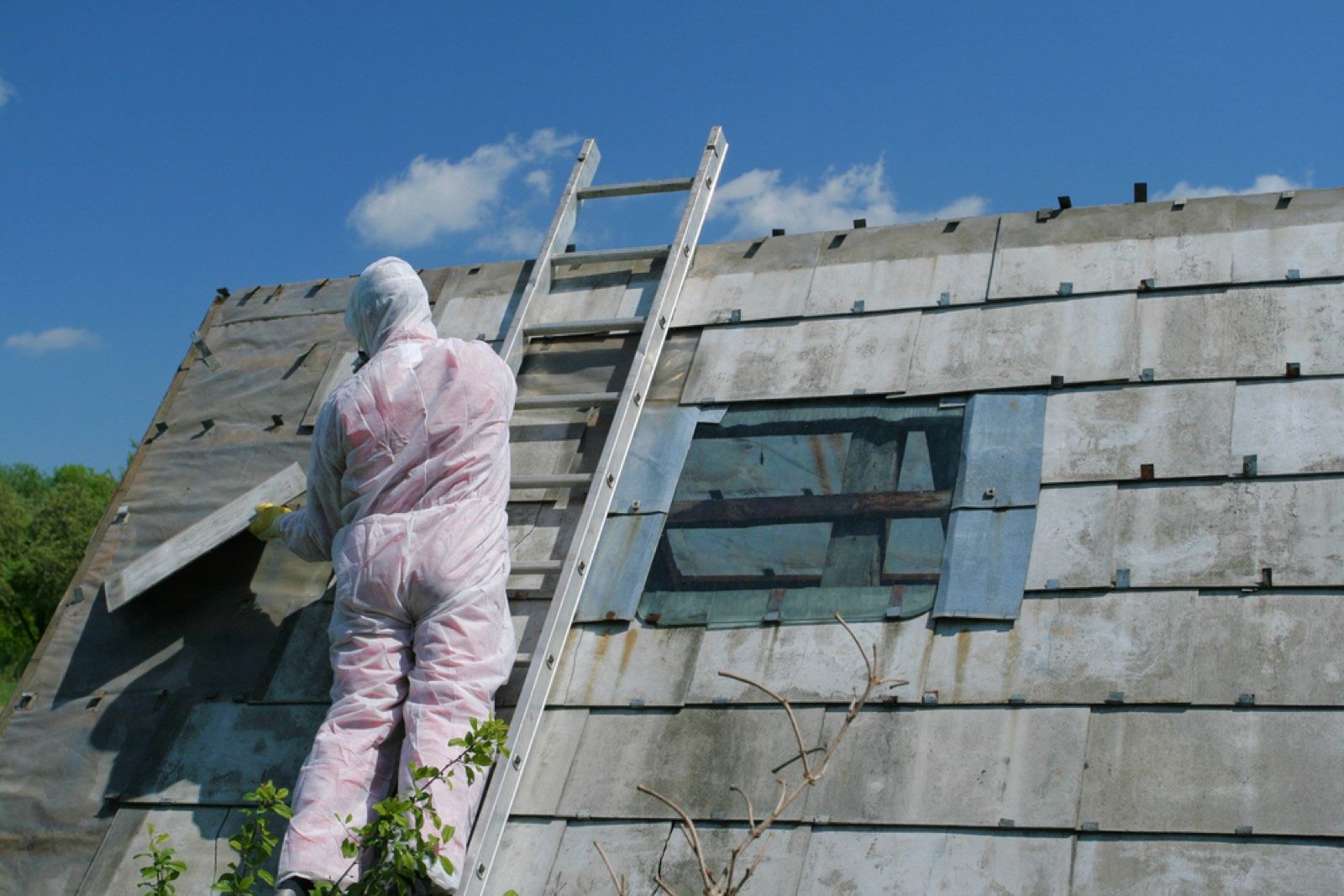
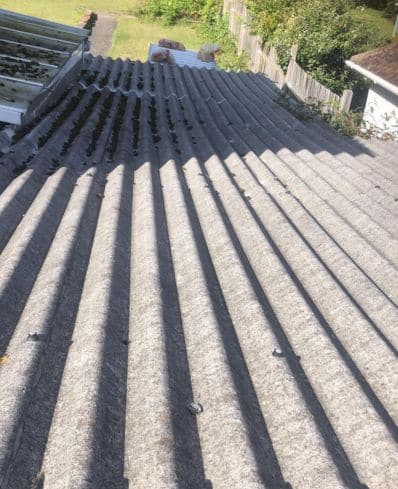
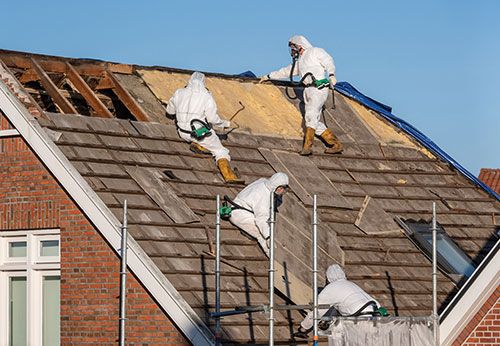
Asbestos Roof Removal & Garage Waste Clearance, Molesey
Molesey, Surrey · Roof Removal & Clearance
View this project"Graham has organised two jobs for me, both of which ran smoothly and on time. Clive and the team are really great, they completed the work in the agreed time and left the site spotless. Would recommend using Clearaway if you need any work done."
Our Removal Process
From first call to final certificate, every job follows the same clear four-step process.
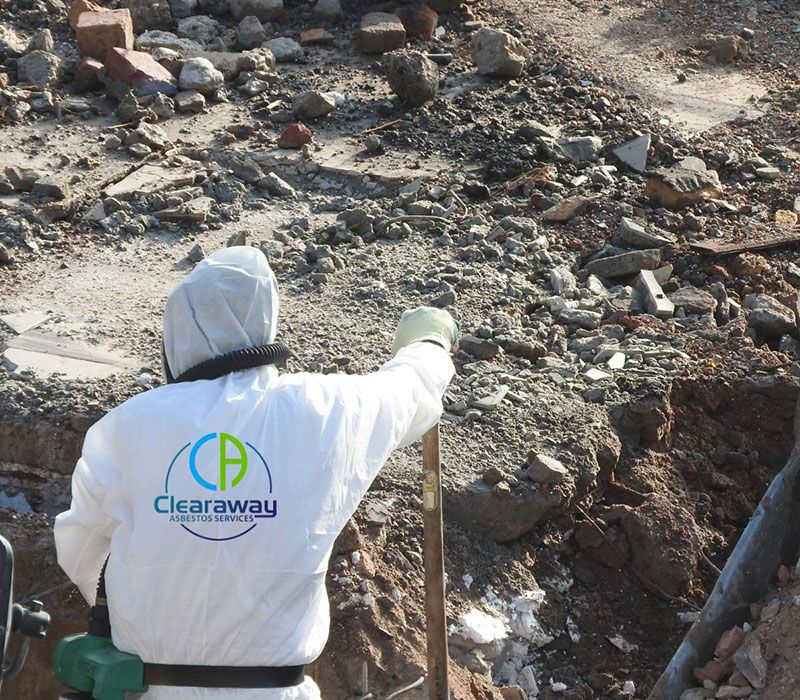
Survey
We inspect the property and confirm the material. Sampling available if required.
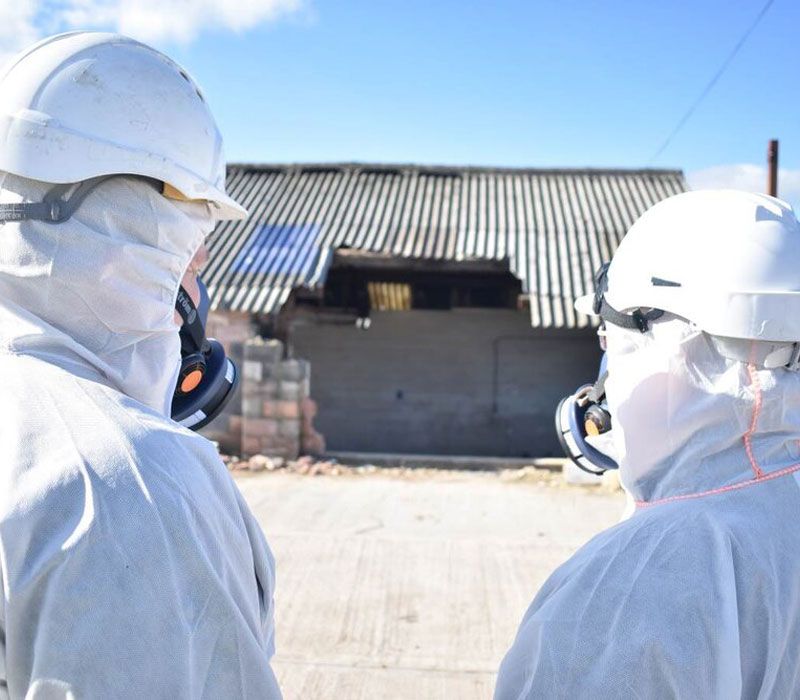
Quote
Fixed written price covering removal, disposal and any replacement work.
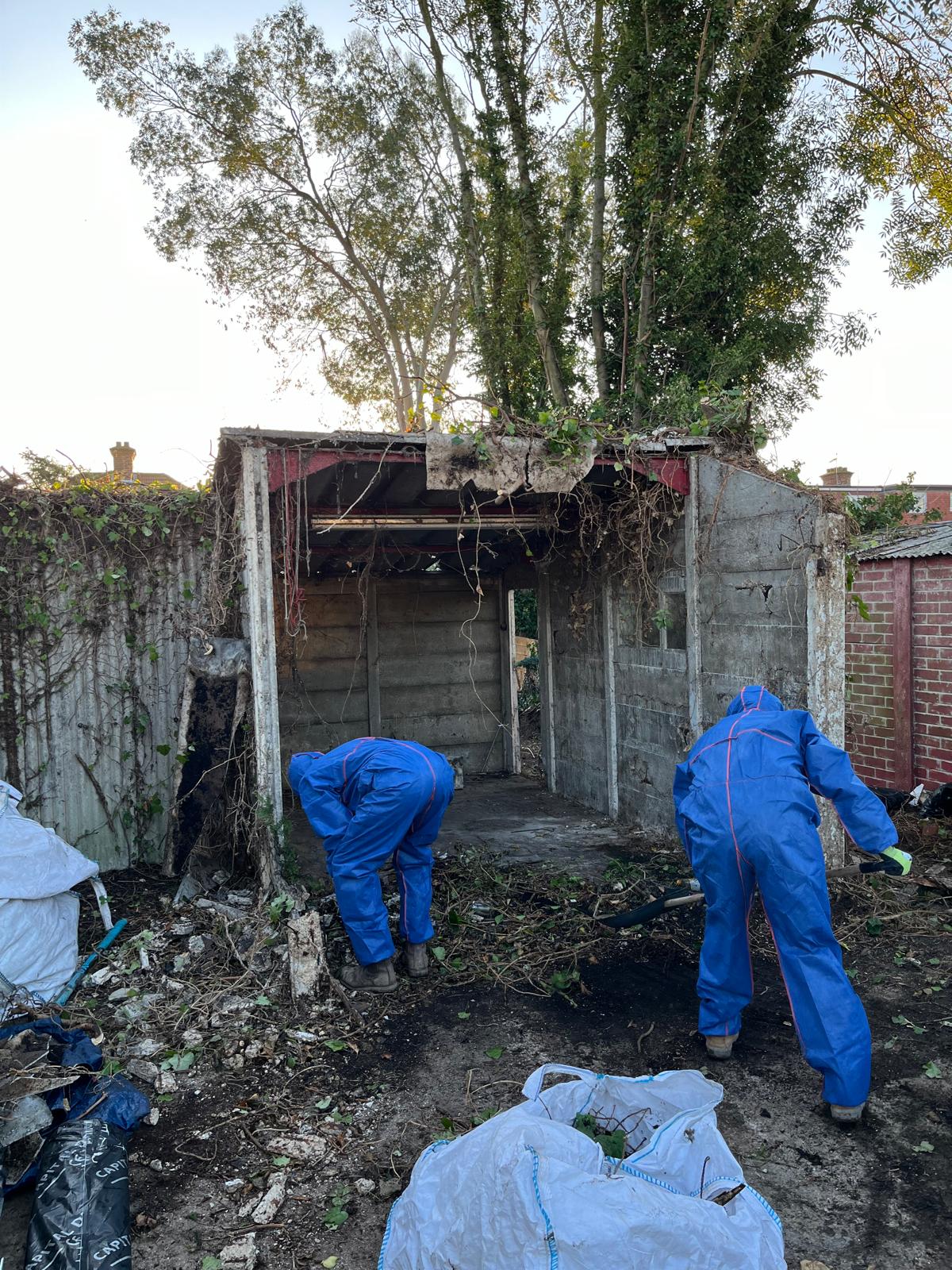
Removal
Material is removed safely, double-wrapped and taken to a licensed disposal facility.
Certificate
You receive a waste consignment note and disposal certificate confirming legal handling.
Frequently Asked Questions
Why Choose Clearaway
Specialist Crew
Asbestos work is all we do, every day, across the South East.
Fully Licensed
Licensed asbestos removal contractor (Licence No. 142305706). Full public liability insurance on every job.
Local & Fast
Surrey-based. Most domestic jobs are booked in and finished within a week.
Our Own Team
We never subcontract. The people who quote your job are the people who do it.
Get in Touch
Send a few details about your project and we will come back the same working day with a fixed price. We cover Surrey, London and the South East, including Esher, Cobham, Kingston, Richmond, Epsom, Guildford, Woking and Croydon.