Asbestos Floor Tile Removal in Leatherhead
Most Leatherhead floor tile jobs start with a refit. Old lino or carpet comes up in a Fetcham or Ashtead kitchen and a layer of vinyl tiles appears underneath, with black adhesive bedded into the screed below them.
Floor Tiles That Surface During a Refit
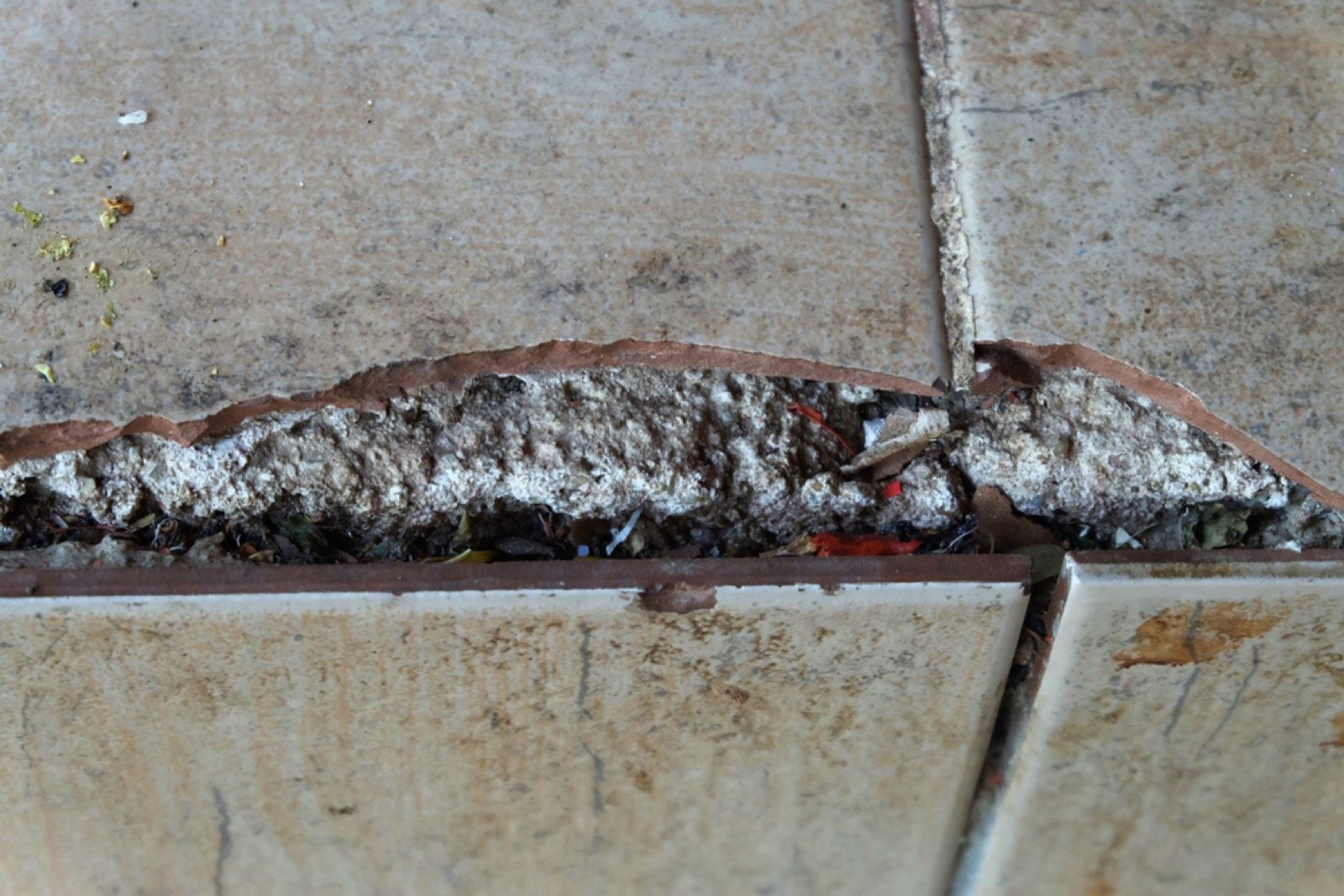
Hardly anyone in Leatherhead sets out to remove asbestos floor tiles. The call almost always comes mid-job. A kitchen is being ripped out in one of the postwar semis around Fetcham, or a tired carpet is lifted in an older house near the High Street, and there underneath is a grid of small, hard floor tiles nobody knew was there. They are usually nine inches square, often a dull brown, green or grey, and they have sat quietly under newer flooring for decades.
Those tiles are thermoplastic or vinyl, and a lot of the ones laid before the late 1980s contain asbestos. The fibres are locked into the tile itself, so while it stays whole and bonded to the floor it is doing no harm. The problem starts when someone takes a bolster and a hammer to it, or runs a floor scraper across it, and the old tiles begin to crack and chip. That is the moment a routine floor refit in a KT22 or KT23 home turns into something that needs handling properly. We see this pattern right across the town. The interwar and postwar semis out towards Fetcham, Ashtead and Bookham went up when these tiles were a cheap, hard-wearing floor, so they turn up in kitchens, hallways, utility rooms and downstairs toilets all over the KT22 and KT23 postcodes. The older homes nearer the High Street and the Mole often have them too, layered under a succession of later floors. Most owners have no idea they are there until the day a refit starts.
It cannot be settled by eye. Two floors that look the same can come back from the lab differently, so if tiles like these turn up in a Leatherhead property we take a small sample under controlled conditions and send it to a UKAS-accredited laboratory before any of it is lifted. The sample is by far the cheap part of the whole job, and it is what stops a kitchen or hallway refit running on guesswork. Results usually come back within a few working days, and only then do we really know how that particular floor needs to be handled.
The Black Adhesive Under the Tiles
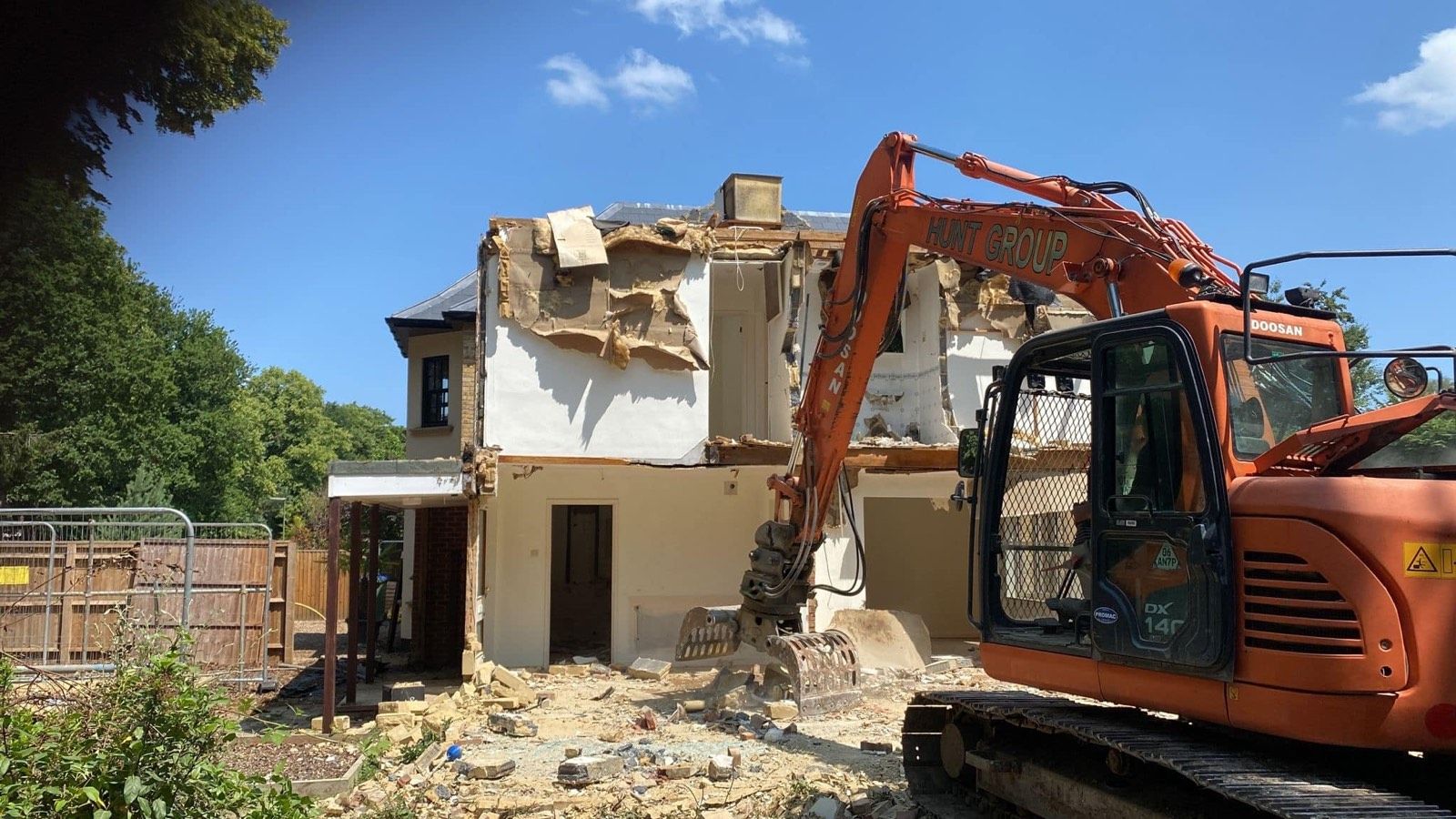
The tiles are rarely the hard part. Underneath them sits the bitumen adhesive, a thick black glue that was used to bed the tiles onto the concrete screed, and that layer is very often where the asbestos really is. It is the stubborn bit. The tiles can lift in minutes, but the black mastic stays welded to the floor and has to be worked off, and that scraping and grinding is exactly what releases fibres.
In a lot of Leatherhead homes the adhesive has soaked into the top of the screed over the years, so it will not simply peel away. Trying to chase it off with a power scraper or a grinder, without containment, throws dust across the room and through the rest of the house. This is why we treat the black glue as the main job rather than an afterthought. The tiles come up, and then the adhesive is removed slowly and kept damp so the fibres stay down. How far it has to come off depends on what is going down next. A new floor that needs a clean, level screed means the black layer has to be taken back properly, which is the slow part of the job. Where the residue is thin and stable it can sometimes be sealed and covered instead, but that is a decision made once we know what the material is, not a corner cut to save time.
None of this is work for a hired floor sander and a free weekend. The whole point is to lift the tiles and the bitumen below them without letting any of it become airborne, and that takes the right containment and the right method, not brute force.
Keeping the Dust Out of the House
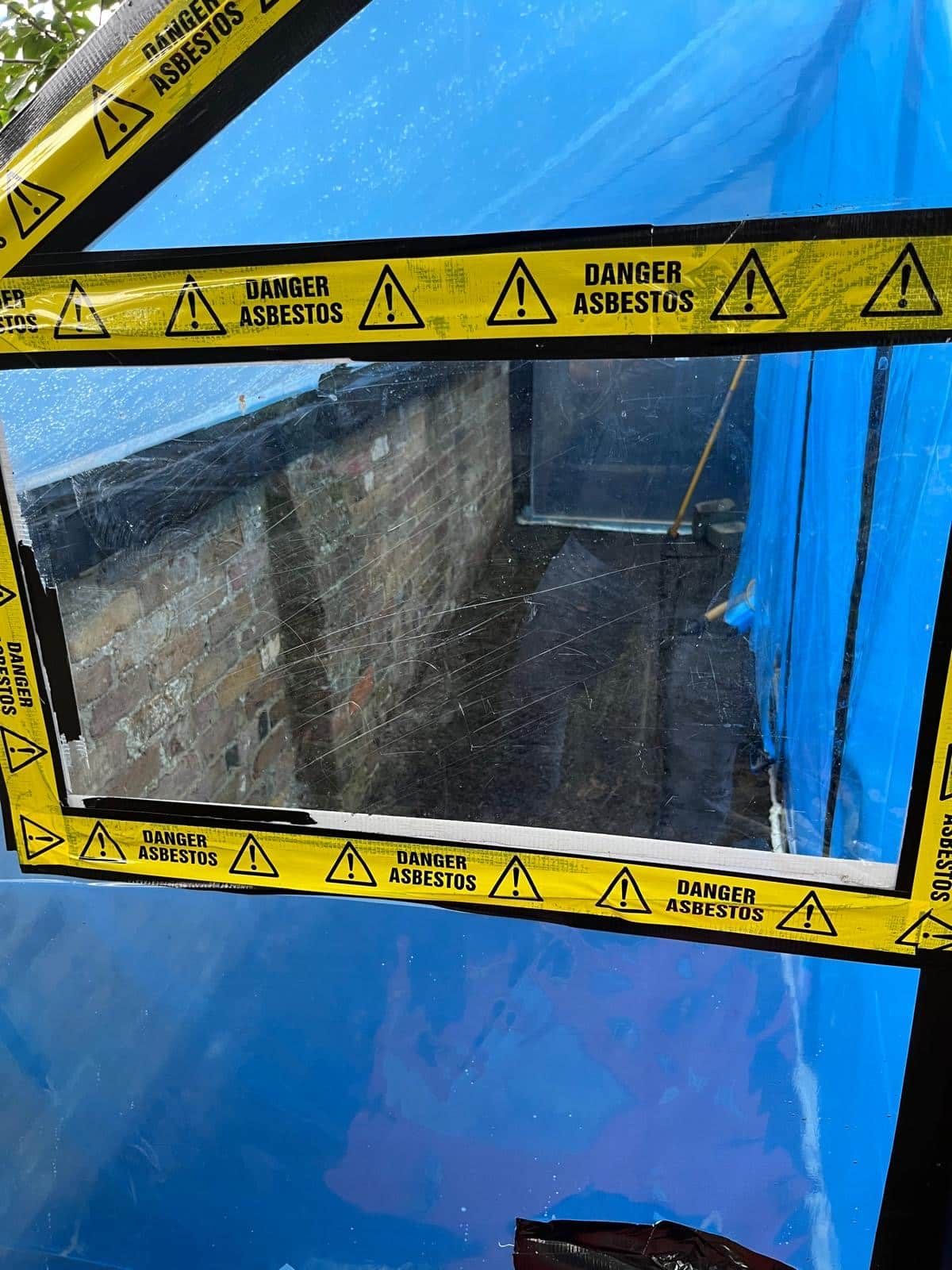
Floor tile work is almost always done in a home people are still living in, often the busiest room in it. A Leatherhead kitchen or hallway connects to everywhere else, so before anything is lifted we seal the room off and close the routes the dust would otherwise take, the doorways, the gaps under doors and any vents.
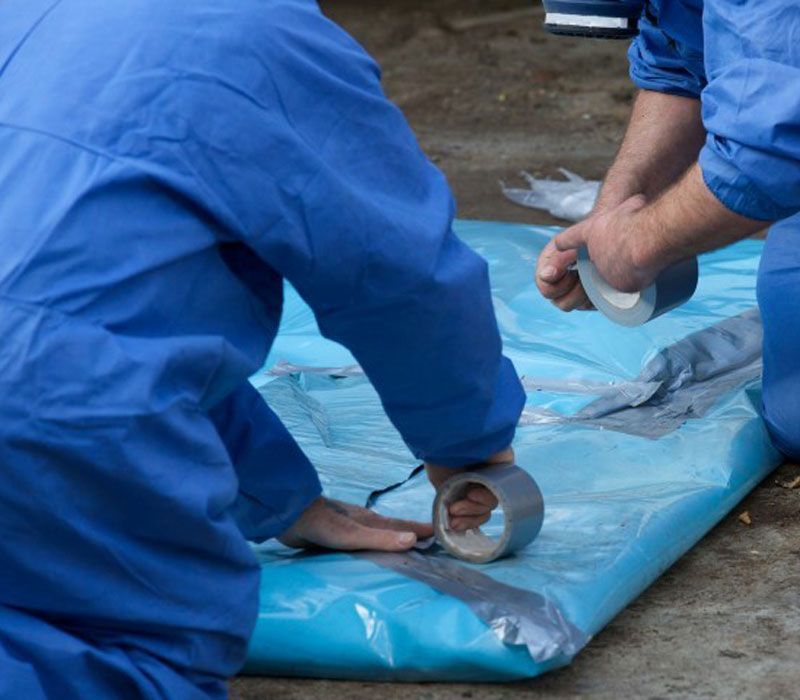
With the room sealed we run commercial-grade air filtration while the tiles and the adhesive come up, so the fine dust is pulled out of the air rather than drifting through the property. The work stays inside that contained zone from start to finish, and the waste goes out as asbestos waste to a licensed facility, not in with the kitchen rubble. The tiles and scraped adhesive are double-bagged as they come up rather than left in a pile on the floor, and floors next to busy parts of a Leatherhead home, a hallway feeding the stairs or a kitchen opening onto a living room, get the most care over the seals, because those are the routes dust would travel furthest if it got loose.
When the floor is clear and the screed is clean, the air in the room is tested before anyone moves back in. That air test is the part that matters in an occupied house. It confirms the room is safe to use again rather than just looking tidy, which counts for a great deal when it is the family kitchen the children walk through every morning.

Sampled First, Then Lifted Properly
The order of work matters. We sample the tiles and the adhesive first and wait for the laboratory result, because what comes back decides how the floor is handled. Some thermoplastic tiles are a lower-risk material, while the bitumen adhesive beneath them can be the higher-risk find, and you cannot tell which is which by looking at a black smear on a Leatherhead floor.
If the result points to higher-risk material, the job is done to the stricter standard the law sets. That means giving the HSE the 14 days' notice required, working under full enclosure with air monitoring throughout, and finishing with four-stage clearance testing by an independent analyst before the floor is signed off. For the lower-risk tiles the containment is lighter, but the floor is still sealed and the air still tested before you walk back in.
Either way the job ends with paperwork, a waste consignment note showing where the material went and the air-test result for the room. Clearaway Asbestos holds Spectra licence number 142305706 and has worked across Leatherhead and the wider Surrey KT postcodes for more than seven years. To book a free site visit before you lift a floor in Fetcham, Ashtead, Bookham or the town itself, call the team on 0800 024 6168.
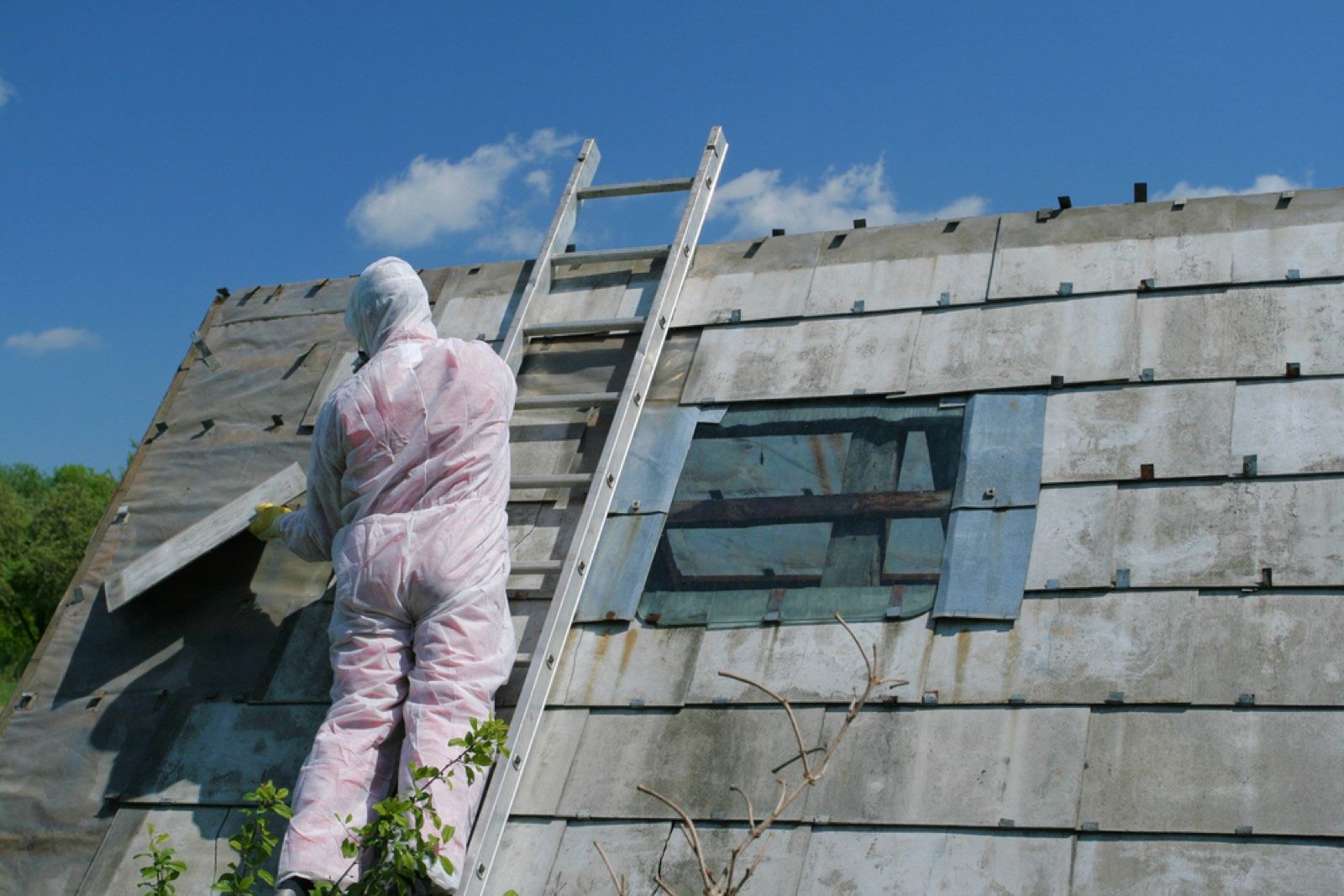
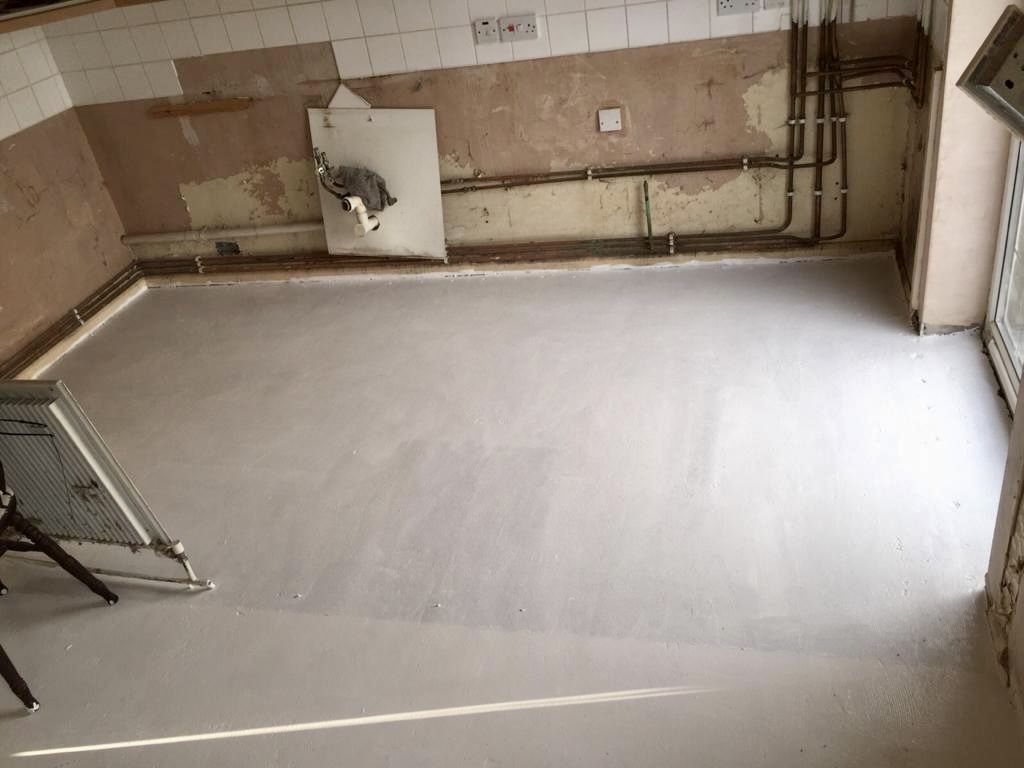
Asbestos Vinyl Floor Tile Removal & Bitumen Sealing, Surbiton
Surbiton, Surrey · Floor Tile Removal
View this project"Clearaway Asbestos did a brilliant job coming out to survey our old garage roof for asbestos. They were professional and we were impressed with the job they did replacing the garage roof"
Frequently Asked Questions
Our Removal Process
From first call to final certificate, every job follows the same clear four-step process.
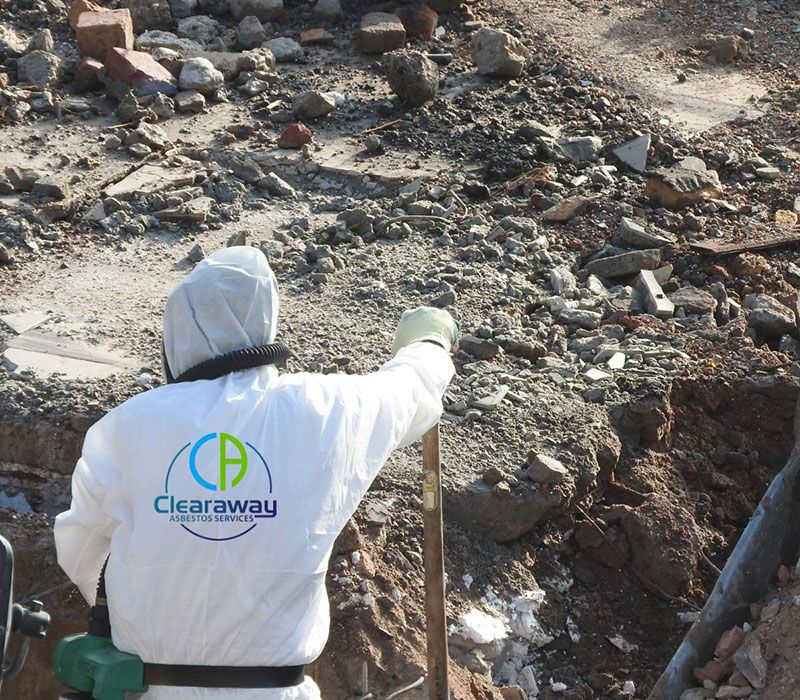
Survey
We inspect the property and confirm the material. Sampling available if required.
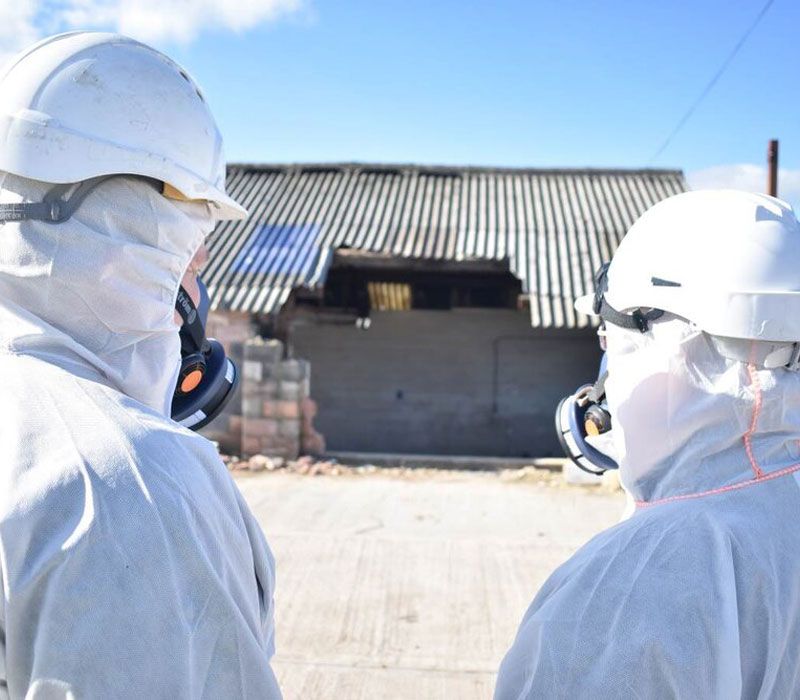
Quote
Fixed written price covering removal, disposal and any replacement work.
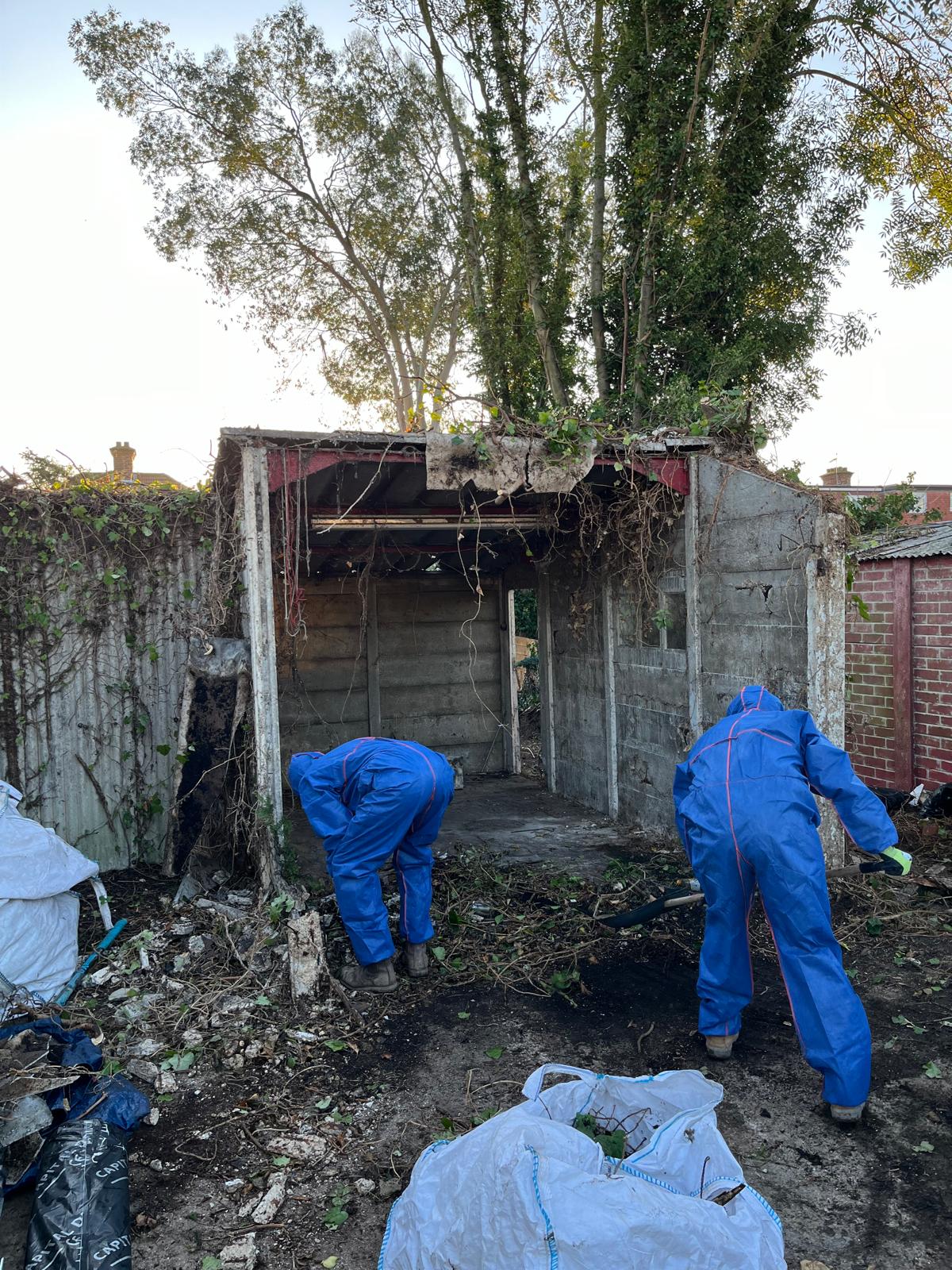
Removal
Material is removed safely, double-wrapped and taken to a licensed disposal facility.
Certificate
You receive a waste consignment note and disposal certificate confirming legal handling.
Why Choose Clearaway
Specialist Crew
Asbestos work is all we do, every day, across the South East.
Fully Licensed
Licensed asbestos removal contractor (Licence No. 142305706). Full public liability insurance on every job.
Local & Fast
Surrey-based. Most domestic jobs are booked in and finished within a week.
Our Own Team
We never subcontract. The people who quote your job are the people who do it.
Get in Touch
Send a few details about your project and we will come back the same working day with a fixed price. We cover Surrey, London and the South East, including Esher, Cobham, Kingston, Richmond, Epsom, Guildford, Woking and Croydon.