Asbestos Floor Tile Removal in Hove
Pull up old lino or carpet in a Hove conversion flat and you often meet a layer of vinyl floor tiles, set in black adhesive. Around Brunswick Town and Palmeira, that flooring is where the asbestos hides.
What turns up under a Hove floor refit
Hove runs from the Regency and early Victorian seafront terraces around Brunswick Town, Adelaide Crescent and Palmeira, much of it long since split into flats and maisonettes, out through the mansion blocks and into the interwar and postwar streets towards Hangleton and Portslade. A lot of those period flats have been refitted more than once. Each time, a new floor went down over the last one, and somewhere in that stack of three or four layers sits a course of old floor tiles.
The tiles are thermoplastic or vinyl, square, nine inches on a side in the older runs and a foot across in the later ones. They were a standard kitchen, hallway and bathroom finish through the 1950s, 1960s and 1970s, and the asbestos in them is bound tight while the tile stays whole. The problem starts at a refit. Someone lifts the carpet or the cracked lino in a Palmeira kitchen, finds a hard tiled floor underneath, and starts levering it up to get a flat base for the new finish.
Intact tiles are low risk. Snapped, ground or chipped tiles are not, and a pry bar through a brittle fifty-year-old floor breaks plenty of them. The same thing surfaces at a sale or a let. A buyer's surveyor flags a suspect floor in a conversion, or a landlord refitting between tenancies finds tiles under the units, and the work cannot move until the material is known. Before any of that starts, a single tile and a scrape of the layer below go to a UKAS-accredited laboratory, with results back in a few working days, so the floor is identified before a tool touches it.
The black bitumen under the tiles
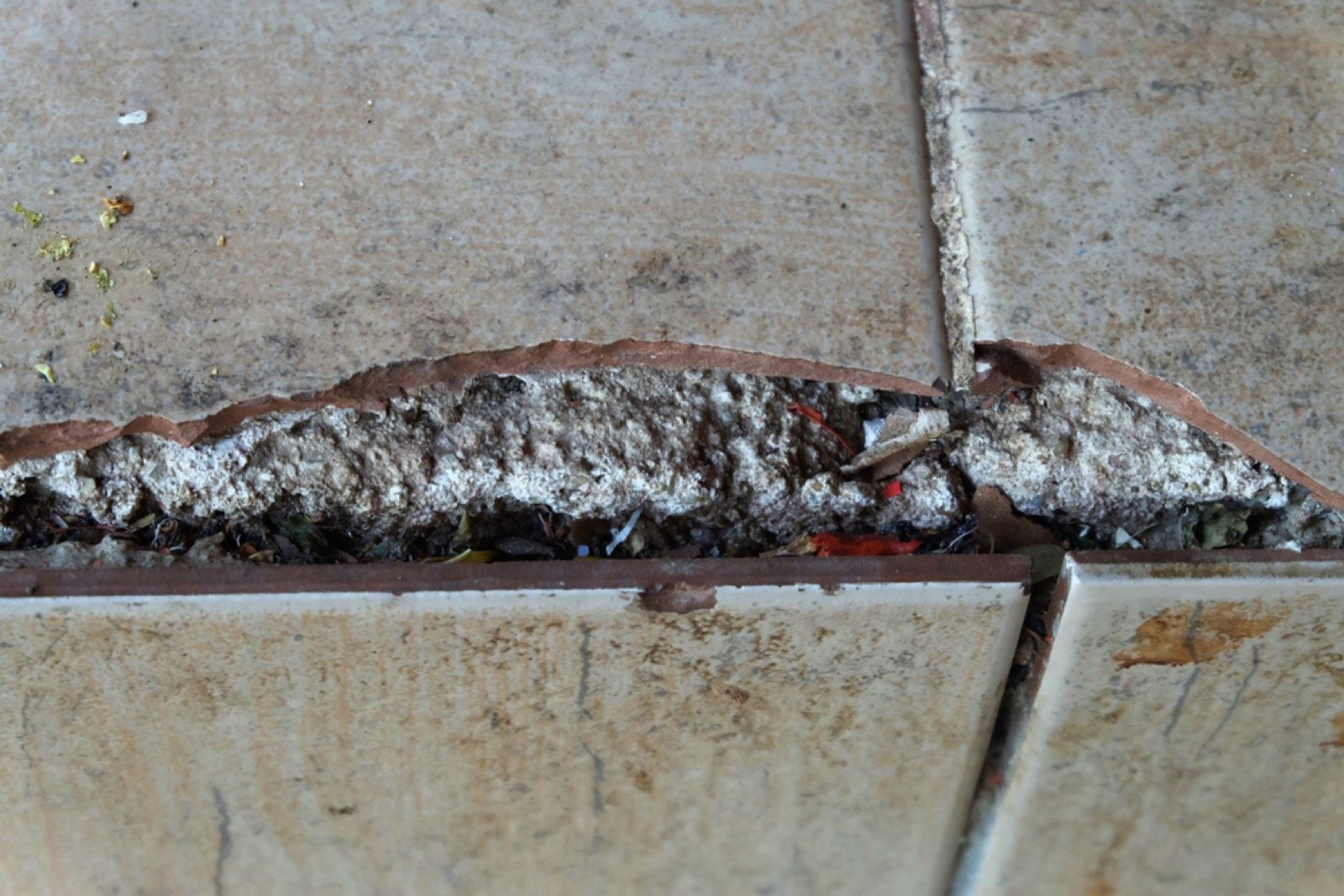
The tiles are rarely the hard part. Underneath them, holding them to the screed, is a black bitumen adhesive, and that is where most of the work sits. It was spread as a hot, tar-like glue, it bonds hard to a concrete or screed floor, and a good deal of it contains asbestos in its own right. Lift the tiles cleanly and a continuous black skin stays welded to the slab.
That residue is the bigger job. You cannot leave it if a new floor is going down, because a level, sound base matters, yet it does not scrape off the way fresh adhesive would. Tiles can come up in an hour or two across a small Hove kitchen of six or seven square metres. The bitumen below can take the better part of a day, lifted in sections with hand tools and controlled methods rather than dry power sanding, which would throw fibre into the air. On a ground-floor flat the adhesive sits on a solid concrete slab, so there is nowhere for it to go but off, scraped back inch by inch.
The scale is easy to underestimate. A hall, kitchen and bathroom in a converted flat can hold fifteen to twenty square metres of tile and the same area of bonded adhesive beneath it, and the layer below is what sets the hours. Two people might clear the tiles before lunch and still spend the afternoon and the next morning on the black glue. Pricing the floor on the visible tiles alone misses the part that actually drives the work, and it is the reason a floor job is quoted on the adhesive, not the tile count.
Working inside an occupied flat
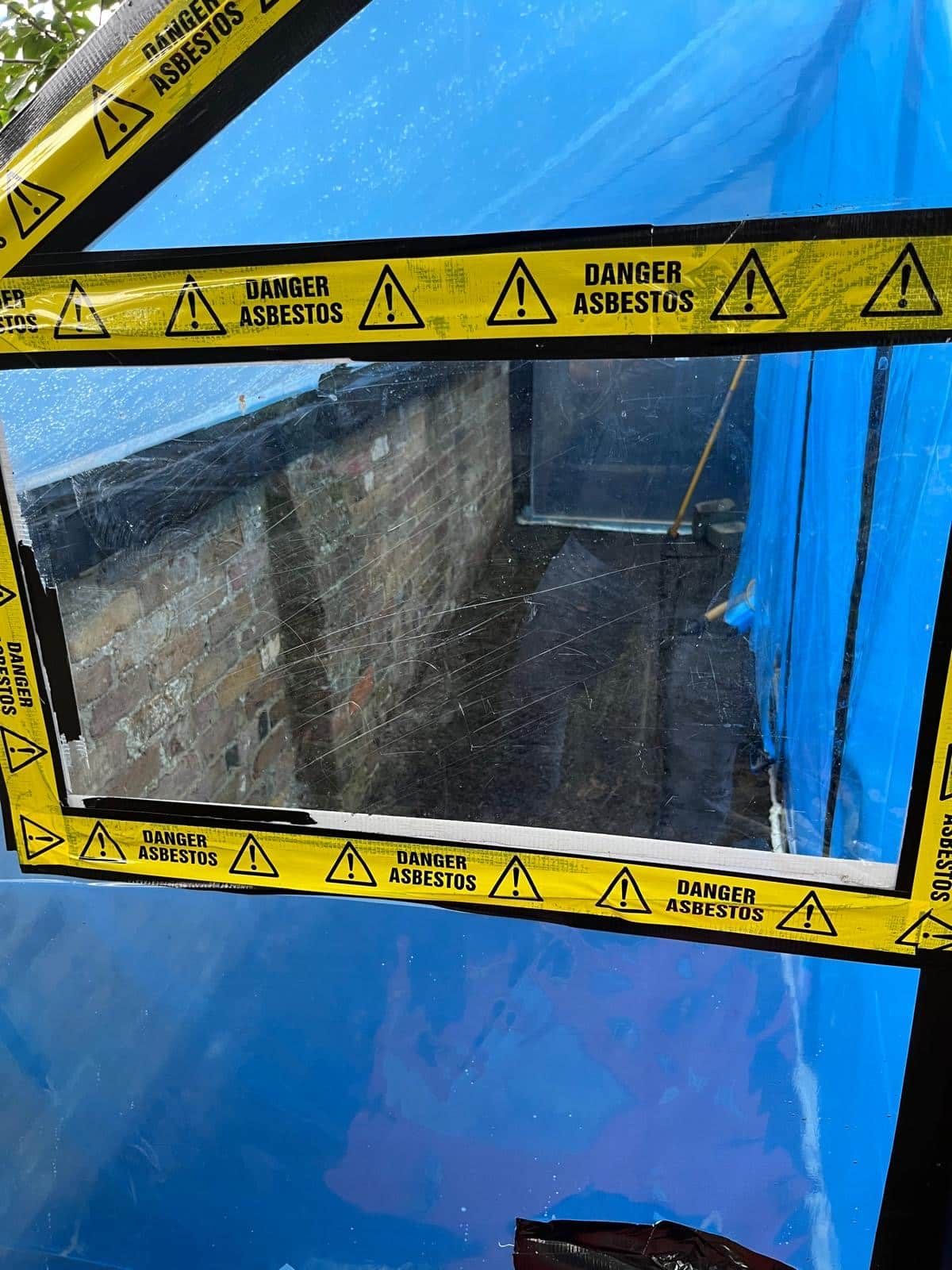
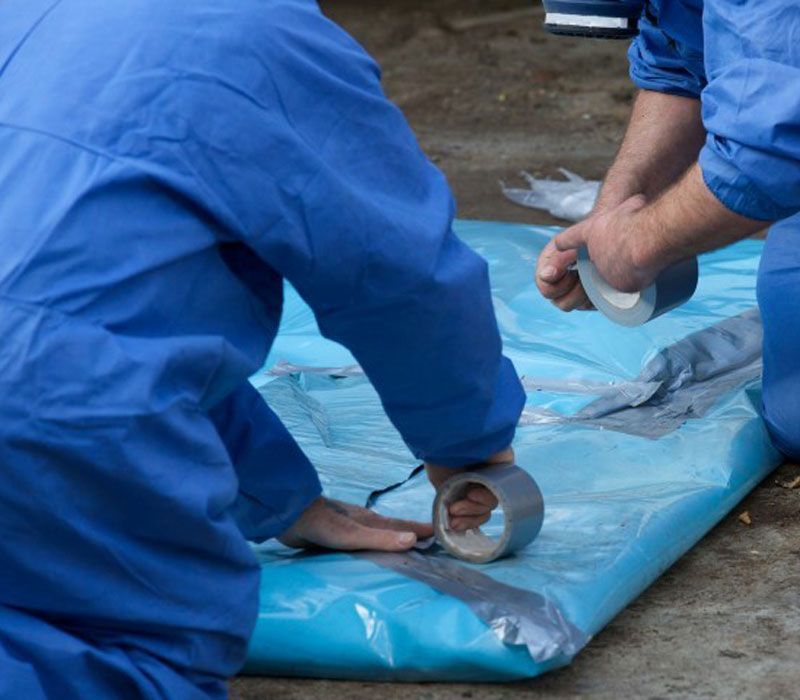
Most of this happens in a flat where people still live, often with neighbours on the other side of a shared wall and a stairwell that everyone uses. A floor strip-out throws dust, so the room is closed off before work begins. The doorway is sealed, the floor area is screened with sheeting, and a commercial-grade air filtration unit runs inside to hold fibre in the contained space rather than letting it drift down a communal hallway or up through a Brunswick Town conversion.
The tiles and the adhesive come up damped down, bagged as they are lifted, and taken out as controlled waste rather than swept and binned. Nothing dry is sanded, and the bags are double-wrapped and labelled for a licensed disposal facility rather than left on the pavement. When the floor is clear and the residue is gone, the room is cleaned down and the sheeting stays up for an air test.
That test is the part that matters. An independent analyst takes a reading inside the room, measures the fibre level against the clearance figure, and only a pass lets the seal come down and the new floor go in. Skip it and there is no proof the kitchen is safe to walk back into. That sequence is what keeps a single-room job from becoming a building-wide problem. In a converted house of three or four flats it is the difference between disturbing your own kitchen for a day and putting fibre into a stairwell that is not yours to contaminate.

Access, paperwork and getting it right
The seafront streets add their own planning. Brunswick Town, Adelaide Crescent and the squares are conservation area, with listed terraces and basement flats reached down narrow steps. Floor waste is heavy, the bags do not get lighter on a long carry, and getting tiles and adhesive out without marking a shared listed stair or a stucco frontage takes thought. The route off site is worked out before the floor comes up, parking and the lift or stair are checked, and on a listed building any protection to the common parts is agreed first. None of that touches the floor itself, but it sets how long the day runs.
Clearaway is based in Chessington in Surrey, so Hove is a long run to the coast, roughly the same trip as Brighton next door. We make it for the residential and commercial floor work where the licence and the documented paperwork carry the most weight, and the owner Graham runs those jobs himself. For higher-risk licensed work the standard is fixed: 14 days of notice to the HSE before a tool is lifted, full enclosure of the work area, and four-stage clearance testing signed off by an independent analyst. Floor tile and bitumen work is sampled first, and where the result puts it in the licensed bracket, it is handled to that standard rather than rushed.
The trip is justified by the credentials behind it. Clearaway holds Spectra licence 142305706 and has spent more than seven years working across this part of the South East. If you have lifted a carpet in a Hove flat and found a hard tiled floor with black glue beneath it, leave it where it is and call 0800 024 6168 before any of it gets disturbed.
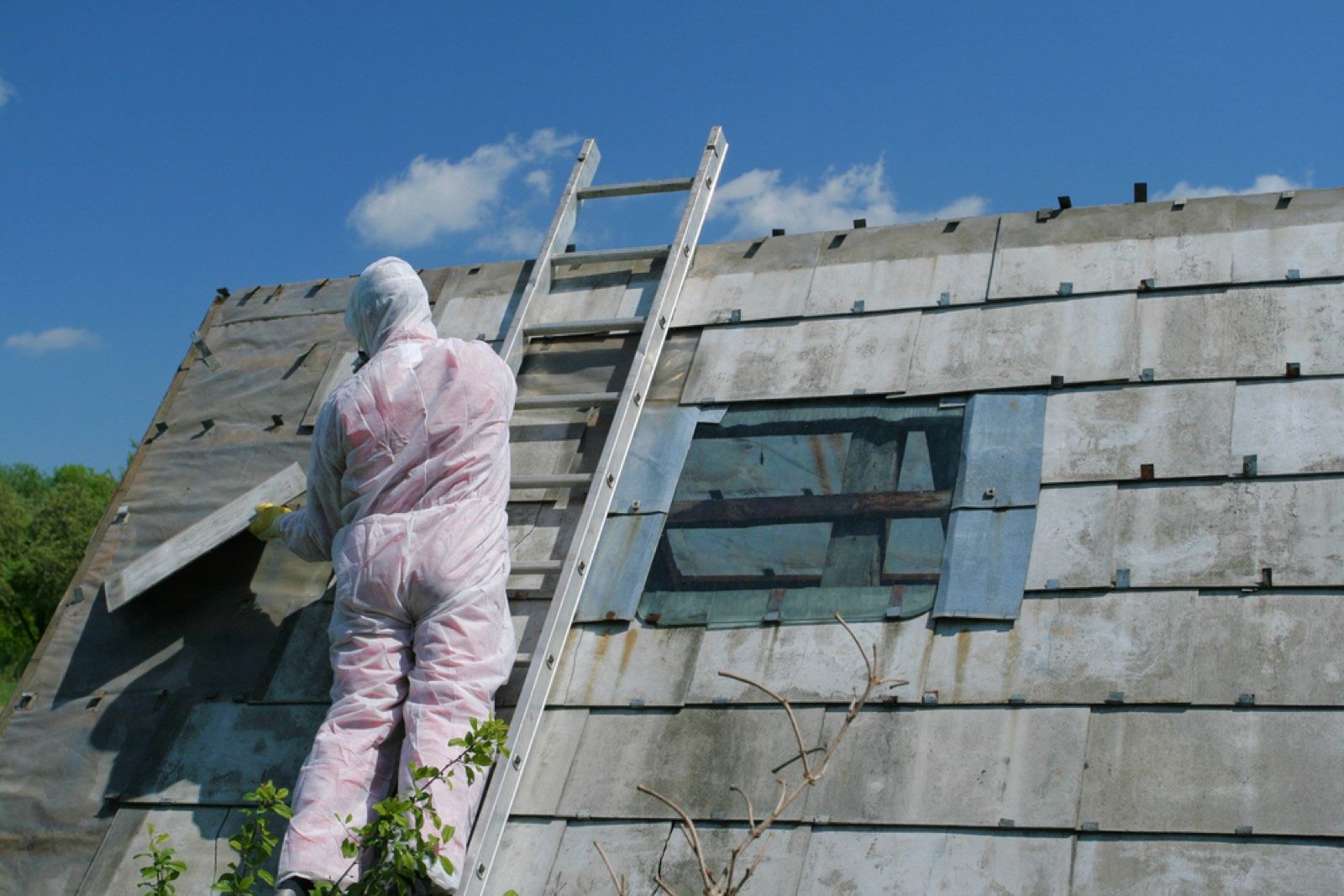
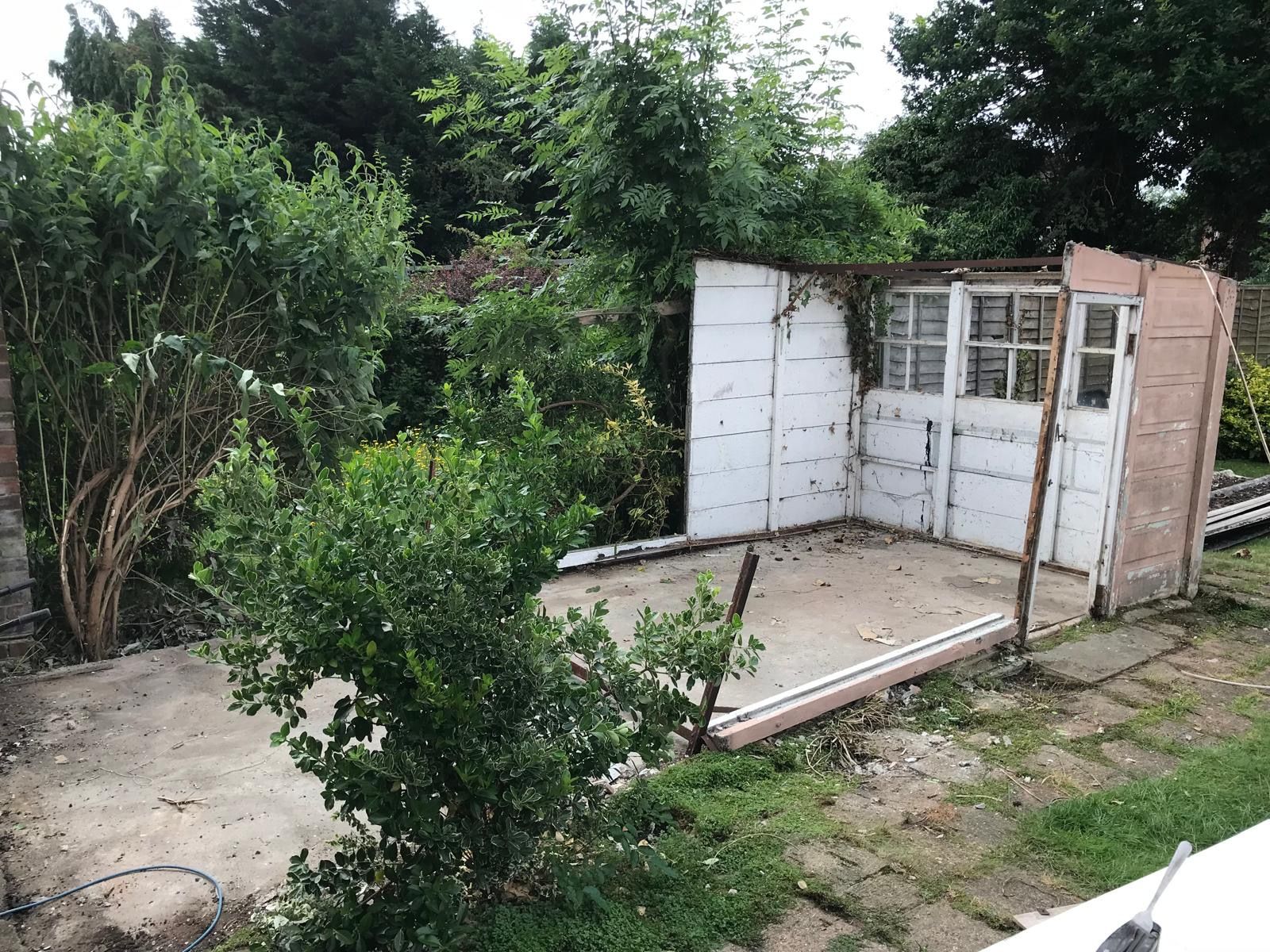
Concrete Asbestos Garage Removal, Cobham
Cobham, Surrey · Garage Removal
View this project"I used Clearaway Asbestos recently for an asbestos garage removal in my home. The staff were really friendly and professional and put me at ease the whole time they were working. I would recommend Clearaway Asbestos to anyone who needs asbestos removal services!"
Why Choose Clearaway
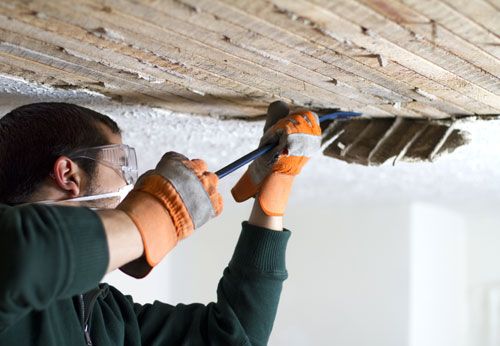
Specialist Crew
Asbestos work is all we do, every day, across the South East.
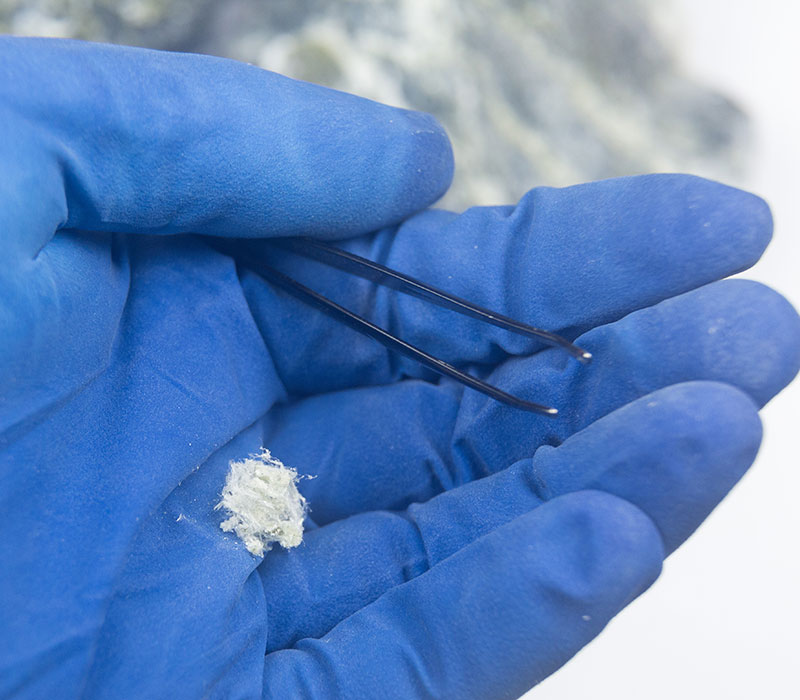
Fully Licensed
Licensed asbestos removal contractor (Licence No. 142305706). Full public liability insurance on every job.
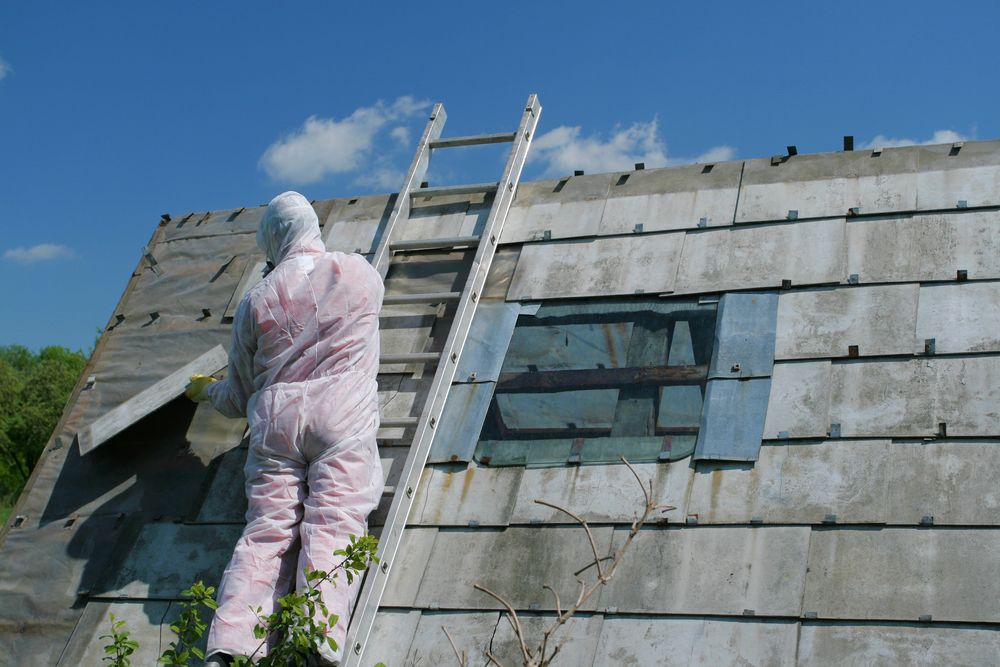
Local & Fast
Surrey-based. Most domestic jobs are booked in and finished within a week.
Our Own Team
We never subcontract. The people who quote your job are the people who do it.
Frequently Asked Questions
Our Removal Process
From first call to final certificate, every job follows the same clear four-step process.
Survey
We inspect the property and confirm the material. Sampling available if required.
Quote
Fixed written price covering removal, disposal and any replacement work.
Removal
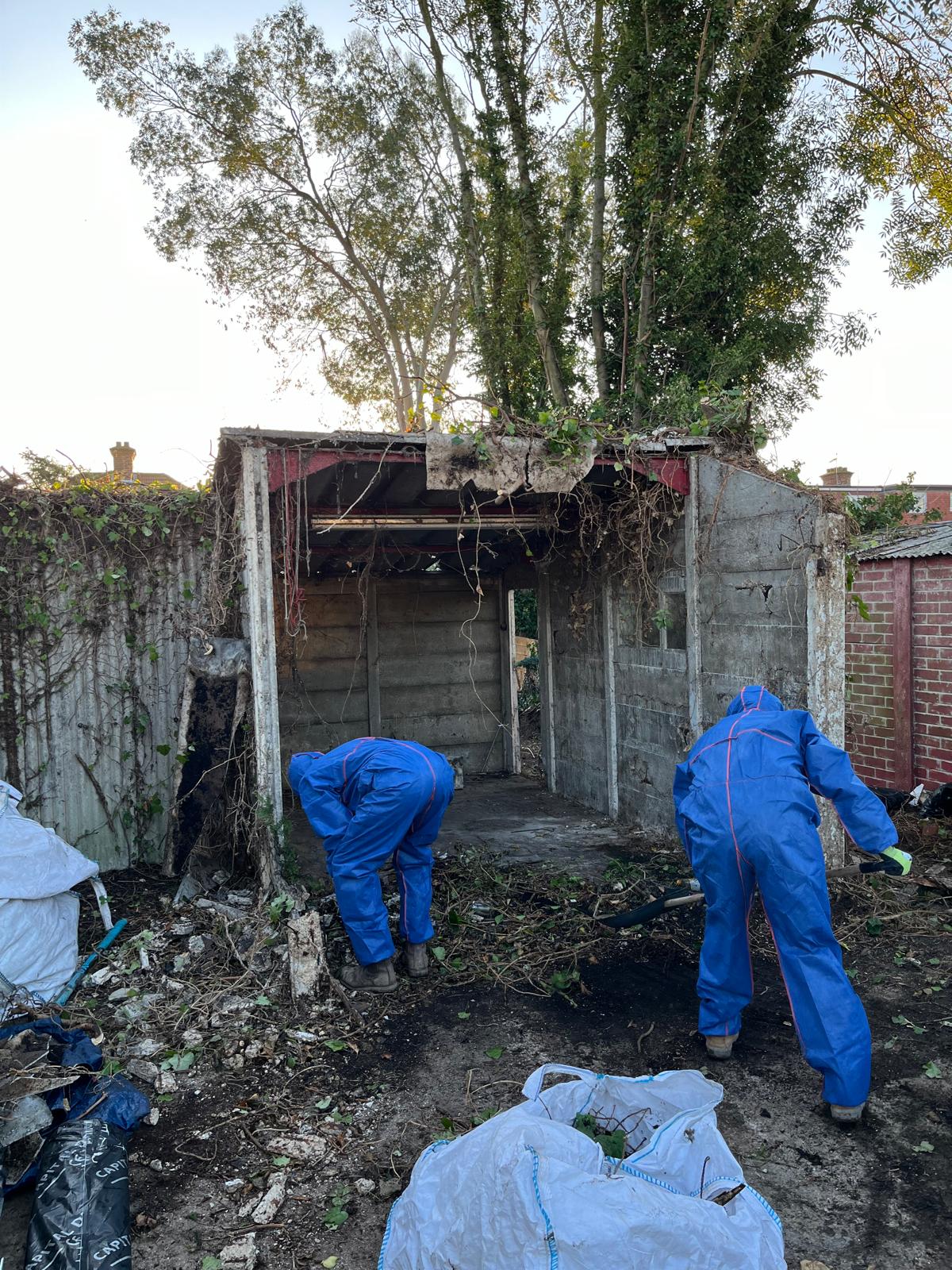
Material is removed safely, double-wrapped and taken to a licensed disposal facility.
Certificate
You receive a waste consignment note and disposal certificate confirming legal handling.
Get in Touch
Send a few details about your project and we will come back the same working day with a fixed price. We cover Surrey, London and the South East, including Esher, Cobham, Kingston, Richmond, Epsom, Guildford, Woking and Croydon.