Asbestos Floor Tile Removal in Camberley
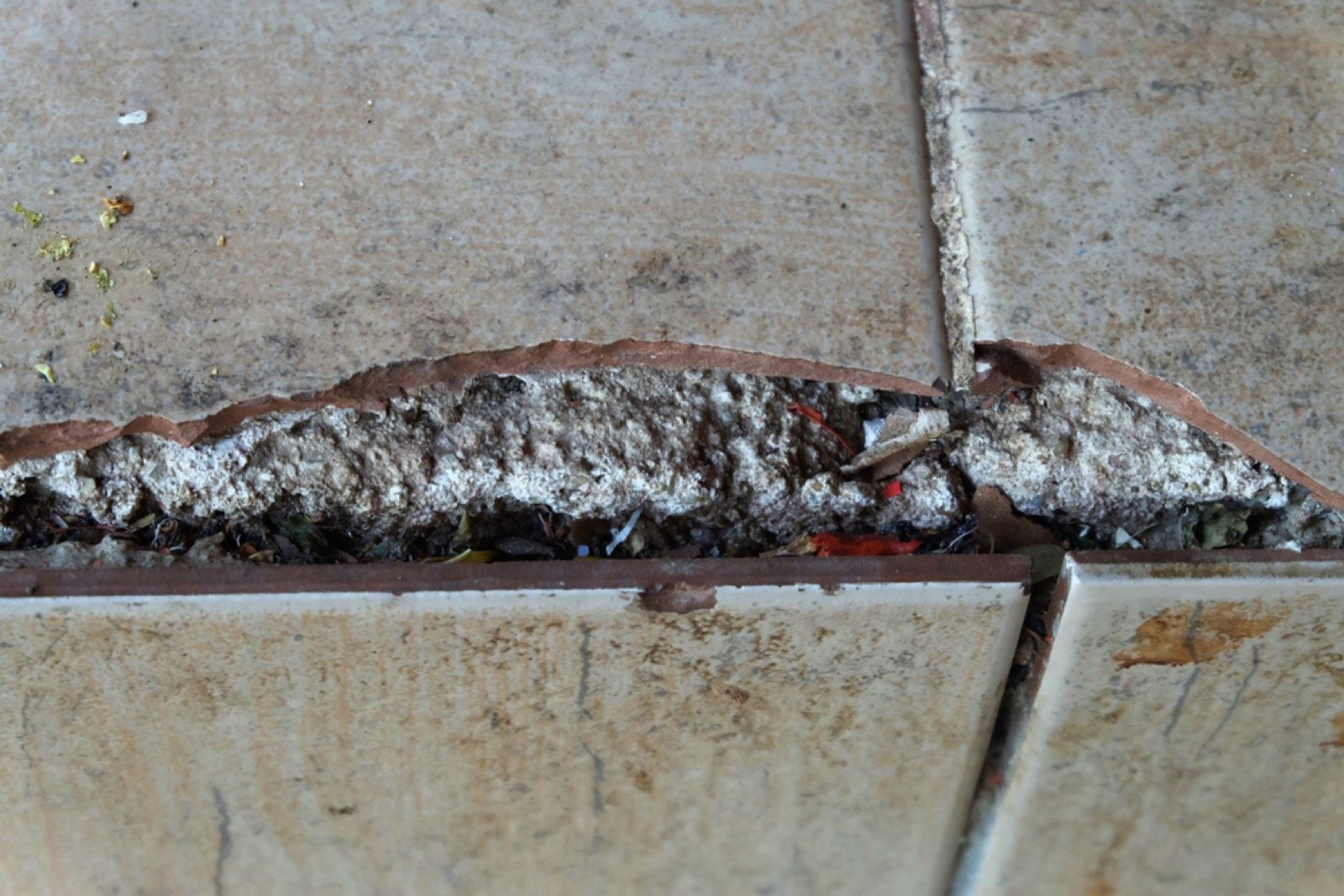
Pull up old lino or carpet in a Camberley kitchen and you can find rows of small floor tiles bedded in black adhesive. Across GU15 to GU17 those tiles, and the glue beneath, often hold asbestos.
Why Camberley floors hide asbestos tiles
Most refit jobs in Camberley start the same way. The old carpet comes up, or the worn vinyl is peeled back, and underneath sits a grid of small floor tiles, each one around 9 inches square, laid tight across the screed. In the Victorian and Edwardian villas near the town centre, and in the 1930s, postwar and later semis and detached houses spread out across the heath towards Frimley, Frimley Green, Yorktown and Old Dean, those tiles turn up in kitchens, hallways, utility rooms and the old larder. A small galley kitchen can hold 200 or 300 of them. A through hallway runs to more.
The tiles themselves are thermoplastic or vinyl, and a good number of them contain asbestos in the body of the tile. You cannot tell by colour or pattern. A plain buff tile and a marbled one can both test positive, and a builder lifting them on a Monday morning has no way of knowing by eye. The houses around Yorktown and Old Dean were going up through exactly the decades these tiles were sold, so they are a common find rather than a rare one. That is why the first move is never the chisel. It is a small sample, taken under controlled conditions and sent to a UKAS-accredited laboratory, with results back in a few working days.
Left flat and sealed under a fitted floor, these tiles sit quietly for decades. They are not a danger while they are whole and covered. The risk starts when someone disturbs them, snapping tiles and breaking the surface, and a kitchen or floor refit is exactly the moment that happens. Stripping a floor blind, before anyone knows what is in it, is how a routine afternoon turns into a contaminated room.
The black bitumen glue under the tiles
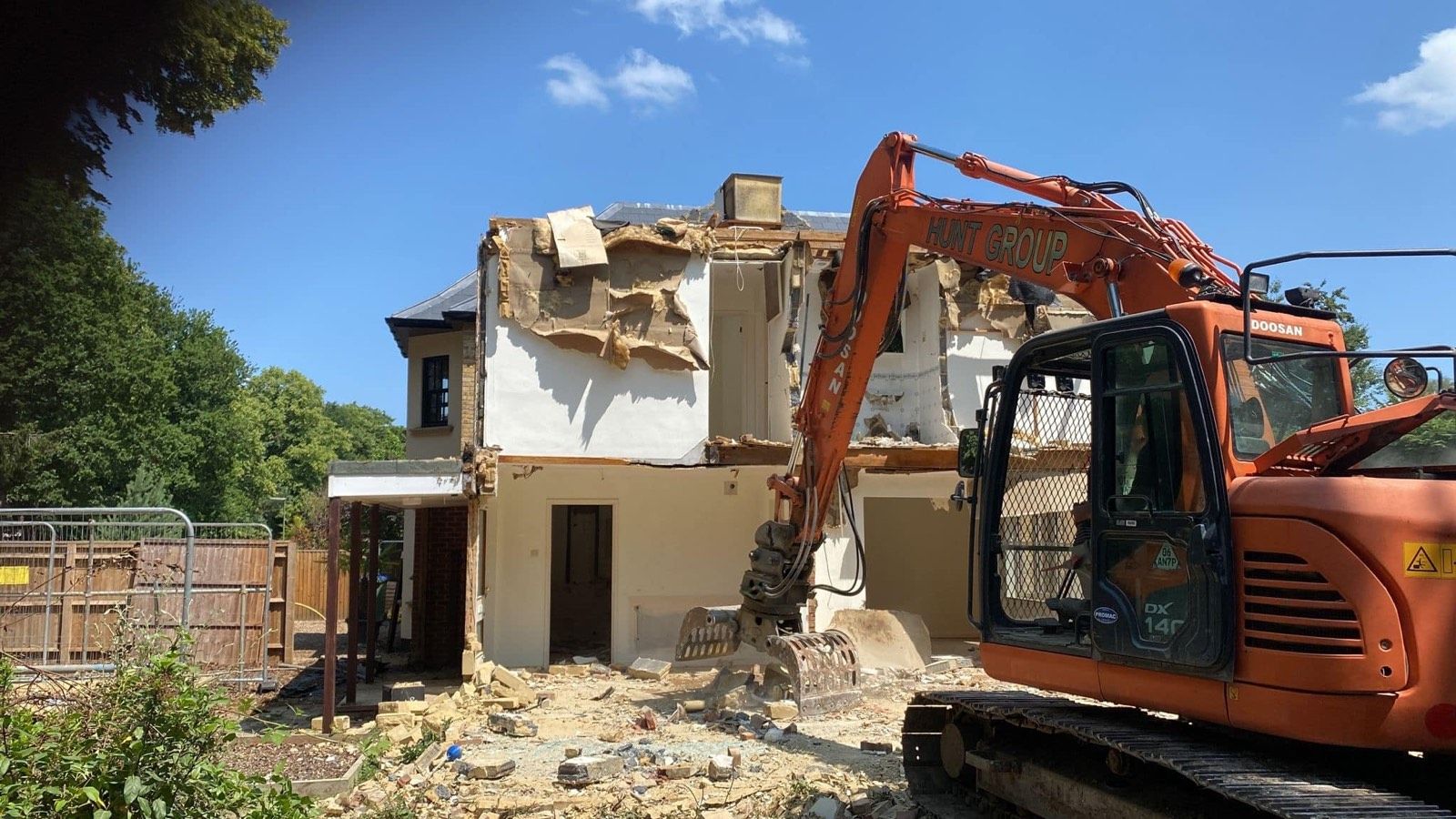
The tiles are rarely the hard part. Under almost every run of old floor tiles in these houses is a layer of black bitumen adhesive, the sticky tar-like glue that held the tiles down, and that bitumen frequently contains asbestos as well. It has had 50 or 60 years to bed into the screed, and it does not lift cleanly the way the tiles do. In a lot of Camberley kitchens it is the adhesive, not the tiles, that turns a half-day job into a two-day one.
This is the bit that catches people out. A homeowner or a general builder will get the tiles up in an afternoon, then hit a black skin of adhesive welded to the floor that will not scrape, will not peel, and smears rather than breaks. The instinct at that point is to reach for a grinder, a heat gun or a belt sander to take it back to bare screed. That is the worst thing you can do, because dry grinding and burning are exactly what send asbestos fibres into the air of an occupied home, and a kitchen open to the hallway and the rest of the house spreads them fast. The adhesive bedded into the screed is the bigger, more stubborn problem, not the tiles sitting on top of it.
We treat the tile layer and the bitumen layer as one job, sampled together first, then removed together under the same controls. There is no point clearing the tiles and leaving the glue behind, because the glue is where a large part of the asbestos actually is. A floor that looks clear with the tiles gone can still be a problem until that black layer is dealt with properly.
How we lift a Camberley floor safely
Once the lab confirms what the tiles and adhesive contain, we plan the lift around the home staying lived in. Clearaway is based in Chessington, so for Camberley the team travels out to the western side of the county, near the Hampshire and Berkshire borders, and the owner Graham runs the jobs himself, on the everyday domestic floors and on the larger residential and commercial work.
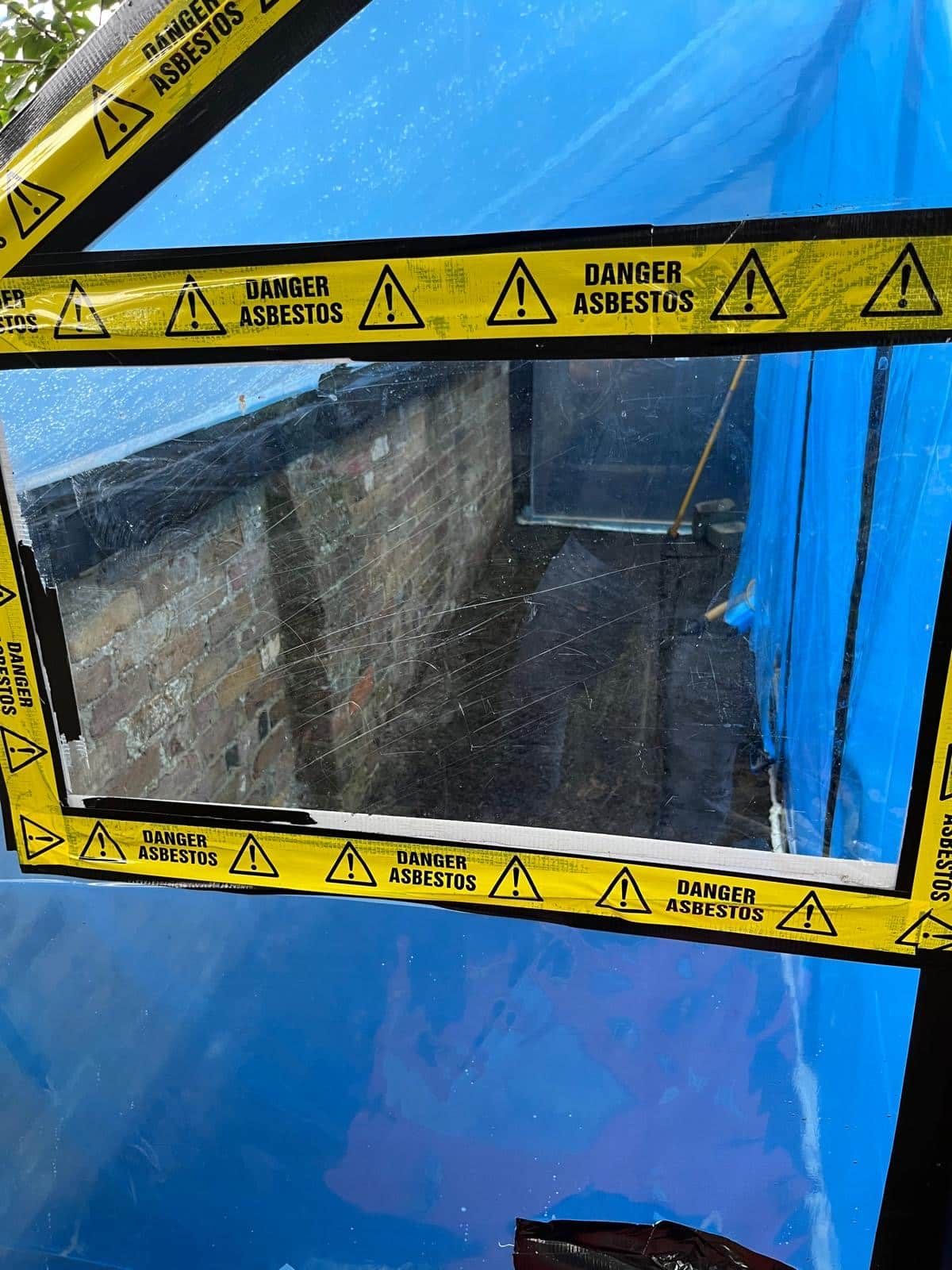
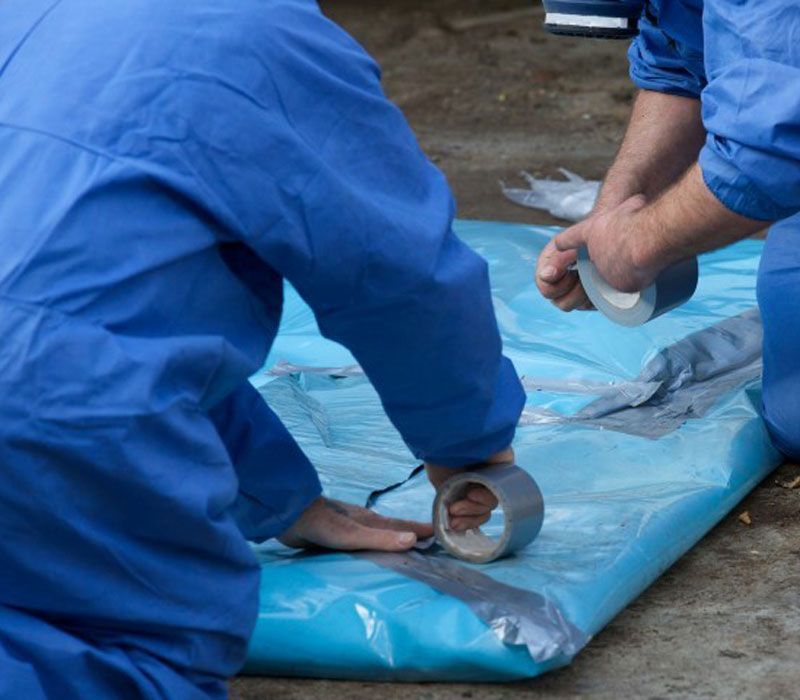
The room is sealed off from the rest of the house before anything is touched. We tape and sheet the doorways and any gaps, cover the route in and out, set up the right floor protection, and use methods that keep the material damp and intact rather than dry and crumbling. Tiles are taken up in whole pieces wherever they will come, lifted rather than smashed, and the bitumen is taken off by hand and with the correct tools, never by aggressive grinding or heat. Everything, tiles and scraped adhesive together, goes into proper asbestos waste sacks, double-bagged and labelled, then to a licensed disposal facility rather than a general skip. On a single kitchen or hallway floor most of this is done inside a day.
When the floor is clear, the work is not finished. The room is cleaned down with a vacuum built for asbestos and a damp wipe of the surfaces, and an independent analyst carries out air testing before the seals come off. The air is checked clear before you walk back in, cook in there, or let children near it, and you get that result in writing. Only then do we hand the floor back as a clean, bare base ready for your new screed, levelling compound or finish.

Clearing the floor for your new kitchen
Getting the old asbestos floor out properly is what lets the rest of your refit run on time. A fitter laying new vinyl, tiles, engineered wood or a fresh screed needs a sound, clean base, and a floor still carrying tile fragments and black adhesive is not that. New flooring laid straight over the top traps the problem instead of solving it, and it surfaces again the next time the floor is opened up. Clearing it correctly first means your kitchen, hallway or utility room is ready for the trades that follow, with no asbestos left buried under the new finish.
We keep the floor work tight to the area that needs it, so the rest of the house stays usable while the sealed room is dealt with. There is no need to move out for a single floor. Sampling first means you are paying to remove material that has actually been confirmed, not guessed at, and the air clearance at the end is your written proof the room is safe before anyone returns to it. For a kitchen or floor refit, that clean handover is the point at which your builder can pick the job back up.
Clearaway holds Spectra licence number 142305706 and has spent more than seven years working on floors and the rest of the asbestos across Camberley and this western edge of Surrey. If you have lifted a carpet or old lino and found tiles in black glue underneath, leave them where they are, keep the room shut off, and call Graham and the team on 0800 024 6168 before any more comes up.
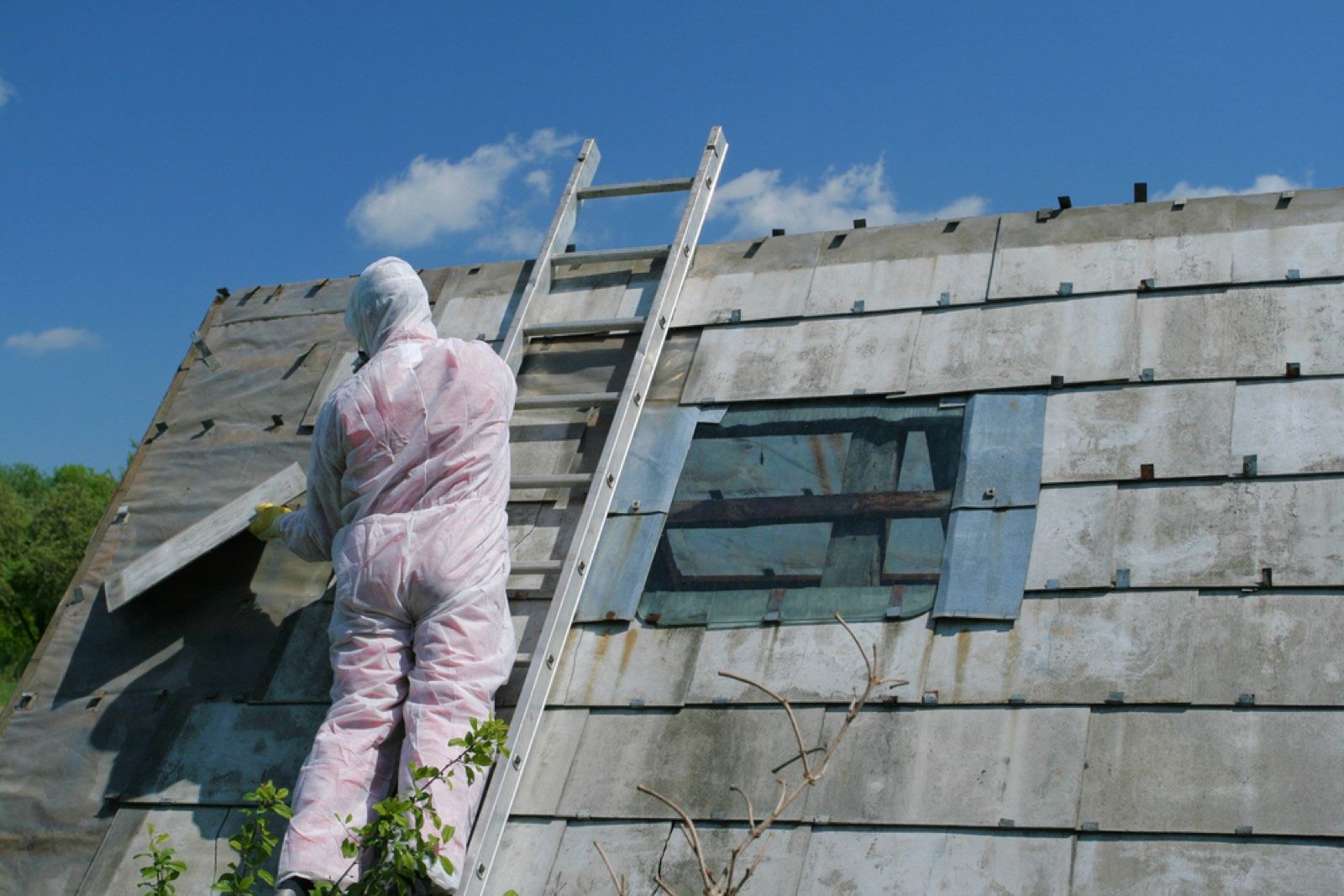
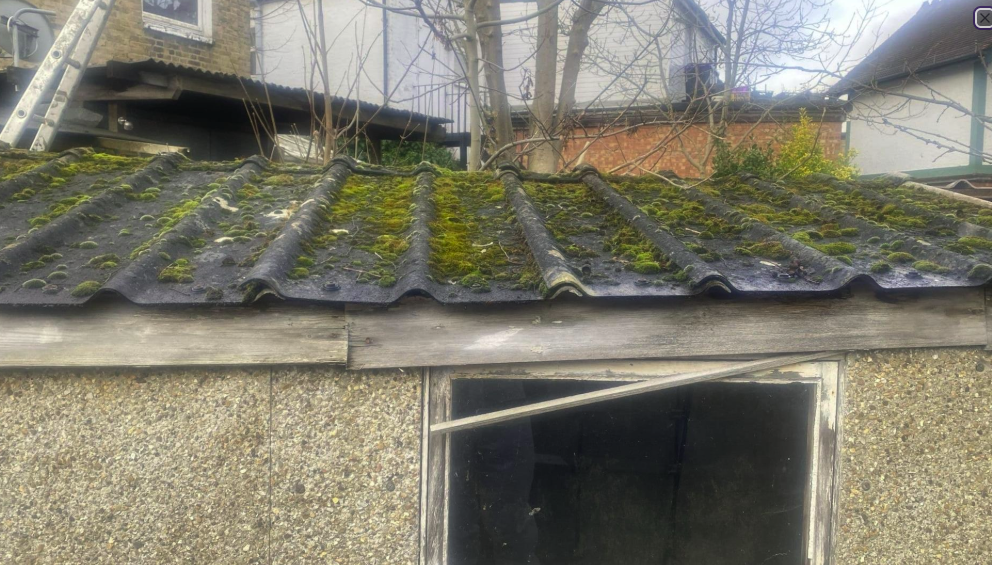
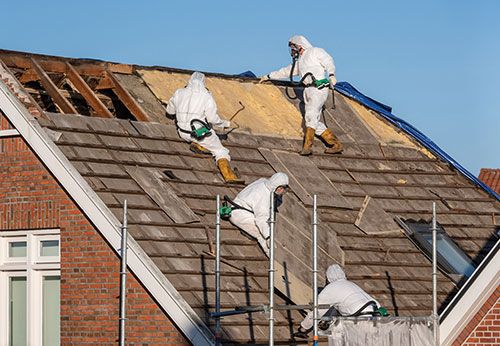
Asbestos Roof Removal and Framework Strip, Claygate
Claygate, Surrey · Roof Removal
View this project"Graham and his staff done a great job of removing my concrete and asbestos garage thank you"
Our Removal Process
From first call to final certificate, every job follows the same clear four-step process.
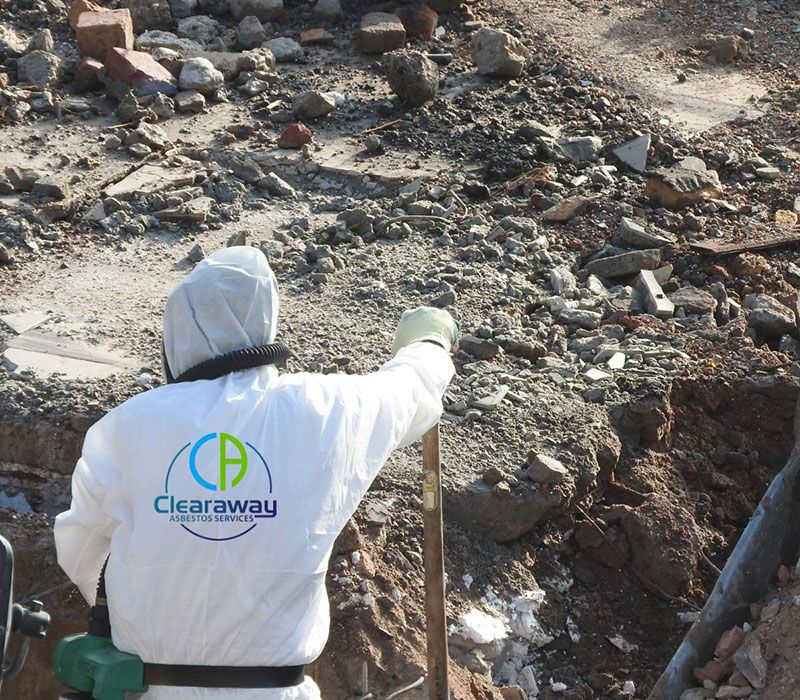
Survey
We inspect the property and confirm the material. Sampling available if required.
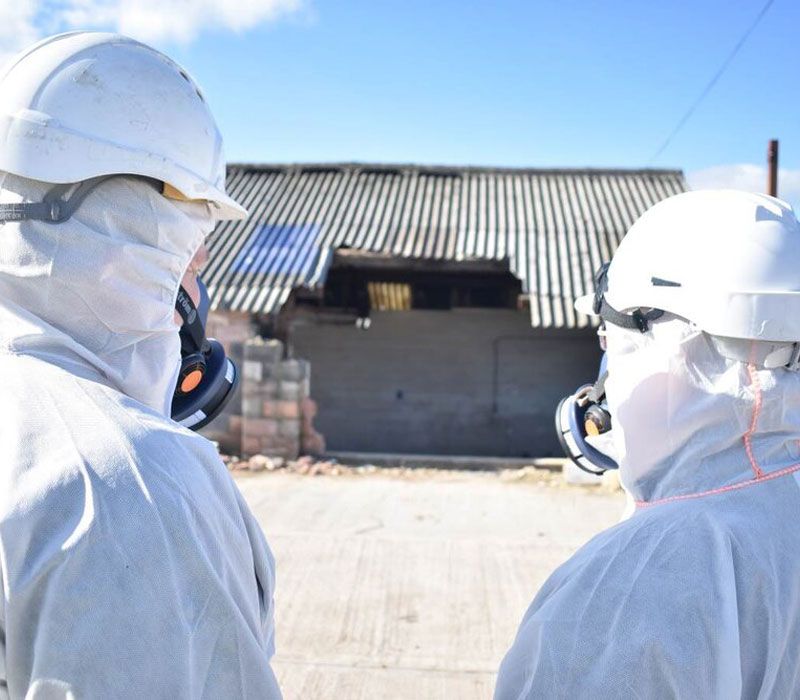
Quote
Fixed written price covering removal, disposal and any replacement work.
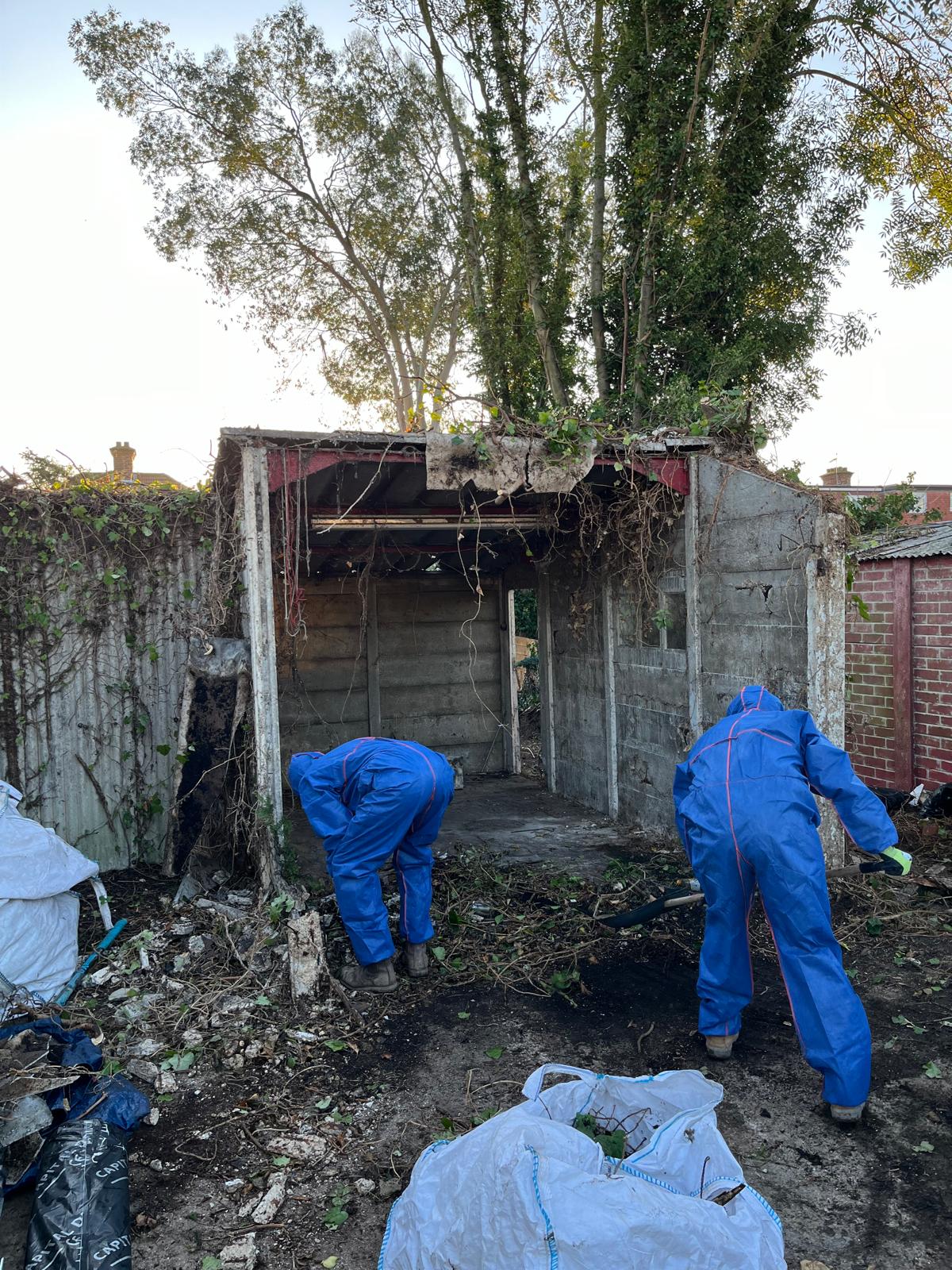
Removal
Material is removed safely, double-wrapped and taken to a licensed disposal facility.
Certificate
You receive a waste consignment note and disposal certificate confirming legal handling.
Frequently Asked Questions
Why Choose Clearaway
Specialist Crew
Asbestos work is all we do, every day, across the South East.
Fully Licensed
Licensed asbestos removal contractor (Licence No. 142305706). Full public liability insurance on every job.
Local & Fast
Surrey-based. Most domestic jobs are booked in and finished within a week.
Our Own Team
We never subcontract. The people who quote your job are the people who do it.
Get in Touch
Send a few details about your project and we will come back the same working day with a fixed price. We cover Surrey, London and the South East, including Esher, Cobham, Kingston, Richmond, Epsom, Guildford, Woking and Croydon.