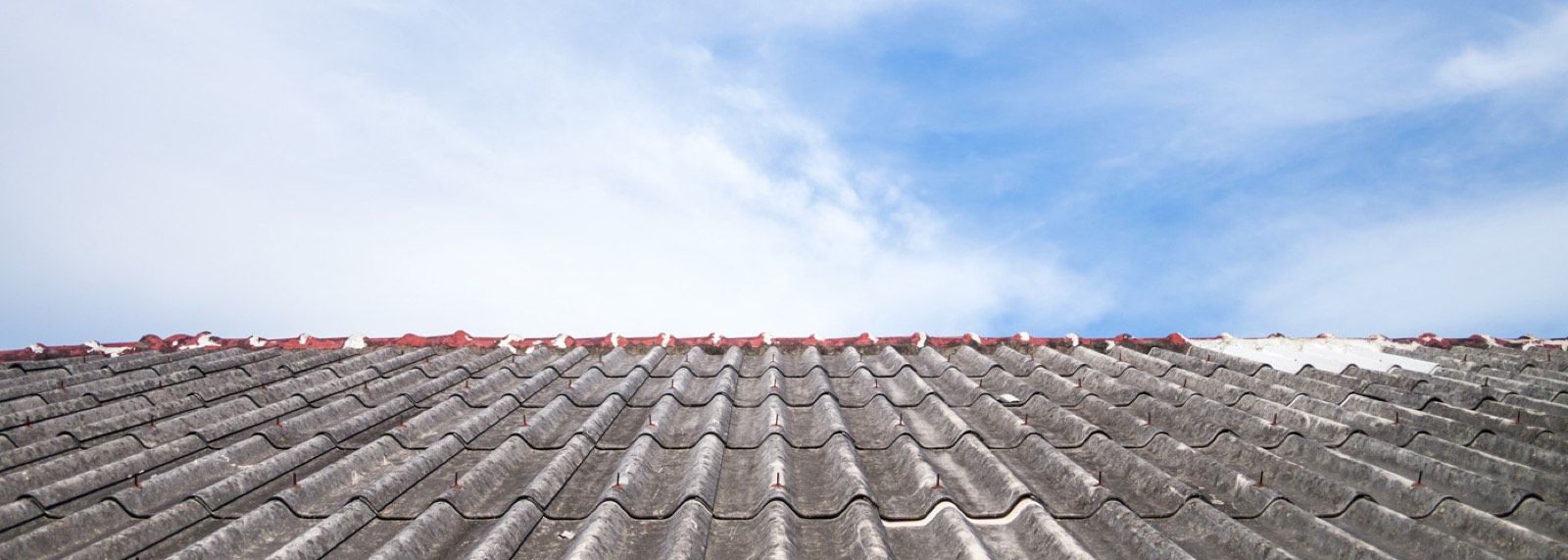
Asbestos Ceiling Removal in Sunbury
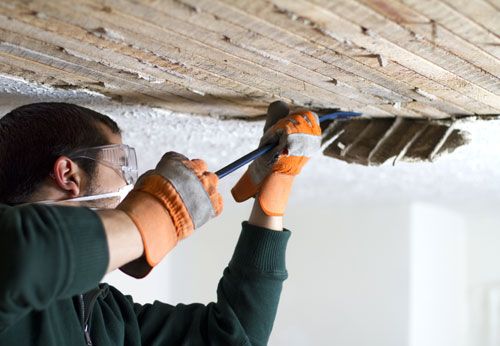
Sunbury homes hide asbestos overhead more than most owners expect, in textured artex coatings and in the boards above boilers and airing cupboards. Ceiling work in a lived-in house needs care, sampling first and proper containment.
What sits in Sunbury ceilings
Sunbury-on-Thames grew fast between the wars and after them, and the ceilings tell that story. Around Sunbury Cross and out towards Kempton there are long runs of semis and detached houses where the original ceilings were finished with textured artex, the swirled or stippled coating that stayed in fashion for decades. It went onto ceilings and walls alike, sometimes plastered straight over later but still there underneath. Down at Lower Sunbury, along Thames Street and the older riverside parts, the period cottages and villas have had their share of patching and conversion work, and asbestos can turn up in whatever was added over the years rather than in the original fabric. A 1970s ceiling repair in an old cottage can carry as much risk as the rest of the house, and often more.
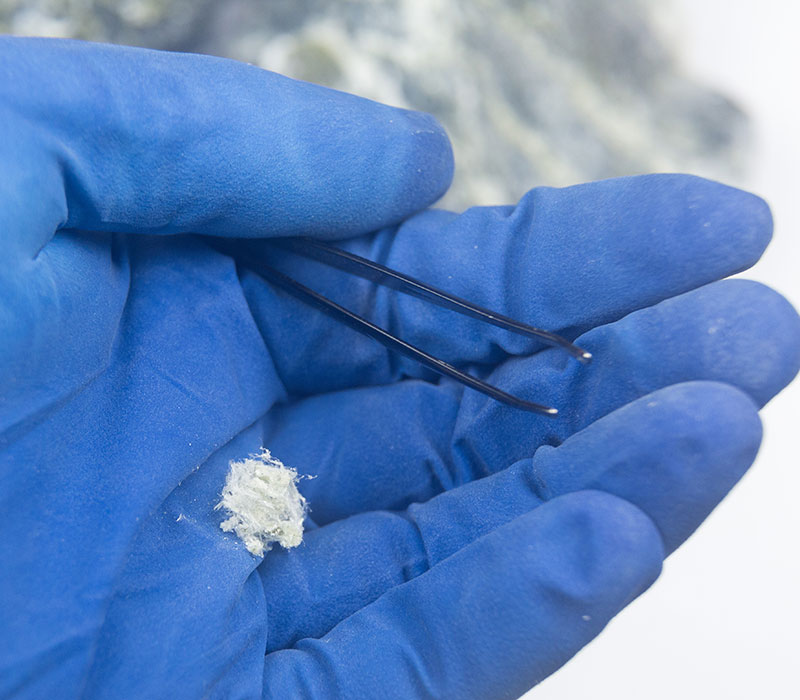
The bigger concern overhead is asbestos insulating board, known as AIB. In Sunbury it shows up around boilers, lining airing cupboards, and as ceiling boards, and it is a regular find in the larger houses that were split into flats. AIB was used as a fire and heat barrier, so it ended up exactly where heat sat, boxed around a flue or fixed as the ceiling of a cupboard that held the hot water tank. The trouble is that you cannot tell artex from AIB by eye, and neither of them stands out from ordinary plasterboard or a clean modern ceiling once it is painted. A swirl of artex and a flat painted board can hide very different materials. That is why a suspect ceiling in a TW16 home gets sampled before anyone lifts a tool to it, rather than guessed at from the floor.
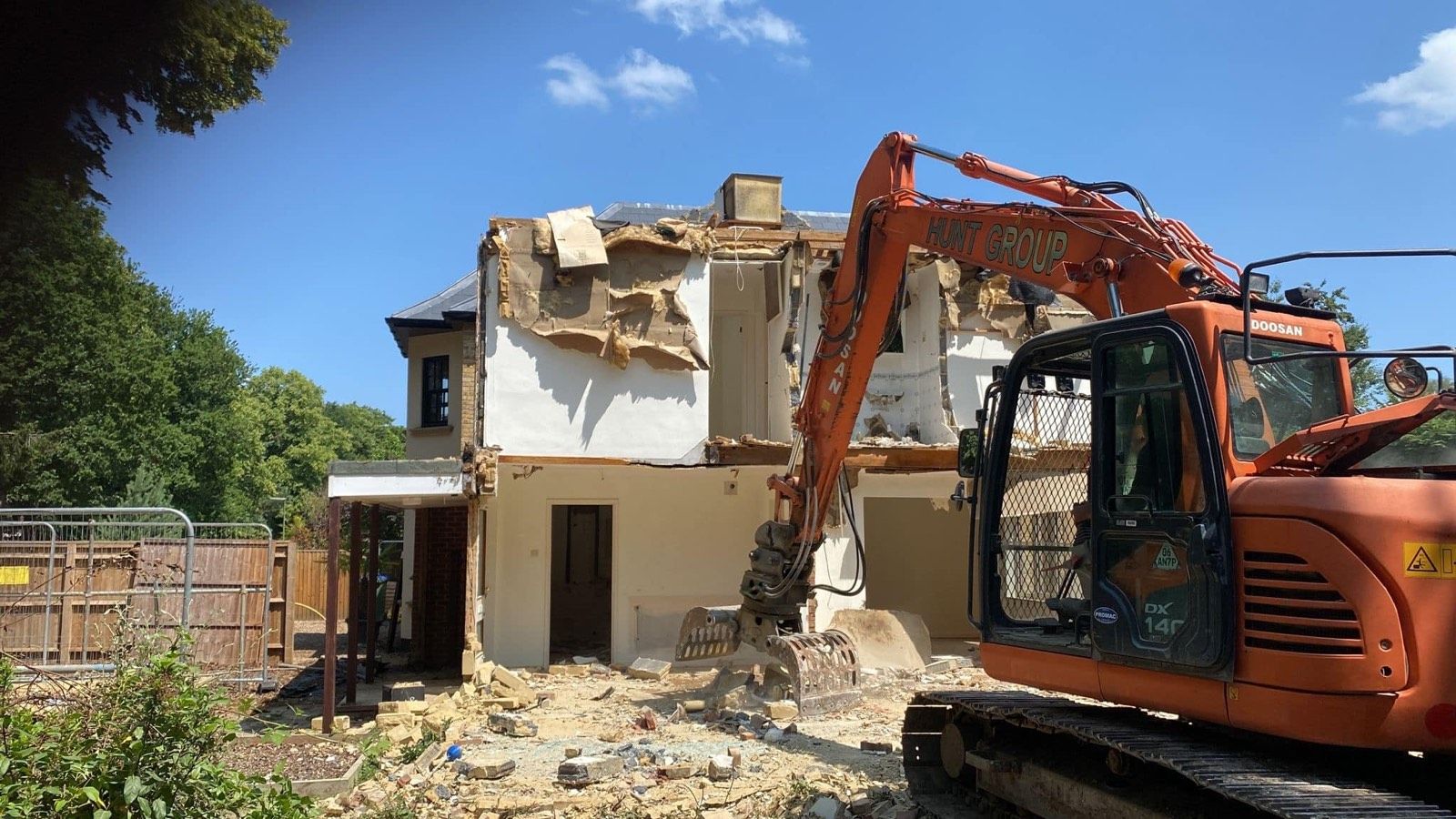
Artex and AIB are not the same risk
Artex and AIB are treated very differently, and the difference shapes how a Sunbury job runs from start to finish. Textured artex normally holds a low percentage of asbestos locked into a hard set coating, so it sits at the lower-risk end and the work is frequently non-licensed. As long as it is not being sanded, scraped or drilled, an intact artex ceiling is not throwing fibres into the room. AIB is the opposite kind of material. It is a softer, more friable board that breaks up and releases fibres far more readily when it is cut, snapped or even knocked hard, which is why its removal is licensed work governed by stricter rules.
Because the two can look similar on a ceiling but behave nothing alike, the order of events is fixed and never reversed. A small piece goes off for testing first, and the result sets everything that follows. A standard AIB sheet was manufactured in set sizes, frequently around 1220mm by 2440mm, which is close to three square metres of board in a single sheet. A boarded ceiling in one of the converted flats can therefore hold several sheets and a sizeable surface area of asbestos material above your head. Knowing exactly what the ceiling is, and how much of it there is, decides whether the job is a short controlled removal or a full licensed strip with formal notice given to the HSE before a single board comes down. It also sets the cost and the time on site, which is why the sample result is the thing every Sunbury ceiling job turns on.
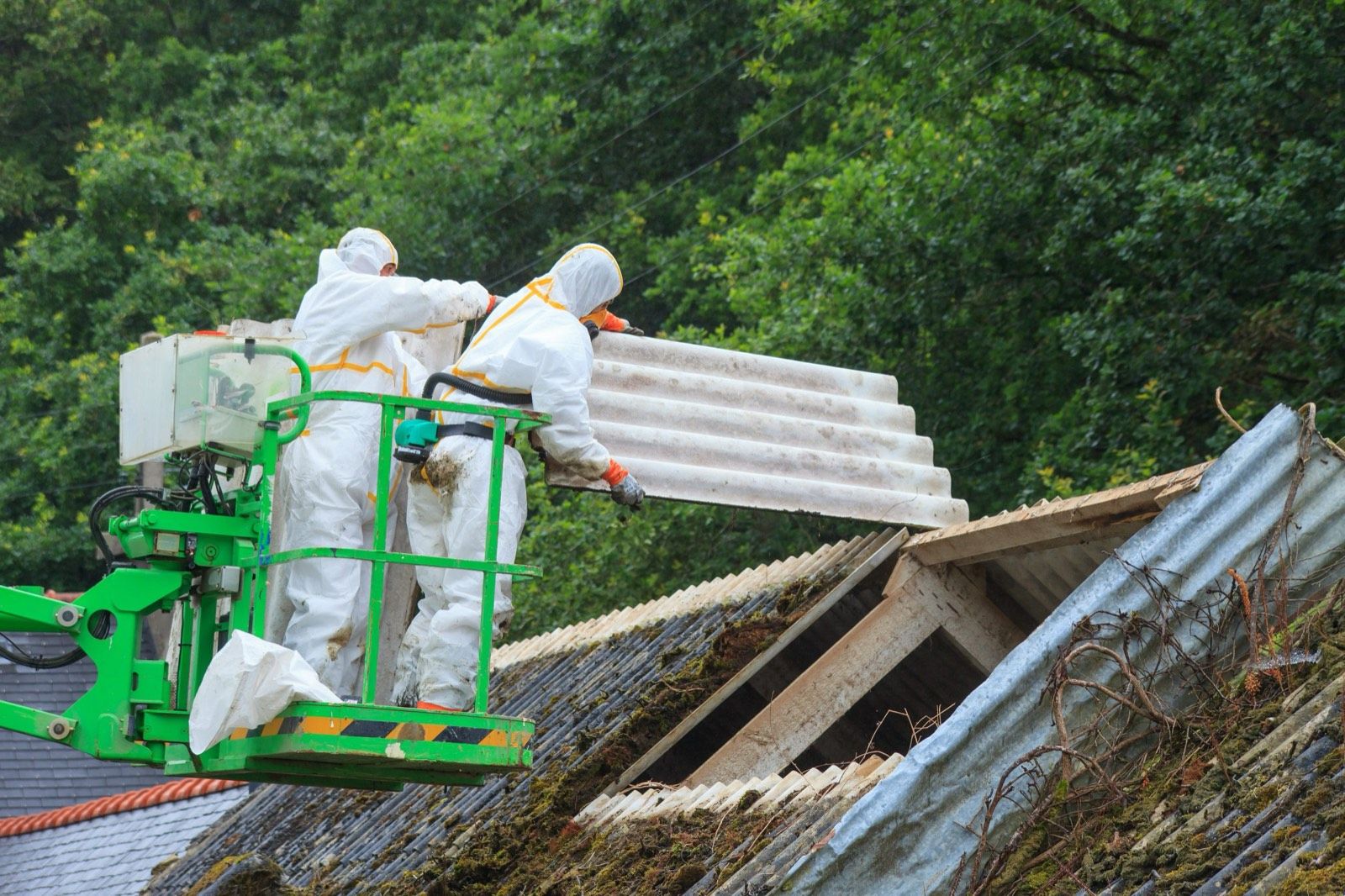
Removing a ceiling in an occupied home
Most Sunbury ceiling jobs happen in houses and flats that people are still living in, so the room is turned into a sealed work area rather than left open like a building site. Doorways, vents and any gaps are sealed with sheeting and tape, floors and any fixed furniture are covered, and a commercial-grade air filtration unit runs the whole time to keep air drawing through filters instead of drifting out into the hallway. The aim is simple. Whatever comes off the ceiling stays inside that one room and ends up in the filters and the waste bags, not in the rest of the home.
For licensed AIB work the controls step up again. The room becomes a full negative-pressure enclosure, with the inside air changed over and over so that the air inside is always being pulled towards the extraction rather than escaping. A common standard for that kind of enclosure is around ten air changes every hour, enough that any fibre released during the strip is carried straight into the filtration. The board is taken down in whole sheets where it can be, kept damp and bagged as it comes away, then sent on to a licensed disposal facility rather than a normal skip on the drive. Working from inside the enclosure also keeps the landing, the stairs and the neighbouring flats clear of any disturbance while the ceiling comes down.
When the material is out, the air itself is the proof that the room is clean. A reassurance air test measures the fibre count, and the published clearance figure is 0.01 fibres per millilitre of air, the level a room has to reach before anyone moves back in. For higher-risk licensed jobs that air test forms part of a four-stage clearance carried out by an independent analyst, someone separate from the team that did the removal. The samples taken along the way go to a UKAS-accredited laboratory, with results back in a few working days.

Booking ceiling work in Sunbury
Clearaway is based in Chessington, KT9, a short run from Sunbury through this corner of Surrey, and the owner Graham runs the jobs himself rather than sending out a changing crew. That counts for a lot with ceiling work, where the line between a quick artex job and a licensed AIB removal is read on the day by someone who has handled both many times over. A homeowner standing in a hallway cannot make that call, and they should not have to.
The sensible first step is almost always the sample. The UK banned asbestos in 1999, and most Sunbury homes were built or last reworked well before that, so a textured ceiling or a boarded airing cupboard from that era is worth checking before any renovation disturbs it. Pulling down a ceiling to open up a loft or reworking a kitchen below a suspect board are exactly the moments fibres get released, and a test booked early settles the question first. If the result comes back as licensed material, the law requires 14 days notice to the HSE before the work begins, so a sample taken in good time keeps a loft conversion or a kitchen refit moving instead of stalling it for a fortnight.
Clearaway works under Spectra licence 142305706 and has spent more than seven years on asbestos jobs across this part of Surrey. To get a Sunbury ceiling sampled or removed, call 0800 024 6168.

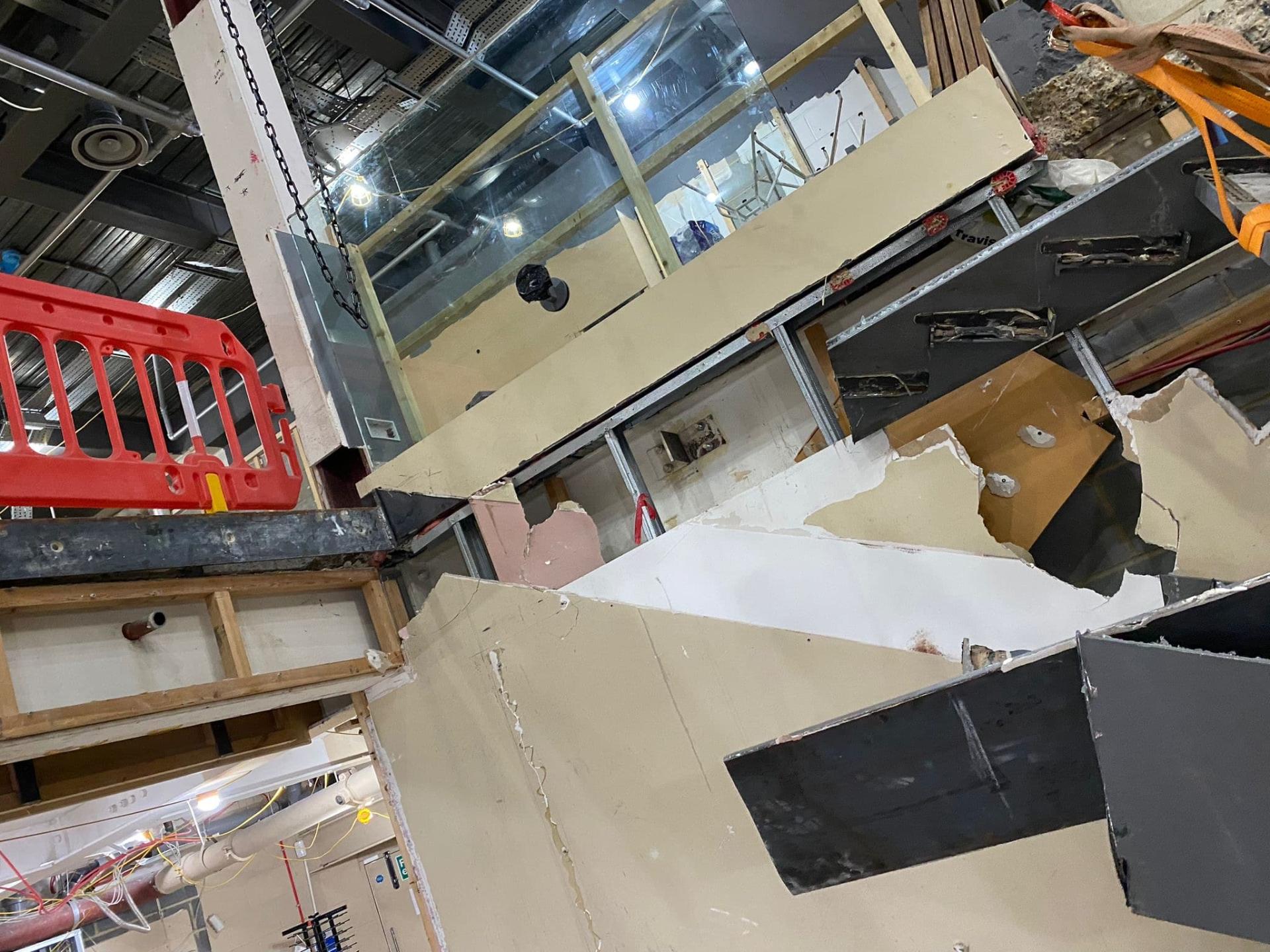
Commercial Building Strip-Out, Kensington
Kensington, South London · Strip-Out
View this project"I used Clearaway Asbestos recently for an asbestos garage removal in my home. The staff were really friendly and professional and put me at ease the whole time they were working. I would recommend Clearaway Asbestos to anyone who needs asbestos removal services!"
Our Removal Process
From first call to final certificate, every job follows the same clear four-step process.
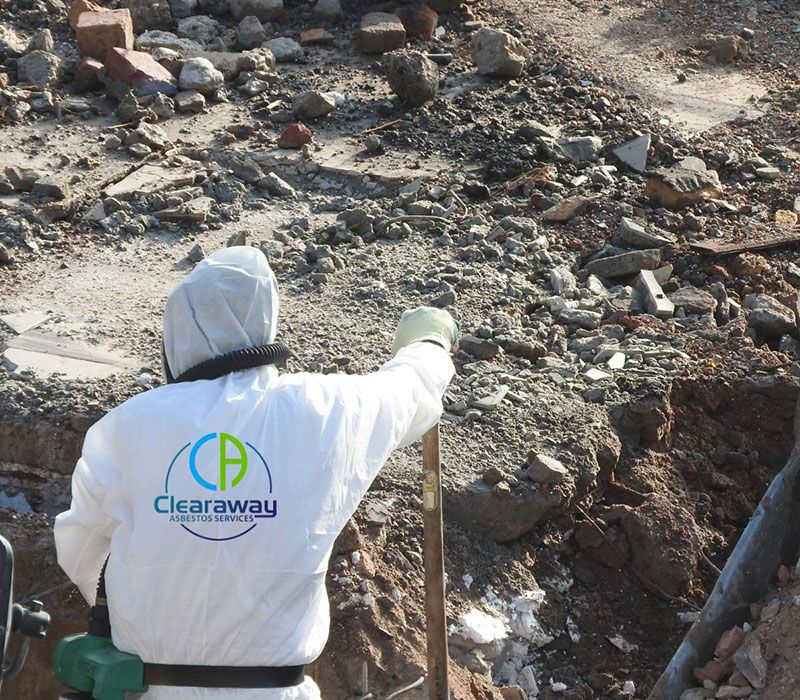
Survey
We inspect the property and confirm the material. Sampling available if required.
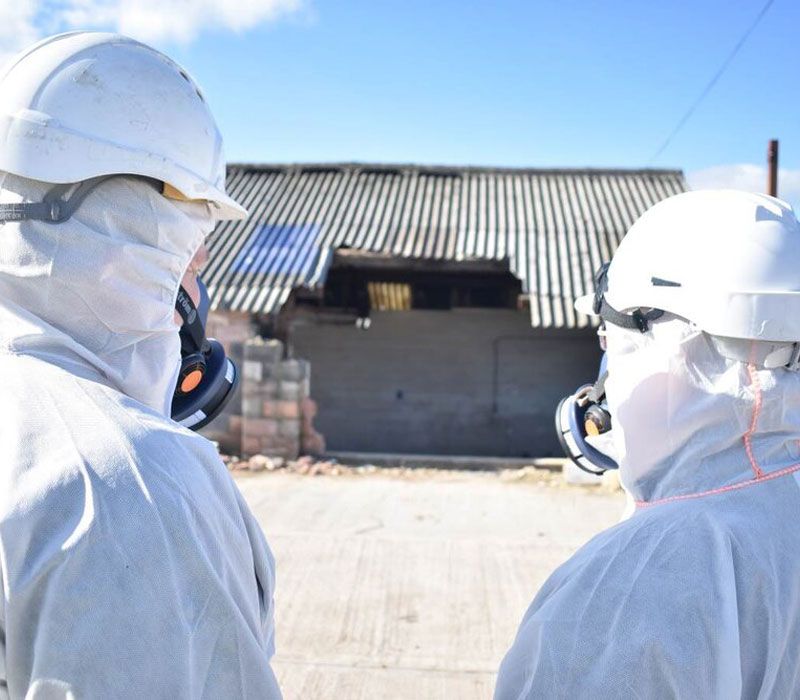
Quote
Fixed written price covering removal, disposal and any replacement work.
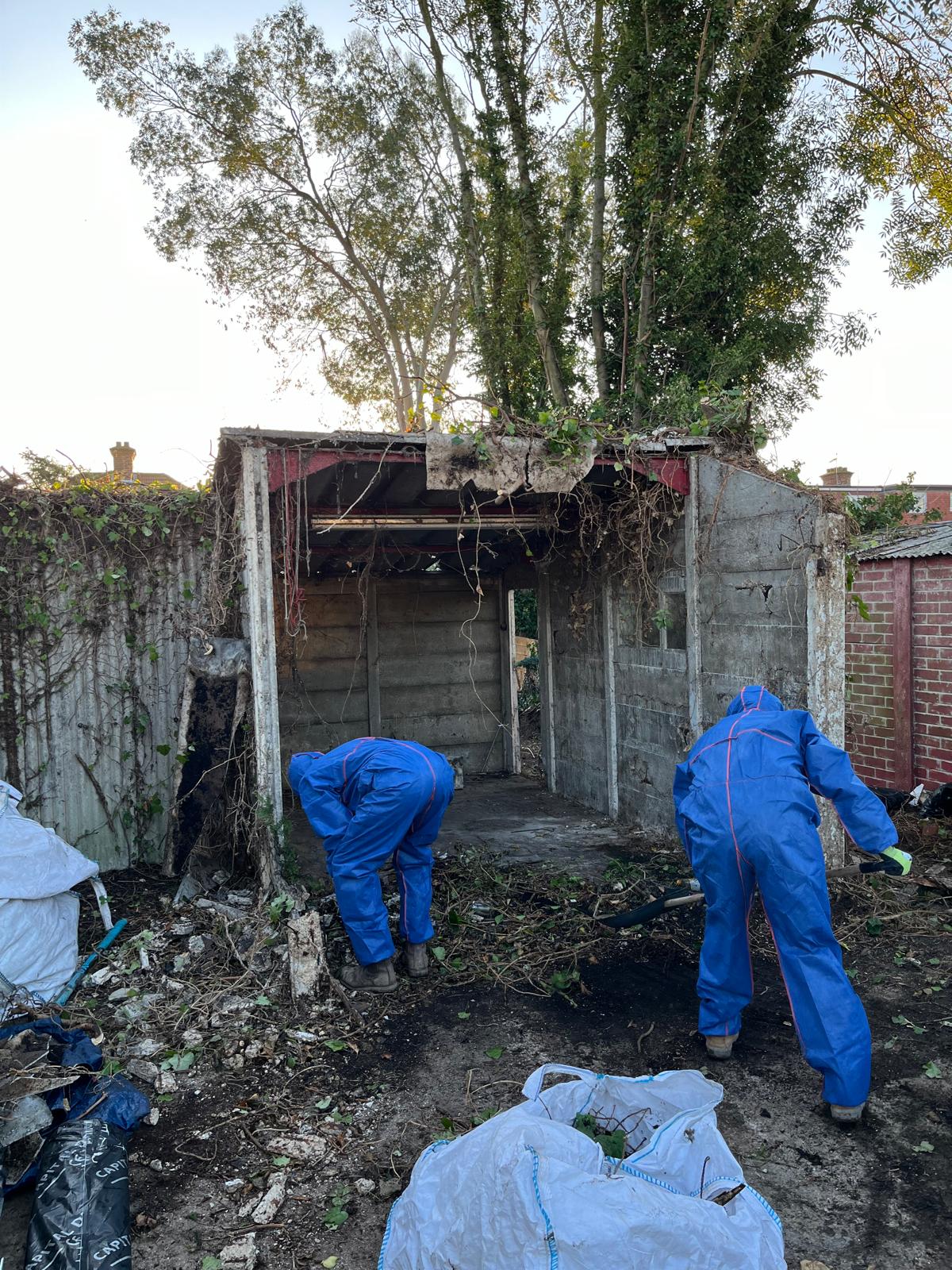
Removal
Material is removed safely, double-wrapped and taken to a licensed disposal facility.
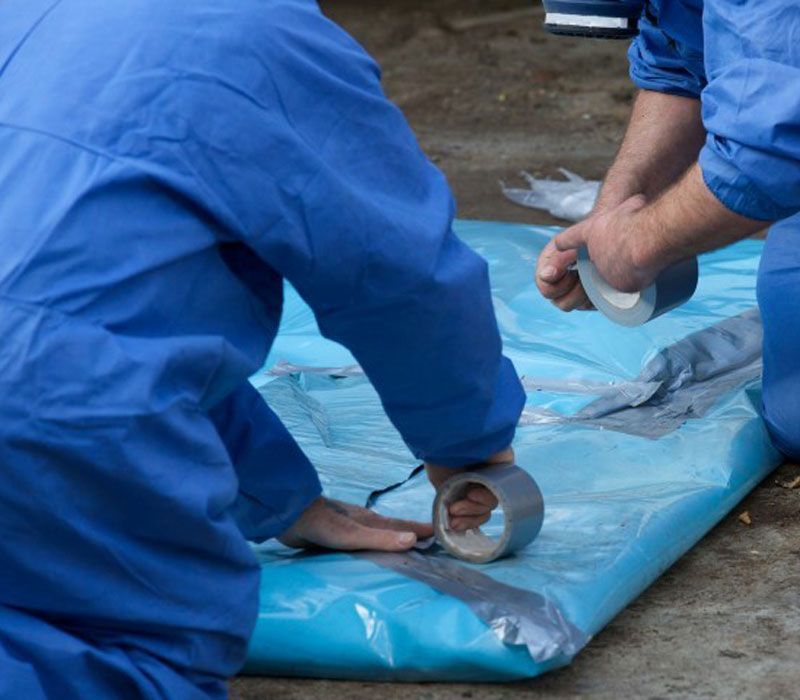
Certificate
You receive a waste consignment note and disposal certificate confirming legal handling.
Frequently Asked Questions
Why Choose Clearaway
Specialist Crew
Asbestos work is all we do, every day, across the South East.
Fully Licensed
Licensed asbestos removal contractor (Licence No. 142305706). Full public liability insurance on every job.
Local & Fast
Surrey-based. Most domestic jobs are booked in and finished within a week.
Our Own Team
We never subcontract. The people who quote your job are the people who do it.
Get in Touch
Send a few details about your project and we will come back the same working day with a fixed price. We cover Surrey, London and the South East, including Esher, Cobham, Kingston, Richmond, Epsom, Guildford, Woking and Croydon.