Asbestos Ceiling Removal in Leatherhead
Asbestos ceiling removal for Leatherhead homes and flats, from textured artex to insulating board around boilers and airing cupboards. We seal the room, filter the air and test it clear before anyone moves back in, with the paperwork to match.
Look Up in a Leatherhead Front Room
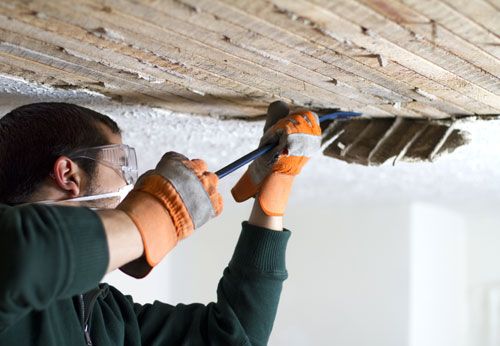
Most of what worries people about asbestos sits outside, on a garage roof or a shed. The Leatherhead jobs that catch homeowners out are usually overhead and indoors. A swirled or stippled ceiling in a Fetcham semi, a flat board lining the airing cupboard, a panel boxing in the old boiler near the High Street. These are the materials that came as standard in the interwar and postwar housing across the KT22 and KT23 postcodes, and they sat untouched until a redecoration or a loft conversion brought somebody up close to them.
The two you meet most are textured coatings and asbestos insulating board. Artex and similar finishes went on countless ceilings between the 1960s and the 1980s, a quick way to hide an uneven surface and skip a skim of plaster. Plenty of those ceilings have since been painted over two or three times, which hides them further but does nothing to change what is underneath. Insulating board, or AIB, turns up as ceiling panels, around heat sources and inside cupboards because it resisted fire, and it was a common choice anywhere a builder wanted a fire-resistant lining. Both predate the 1999 ban, and in Leatherhead's older stock near the Mole and its bigger estates out towards Ashtead and Bookham they are still in plenty of homes.
Left alone, a sound ceiling is no threat to anybody. The trouble starts when it is scraped, sanded, drilled or pulled down, because that is when the fibres come loose into the air of a room people live and sleep in. Those fibres are the danger, not the ceiling itself. Breathed in, they are linked to asbestosis, lung cancer and mesothelioma, illnesses that can take thirty or forty years to show. That long delay is exactly why a quiet ceiling gets treated so lightly and disturbed without a second thought, and why doing it the right way matters.
Artex and Insulating Board Are Not the Same Risk
It matters which one you have, because they are handled very differently. Textured coatings usually hold their asbestos in a hard matrix, so the fibre content is low and the material is harder to disturb. A lot of artex removal is non-licensed work, though it is still done under controls, kept wet and never taken off with a dry sander or scraped back into a cloud of dust. Asbestos insulating board is the higher-risk material. It is softer, more friable and releases fibres far more readily, so work on AIB is licensed and held to the strict standard, with the room sealed and the air monitored throughout.
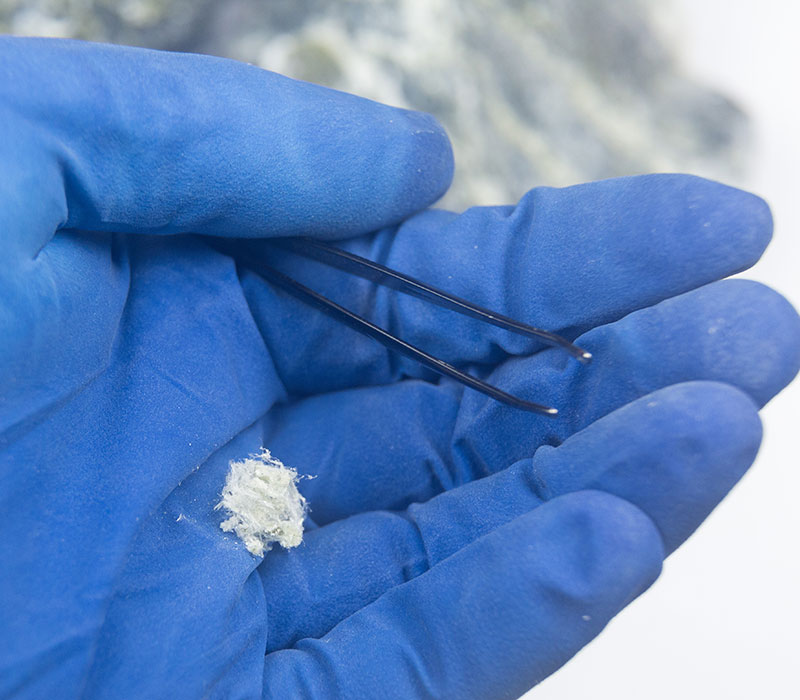
The problem is that you cannot tell the two apart by looking. A textured ceiling and an AIB panel can sit in the same Leatherhead house, sometimes in adjoining rooms, and a board in an airing cupboard that has been painted to match the wall gives nothing away. Even an experienced eye can be wrong, which is why guessing is not part of how we work. We take a small sample under controlled conditions and send it to a UKAS-accredited laboratory, which tells us not only whether asbestos is present but what type it is and what condition it is in. Results come back within a few working days, and sampling first is far cheaper than treating a low-risk ceiling as though it were the worst case.
Only then do we know how the job has to run, what controls the room needs and whether the HSE has to be told in advance. We will not guess at a ceiling and we will not start removal until the lab has confirmed what is up there, because the wrong method on the wrong material is exactly how a harmless ceiling becomes a hazard for the people living under it.
Working Safely in an Occupied Home
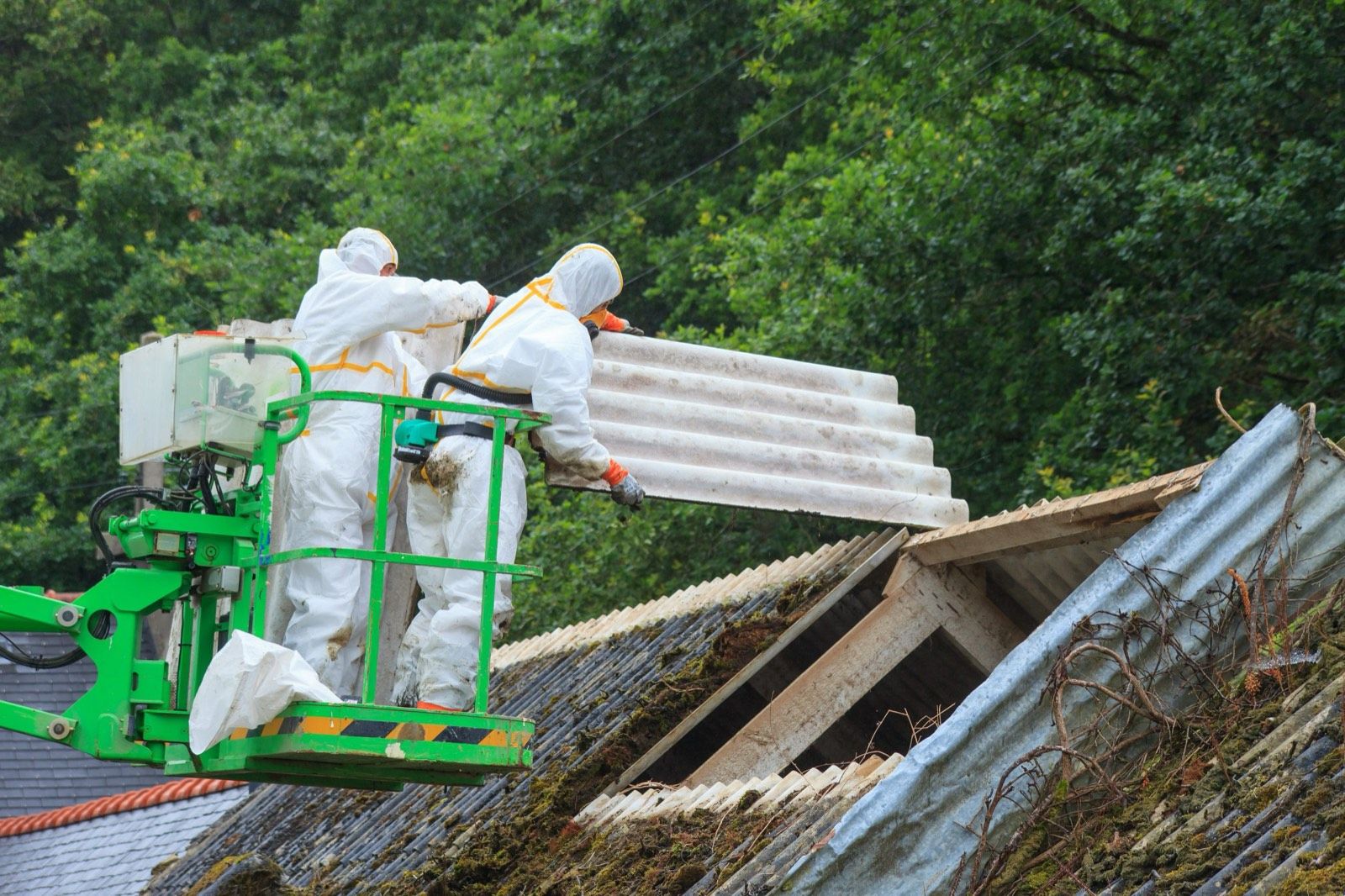
Ceilings are an indoor job, often in a house or flat that someone is still living in, so containing the work is the whole point. A garage roof comes off in the open air, but a ceiling is inside the home, with bedrooms and a kitchen close by, so we do not let fibres drift through the rest of the property. The room is sealed off, the doorways and any openings are covered over, and we run commercial-grade air filtration inside to keep any loose fibre captured rather than spreading down a hallway or up a stairwell.
For most Leatherhead flats and houses that means clearing one room at a time, with the working area shut away from kitchens, bedrooms and the route people use to come and go. In a flat where the boiler cupboard or a hall ceiling is involved, the same approach keeps the rest of the home usable while we work. The material is taken down carefully and kept damp so it holds its dust instead of breaking up dry, bagged as it comes off, and removed to a licensed facility rather than piled up in the front garden or fed into a household bin. Where the ceiling is the higher-risk insulating board, the controls step up to match, with tighter enclosure and air monitoring as the work goes on.
The step that matters most comes at the end. Before anyone moves back into the room we carry out air testing, so the all-clear is measured rather than assumed. You are not taking our word that the air is safe to breathe, you are getting a result that says so, and only then is the room handed back for normal use.

Licensed AIB Work and the Paperwork
When the ceiling turns out to be asbestos insulating board, the job moves onto the licensed footing the law requires. We give the HSE the 14 days' notice in advance, work under full enclosure with air monitoring running throughout, and finish with four-stage clearance testing carried out by an independent analyst before the space is signed off and handed back. That independent check is the difference between a tidy-looking room and one that is genuinely proven clear.
Every ceiling job, artex or AIB, ends with the records to back it up. You get a waste consignment note showing the material went to a licensed facility, along with the sampling results and the air-test certificate where the work called for them. It is the proof the ceiling was removed and disposed of properly, and it is worth keeping if you ever come to sell, because a buyer's solicitor may well ask.
Clearaway Asbestos has worked across Leatherhead and the wider Surrey KT postcodes for more than seven years, and we hold Spectra licence number 142305706. To arrange a free site visit for a ceiling anywhere in the town, call the team on 0800 024 6168 and we will book a date that suits you.

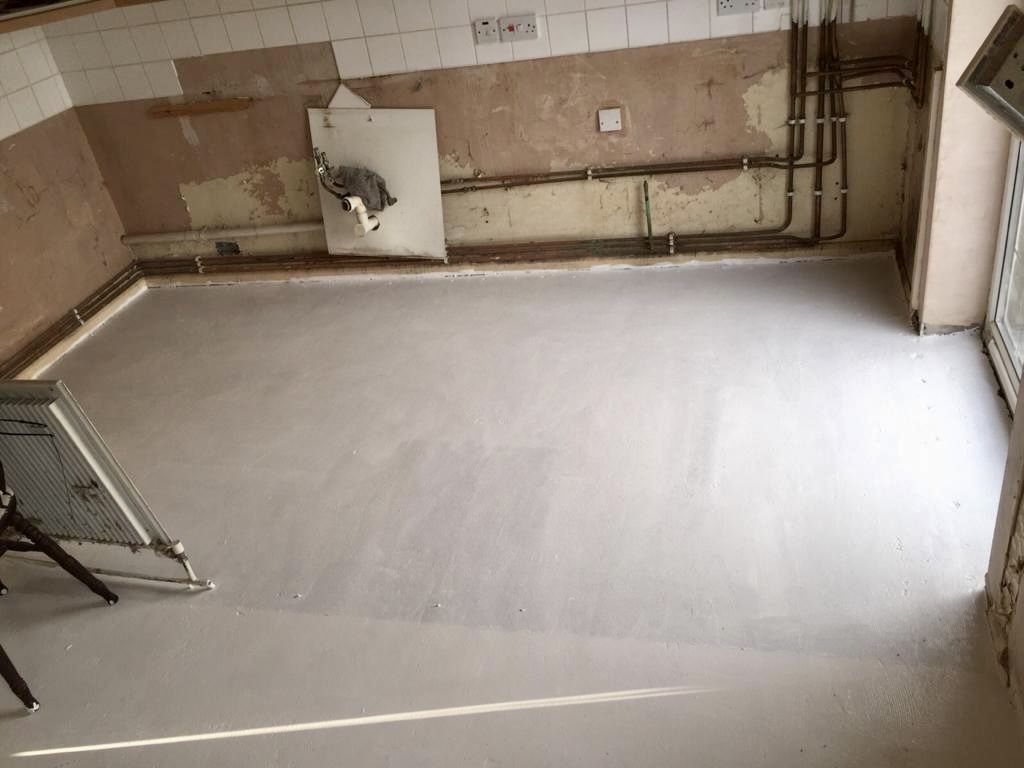
Asbestos Vinyl Floor Tile Removal & Bitumen Sealing, Surbiton
Surbiton, Surrey · Floor Tile Removal
View this project"Graham and his team done an excellent job of removing and replacing my asbestos garage roof and I wouldn't hesitate in recommending them"
Our Removal Process
From first call to final certificate, every job follows the same clear four-step process.
Survey
We inspect the property and confirm the material. Sampling available if required.
Quote
Fixed written price covering removal, disposal and any replacement work.
Removal
Material is removed safely, double-wrapped and taken to a licensed disposal facility.
Certificate
You receive a waste consignment note and disposal certificate confirming legal handling.
Frequently Asked Questions
Why Choose Clearaway
Specialist Crew
Asbestos work is all we do, every day, across the South East.
Fully Licensed
Licensed asbestos removal contractor (Licence No. 142305706). Full public liability insurance on every job.
Local & Fast
Surrey-based. Most domestic jobs are booked in and finished within a week.
Our Own Team
We never subcontract. The people who quote your job are the people who do it.
Get in Touch
Send a few details about your project and we will come back the same working day with a fixed price. We cover Surrey, London and the South East, including Esher, Cobham, Kingston, Richmond, Epsom, Guildford, Woking and Croydon.