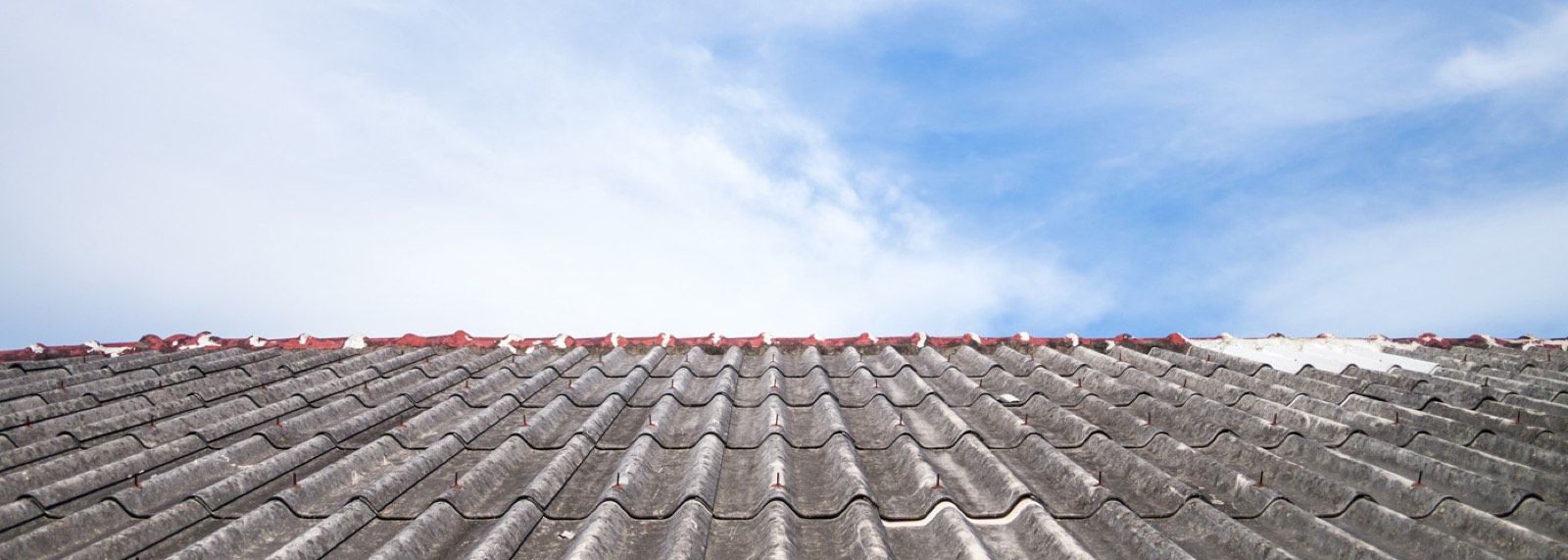
Asbestos Ceiling Removal in Epsom
Look up in an older Epsom home and the ceiling can be hiding more than a coat of paint. We remove textured artex and asbestos insulating board from lived-in houses and flats across Stamford Green, Woodcote and the Wells Estate.
What Hides In An Epsom Ceiling
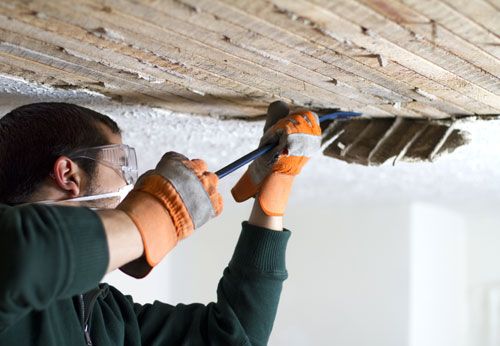
Most asbestos work in Epsom happens outdoors, on a garage roof or a shed. Ceilings are quieter, and that is exactly why they get missed. The textured swirls and stippled patterns across so many ceilings in the interwar semis around Stamford Green and the Wells Estate were applied with artex, and a good deal of that artex, on anything decorated before 2000, was mixed with asbestos to help it set and hold its shape. Look up in a hall, a landing or a back bedroom in one of those houses and there is a fair chance you are looking at it.
It is not only the ceiling surface. Asbestos insulating board, usually shortened to AIB, turns up boxed around old boilers, lining the airing cupboard and fitted as ceiling panels in halls, landings and the flats carved out of larger houses nearer the town centre. AIB looks like ordinary board once it has been painted over, which is part of the problem. People paper over it, screw shelves through it and fit downlights into it without ever knowing it is there.
While it stays painted, sound and undisturbed, none of this is doing any harm. The trouble starts the moment someone scrapes a ceiling flat, drills for a light fitting or pulls out an old boiler cupboard, because that is when the fibres are released into the air of a room people live in. A bit of casual DIY on a tired ceiling is one of the most common ways an Epsom household disturbs asbestos without meaning to.
Why You Cannot Tell Artex From AIB By Eye
Artex and asbestos insulating board sit at opposite ends of the risk scale, and you cannot place a ceiling on that scale by looking at it. Textured artex coatings are often the lower risk of the two, because the asbestos is locked into a hard coating, and removing them is frequently non-licensed work. AIB is a different beast. It holds a much higher proportion of fibre, breaks up far more easily into dust, and is licensed work handled to a stricter standard.
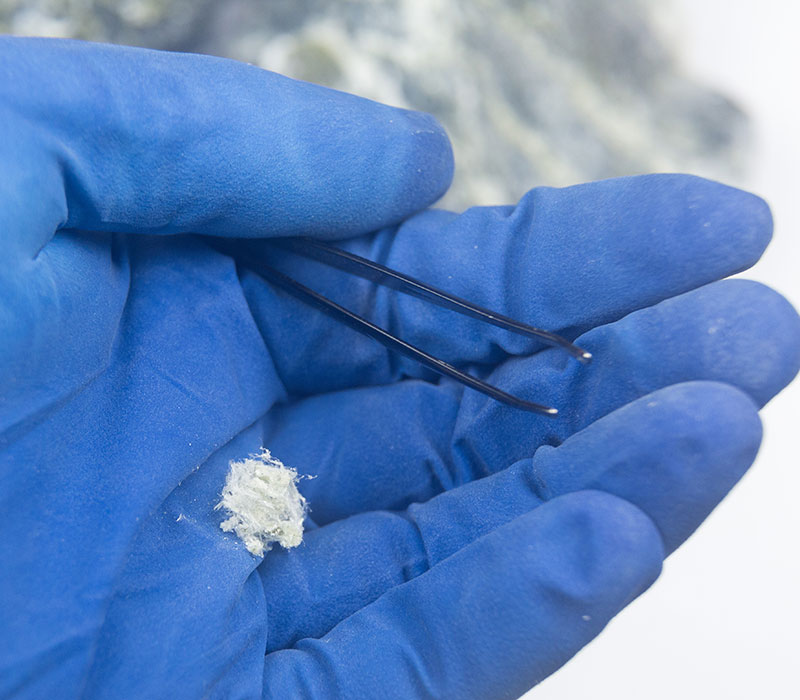
The catch is that a painted ceiling gives nothing away. A skimmed-over artex ceiling and an AIB panel can look identical from the floor, and two ceilings in the same Epsom street, fitted by the same builder in the same year, can come back from the laboratory with completely different results. So nothing is assumed and nothing is guessed. We take a small sample under controlled conditions, double-bag it and send it to a UKAS-accredited laboratory, and the result decides how the job is run.
That sampling step is what tells us whether we are looking at a straightforward artex strip or licensed work that needs HSE notice and full enclosure. It costs a little time at the front and saves a great deal of guesswork later. The same goes for the boxing around an old boiler or the panel in the airing cupboard, each suspect material is tested in its own right, because a house can hold artex on the ceiling and AIB in the cupboard at the same time. Either way, we will not start removal until the lab has told us exactly what each material is, because the wrong method on the wrong material is how a small job turns into a contaminated house.
Removing It Without Emptying The House
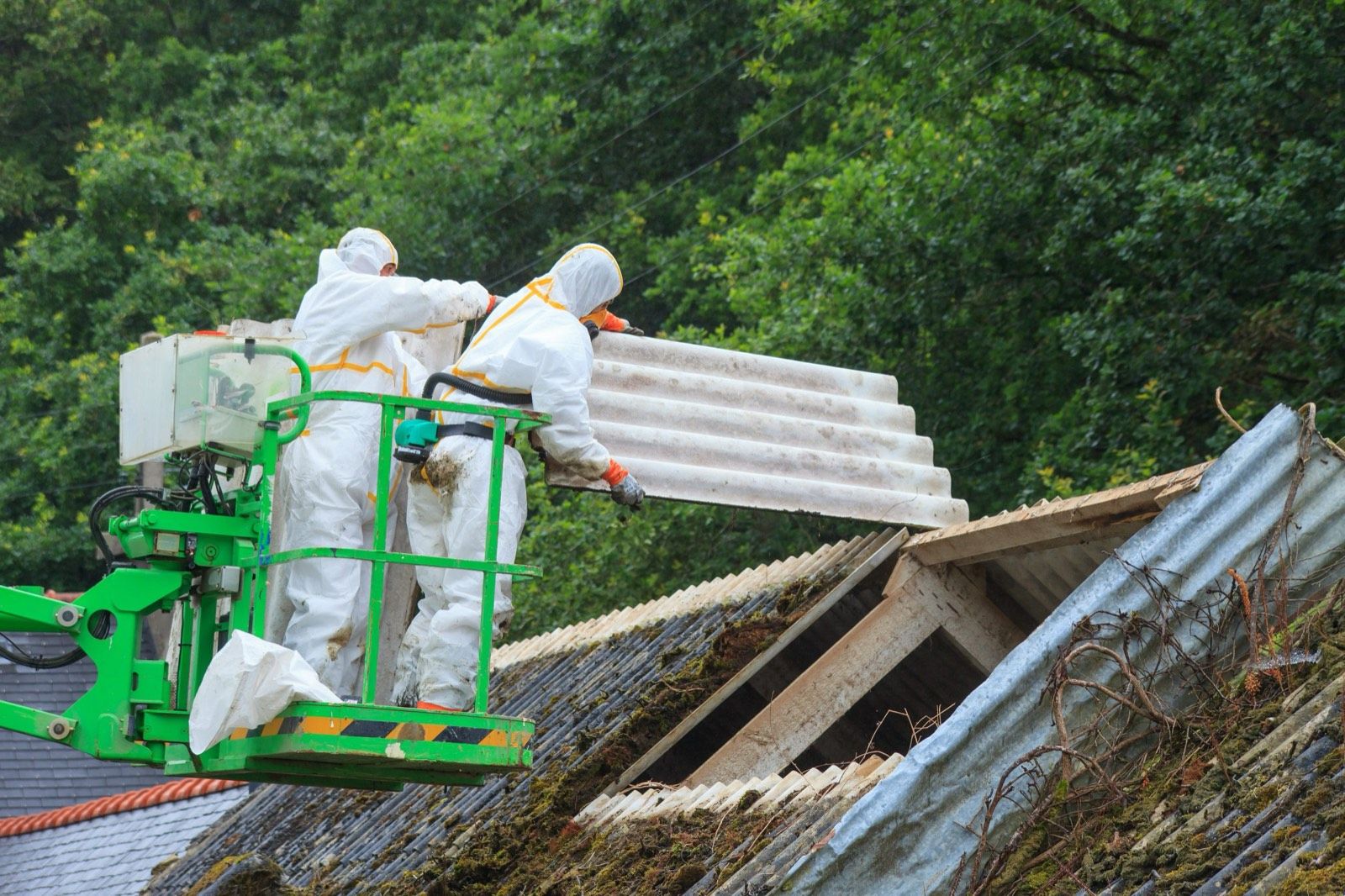
A ceiling is not a garage. The work is over your head, indoors, often in a room you are still living in, so the method is built around keeping the rest of the home clean. Before anything comes down we seal the room off from the rest of the house, tape up the doorway, cover and protect what has to stay, and run commercial-grade air filtration throughout to pull airborne fibres out of the space while the material is removed. The filtration keeps the air inside the room moving in one direction, away from the rest of the home.
With the room contained, the artex or board is taken down carefully and bagged inside the enclosure rather than carried through the house as loose debris. Wetting the surface keeps the dust down as it comes off. Once the material is out and the room has been cleaned down, the air is tested before anyone goes back in. That air clearance is the part that matters most in an occupied home, because it is the proof the room is genuinely safe to use again and not just tidy to look at.
Flats and houses in multiple occupation around the centre and out towards Ewell get the same treatment, with the shared landings and stairwells kept clear of the work so neighbours are not walking through it. Most single ceilings are dealt with in a day or two depending on size and what the lab finds. The aim is always to remove the ceiling and hand the room back, not to move a family out for a fortnight.

When The Ceiling Is The Higher-Risk Job
Where the sample comes back as asbestos insulating board, the rules tighten and we follow them to the letter. Licensed work requires fourteen days of notice to the HSE before a tool touches the ceiling, which is why a suspected AIB ceiling cannot be a same-week job and is worth flagging early if a renovation is booked in. The room is then taken down under full enclosure with air monitoring running throughout, and the job closes with four-stage clearance testing carried out by an independent analyst before the space is signed back into use.
It sounds heavy for a single ceiling, and it is meant to. AIB releases fibres readily once it is broken, far more so than a hard artex coating, and those fibres are too fine to see. Breathed in, they cause asbestosis, lung cancer and mesothelioma, often decades after the day of exposure. That long delay is the whole reason this is a licensed trade rather than a weekend job with a dust mask, and it is why a settled ceiling left alone is safer than a damaged one a homeowner has started picking at.
Whether the ceiling turns out to be a quick artex strip or a fully enclosed AIB removal, the same people see it through and the same paperwork closes it out. You are handed a waste consignment note showing the material went to a licensed facility, alongside the air-test results for the room. We hold Spectra licence number 142305706, we have spent more than seven years working across Epsom and the surrounding KT postcodes, and every job ends with the certificates that prove the air was tested clear. To arrange a free site visit, call us on 0800 024 6168.
You may also need our complete asbestos removal in Epsom service.

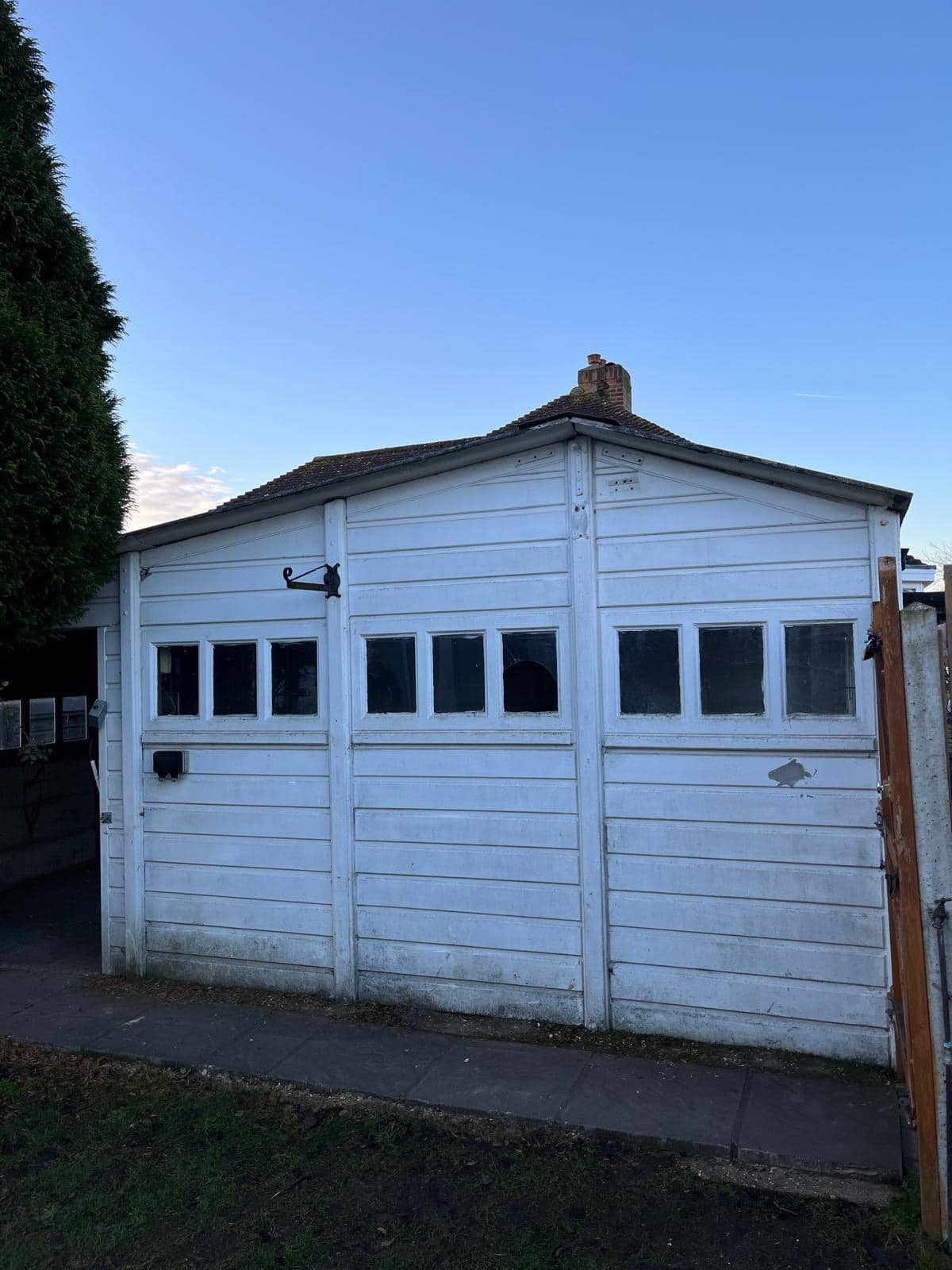
Concrete Asbestos Garage Removal, Epsom
Epsom, Surrey · Garage Removal
View this project"Graham and his guys picked up some asbestos roof sheets from my property in Chessington. Would highly recommend this company to anyone. Really good service and very professional. Thank you"
Our Removal Process
From first call to final certificate, every job follows the same clear four-step process.
Survey
We inspect the property and confirm the material. Sampling available if required.
Quote
Fixed written price covering removal, disposal and any replacement work.
Removal
Material is removed safely, double-wrapped and taken to a licensed disposal facility.
Certificate
You receive a waste consignment note and disposal certificate confirming legal handling.
Frequently Asked Questions
Why Choose Clearaway
Specialist Crew
Asbestos work is all we do, every day, across the South East.
Fully Licensed
Licensed asbestos removal contractor (Licence No. 142305706). Full public liability insurance on every job.
Local & Fast
Surrey-based. Most domestic jobs are booked in and finished within a week.
Our Own Team
We never subcontract. The people who quote your job are the people who do it.
Get in Touch
Send a few details about your project and we will come back the same working day with a fixed price. We cover Surrey, London and the South East, including Esher, Cobham, Kingston, Richmond, Epsom, Guildford, Woking and Croydon.