Asbestos Clearance in East Grinstead
East Grinstead sits up on the High Weald in RH19, where a medieval High Street gives way to street after street of Victorian, interwar and postwar housing. That later building is where the asbestos hides, and where Clearaway works.
An old town wrapped in newer houses
East Grinstead grew up along one long High Street, and that street holds one of the best surviving runs of medieval timber-framed buildings in the country, along with the Sackville College almshouses. Those genuinely old buildings predate asbestos by centuries. The frames went up when oak and lime plaster were all anyone had to work with. What surrounds them is a different story.
Walk out from the centre in any direction and the dates change fast. Victorian and Edwardian houses give way to interwar semis, then to the postwar estates that fill out RH19 and run on towards Felbridge, Forest Row and Ashurst Wood. Most of that stock was built or repaired during the decades when asbestos was a standard material on a British site. It went into roof sheets, ceiling coatings, boiler cupboards, floor tiles and the boards behind a fascia, and a fair amount of it is still in place. The material was only fully banned in the UK in 1999, so a house finished any time in the previous fifty years can hold it. A single street can even run from a Victorian villa at one end to a 1960s infill at the other, each era leaving its own version behind.
The town sits near the meeting point of Surrey, West Sussex, East Sussex and Kent, the three-counties corner. Clearaway is based in Chessington, so for East Grinstead the team travels south into Sussex. The owner, Graham, runs the jobs, and the work spans everyday domestic call-outs through to the larger residential and commercial sites the town also holds.
Where the asbestos actually sits
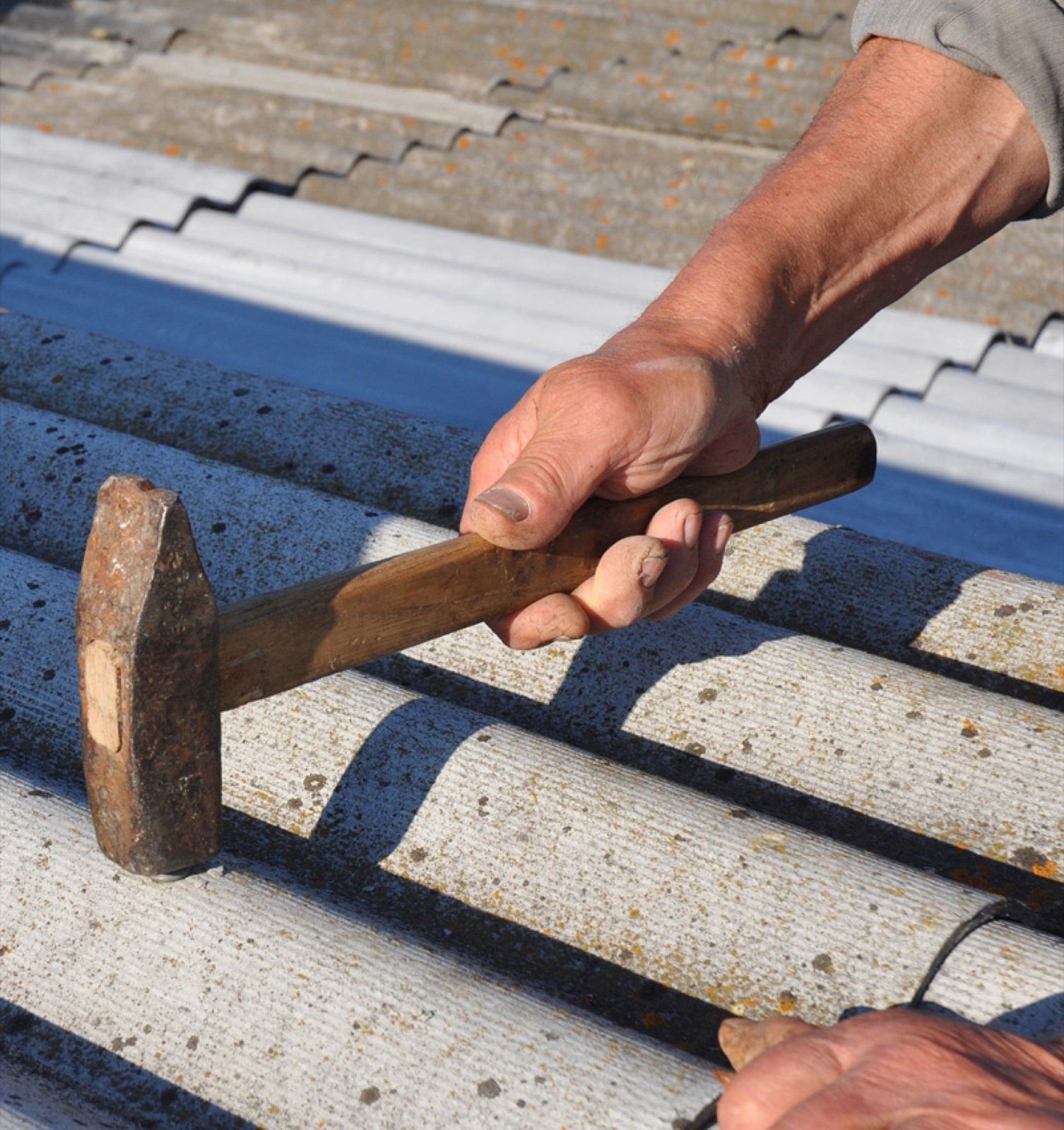
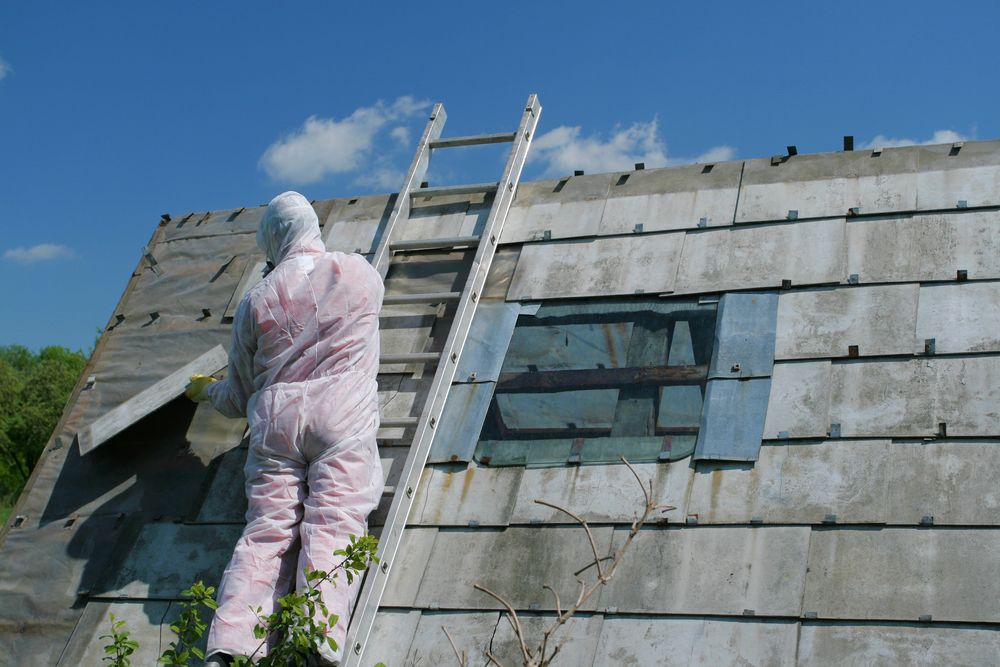
Across East Grinstead the same materials turn up again and again, and knowing where to look saves a lot of guesswork. The corrugated cement garage and shed roof is the most common find, fitted between the 1950s and the 1980s and weathered ever since by decades of rain up on the Weald. Inside the house, textured artex coats ceilings and in places walls, and asbestos insulating board, AIB, sits around boilers and in airing cupboards. Under old lino or carpet you find vinyl and thermoplastic floor tiles, with a black bitumen adhesive bedded into the screed beneath them.
There is more besides. Pipe lagging shows up in the older houses and in outbuildings that have not been touched in years, wrapped around heating runs in cellars and lofts. On the interwar and postwar semis, cement was used for soffits, gutters and fascia boards, so the asbestos can be up at roof level as well as down in the floor. A two-car garage roof might carry a dozen or more corrugated sheets, while a ceiling coating covers every square metre of a room. None of this can be identified by eye. A grey cement sheet and a harmless modern board can look near enough identical from the ground, and the difference matters because it sets how the material has to be handled.
That uncertainty is the reason every Clearaway job starts the same way. A small sample of the suspect material is taken under controlled conditions and sent to a UKAS-accredited laboratory, with results back in a few working days. Until the lab confirms what a material is, nothing is disturbed. It is a cheaper, calmer first step than ripping into something and finding out the hard way.
How a clearance runs in an East Grinstead home
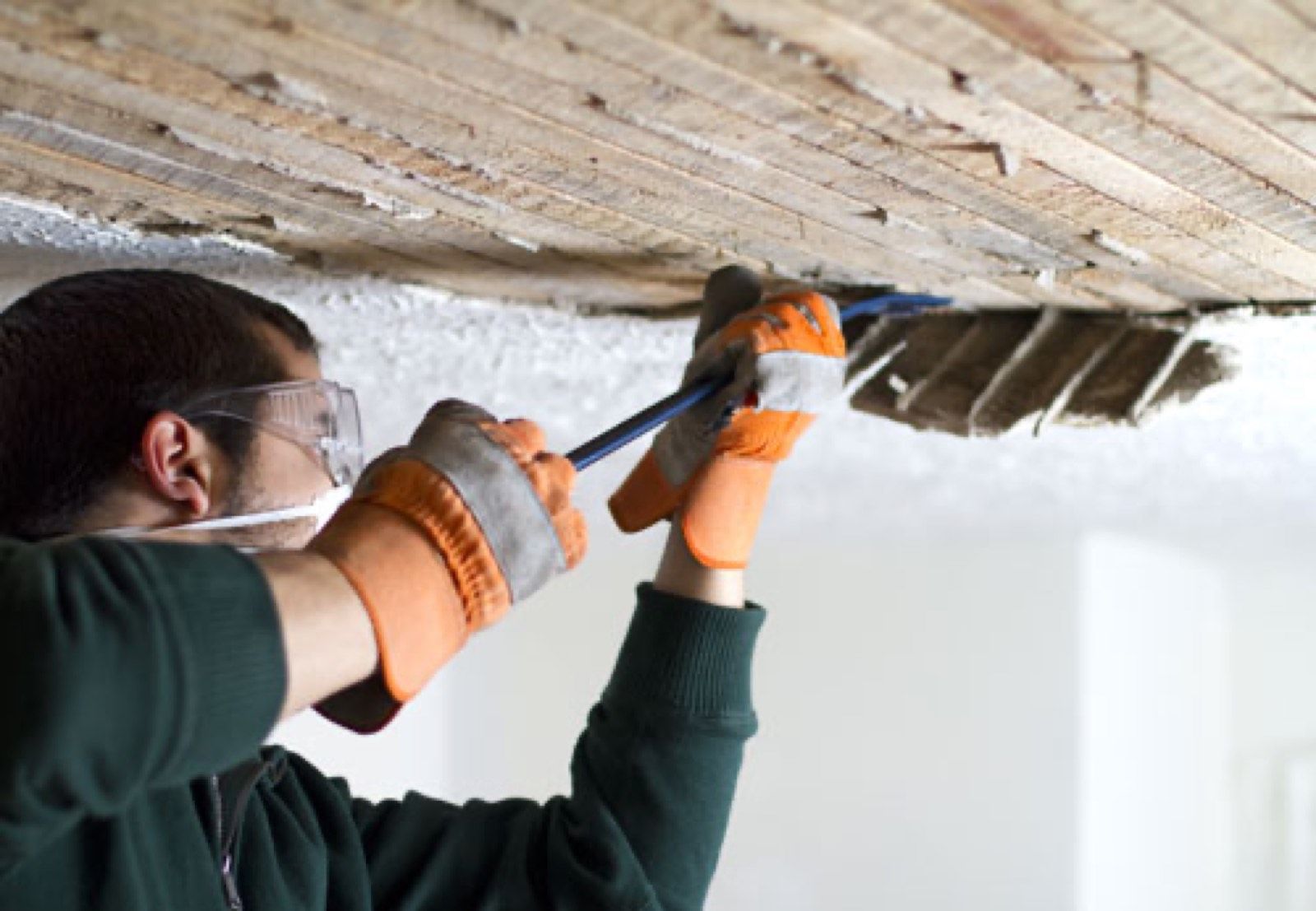
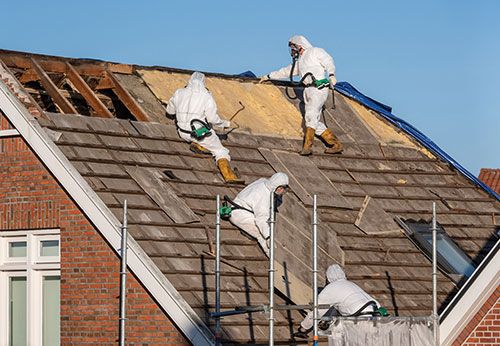
Once the lab results are in, the plan is straightforward. Most domestic asbestos in the town is the lower-risk cement and bonded material, and that is taken out whole rather than broken up. Roof sheets come down in one piece, floor tiles are lifted with their adhesive contained, and everything is wrapped, sealed and carried away to a licensed disposal facility with the paperwork that proves where it went. On a normal house there is no skip sitting on the drive, so the road and the front garden stay clear, and a single domestic job is finished in a day.
Higher-risk material is treated to a stricter standard, and the law sets out exactly how. For licensed work such as AIB or pipe lagging, the Health and Safety Executive is given 14 days notice before anyone starts. The work area is put under full enclosure, the air is filtered, and once the strip-out is done an independent analyst carries out four-stage clearance testing. Nobody moves back in until that analyst signs the space off as clean.
The larger sites around East Grinstead, the bigger houses and the commercial buildings, follow the same principles on a longer timeline. The volume is higher and the access is harder, but the order of work holds: test, plan, remove whole, dispose under licence, and prove it. Surveys, sampling and full strip-outs are all part of the same service, so a single property can be assessed, sampled and cleared without handing it between firms, and the same crew that took the sample is the crew that does the removal.
Knowing what you are dealing with first
Plenty of people in RH19 only think about asbestos when a project forces the question. A kitchen refit lifts old tiles and finds dark adhesive underneath. A garage roof finally cracks after fifty winters on the Weald. A house comes up for sale and a survey flags a suspect material. In each case the right move is to confirm what the material is before touching it, not after.
That is where a clearance differs from a survey, and both have their place. A survey inspects the whole property and produces a written report you can hand to a builder, a solicitor or a buyer. Sampling tests one specific item to settle a single question, and the lab results come back in a few working days. A clearance is the removal itself, done once the testing tells you what is there. The three steps fit together, and a job can move from one to the next without starting over each time. For an older East Grinstead house facing renovation, a survey first can answer questions across the roof, the ceilings and the floors in one visit, before a single tile or sheet is touched.
Good removal work mostly goes unseen, which is the point. It leaves a clean roof, a clear floor and a building safe to live in or sell, with the records to back it. Clearaway holds Spectra licence number 142305706 and has worked across this part of Surrey and Sussex for more than seven years, on small domestic jobs and on the larger sites East Grinstead throws up. To talk through a property in the town and book a sample or a clearance, call 0800 024 6168.
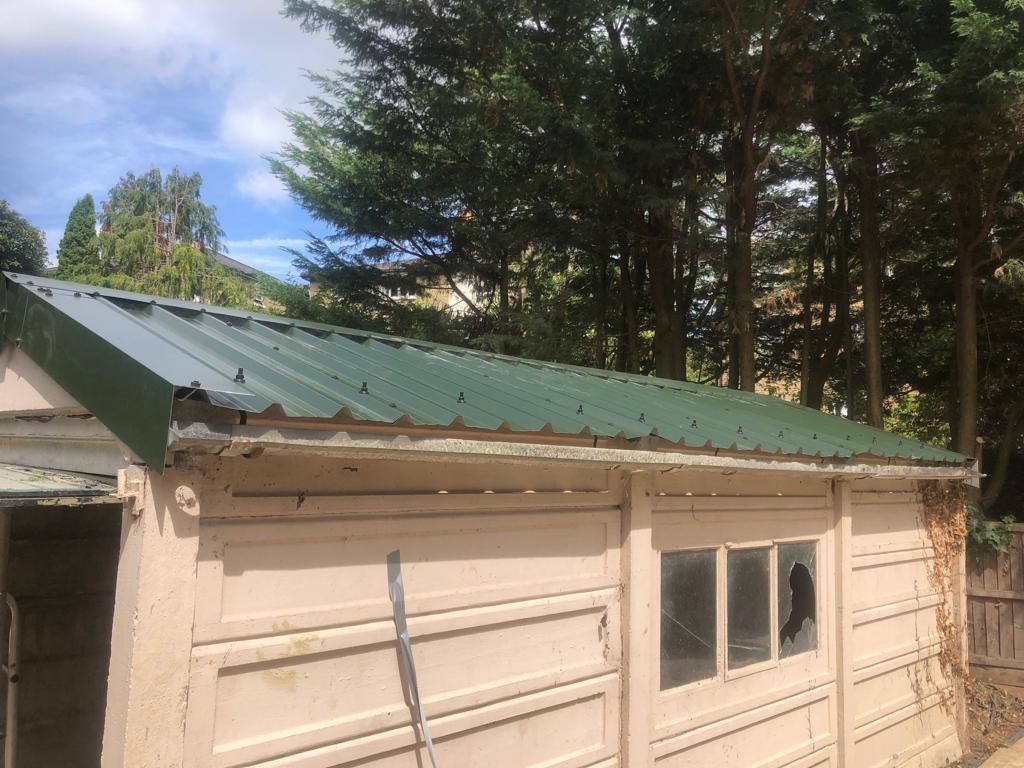
Asbestos Roof Removal and Steel Box Profile Renewal, Putney
Putney, South West London · Roof Removal & Renewal
View this project"Graham and his team done an excellent job of removing and replacing my asbestos garage roof and I wouldn't hesitate in recommending them"
Our Removal Process
From first call to final certificate, every job follows the same clear four-step process.
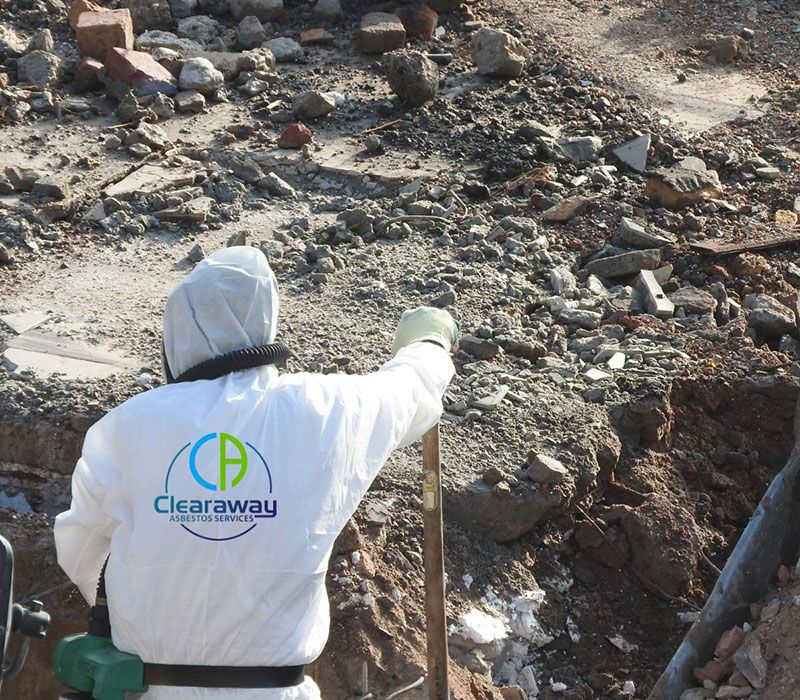
Survey
We inspect the property and confirm the material. Sampling available if required.
Quote
Fixed written price covering removal, disposal and any replacement work.
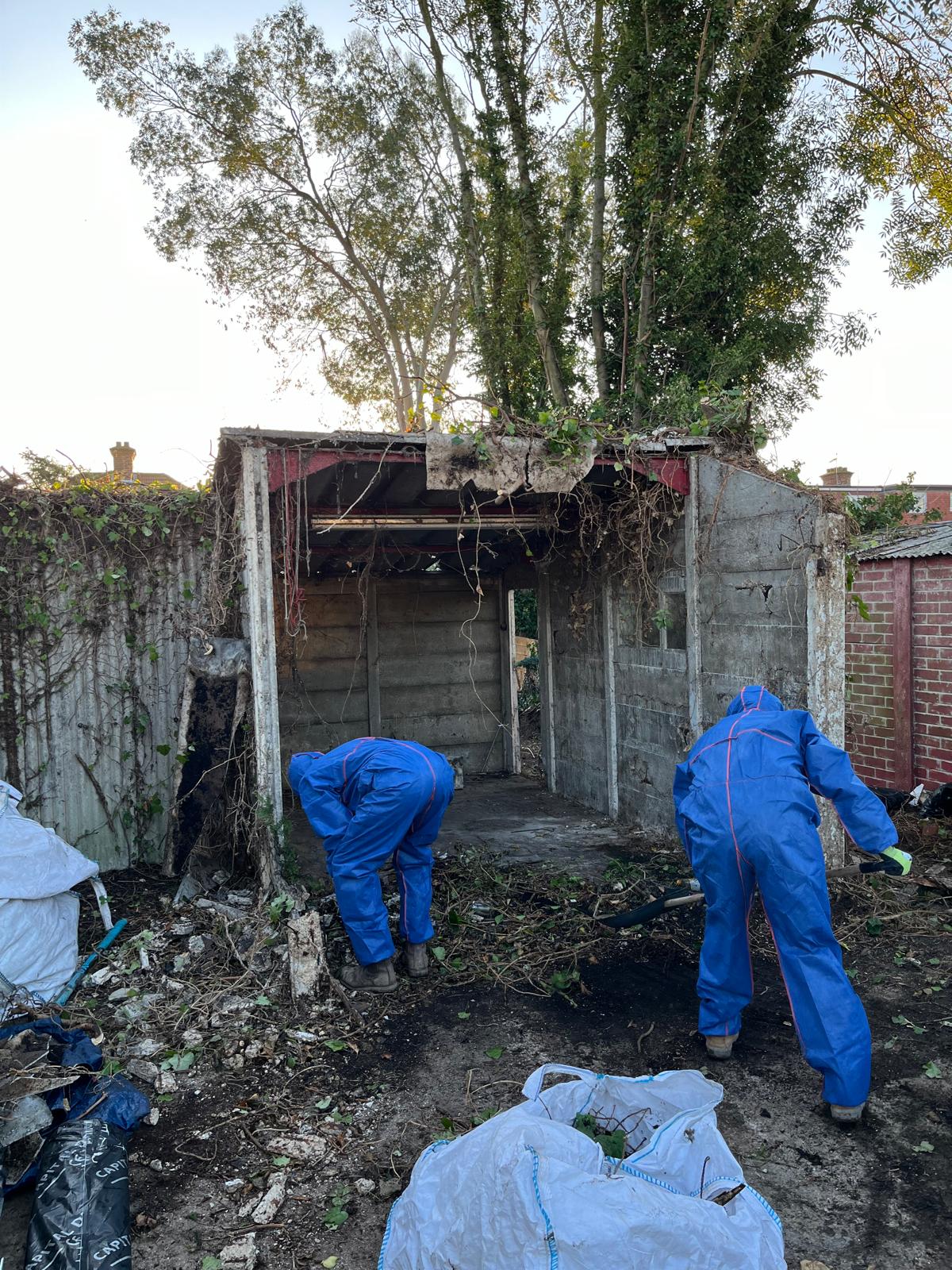
Removal
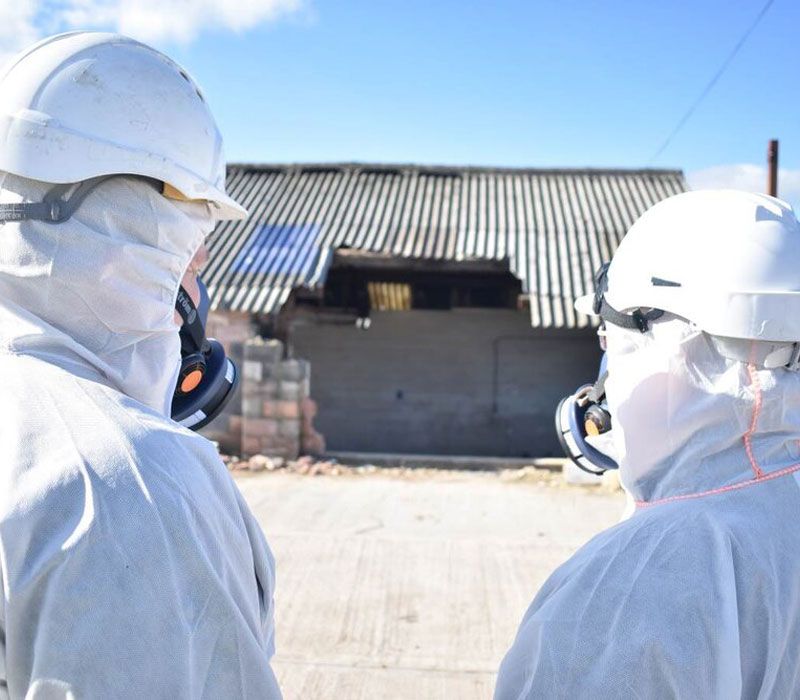
Material is removed safely, double-wrapped and taken to a licensed disposal facility.
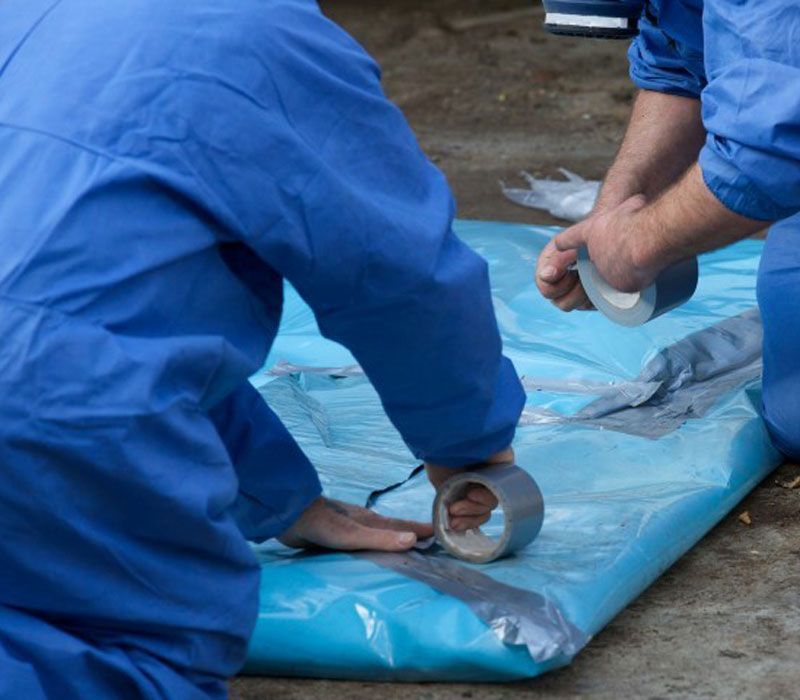
Certificate
You receive a waste consignment note and disposal certificate confirming legal handling.
Frequently Asked Questions
Why Choose Clearaway
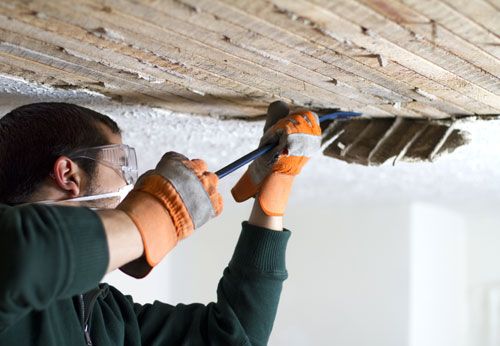
Specialist Crew
Asbestos work is all we do, every day, across the South East.
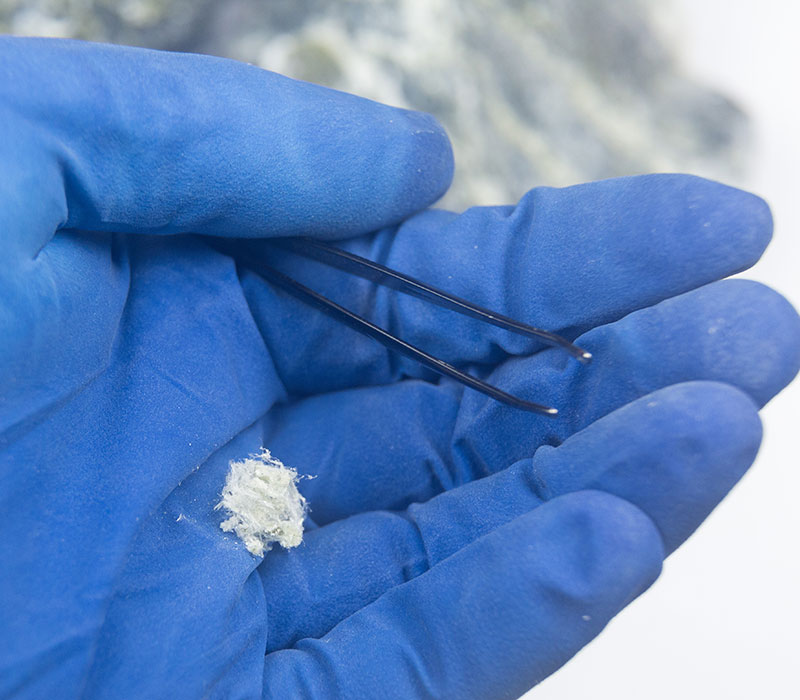
Fully Licensed
Licensed asbestos removal contractor (Licence No. 142305706). Full public liability insurance on every job.
Local & Fast
Surrey-based. Most domestic jobs are booked in and finished within a week.
Our Own Team
We never subcontract. The people who quote your job are the people who do it.
Get in Touch
Send a few details about your project and we will come back the same working day with a fixed price. We cover Surrey, London and the South East, including Esher, Cobham, Kingston, Richmond, Epsom, Guildford, Woking and Croydon.